You searched “repair wet wall smell” because a room has a damp odor, even after cleaning, and it feels worse after rain or overnight with windows closed.
That smell can come from a small hidden leak, trapped humidity, or damp plaster that never fully dries in Malaysia’s warm air and rainy seasons. Not always obvious.
In this guide, you’ll learn how to trace wet wall odor back to the real moisture route so you stop the source fast, avoid repeat mold, and keep repairs focused.

Hi, I’m Ken. I write practical home guides for Malaysia—no fluff, just what works.
I hold a formal building design qualification and have spent about 20 years on job sites across hundreds of projects. My goal is simple: help you avoid costly mistakes with clear, safe steps—a quick way to decide what to do next.
1. Repair wet wall smell: 5 checks
Wet wall smell means moisture is active somewhere nearby.
Odor usually appears before stains, because damp dust and microbes wake up early in humid Malaysia rooms. Trust the pattern — and test the wall like a system. No guesswork.
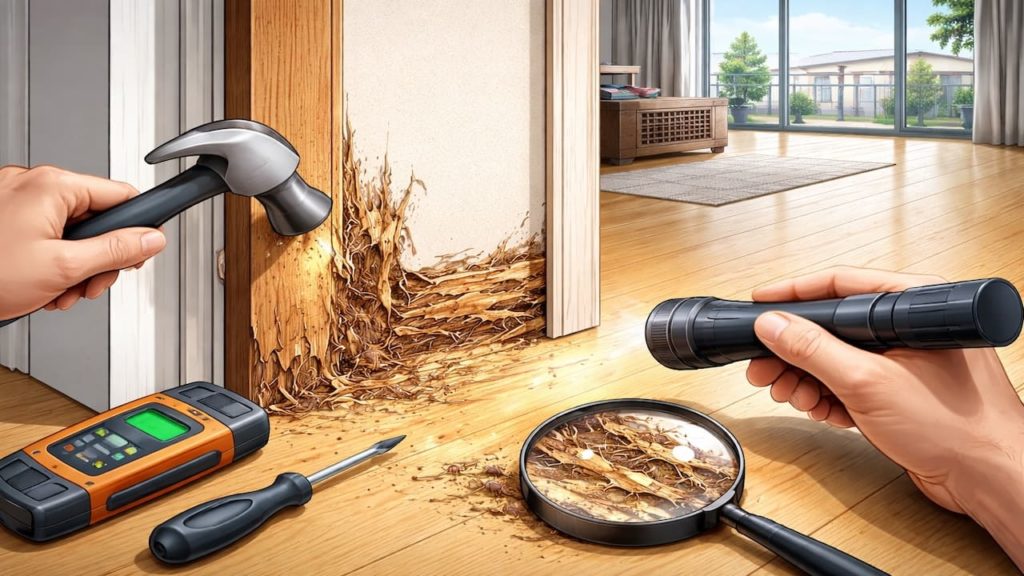
- Sniff along wall base and corner seams
- Press skirting board softness with gentle thumb press
- Check paint for bubbling and powdery chalking
- Feel wall temperature changes using bare hand
- Search for musty odor after AC off
Some think smell is only old furniture. If the odor strengthens near one wall line, there is moisture feeding it, so start with checks before buying sprays.
2. Find the hidden leak pathway
Leaks travel sideways through gaps before they show.
Water rarely drips straight down inside walls, it creeps along plaster joints, pipe chases, and hairline cracks, then exits where air can breathe — sneaky. Track pathways, not stains.
- Trace odor gradient from strongest point outward
- Check opposite side of wall for damp signs
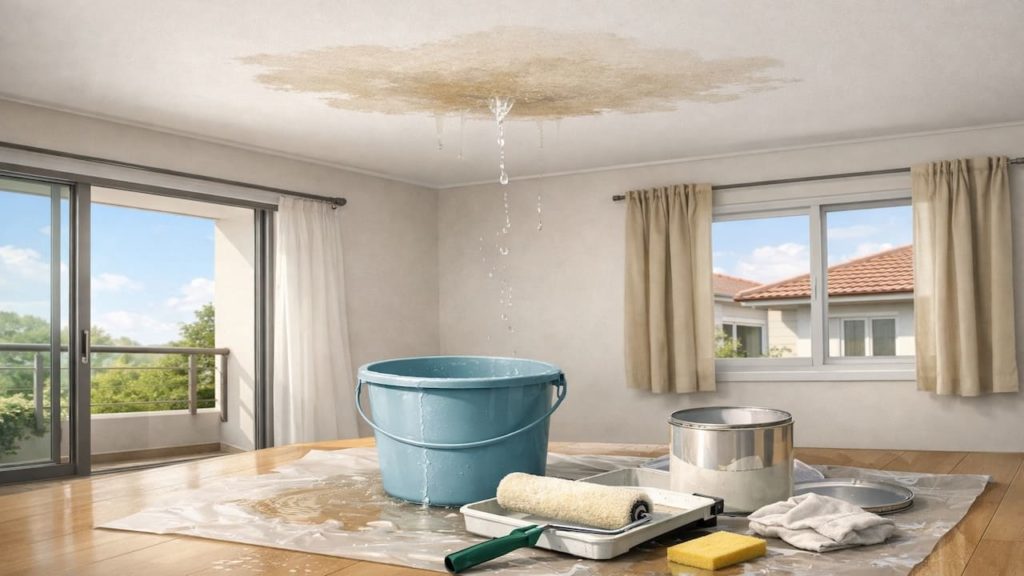
- Inspect ceiling corner above for faint ring marks
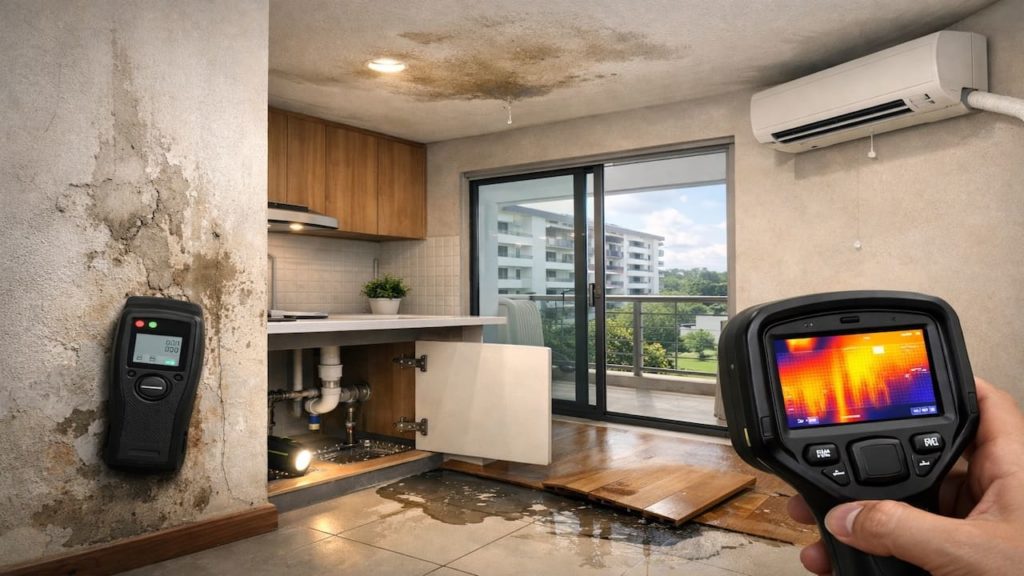
- Look behind cabinets for dark damp patches
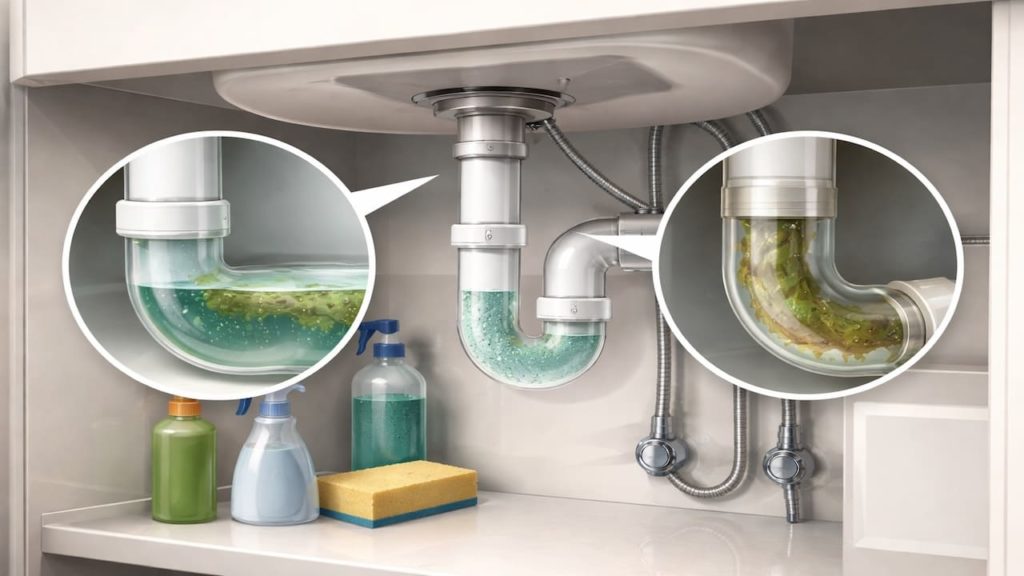
- Check floor trap area for slow seepage
Some say “no stain means no leak.” In Malaysia humidity, a wall can stay damp without obvious marks, so pathway tracing is the shortcut to truth.
3. Why wet wall smells persist in Malaysia homes
Humidity slows drying so small leaks become long smells.
When air stays moist, plaster and paint dry slowly, so even minor seepage keeps feeding odor daily. Condos can have shared risers, terrace homes can have splash zones, and both trap damp. Persistent.
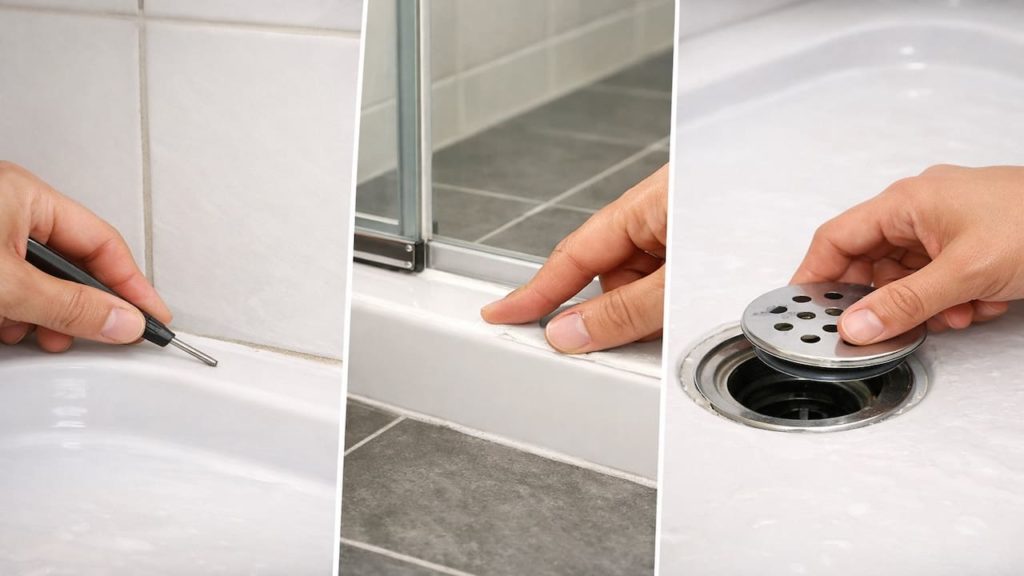
- Check bathroom grout gaps near wet wall side
- Inspect window frame seals after heavy rain
- Check AC drain line for drip points
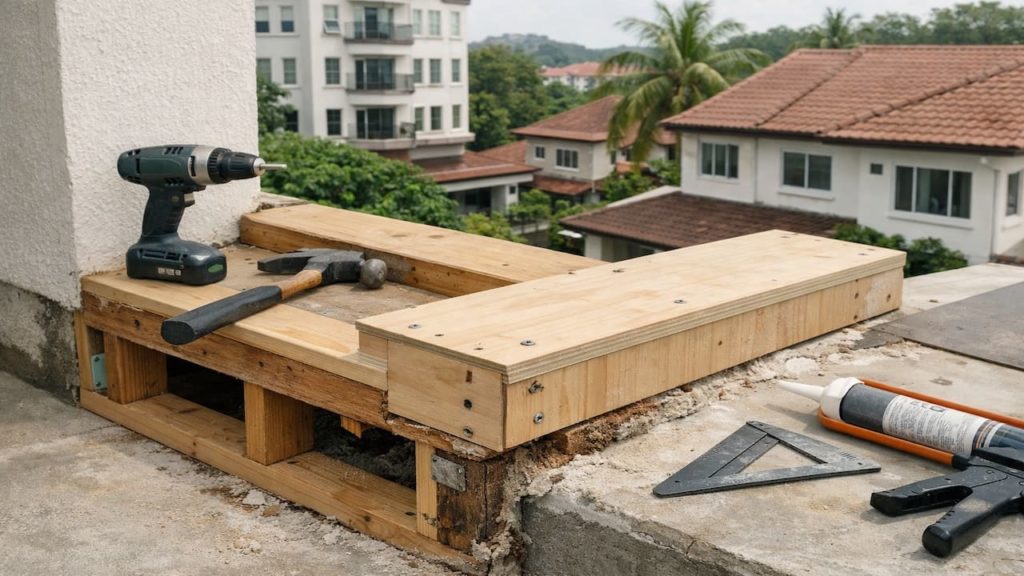
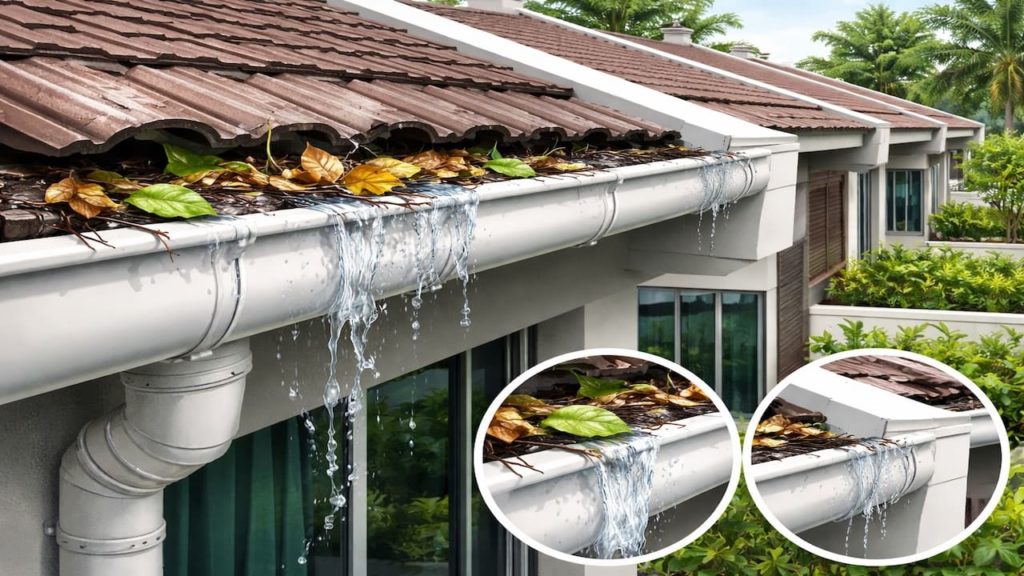
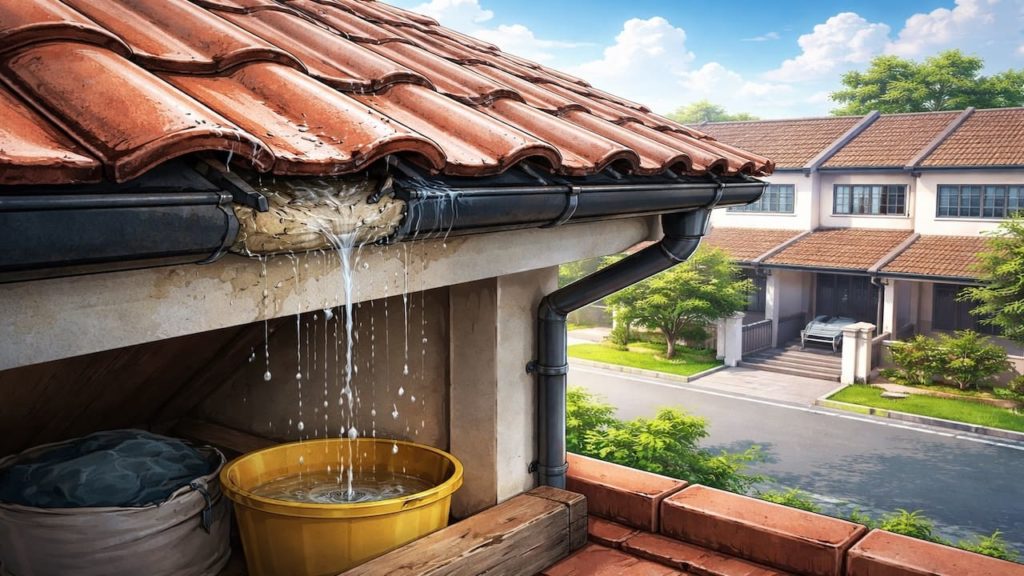
- Look for roof edge seep during storms
- Measure room humidity with small digital meter
Some blame only “Malaysia weather.” Weather raises baseline, but a real moisture source keeps the smell alive, so you must find and stop the feed.
4. How to locate the source and fix it for good
Confirm the source then dry and seal the wall properly.
Work in order so you do not repaint over damp — first confirm entry point, then stop water, then dry deep, then repair finishes. In Malaysia, basic inspection and minor reseal might be RM120–RM350, leak tracing and localized repair can be RM350–RM1,200, and bigger fixes like window resealing or concealed pipe work may reach RM800–RM3,000 depending on access and damage. Cost guardrails.
- Use tissue test on fittings and joints
- Run hose test on window frame edges
- Open small access and inspect wall cavity
- Dry wall using fan plus dehumidifier
- Seal cracks with flexible filler and repaint
Some want to repaint immediately because it looks clean. If moisture is still present, paint traps it and odor returns, so source confirmation and drying come first.
5. FAQs
Q1. How can I tell if the smell is mold or just old paint?
Moldy odor usually strengthens after the room is closed, especially overnight, and it clusters near corners or baseboards. Old paint smell is flatter and fades with ventilation.
Q2. Why is the smell stronger after rain?
Rain increases seepage through tiny cracks and also raises humidity so damp materials cannot dry. That combination boosts odor fast in Malaysia homes.
Q3. Can a leak be present without visible stains?
Yes, water can travel inside walls and evaporate before staining shows. Smell is often the first leak warning — treat it like a signal, not a mystery.
Q4. Should I use bleach or strong cleaners on the wall?
Cleaning can reduce surface growth, but it does not stop the moisture route. Fix the source first, then clean and repaint after full drying.
Q5. When should I call a professional?
If the smell persists beyond 7 days after drying attempts, if multiple rooms share the odor line, or if you suspect concealed plumbing or roof entry points.
Pro’s Tough Talk

Alright, I’ve been on site for 20+ years and handled hundreds of jobs, and “wet wall smell” in Malaysia is the loudest quiet problem. You don’t see much, but the room smells like a damp towel that never dries. Nasty.
Three causes show up nonstop. One, tiny leaks that travel along joints, then breathe out in one corner. Two, window or roof edges that wick water in during storms. Three, AC drain and bathroom wet zones feeding moisture behind cabinets. Structure.
Do 3 steps, clean and simple. Step one, follow your nose and feel the wall line, strongest point is your clue. Step two, tissue test fittings, hose test window edges, and check AC drain drops. Step three, stop water, dry deep with fan and dehumidifier, then seal and repaint. Simple.
You didn’t fail and not every contractor is a villain, but stop doing the “spray perfume and hope” routine like it’s therapy. Find the moisture route then cut it off. That’s my jab, because perfume on damp walls is like putting a bandage on a leaking pipe.
Relatable moment one, you clean the room and feel proud, then the smell returns at night. Relatable moment two, you move furniture around like musical chairs and blame the mattress. Keep ignoring it and you’ll be hosting mold like it pays rent, then act shocked. Cute.
Summary
Wet wall smell usually means active moisture, even when stains are not visible, and Malaysia humidity makes small seepage linger and keep feeding odor. Treat smell as data.
Start with location checks, then trace hidden pathways through joints, opposite sides, windows, wet zones, and AC drains, because water travels before it shows. Confirm the entry point before repainting.
Today, map the strongest odor spot, run a tissue and hose test, stop the water, and dry the wall deeply before sealing and repainting. Source first drying second finish last. If you also have window leaks or damp wall paint, read those guides next and close the full moisture loop.