A roof leak after cleaning roof feels unfair, because you tried to protect the house and still got a ceiling stain. Malaysia rain turns small cleaning errors into fast drips.
Roof cleaning can shift tiles, peel tired sealant, flood valleys, or push water under flashing, so the cause is wider than “old roof.” Humid heat keeps joints soft.
In this guide, you’ll learn how to clean your roof without triggering a leak using safer spray angles, simple post-clean checks, and staged testing that fits terrace houses and condo top floors in tropical storms.

Hi, I’m Ken. I write practical home guides for Malaysia—no fluff, just what works.
I hold a formal building design qualification and have spent about 20 years on job sites across hundreds of projects. My goal is simple: help you avoid costly mistakes with clear, safe steps—a quick way to decide what to do next.
1. Roof leak after cleaning roof: 5 mistakes
Most leaks after cleaning come from water forced uphill.
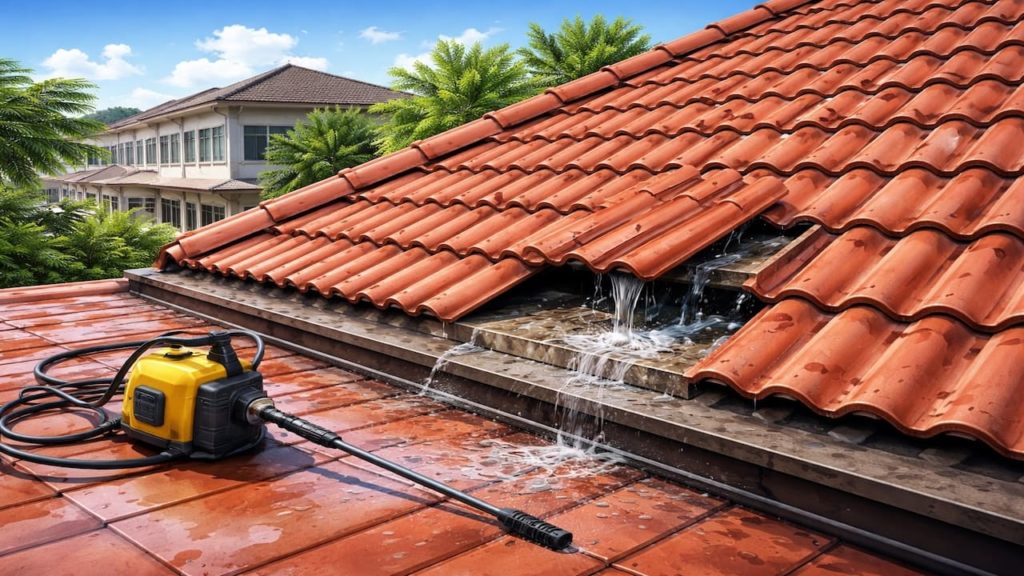
A strong jet can drive water against gravity and under overlaps, especially on tile roofs where overlap is the real waterproofing—sealant is only support. One wrong angle, big trouble.
- Keep nozzle low angle aimed down slope
- Stop blasting directly into ridge cap joints
- Avoid spraying upward under tile overlaps ever
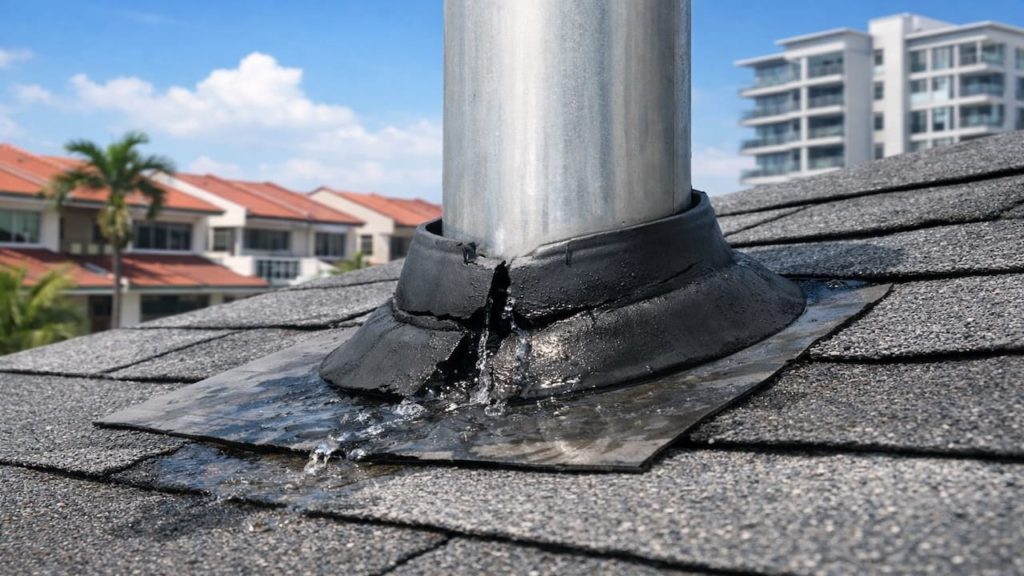
- Do not jet water behind flashing edges
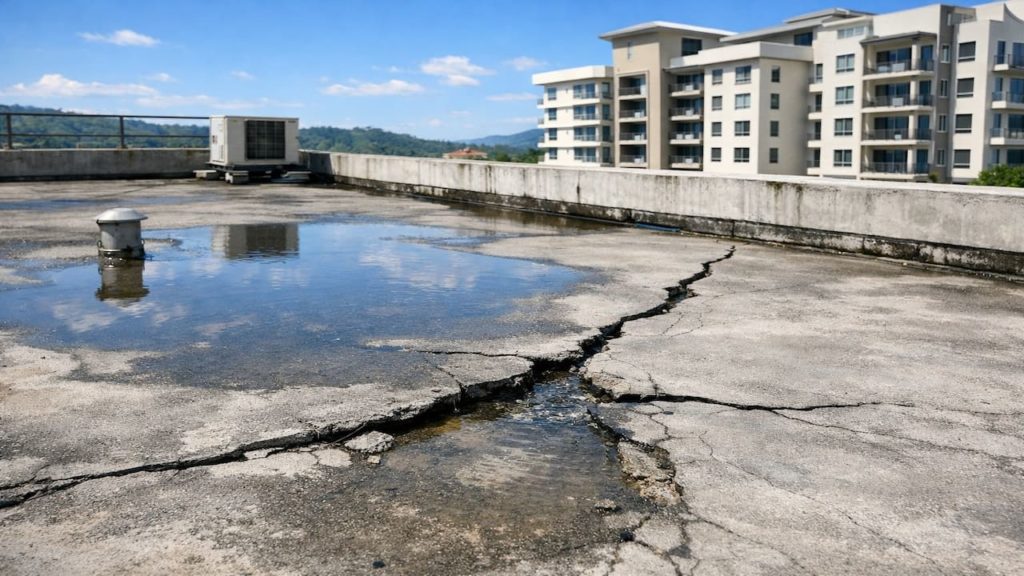
- Limit soaking valleys until runoff stays clear
Some people say “I used low pressure so it cannot leak,” but low pressure still leaks when you aim into seams. Wind-driven Malaysian rain then repeats the entry path. Same movie.
2. Pressure washing lifts tiles and seals
Pressure washing can unseat tiles and break seal bonds.
Many roofs in Malaysia rely on tile alignment, ridge bedding, and gravity, not glue. A pressure stream can nudge a tile 2 mm and open a capillary gap—water loves that gap. Silent shift.
- Scan rows for tile corners sitting higher
- Check ridge cap lines for uneven shadow gaps
- Inspect flashing for lifted lips and peeled sealant
- Look for missing mortar crumbs near ridge ends
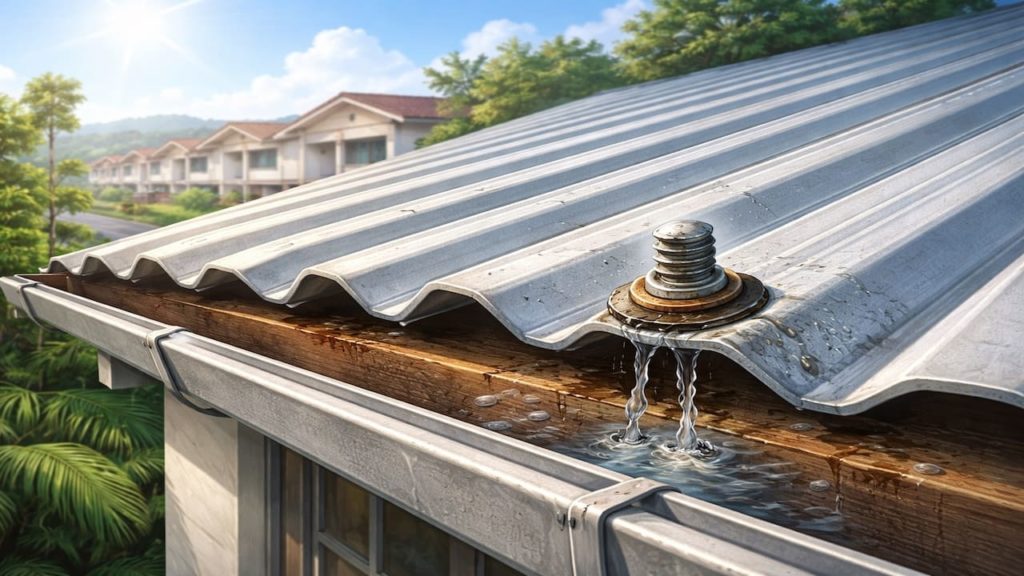
- Check metal roof screws for cracked rubber washers
You might think one shifted tile is harmless. In a downpour, water can travel along battens and drip far from the entry point, then land on your ceiling light. Not random.
3. Why water shows up late after cleaning
Leaks appear late because trapped moisture releases slowly.
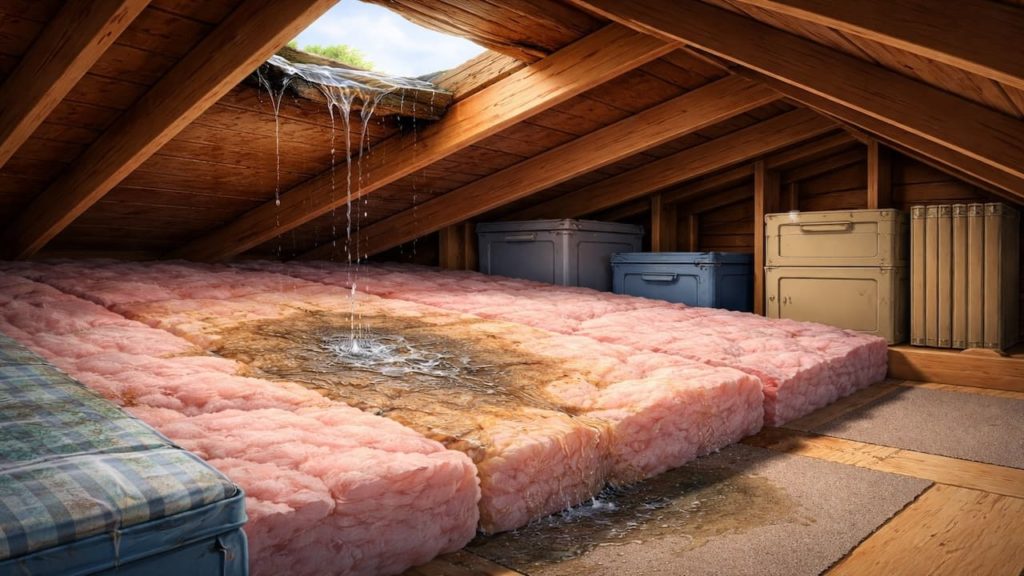
After washing, water can sit under tiles, inside insulation, or on the underside of metal deck sheets. Night cooling pulls that moisture to edges—Malaysia humidity slows drying and hides the trail. Delayed drama.
- Mark drip spots with tape and time
- Smell attic air for damp sour odor
- Feel insulation edges for wet spread lines
- Check timber near ridge for dark damp patches
- Inspect soffit vents for fresh water streaks
People blame “mystery leaks,” but the delay is predictable when water is trapped and gravity waits. Follow the drip timing and you find the pathway. Clear logic.
4. How to clean and test without making it worse
Use controlled flow then test in stages before relaxing.
Clean in short sections, rinse down-slope only, then pause and check inside before moving on. In wet season gusts, terrace house edges and ridge lines take the first hit—so treat them gently. Slow wins.
- Clean one small area then rinse downslope
- Keep water away from penetrations and vents
- Run gentle hose test for 10 minutes
- Stop and dry attic if any drip appears
- Photograph tile lines before and after cleaning
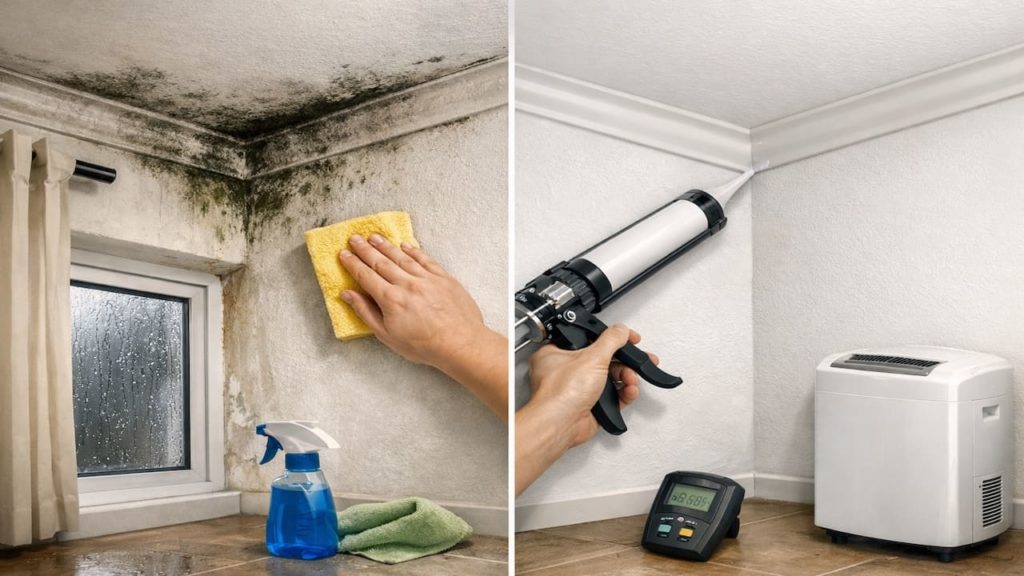
Some say testing is overkill because “it looks fine from outside.” One controlled hose test beats repainting, mold smell, and chasing stains that spread across humid plaster. Do the test.
5. FAQs
Q1. How soon can a leak appear after roof cleaning?
It can show immediately, or hours later when trapped water finally finds a low point. In Malaysia, humid nights slow drying, so stains can bloom the next day. Classic delay.
Q2. Is pressure washing always a bad idea for tile roofs?
Not always, but it becomes risky on older tiles, loose ridge caps, or brittle sealant baked by heat. Keep pressure low, keep the spray angle down, and avoid seams. Simple rule.
Q3. What is the first safety step when a ceiling starts dripping?
Switch off power to the wet area and keep people away from the drip line—then move valuables and lay a towel bucket setup. Electricity and water should never share a ceiling. No hero moves.
Q4. Can I just add more sealant after washing?
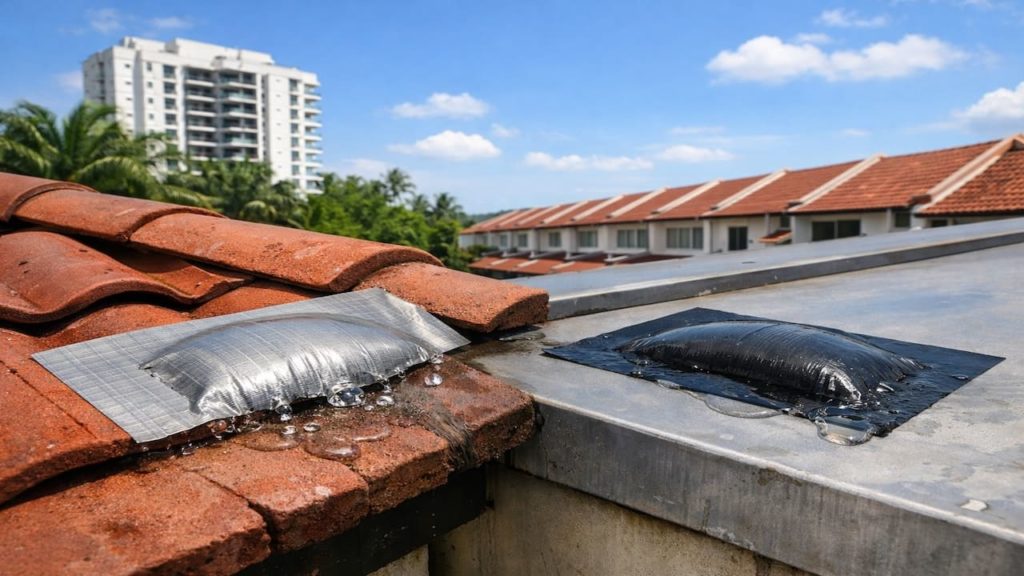
Sealant works only after the entry gap is fixed and the surface is dry. Sealing over damp joints in tropical humidity often fails fast and traps moisture. Bad trade.
Q5. When should I call a roofer instead of trying again?
Call if you see shifted tiles, lifted flashing, soft timber, repeated stains after a hose test, or water near light fittings. Recurring leaks usually mean a structural path. Time saver.
Pro’s Tough Talk

I’ve been on site for 20+ years and handled hundreds of jobs, and a leak after roof cleaning is the kind that breaks your spirit. Malaysia humidity and sudden storms kick you again. Hell.
It comes down to 3 causes. Cause 1, you sprayed upward and forced water under the tile overlaps. Cause 2, a tile shifted a little and that tiny channel became a water highway. Cause 3, old sealant peeled off and the last barrier disappeared. Classic.
Do 3 quick steps. Step 1, cut power near the wet ceiling, because getting shocked is not funny. Step 2, use a torch and find tile shifts and lifted flashing, because the entry point is usually obvious. Step 3, run a hose test in small sections, because spraying everywhere is not testing, it is water play. Come on.
Do not add more water until you fix the entry point. That is the fastest path. A “repair” on wet surfaces is like taping a soggy cardboard box and expecting it to carry groceries. In humid homes, mold wins first.
You clean it shiny, then at night the room ends up smelling like wet socks. Then the next storm brings drip-drip again and your mood collapses. Funny ending? Do not pressure wash your life away too.
Summary
A roof leak after cleaning usually starts from spray direction, shifted tiles, or disturbed sealant, and Malaysia heat plus wet season wind makes the weakness show fast. No mystery.
If stains return after a careful staged hose test, treat it as a real entry path and not “leftover moisture.” Prioritize tile alignment and flashing contact before adding sealant. Hard rule.
Do one controlled test today and fix one clear gap before the next downpour, then move to your related guides on roof screw leaks and gutter overflow so the stain does not come back.