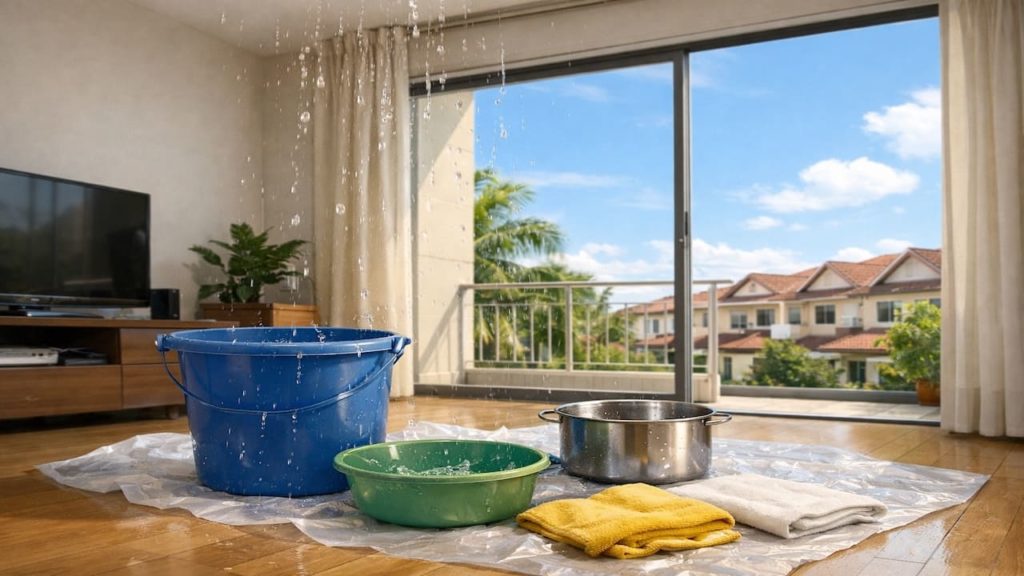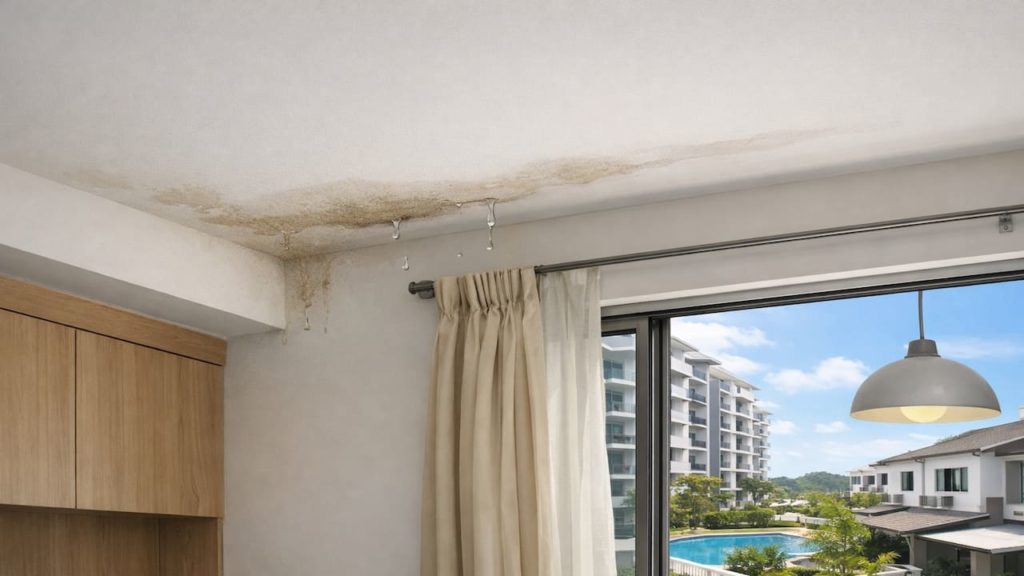
A roof leak after rain in Malaysia feels scary, because the ceiling can look fine during the storm. Then it drips later when you finally relax at home. Nasty.
Heavy downpours, humid air, and long roof runs in terrace houses let water travel under tiles, flashings, and gutters. It can appear far from the entry point. Tricky.
In this guide, you’ll learn how to spot the entry point before it spreads using simple signs and controlled checks. They fit wet season homes and condo top floors.

Hi, I’m Ken. I write practical home guides for Malaysia—no fluff, just what works.
I hold a formal building design qualification and have spent about 20 years on job sites across hundreds of projects. My goal is simple: help you avoid costly mistakes with clear, safe steps—a quick way to decide what to do next.
1. Roof leak after rain: 5 signs
Post rain leaks leave patterns you can read.
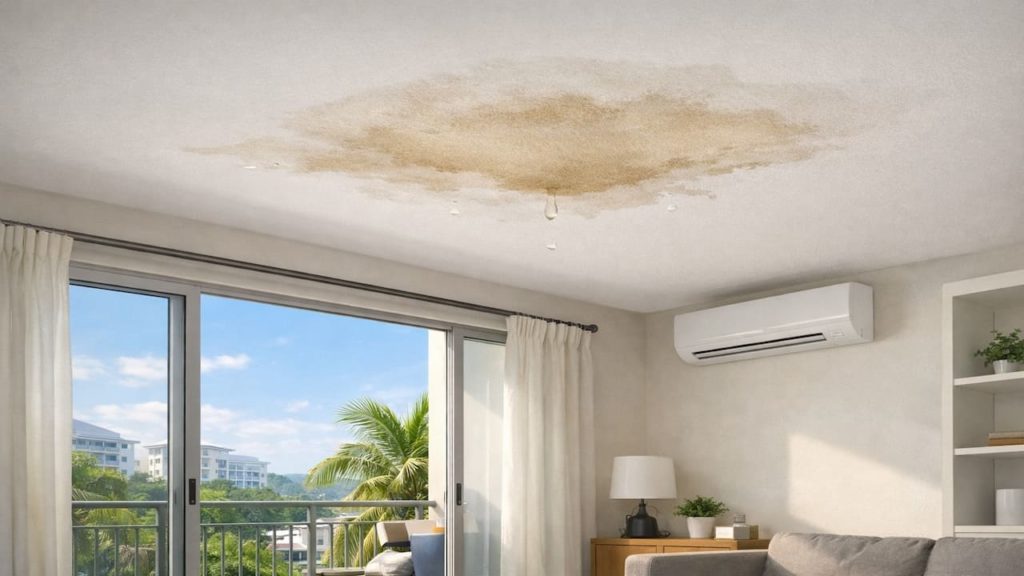
After storms, water often hides in roof layers and releases later—Malaysia humidity slows drying and makes stains widen. Look for repeatable clues. Clear.
- Mark ceiling stain edges with pencil lines
- Check drip timing compared with rain end
- Look for brown rings around wet patch
- Feel for soft gypsum near the stain
- Smell for musty odor after wet nights
Some people say stains are random because water runs anywhere. Patterns still exist if you track edges and timing, so read them first. It works.
2. Spot the entry point before it spreads
Find the highest wet line not the biggest stain.
In many Malaysia homes, water rides rafters and ceiling boards—so the widest stain is often the last stop. Start where moisture first appears. Fast.
- Follow stain trail along joist shadow direction
- Check ceiling corners for first tiny dots
- Inspect wall top line for damp streaks
- Look inside access panel for wet timber
- Use torch to spot shiny droplets above
You may think the biggest stain sits under the hole, and sometimes it does in open ceilings. In boxed ceilings, framing carries water first, so chase the highest sign. Do it.
3. Why + Roof water shows up late in humid houses
Humidity keeps water moving long after rain stops.
Roof cavities stay damp after rain—so trapped water wicks through dust, insulation, and timber until it finds a low point. Malaysia wet season extends this cycle. Slow.
- Check roof valley for leaf mud blockage
- Inspect box gutter seam for seep marks
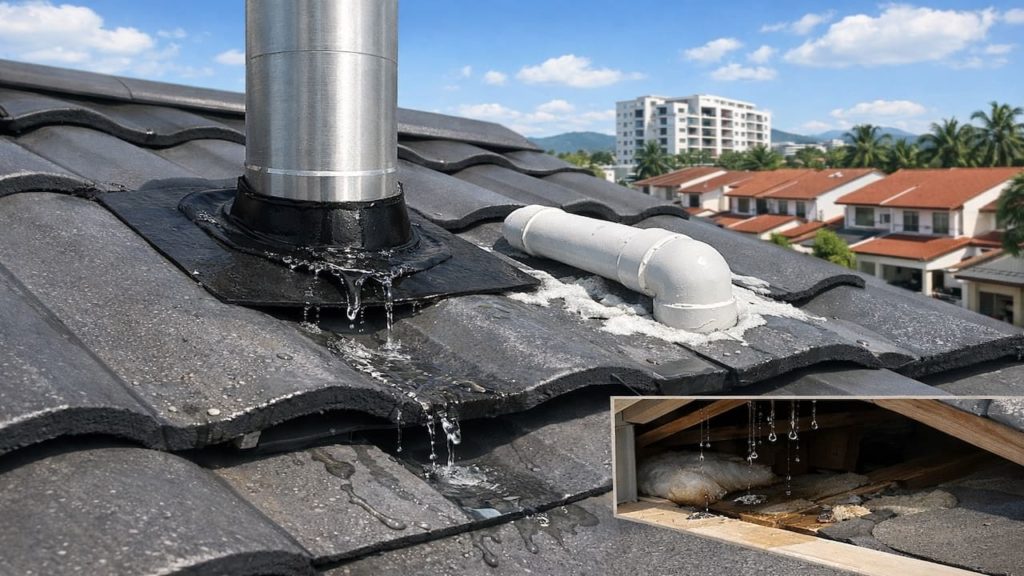
- Look at flashing corner for sealant cracks
- Check ridge cap lap for lifted edge
- Inspect parapet top coat for hairline splits
It is easy to blame the last storm or the last repair, because that is what you remember. Late leaks are normal in wet climates, so focus on joints and paths. Practical.
4. How + Confirm the entry point and stop spread
Test one roof zone at a time then seal once.
Random resealing is expensive and often fails in Malaysia, because moisture gets trapped and the leak appears elsewhere—controlled testing saves time and money. No shortcuts.
- Photograph stain and write date and time
- Dry the area then wait for new drip
- Hose test one roof section for ten minutes
- Inspect attic for wet nails and rusty heads
- Seal flashing with roof grade polyurethane compound
People say a full roof coating is the fastest fix, and it can help on porous tiles. If you coat before you locate the joint, you trap moisture and waste money, so test first. Better.
5. FAQs
Q1. Why does the leak start after the rain ends?
Water can sit in valleys, box gutters, and tile overlaps, then release slowly when airflow changes. In Malaysia wet season, delayed dripping is common.
Q2. How do I tell roof leak versus condensation?
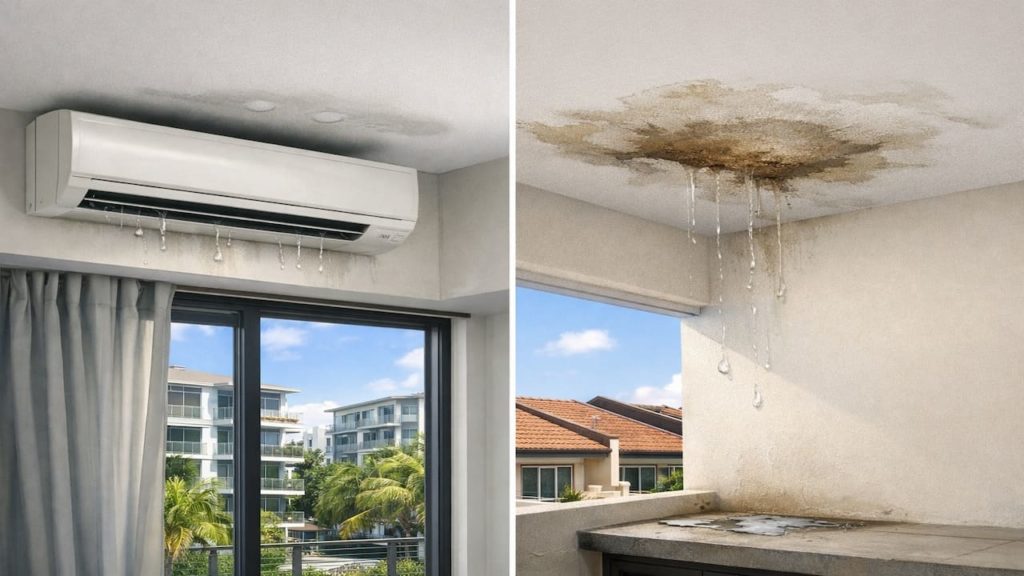
If drips match aircond run time and cold pipes have beads, condensation is likely. If drips follow storms with aircond off, chase roof paths.
Q3. Is it safe to climb the roof right after rain?
No, wet tiles and metal are slippery, and you can miss fine gaps while rushing. Inspect from inside first, then go up in dry daylight.
Q4. What if the stain is near lights or sockets?
Cut power to that circuit and stop using the area until checked. Water near wiring is dangerous and humidity increases risk.
Q5. When should I call a professional?
If the ceiling is bulging, water is heavy, or the stain grows fast, call help. For small stains, map edges and do one zone testing first.
Pro’s Tough Talk

I’ve been on site for 20+ years and handled hundreds of roof and ceiling jobs, and post rain leaks love messing with your head. You hear one drip and you start counting. Classic.
Most cases in Malaysia split into 3 causes. Stored runoff sits in valleys or box gutters and drips later, and it crawls like a tired snail. Cracked flashing sealant opens a path. Tiny screw washer failure feeds slow leaks.
Here are 3 immediate steps. Tape the stain edge and write the time. Check the ceiling void for wet nails or shiny timber. Hose test one small roof zone only and watch.
Control the test and the leak stops being magic and you avoid blaming yourself or burning a decent contractor for climate driven problems. Water is a sneaky cat.
Relatable moment one, you move the bucket and it drips beside it anyway. Relatable moment two, you seal one spot and the stain grows somewhere new. And the “coat everything” guy gets a jab. Enjoy your midnight bucket hobby.
Summary
After rain leaks in Malaysia usually follow a path through valleys, flashings, gutters, or roof cavities. Your job is reading signs and confirming one entry point. Clear.
If mapping, attic checks, and one zone hose testing cannot reproduce the leak, focus on box gutter seams and parapet cracks. Treat any electrical risk as urgent. Safety.
Mark the stain tonight then test one zone tomorrow. Then read our guides on gutter overflow, ceiling mold control, and aircond condensation for humid homes.