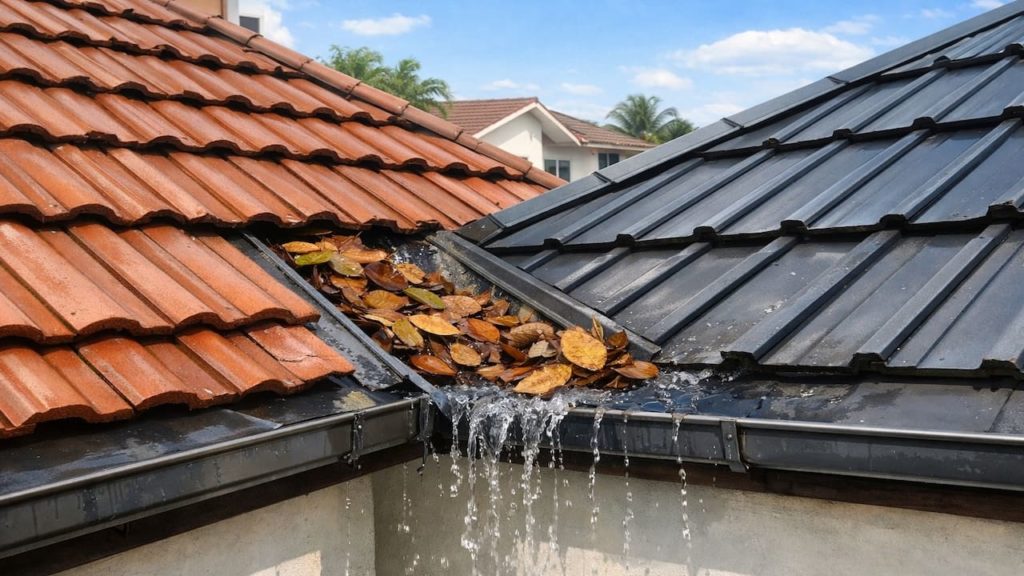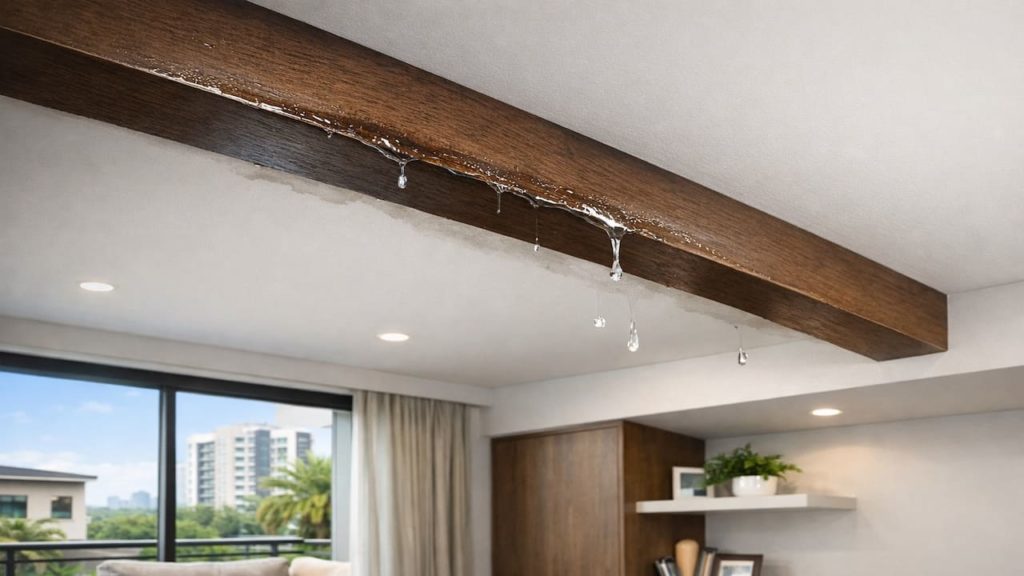
A roof leak along a beam is frustrating, because the water line looks like it is “moving sideways” instead of dripping straight down in Malaysia rain.
Water can travel along beams, conduits, and ceiling joints, so the drip you see may be far from the roof entry point, especially in humid homes.
In this guide, you’ll learn how to read beam leaks to trace the entry point using stain patterns, timing, and safe checks that work for terrace houses and condo top floors.

Hi, I’m Ken. I write practical home guides for Malaysia—no fluff, just what works.
I hold a formal building design qualification and have spent about 20 years on job sites across hundreds of projects. My goal is simple: help you avoid costly mistakes with clear, safe steps—a quick way to decide what to do next.
1. Roof leak along beam: 5 signs
Beam leaks mean water is traveling before it drops.
Structure creates a path, and Malaysia humidity keeps the beam line damp longer, so the stain stretches and grows even when the original gap is small.
Travel line.
- Long straight stain following beam direction line
- Drip forms at beam end or joint corner
- Stain grows after rain stops not during
- Multiple drip points along same straight line
- Musty smell stronger near beam intersections
Some people assume the roof entry is directly above the drip point because that feels logical.
But beam leaks are about sideways travel, so trace the highest wet point first.
2. Water follows structure before dripping
The highest damp spot is closer to the entry point.
Water runs along the top of beams or slab edges, then drops where it finds an opening, and Malaysia wet season keeps that hidden path active.
Key clue.
- Find the highest wet mark on beam face
- Check beam corners for fresh damp sheen
- Inspect ceiling joint line crossing the beam
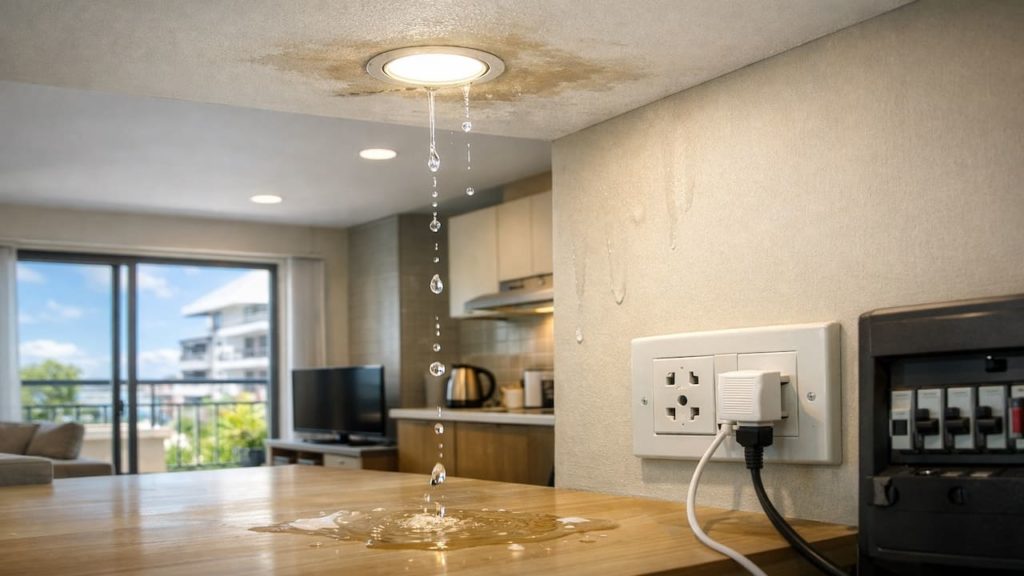
- Look for water ring around nearby light cutout
- Mark stain edge with pencil and date
You might think the darkest part is the source because it looks worst and demands attention.
But dark color can be older moisture, so follow height and freshness, then the path makes sense.
3. Why beam leaks are common in Malaysia homes
Beams act like gutters inside the ceiling void.
In tropical weather, repeated wet and dry cycles expand materials, tiny gaps open at joints, and wind-driven rain pushes water into edges that feed beams.
Hidden gutter.
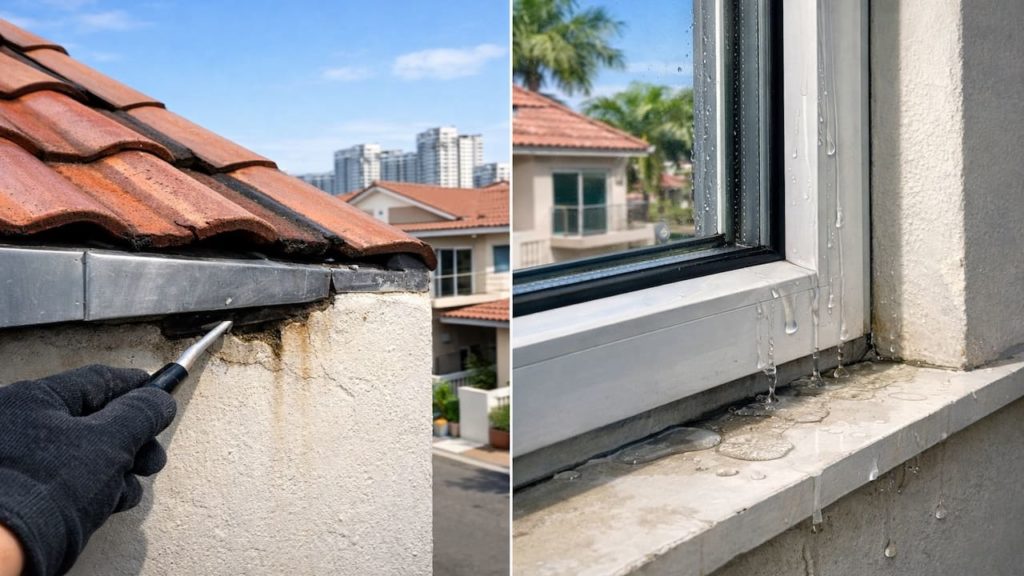
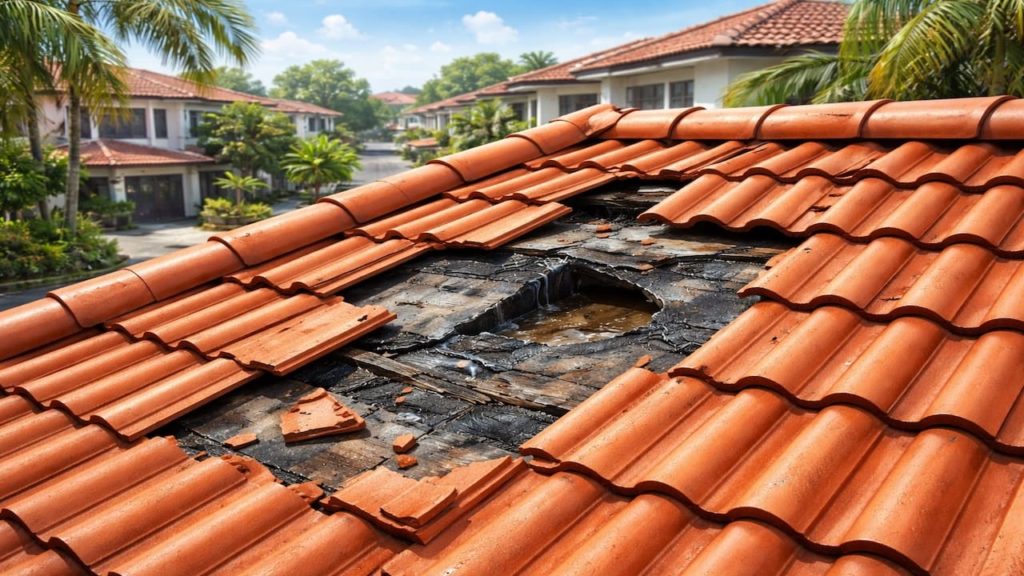
- Check roof joint seams above beam line zone
- Inspect parapet wall cracks near beam direction
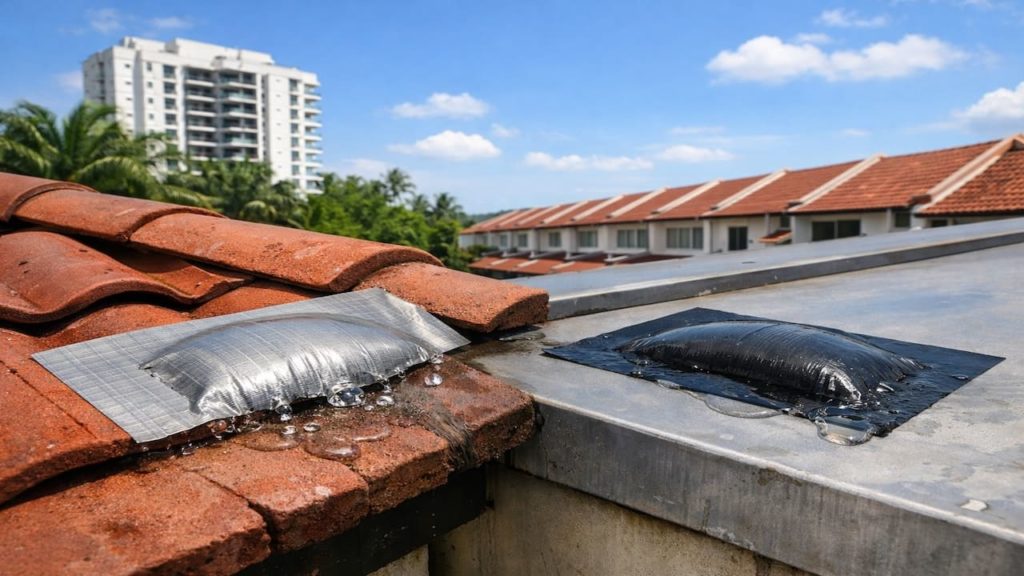
- Look for gutter overflow stains at roof edge
- Check roof screw rows if metal roofing exists
- Inspect aircond trunking route near beam path
People sometimes blame “concrete cracks” and give up, because beams feel permanent and untouchable.
But the beam is not the entry, so focus on roof edges and joints that feed the beam path.
4. How to trace beam leaks without dangerous roof access
Map drip points and match them to roof zones.
Use safe indoor mapping, note timing, and compare with roof edges you can view from ground or balcony, because Malaysia roofs are slippery in wet season.
Safe method.
- Label each drip point with tape number
- Measure distance to two fixed wall corners
- Log rain start and drip start time
- Compare beam direction to roof joint layout
- Hose test one roof edge zone from ground
Some homeowners want to patch the beam stain and repaint because it looks ugly and feels urgent.
But repainting hides evidence, so trace first, fix entry, dry fully, then do cosmetic repairs last.
5. FAQs
Q1. Why does the leak drip from the beam end, not the middle?
Water travels along the beam until it reaches a joint, opening, or corner where it can drop. Beam ends often have gaps near wall connections or ceiling joints.
Q2. Can a beam leak come from aircond issues?
Yes, condensation or drain leaks can run along structural lines the same way. Test on a dry day with the AC off to separate roof rain from AC moisture.
Q3. What should I do if the leak is near a light on the beam line?
Turn off the circuit at the DB and keep it off until dry. Water near wiring can be dangerous even if the drip seems small.
Q4. What is the best first clue to find the roof entry point?
Find the highest fresh damp spot along the beam line and match it to the nearest roof edge or joint above. Highest wet point beats biggest stain for tracing.
Q5. When should I call a professional?
If stains grow after every storm, the ceiling feels soft, or multiple rooms show beam-line damp, call a roofer or waterproofing specialist. Hidden travel can spread fast.
Pro’s Tough Talk

I’ve been on site for 20+ years and handled hundreds of jobs, and beam leaks in Malaysia are the sneakiest because water does not fall like a polite raindrop. It travels like it has a plan.
Cause 1 is roof edges and joints feeding water into the ceiling void. Cause 2 is beams acting like internal gutters, so water runs sideways before it drops. Cause 3 is humidity keeping everything damp, so the path stays active and stains grow even after rain. Three truths.
Step 1, power off near the wet area and control the drip, because water plus wiring is a trap. Step 2, find the highest fresh damp spot on the beam line, because that is closer to the entry. Step 3, map drip points and match to roof zones, because guessing is expensive. Done.
Beam leaks are travel leaks not point leaks. Don’t blame yourself, because ceilings lie and beams hide the route, and not every contractor is a villain either, tropical weather eats weak joints. But the structure is cold: water moves like ants in walls, and a beam is like a hidden gutter that delivers the drip to the worst place.
And the “just repaint it bro” advice gets a side-eye, because paint is makeup not medicine. Relatable moment 1: you stand under the beam listening for drip timing. Relatable moment 2: you chase the stain and it keeps moving. Follow the structure, or keep playing hide and seek with your own house.
Summary
Leaks along beams usually mean water is traveling inside the ceiling void, and Malaysia humidity keeps the beam line damp so stains spread and drip points shift.
Trace the highest fresh damp spot, map drip points along the beam, and match the beam direction to roof joints and edges before paying for broad sealing.
Mark the beam stain and log drip timing today then build a simple leak map for targeted repairs, and next read the guides on water mark mapping and AC-run leak differences.