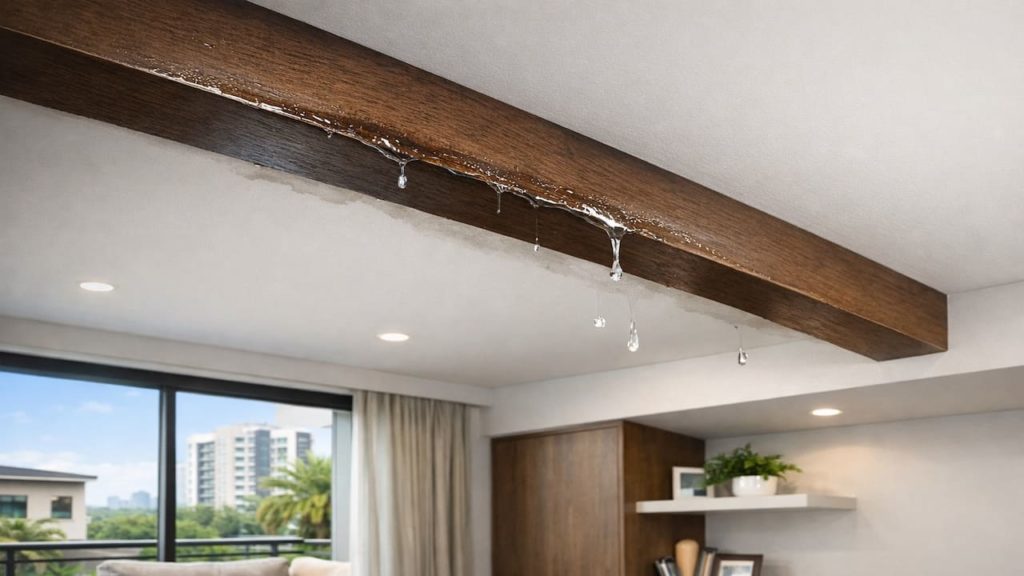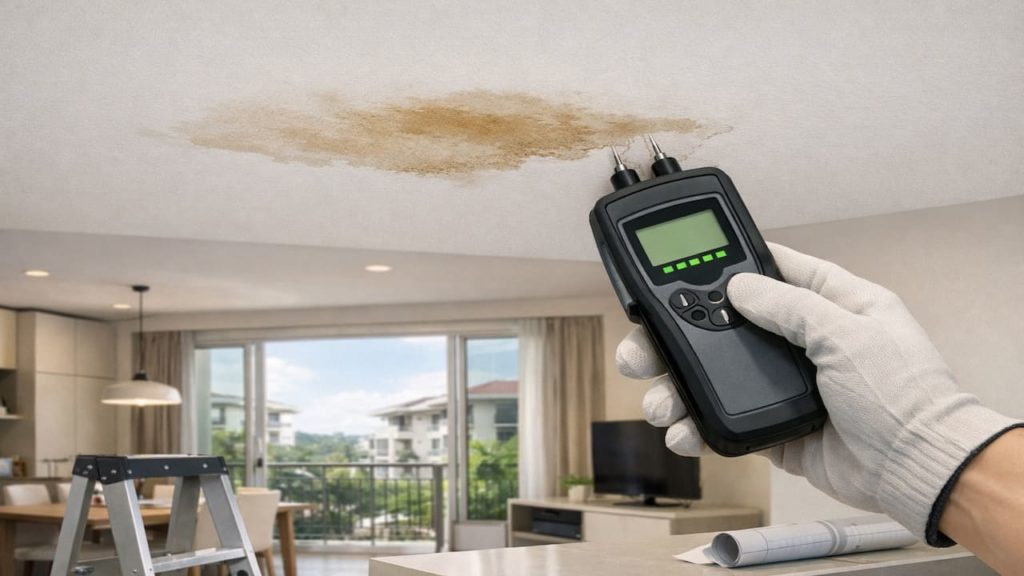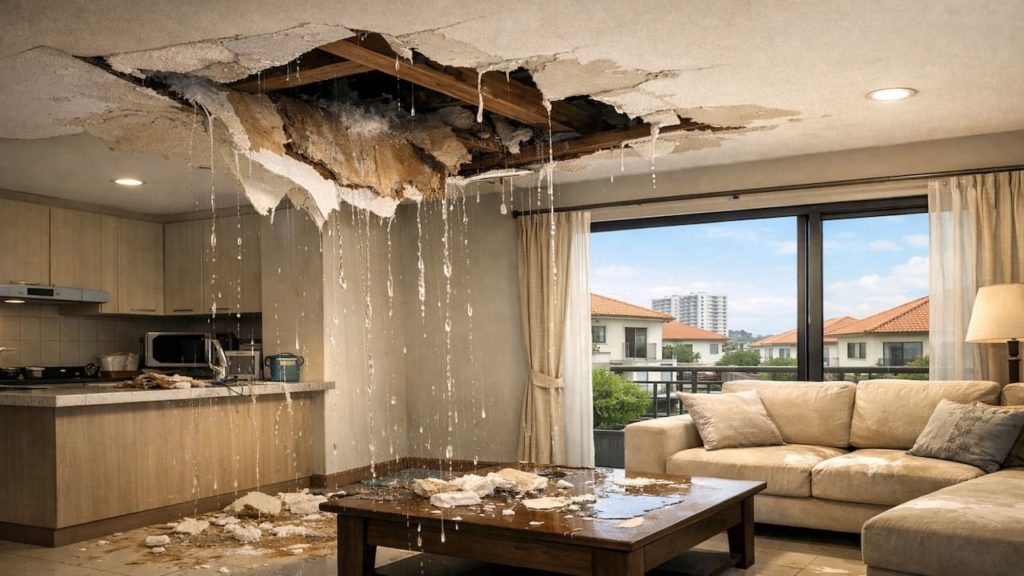
A roof leak ceiling collapse fear usually starts with a growing stain, a sagging patch, or a scary creak above your head. In Malaysia, heavy rain plus humid air can load a ceiling faster than you expect.
Not every stain means collapse, but some signs mean you should treat it as an emergency. The goal is simple: protect people first, then reduce damage. No hero moves.
In this guide, you’ll learn how to spot ceiling collapse danger signs fast and what to do immediately in Malaysia terrace houses and condo units during wet season storms.

Hi, I’m Ken. I write practical home guides for Malaysia—no fluff, just what works.
I hold a formal building design qualification and have spent about 20 years on job sites across hundreds of projects. My goal is simple: help you avoid costly mistakes with clear, safe steps—a quick way to decide what to do next.
1. Roof leak ceiling collapse: 5 signs
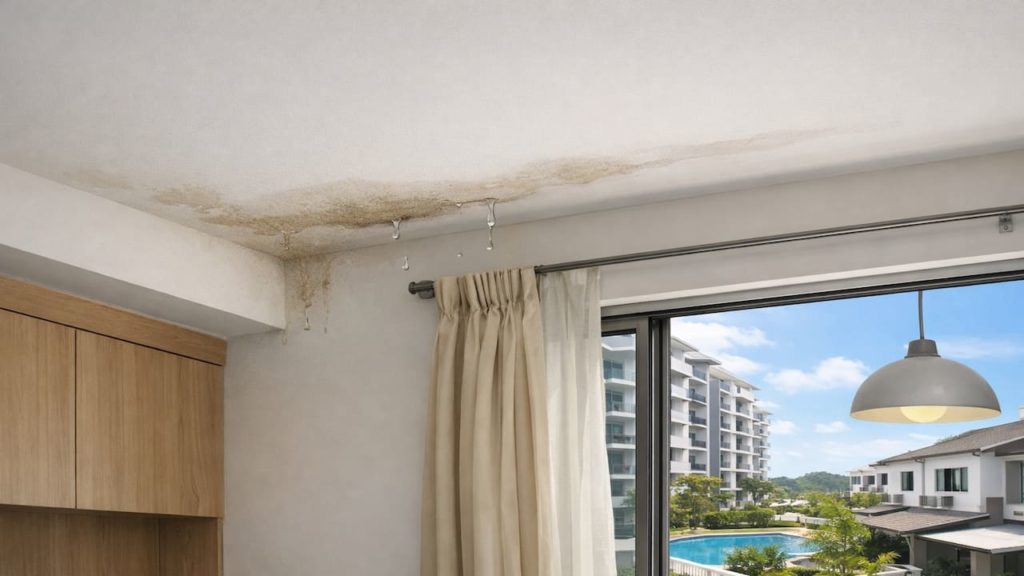
A sagging ceiling can fail suddenly when water keeps pooling.
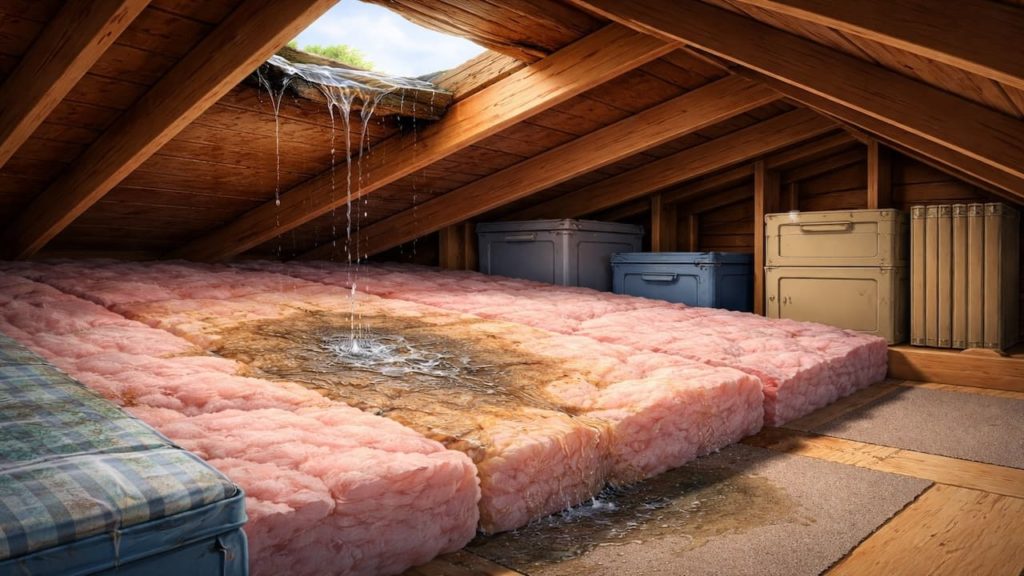
Ceilings hold water like a soft bag when insulation and boards soak up moisture. In Malaysia humidity, materials stay heavy longer—so the load does not drop quickly. Heavy load.
- Ceiling surface bulges like a water pillow
- Cracking spreads in a circular ring pattern
- Fast dripping turns into a steady sheet flow
- Ceiling feels soft when lightly tapped
- New loud creaks appear during rainfall
Some people think “it has been sagging for days so it is stable.” It is not stable if water is still entering. One more storm can be the breaking point. Treat it seriously.
2. Know when it is an emergency
It is an emergency when safety risks outrun property damage.
Electricity, falling debris, and hidden water weight make this dangerous, especially around light fittings and fans common in Malaysian homes. Safety rules win. Zero debate.
- Water is near ceiling lights or fan mounts
- Bulge grows quickly within 30 minutes
- Plasterboard pieces are already dropping down
- Room smells strongly of wet insulation suddenly
- Ceiling frame lines look distorted or bowed
You might think calling for help is overreacting. It is not. A ceiling collapse can injure people and destroy wiring. If in doubt, clear the room and isolate power.
3. Why ceilings fail during Malaysian storms
Collapse happens when water load plus weak points combine.
Water collects on plasterboard, insulation, and ceiling panels, then fast wind-driven rain keeps feeding it. If the leak path hits one bay, that bay becomes the failure point. Weak bay.
- Check attic for pooled water above ceiling bay
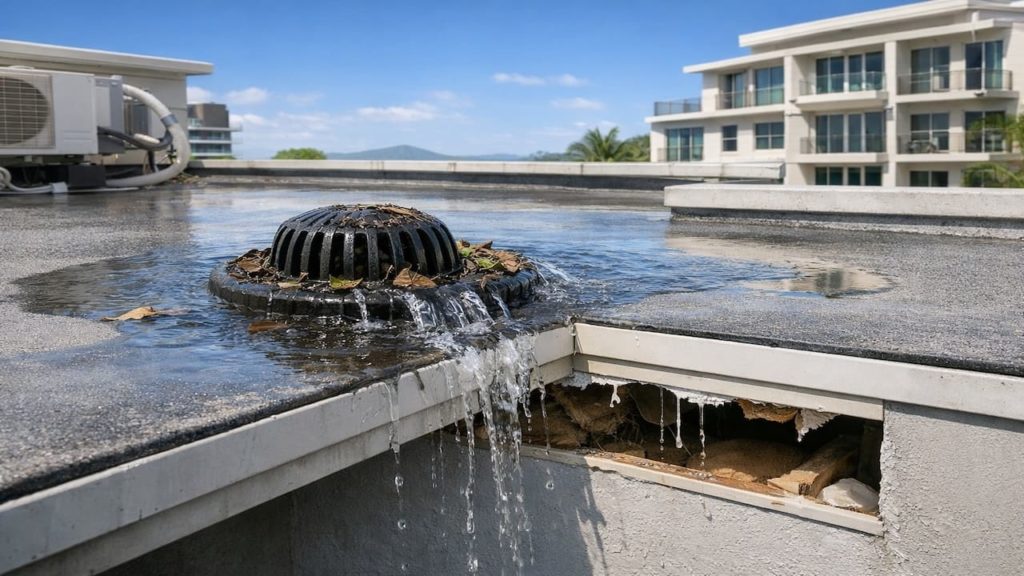
- Inspect roof valley and flashing for entry points
- Look for soaked insulation clumped and heavy
- Check for termite softened timber near edges
- Note if leak started after roof cleaning work
Some people blame “bad ceiling quality.” Quality matters, but water load is the real killer. Even good ceilings fail when they hold enough water. Physics wins.
4. How to respond safely right now
Turn off power and clear the area before you do anything.
In Malaysia condos and terrace houses, wet ceilings often sit above wiring routes. Focus on safety, then controlled drainage and drying—only if it can be done without danger. Simple steps.
- Switch off circuit feeding that room area
- Move people pets and valuables out quickly
- Place buckets and towels outside the danger zone
- Use torch to check for active dripping points
- Call building management or roofer for urgent check
People say “I will poke a hole to drain the bulge.” That can help, but only if you are confident there is no wiring and you can control falling debris. If not, do not touch it.
5. FAQs
Q1. Does a brown water stain mean collapse is coming?
Not always, but a stain that grows fast and becomes a bulge is a warning. Track size changes during rain and treat bulging as urgent.
Q2. What is the most dangerous area to stand under?
Under a bulge, under light fittings, and near ceiling fans. These areas can drop debris and expose wiring if the ceiling fails.
Q3. What is the first electrical action?
Turn off power to the wet ceiling area before you touch buckets, ladders, or switches nearby. Water and wiring is the risk that hurts people.
Q4. Should I sleep in the room if the leak stops?
No, not if there is sagging, cracking, or wet insulation smell. The ceiling can still be holding water even after rain ends.
Q5. Who should I call in a condo situation?
Call building management first if it affects roof access and shared waterproofing. Then call a roofer for inspection and a ceiling contractor for damage assessment.
Pro’s Tough Talk

I’ve been on site for 20+ years and handled hundreds of jobs, and ceiling collapse is not movie drama. It happens when people ignore the bulge and hope it behaves. Malaysia storms do not negotiate.
Cause 1, the ceiling turns into a water bag, and the weight keeps rising. Cause 2, the leak keeps feeding one bay, so one weak spot gets overloaded. Cause 3, wiring and fixtures sit right there, so the danger is not just the mess.
Do 3 steps now. Step 1, cut power to that area, because sparks plus water is a stupid combo. Step 2, clear the room and keep people out, because falling plaster hurts. Step 3, call for urgent inspection, because guessing under a sagging ceiling is gambling.
If it bulges or cracks you treat it as emergency. That is the rule. Trying to “wait till morning” is like standing under a ripe durian and trusting gravity. And the guy who says “it will hold bro” deserves a long stare. Relatable.
Two classic scenes. You hear a pop at midnight and the drip becomes a waterfall. Or you step in, look up, and the ceiling decides today is the day. Funny ending. Your house is not testing you, it is warning you.
Summary
Ceiling collapse risk rises when water pools, bulges form, cracks spread, and fixtures or wiring are involved. Malaysia humidity keeps materials heavy, so danger can persist after rain.
If any emergency sign shows, clear the area, cut power, and treat it as a safety event first. After it is safe, document the leak and plan a proper roof inspection.
Leave the room and cut power now if it is sagging, then use your stopgap bucket and contractor red flag guides to protect the home while repairs start.