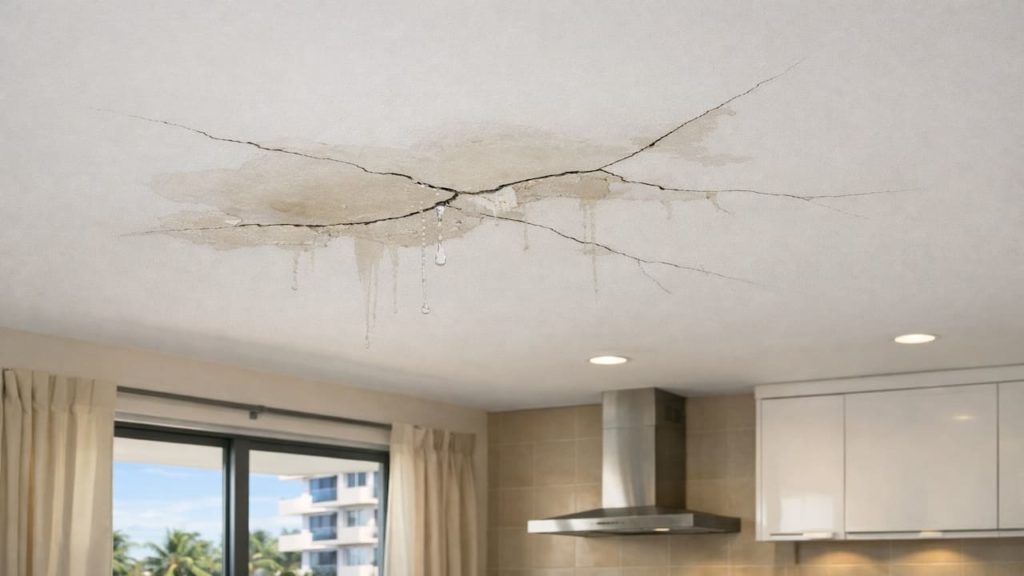
A roof leak with a ceiling crack is confusing, because the crack looks like “structure” while the stain looks like “water,” and Malaysia humidity makes both spread fast.
Cracks can come from normal movement, poor patch work, or moisture swelling, and water can use the crack line as a path even when the roof entry is elsewhere.
In this guide, you’ll learn how to read ceiling cracks for leak clues so you can trace water movement, protect wiring, and plan repairs for terrace houses and condo units.

Hi, I’m Ken. I write practical home guides for Malaysia—no fluff, just what works.
I hold a formal building design qualification and have spent about 20 years on job sites across hundreds of projects. My goal is simple: help you avoid costly mistakes with clear, safe steps—a quick way to decide what to do next.
1. Roof leak ceiling crack: 5 checks
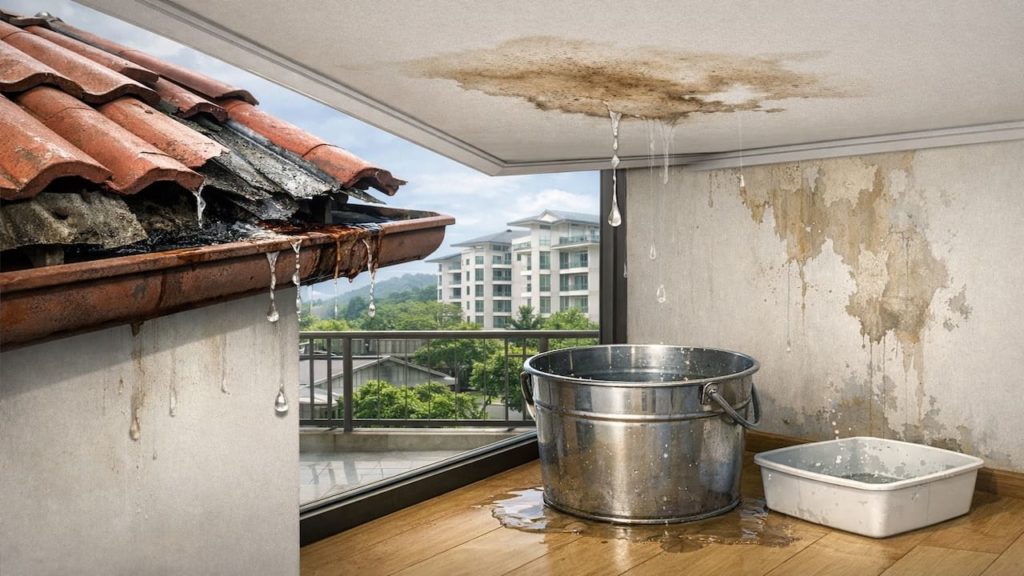
Cracks plus stains often point to a hidden travel path.
Water likes seams and weak lines, and a ceiling crack is a ready-made channel—especially after Malaysia wet season storms when the ceiling void stays damp.
Leak map.
- Mark crack ends and stain edges with dates
- Check if crack follows a straight joint line
- Press nearby ceiling and feel for softness
- Look for drip points along the crack line
- Smell for musty odor near crack corners
Some people assume the crack itself is the roof entry, so they patch the crack and feel done.
But cracks often show where water exits, so trace uphill and you find the real source.
2. Cracks show stress and water movement
Stress cracks widen when moisture swells the ceiling.
Gypsum and plaster absorb moisture, then expand and weaken, and Malaysia humidity keeps it soft, so a small crack can open wider after each storm.
Material response.
- Compare crack width before and after rain
- Check for powdery plaster falling from crack
- Look for paint blistering near crack edges
- Inspect cornice joint gaps near the crack end
- Check for sagging line along the crack
You might think a widening crack means the house is failing and panic spikes.
But moisture can exaggerate normal movement, so focus on drying and leak entry repair first, then reassess the crack when dry.
3. Why ceiling cracks and leaks pair up in Malaysia homes
Humidity turns small leaks into larger ceiling failures.
When drying is slow, water keeps moving inside the ceiling, and repeated damp cycles weaken tape joints and plaster repairs, so cracks reappear quickly.
Cycle damage.
- Note if drip continues after rain stops
- Check if aircond was running that day
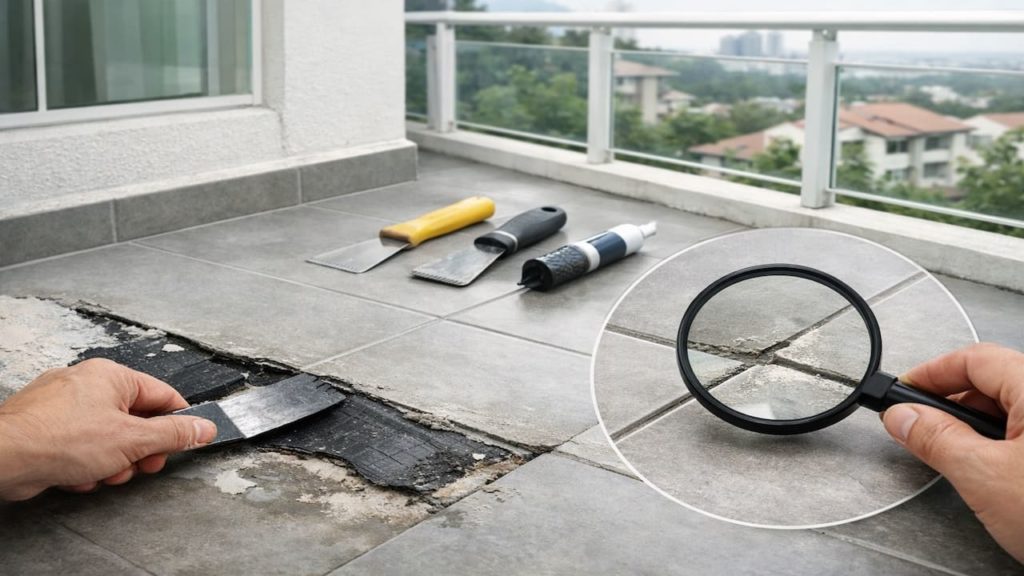
- Inspect roof joint and parapet zone above crack
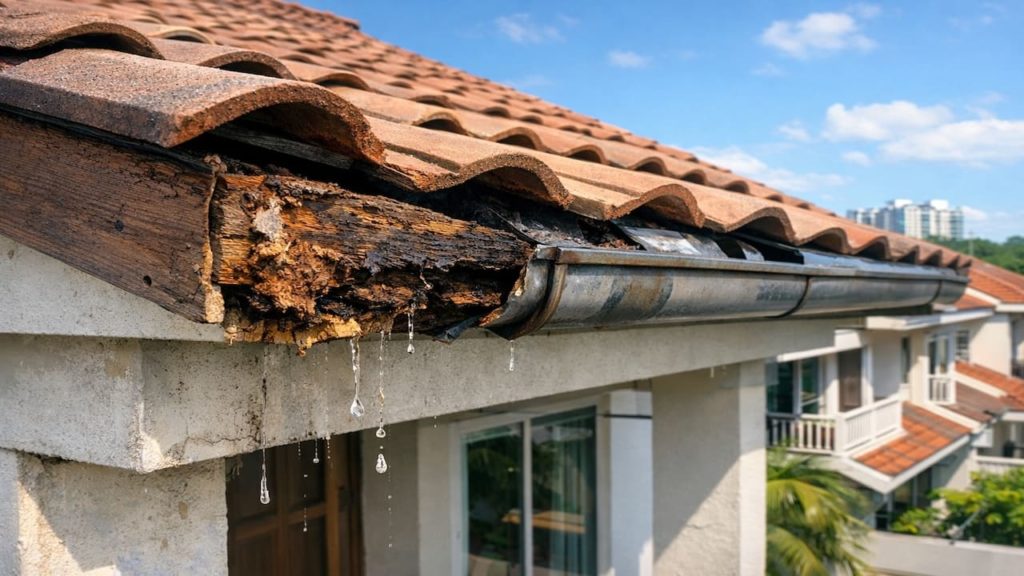
- Check gutter overflow streaks near the room edge
- Look for stain rings around light fittings nearby
People often blame only “bad plaster work” because cracks look like finishing problems.
Sometimes that is true, but water is a force multiplier, so fix the leak path or the crack repair will fail again.
4. How to confirm the leak source and avoid useless patching
Use timing and mapping before you repair the crack.
Shut off power near wet areas, then map the highest damp point and crack direction, because Malaysia wet season makes stains spread away from the entry.
Proof first.
- Turn off circuit near wet ceiling area
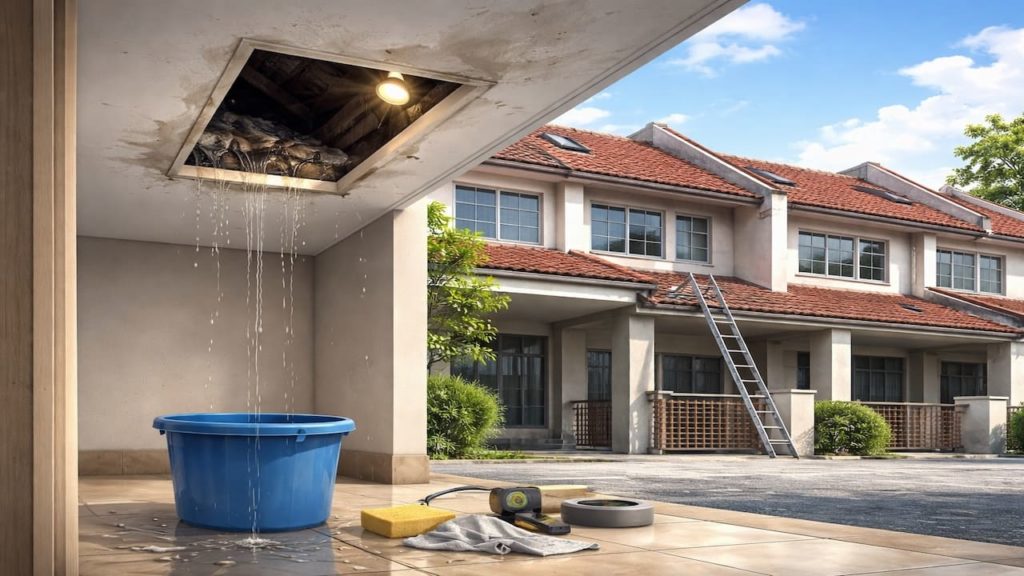
- Place bucket and plastic to control drips
- Photograph crack and stain from same angle
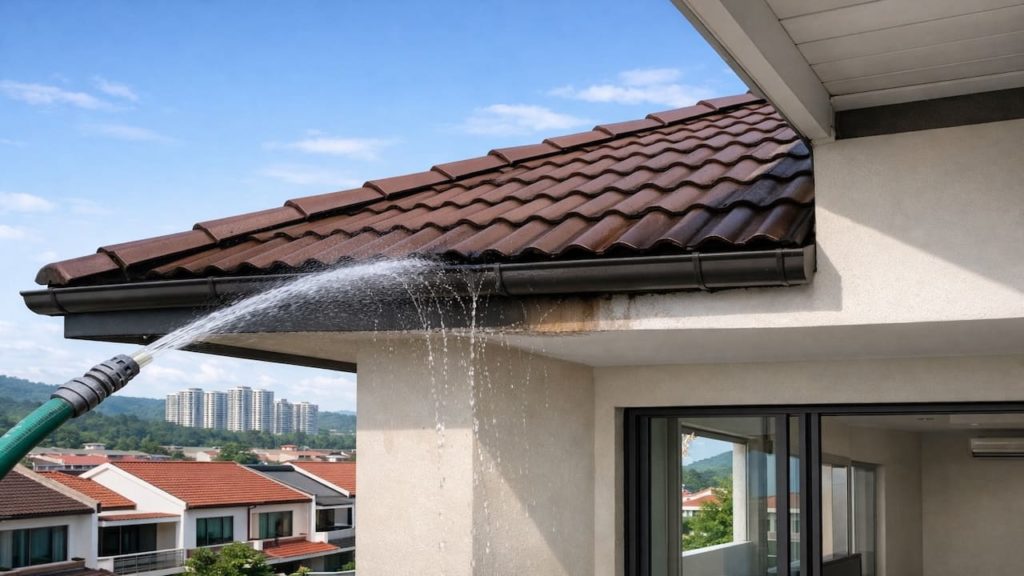
- Do one-zone hose test on suspected roof edge
- Dry ceiling with fan airflow for 48 hours
Some people want to scrape and repaint immediately because the crack looks ugly and feels urgent.
But patching wet plaster traps moisture, so dry first, fix entry point, then repair the ceiling once it stays dry.
5. FAQs
Q1. Is a ceiling crack always caused by a roof leak?
No, cracks can come from normal building movement, but water makes them worse and more visible. If cracks grow after rain, suspect moisture involvement.
Q2. What crack pattern suggests water travel?
Straight cracks along gypsum joints, cracks that connect to stains, and cracks with multiple drip points are common water-path clues in ceiling voids.
Q3. Can I seal the crack with silicone as a quick fix?
It can hide the symptom and trap moisture, which is risky in Malaysia humidity. It is better to find the entry point and dry the area first.
Q4. What should I do if the crack is near a light?
Turn off the circuit at the DB and keep it off until dry. Electric safety comes before crack repair when water may be reaching wiring.
Q5. When should I call a professional for ceiling cracks?
If the ceiling sags, feels soft, or the crack widens rapidly after storms, call a roofer and consider a ceiling contractor. Hidden damp can spread fast.
Pro’s Tough Talk

I’ve been on site for 20+ years and handled hundreds of jobs, and a ceiling crack with a leak in Malaysia is the classic “two problems that are really one.” The crack is the symptom, the water is the bully.
Cause 1 is water traveling along joints and beams, so it exits at the weakest line. Cause 2 is repeated damp cycles weakening plaster and tape joints. Cause 3 is people patching too early while it is still wet, so the repair fails again. Same loop.
Step 1, power off near the wet area and control the drip, because wet wiring is a trap. Step 2, map the crack direction and find the highest damp point, because stains lie. Step 3, fix the roof entry and dry for 48 hours, because patching wet plaster is like painting over a wet sponge. Fact.
Fix the water path first or the crack will come back. Don’t blame yourself, because everyone wants the ceiling to look normal again, and not every contractor is trash either, humidity just wrecks weak details. But the structure is cold: water moves like ants in walls, and a crack is like a zipper line that opens when it gets soaked.
And the “just skim coat and repaint bro” advice gets a side-eye, because that is how you trap moisture and grow mold. Relatable moment 1: you poke the ceiling and your finger comes back damp. Relatable moment 2: you repaint and the stain returns like it paid rent. Ignore the water, and your ceiling will keep rehearsing the same comeback.
Summary
Ceiling cracks with roof leaks often reveal stress lines and water travel paths, and Malaysia humidity makes cracks widen and stains spread after storms.
If cracks grow after rain, map the highest damp point, shut power near wet areas, and fix the roof entry before doing any ceiling patch work.
Document crack growth and dry the ceiling today then repair only after the leak stops, and next read the guides on water mark mapping and roof joint leaks.