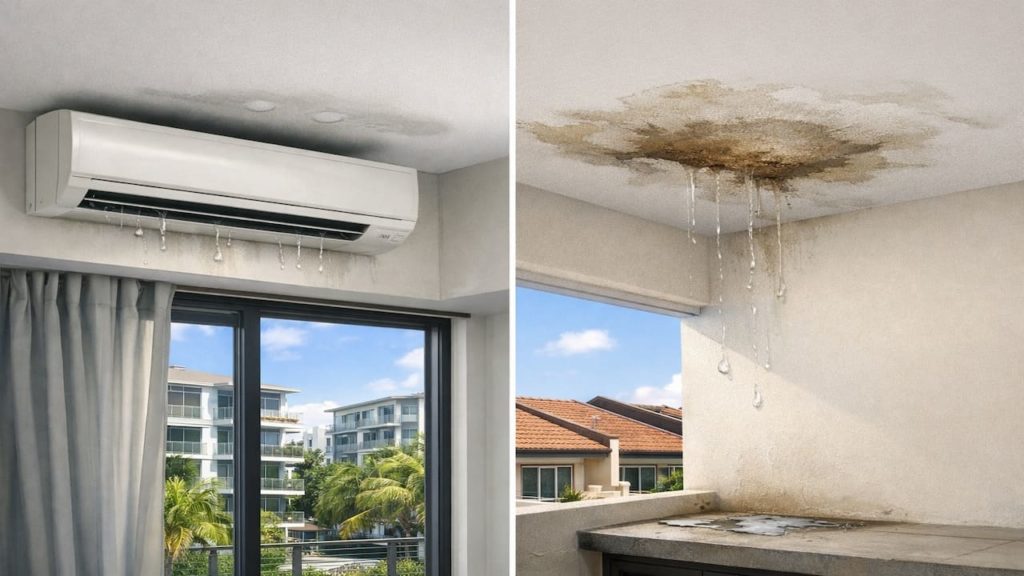
A roof leak in a condo top floor in Malaysia feels personal, because you paid for “the best view” and got a damp ceiling instead. Humid nights make stains grow fast.
It can come from slab cracks, failed waterproofing, ponding water, or parapet joints, and the drip may appear far from the real entry point. Concrete hides routes.
In this guide, you’ll learn how to isolate the leak source without wasting money on random sealing using checks that match tropical storms and hot roof slabs.

Hi, I’m Ken. I write practical home guides for Malaysia—no fluff, just what works.
I hold a formal building design qualification and have spent about 20 years on job sites across hundreds of projects. My goal is simple: help you avoid costly mistakes with clear, safe steps—a quick way to decide what to do next.
1. Roof leak in condo top floor: 5 checks
Top floor leaks usually start at water sitting on the slab.
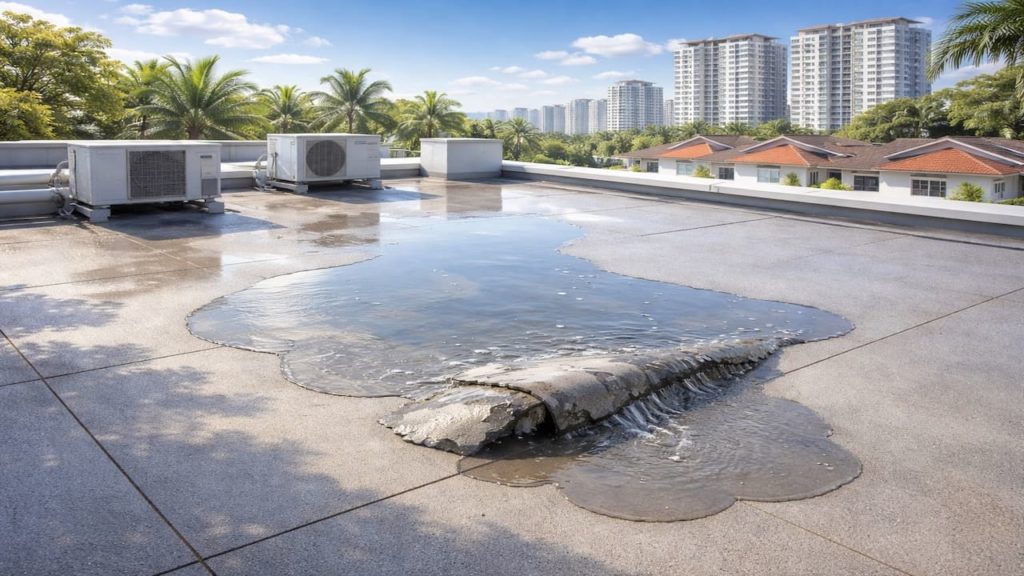
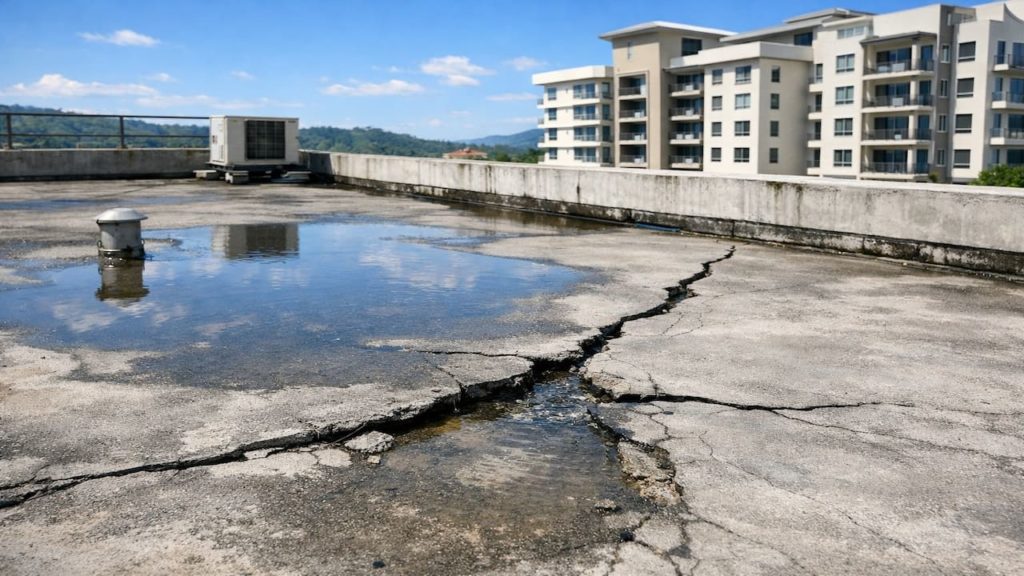
After heavy Malaysian rain, roof slabs can hold shallow puddles, then water finds tiny openings around drains and parapet edges—so the drip appears later, not during the storm.
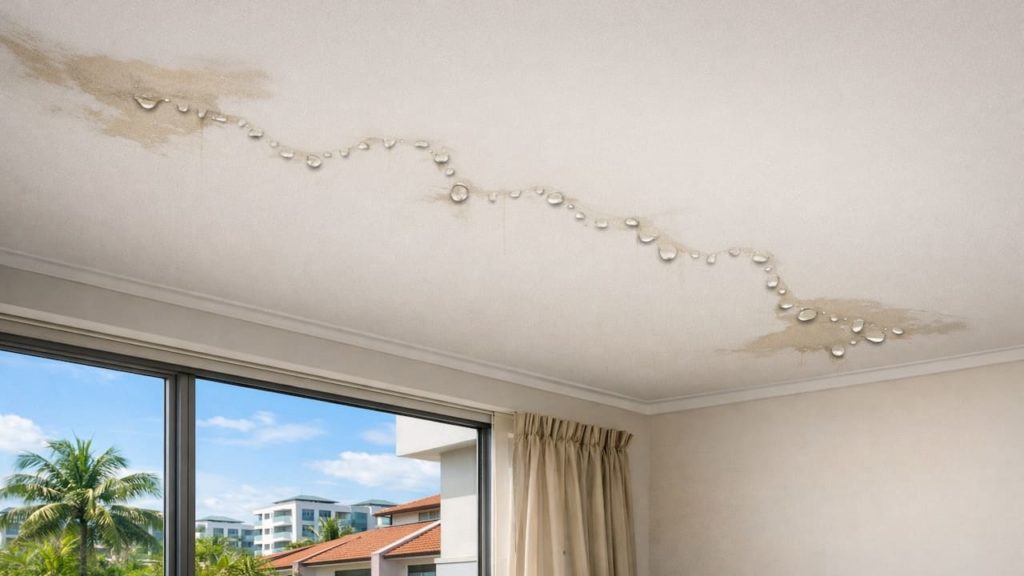
- Photograph ceiling stain and record rain start time
- Check roof slab for hairline cracks near drain
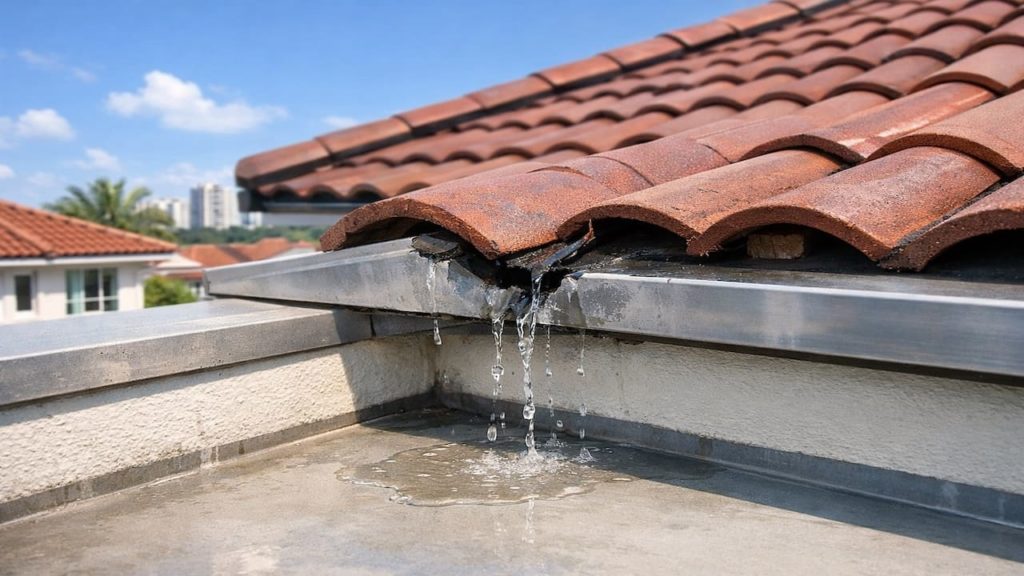
- Inspect parapet wall joint for open seal gaps
- Look for ponding water marks around low spots
- Check balcony door threshold for seep tracks
Some people assume the leak must be a burst pipe, because concrete feels “solid.” In top floors, rainwater on the slab is the usual trigger—confirm ponding first, then chase joints.
2. Roof slab cracks and ponding water
Ponding water turns tiny cracks into active leak paths.
When water sits on a hot slab, it seeps slowly into microcracks and cold joints—Malaysia heat expands concrete, then night cooling tightens it and keeps the crack working.
- Mark puddle edges with chalk after rain ends
- Check crack line direction toward ceiling stain area
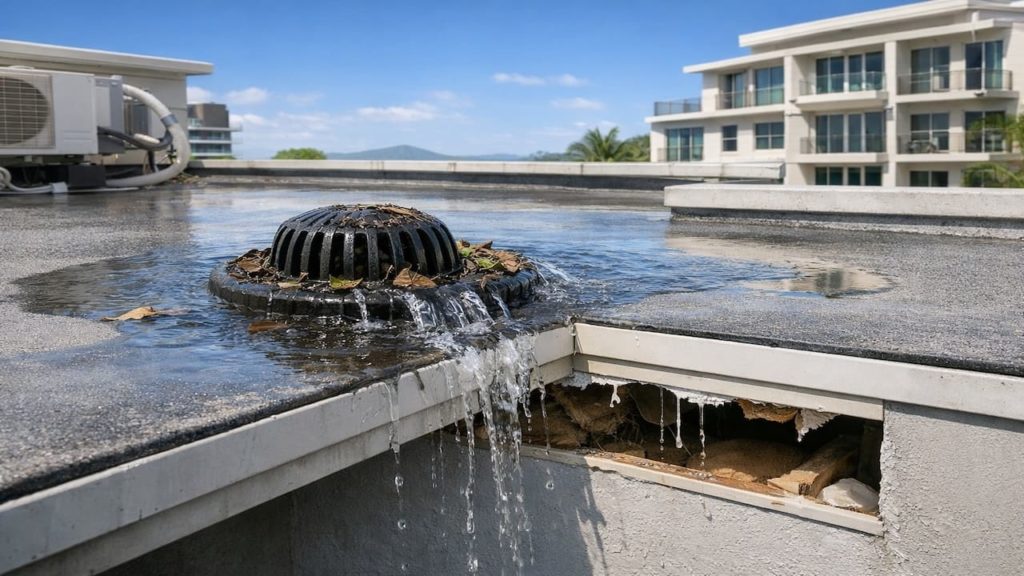
- Inspect drain collar for loose grout ring gaps
- Look for algae streaks showing long term ponding
- Test parapet corner with tissue for dampness
You might think “Just add more coating and it stops.” If water still ponds, it keeps pushing into edges and corners, so the leak returns—reduce ponding and treat the crack detail.
3. Why + Storm pressure finds slab joints and drain collars
Storm water exploits joints faster than wide open cracks.
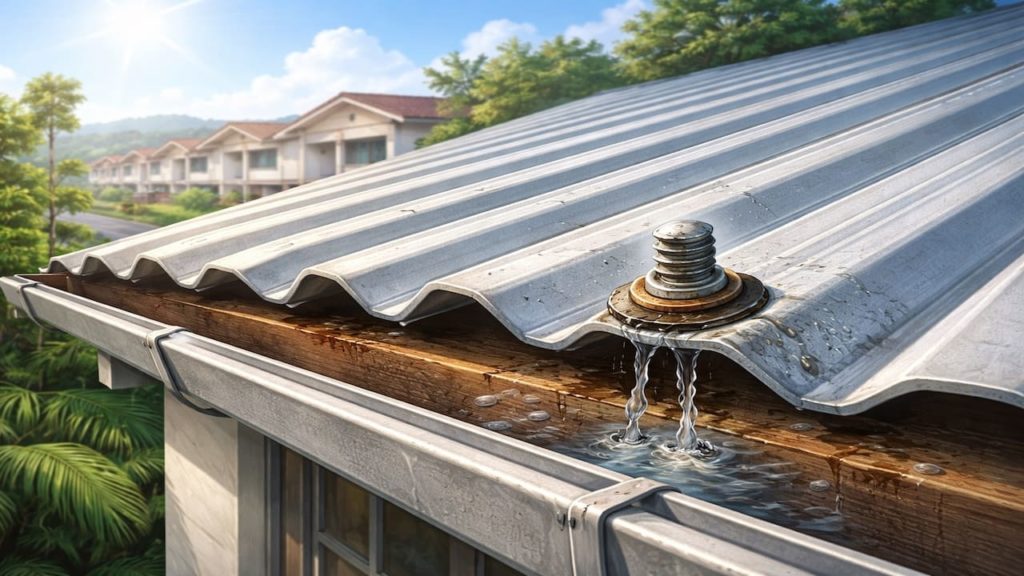
During Malaysian downpours, runoff volume spikes and water pressure builds at drains and movement joints—so weak collars, old sealant, and cold joints become the entry points.
- Inspect movement joint sealant for shrink and splits
- Check drain strainer area for debris blocking flow
- Look for water trails at slab to parapet joint
- Tap tiles and find hollow spots near drains
- Inspect planter box edges for overflow seep marks
Some say “Concrete cracks are normal, so ignore them.” In a wet tropical climate, normal cracks still leak when water sits and pressure rises—treat the joint like a system, not a cosmetic flaw.
4. How + Map ponding zones and patch the confirmed entry
Map water behavior on the roof before any repair.
Random patching fails in Malaysia humidity—trapped moisture grows mold inside ceilings, and the stain shifts to a new spot even after repainting, so testing must come first.
- Circle stain edge and recheck after 12 hours
- Open access panel and spot shiny drip trails
- Hose test one roof zone for ten minutes
- Clean joint surface and dry fully before sealing
- Patch drain collar with roof grade waterproof compound
People say “Seal everything at once to be safe.” That wastes money and hides the true path, because slab water travels sideways—confirm one entry point, fix it cleanly, then expand only if needed.
5. FAQs
Q1. Why does a top floor leak show up hours after rain?
Ponding water can sit on the roof slab and seep slowly into joints, then drip later through the ceiling void. Malaysia humidity slows drying, so the delay is common.
Q2. How do I know it is roof slab water, not plumbing?
Compare timing to rain events and check if it happens only after storms. If the stain grows after downpours and stops in dry weeks, suspect roof slab entry points.
Q3. Can hairline cracks really cause a visible ceiling stain?
Yes, because water sitting on a slab will find microcracks and cold joints over time. The stain can form far from the crack because water travels inside concrete routes.
Q4. What if the stain is near lights or a ceiling fan?
Cut power to that circuit and stop using the area until checked. Water near wiring is dangerous and humid air increases the risk fast.
Q5. Should I repaint the ceiling first or fix the roof first?
Fix the roof source first, then let the ceiling dry fully before repainting. If you paint early, the stain often bleeds back and you lose the true timing clues.
Pro’s Tough Talk

I’ve been on site for 20+ years and handled hundreds of roof and ceiling jobs, and top floor condo leaks in Malaysia are the same story with new wallpaper. Hot slab, wet season, unhappy owner.
It is usually 3 causes. Ponding water sits like a bathtub on the roof slab. Drain collars and joints fail like a zipper opening one tooth at a time. Old sealant at parapets shrinks and lets storm water sneak in.
Do 3 moves right now. Log the rain time and the first drip time. Check the roof slab for puddle marks and crack lines. Test one zone with a hose and watch the first wet line.
Stop chasing the stain and start chasing roof water behavior before you pay for random coating that fails again. You are not careless, and not every contractor is trash, but the structure is unforgiving.
Relatable moment one, you repaint and the stain returns like a boomerang. Relatable moment two, you seal one corner and it leaks next week two meters away. And the silicone cowboy who says “just smear more” gets my jab. Enjoy your midnight drip soundtrack if you ignore it.
Summary
Top floor condo leaks in Malaysia often come from ponding water, slab joints, drain collars, and parapet seals, not from the ceiling stain itself. Concrete hides the path.
Map puddle zones, compare drip timing to storms, and isolate one test area before sealing anything. If ponding persists, address drainage and low spots first.
Log the next storm then test one roof zone in daylight and continue with our guides on parapet leaks, balcony threshold seepage, and ceiling mold control for wet season homes.