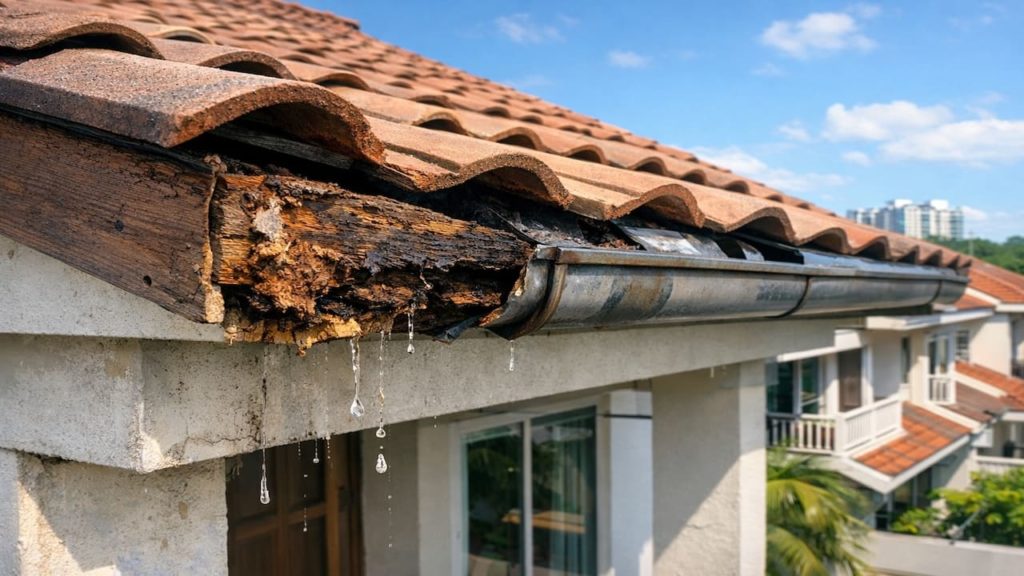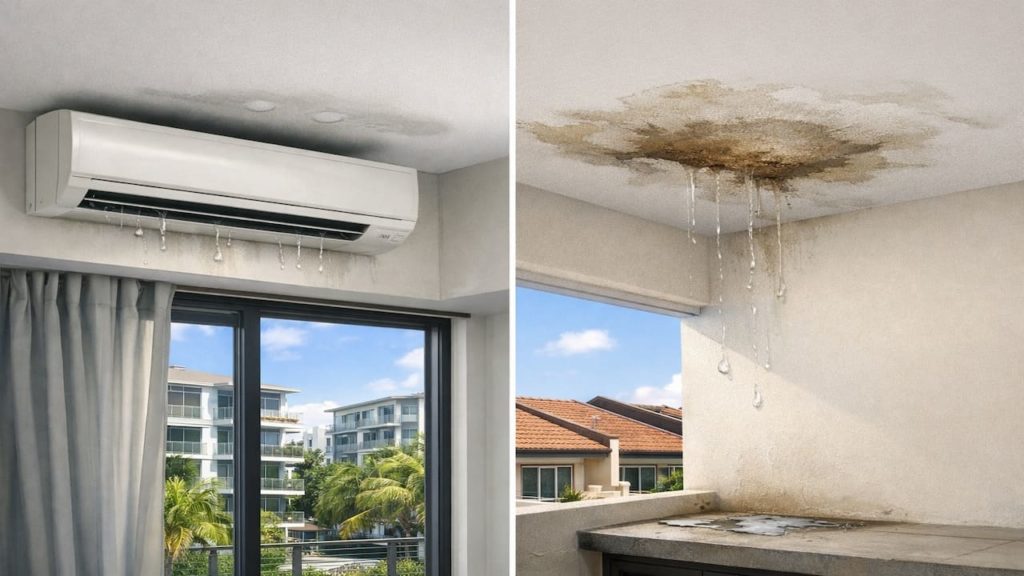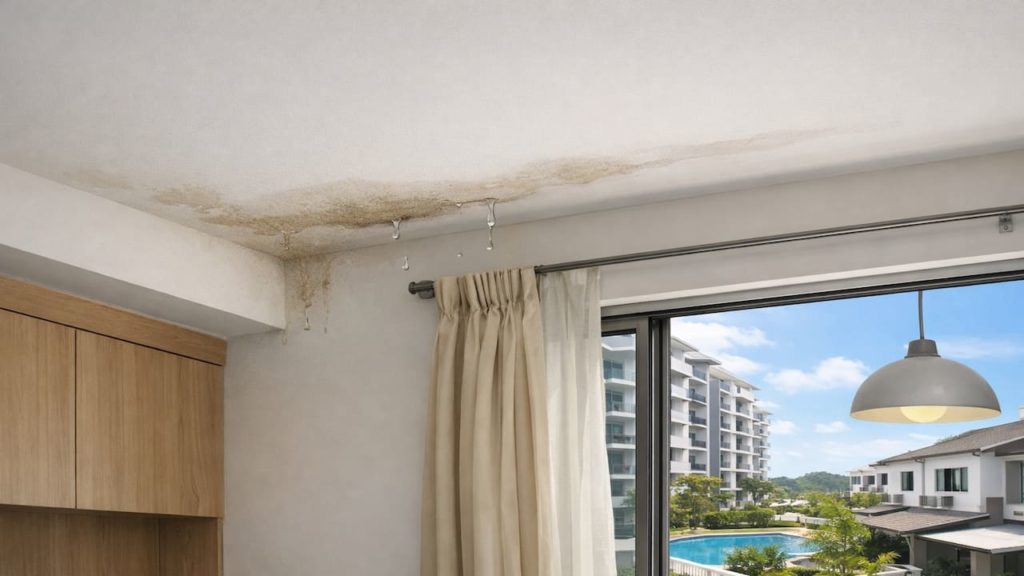
A roof leak that ends up dripping down a wall in Malaysia feels wrong, because you expect water to fall straight down, not travel and show up beside a window frame. Brutal.
After heavy rain, water can run inside ceiling voids, along rafters, and down hidden cavities, especially in terrace houses with long roof spans and warm humid air. Misleading path.
In this guide, you’ll learn how to find the entry point behind a wet wall by spotting travel signs and confirming them safely in wet season conditions.

Hi, I’m Ken. I write practical home guides for Malaysia—no fluff, just what works.
I hold a formal building design qualification and have spent about 20 years on job sites across hundreds of projects. My goal is simple: help you avoid costly mistakes with clear, safe steps—a quick way to decide what to do next.
1. Roof leak dripping wall: 5 signs
Wall drips mean water is moving inside the ceiling.
In Malaysia storms, moisture can ride the underside of tiles and underlay—then follow timber lines until it meets a wall junction and drops down the plaster. That is why the wall looks like the problem. Not always.
- Trace damp line upward along wall corner
- Check ceiling cornice for fresh drip beads
- Look for paint bubbles near wall top
- Feel gypsum for soft spots above stain
- Smell musty odor after rainy humid nights
Some people assume the wall is leaking from outside, because the drip is vertical. The ceiling void can deliver water to the wall first, so start at the highest wet sign and work back. Simple.
2. Water travels far inside ceilings
Travel distance can be several meters in boxed ceilings.
Warm humid air slows drying in Malaysia, so water keeps creeping along dust and insulation—then it finally finds a low point near a wall plate or beam. Slow motion.
- Follow stain trail along joist shadow direction
- Check access panel for wet timber streak
- Inspect wiring tray for water drip marks
- Look for rusted nail heads near wall line
- Check insulation for damp patch near edge
You may think the darkest stain marks the hole, because it looks dramatic. The first damp line near the wall top is often more truthful, so treat that as your compass. Clear.
3. Why + Roof junctions feed wall drips after storms
Most wall drips start at junction details not tiles.
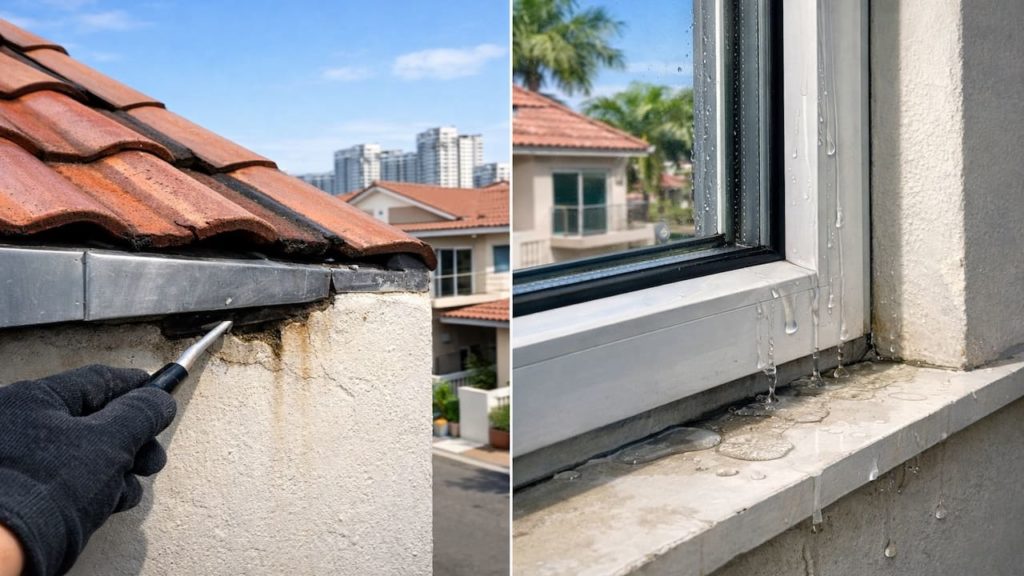
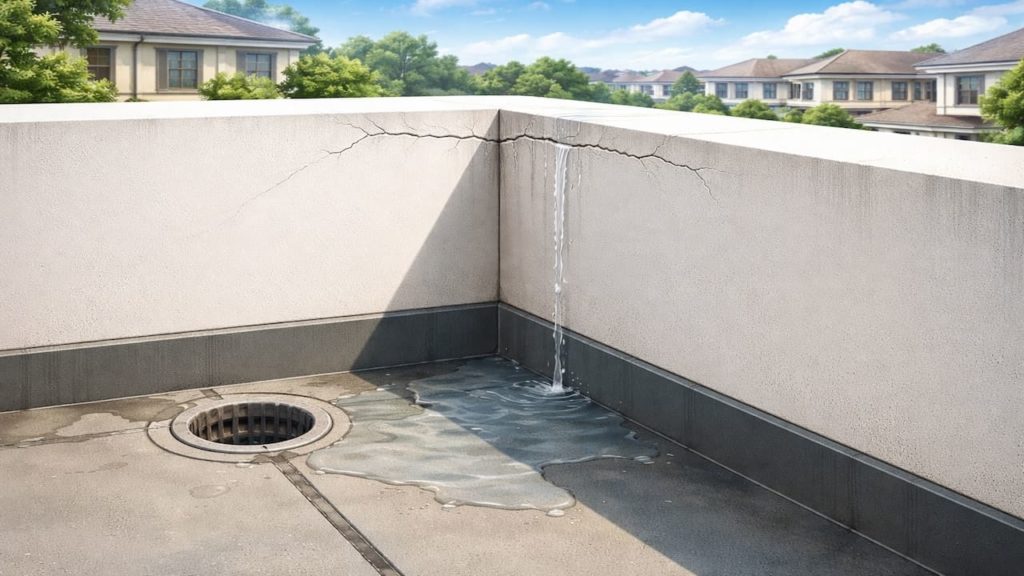
Roof to wall junctions, parapet caps, and flashing corners take the hardest hit in Malaysia wet season—wind driven rain pushes water sideways into tiny gaps and it runs inside. Junction problem.
- Inspect parapet cap joint for hairline cracks
- Check flashing corner for split seal bead
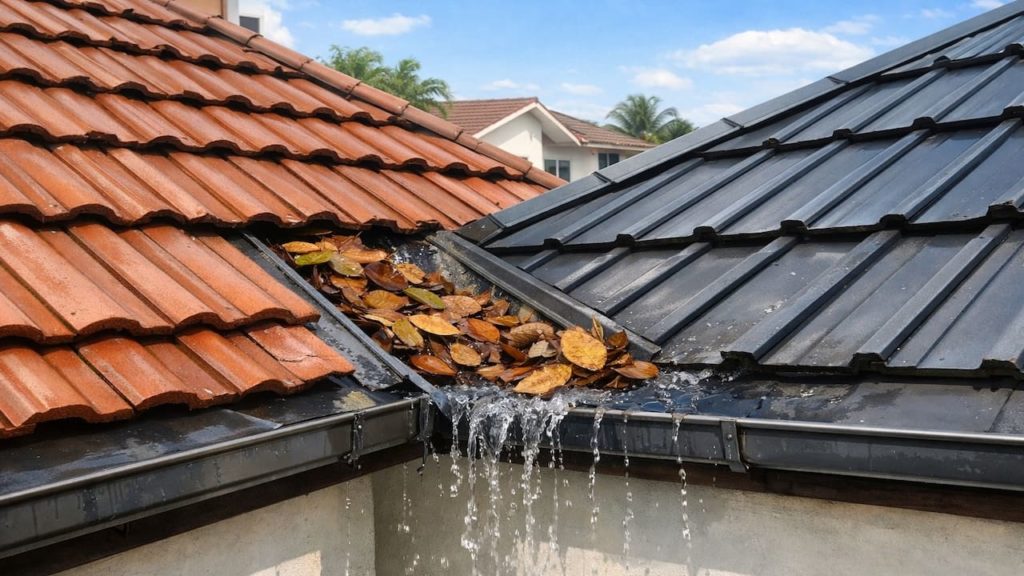
- Look at valley end for debris dam
- Check gutter overflow marks under eave edge
- Inspect ridge lap for lifted edge line
Some blame the last repair instantly, and sometimes a rushed seal bead is real. But heat and UV age joints fast here, so even decent work can fail with time. Find the weak detail and fix it once. Fair.
4. How + Confirm the path and stop wall staining
Map the wet line then test one exterior zone.
Random patching fails in Malaysia humidity—trapped moisture feeds mold and the drip shifts to a new wall spot, even if the old stain is repainted. Controlled tests win.
- Circle stain edge and write date time
- Dry wall surface then watch for new wet
- Inspect ceiling void for shiny droplet trails
- Angle spray one junction zone for ten minutes
- Seal confirmed joint with roof grade compound
People say “Just coat the whole roof and relax,” because it feels decisive. If the entry is a flashing corner or parapet joint, coating wastes money and the wall still stains. Confirm first, seal one joint, then stop. Done.
5. FAQs
Q1. Why does water drip down a wall after rain?
Water can enter at a roof junction and travel inside the ceiling void until it meets a wall plate, then it runs down plaster. In Malaysia humidity, that travel lasts longer.
Q2. Can a roof leak show far from the entry point?
Yes, boxed ceilings let water follow rafters, wiring, and insulation for meters before it drops. Track the highest wet sign instead of the biggest stain.
Q3. What is the fastest way to find the path?
Mark the stain edge, note the rain time, then check the ceiling void for shiny trails and wet nails near the wall line. Timing plus trails beats guessing.
Q4. What if the wet area is near a socket?
Cut power to that circuit and avoid using the area until checked. Water near wiring is dangerous in humid homes and can escalate quickly.
Q5. When should I call a professional?
If the ceiling is soft, bulging, or dripping heavily, call help fast. If access is unsafe after rain, do not climb and risk a fall.
Pro’s Tough Talk

I’ve been on site for 20+ years and handled hundreds of roof and ceiling jobs, and a wall drip after rain is the one that makes people feel haunted. In Malaysia wet season it is just physics.
Cause is usually 3 things. Junction gaps at parapets or flashings let wind driven rain slip in. Valleys and gutters overflow and push water under edges. Heat and UV age sealant and washers until tiny paths open.
Two relatable moments. You put a bucket under the wall drip and it starts dripping 20 cm away like it has a passport. You wipe the stain clean and it blooms back the next morning like a stubborn bruise.
Chase the first wet line not the darkest stain with 3 steps. Mark the edge and record rain time. Check the ceiling void for shiny trails and wet nails. Spray test one junction zone only in daylight.
Do not blame yourself, and do not call every contractor a villain, but the structure is cold: water travels sideways and your money disappears if you guess. The silicone cowboy gets my jab. Keep ignoring it and enjoy your midnight bucket hobby.
Summary
Wall drips after rain in Malaysia usually mean water entered at a roof junction and traveled inside the ceiling void before dropping. The wall is the exit point.
Map the wet line, check for shiny trails above the wall, and isolate tests on parapet caps, flashings, valleys, and overflow paths. Treat electrical proximity as urgent.
Mark the stain tonight then test one junction zone tomorrow and continue with our guides on valley leaks, gutter overflow, and ceiling mold control for wet season homes.