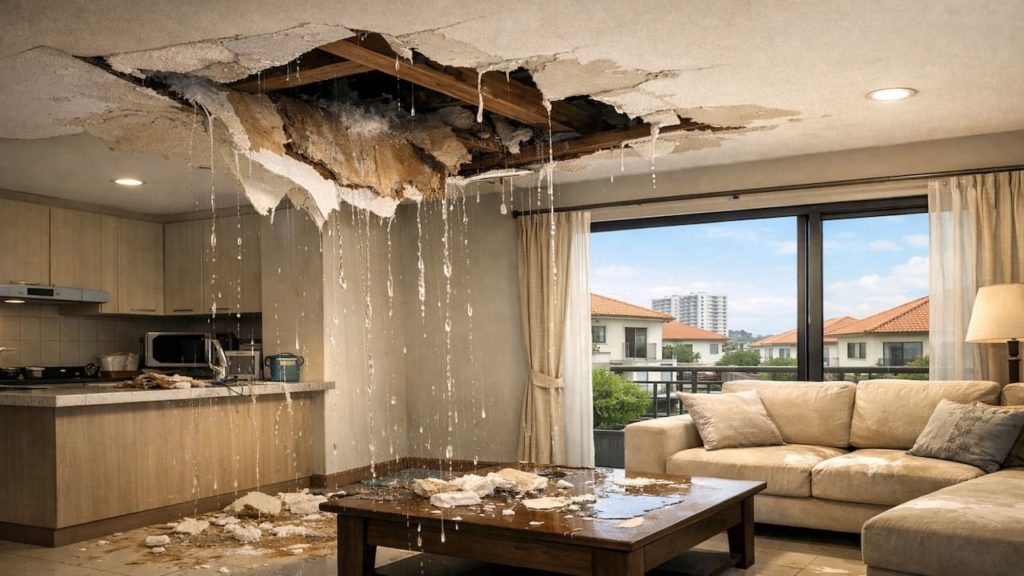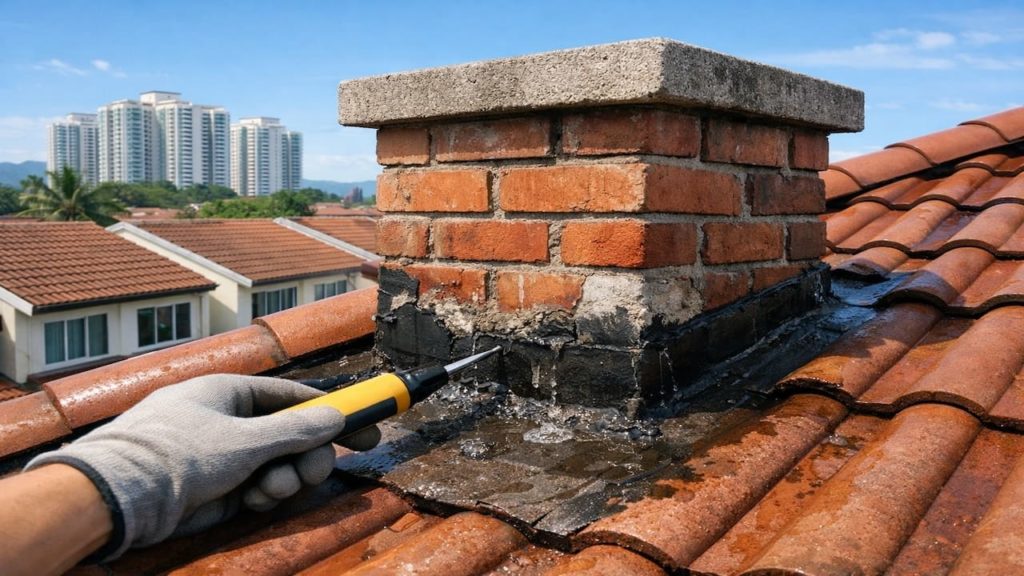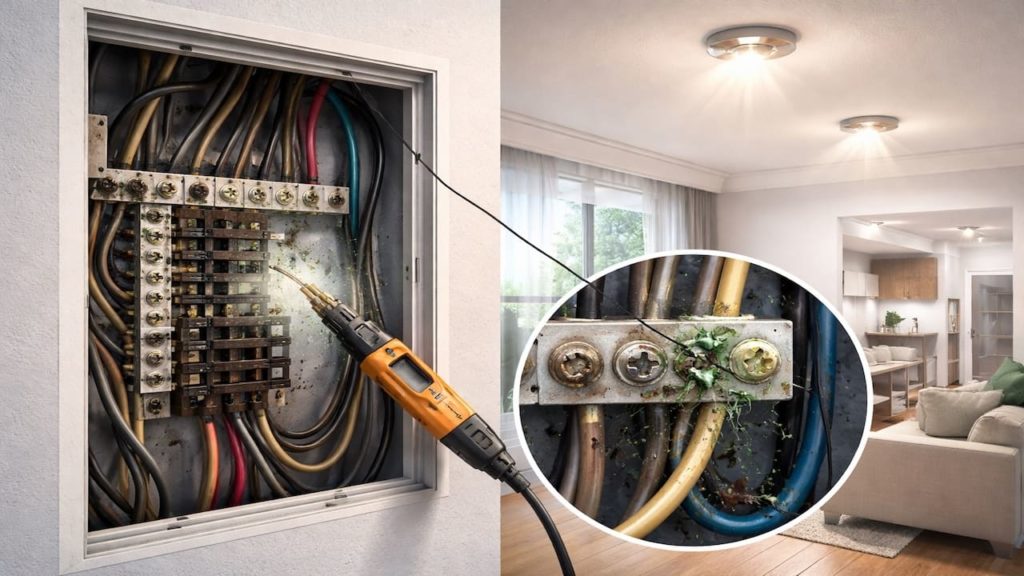
A roof leak after a long dry spell feels unfair, because everything looked fine until the first loud rain hit your ceiling in Malaysia.
Heat, UV, and humid air slowly harden sealants, then sudden downpours test every joint, flashing edge, and hairline crack without warning.
In this guide, you’ll learn why first rain finds weak roof spots fast and how to confirm the source, protect the ceiling, and plan repairs for terrace houses and condo top floors.

Hi, I’m Ken. I write practical home guides for Malaysia—no fluff, just what works.
I hold a formal building design qualification and have spent about 20 years on job sites across hundreds of projects. My goal is simple: help you avoid costly mistakes with clear, safe steps—a quick way to decide what to do next.
1. Roof leak after long dry spell: 5 reasons
Dry weather makes old seals shrink and crack.
Malaysia sun bakes sealant, mortar, and paint until they lose elasticity—then the first rain pushes water sideways under edges and laps.
A common pattern.
- Inspect roof ridge caps and mortar joints
- Check flashing around pipes and aircond lines
- Clear gutter outlets and downpipes before storms
- Test sealant beads with gentle finger pressure
- Photograph ceiling stains and map drip timing
Some people blame “bad luck” after a long dry spell, because rain feels random and the drip appears far from the roofline.
But water follows paths, and the first storm after heat is a stress test—so treat it as a clear signal and chase the real entry point.
2. First rain exposes brittle seals
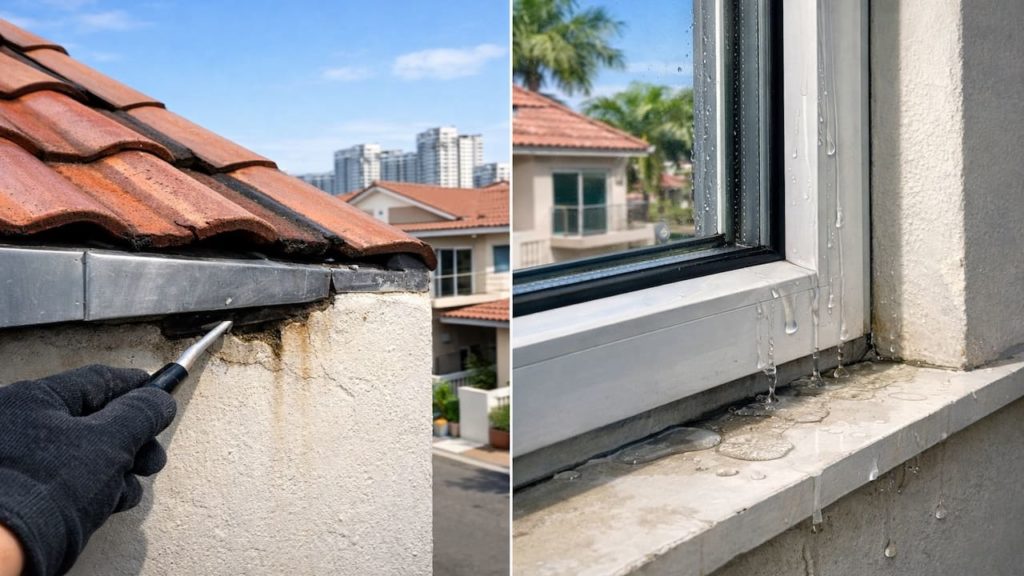
First rain reveals brittle joints around roof edges.
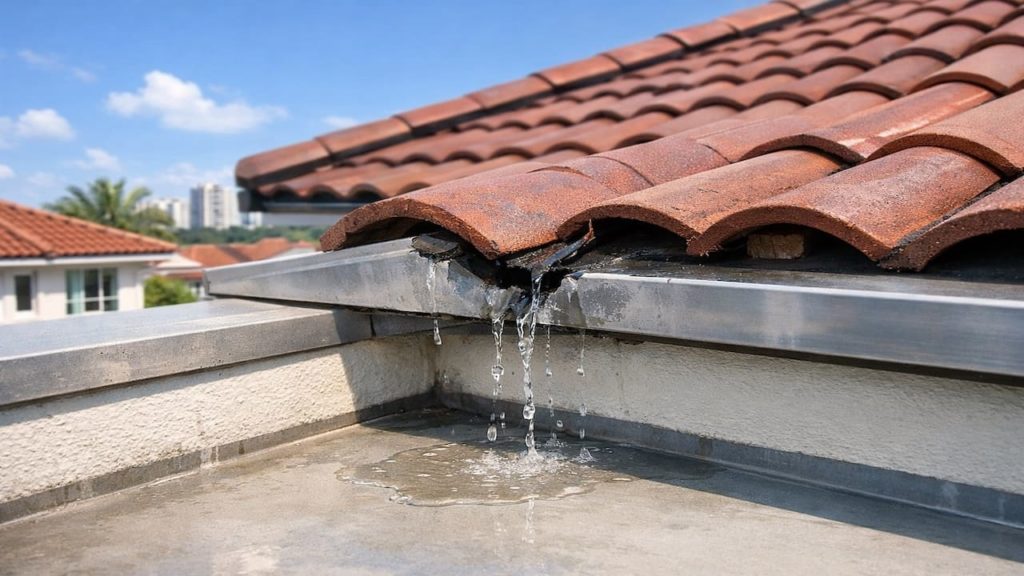
After weeks of hot days, brittle sealant stops bonding, especially near fascia boards, parapet walls, and awning ties on terrace houses.
Simple physics.
- Run hose along eaves for 10 minutes
- Watch soffit corners for fresh moisture trails
- Press drip edge gently and feel movement
- Check parapet cap cracks and loose cement skim
- Look for wet lines near ceiling cornice
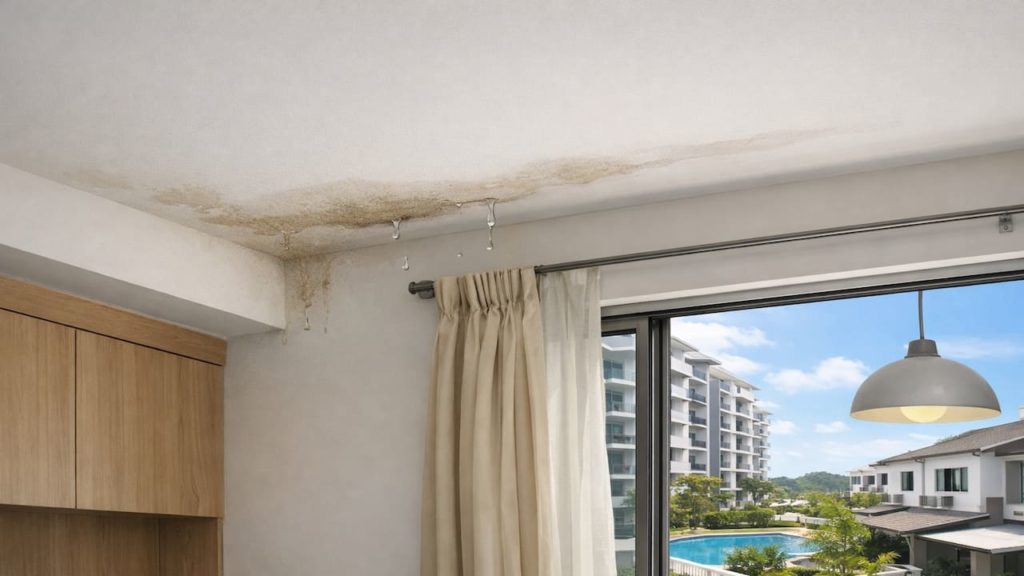
You might think the leak must be “from the middle” because the stain shows near a light point or fan hook inside the room.
But ceiling cavities spread water, and wind-driven rain sneaks under edges, so verify edge joints first and stop guessing.
3. Why first-rain leaks happen in Malaysia homes
Heat plus sudden rain creates micro gaps everywhere.
Malaysia roofs face hot afternoons, humid nights, and abrupt wet-season bursts that slam materials from dry expansion to soaked contraction in minutes.
That swing matters.
- Compare tile alignment along ridges and valleys
- Inspect silicone around skylight frames and vents
- Check seal around solar or antenna brackets
- Look for hairline cracks in flat roof screed
- Verify overflow marks near gutter back lip
People say “it only leaks once, so it’s fine,” and that sounds comforting when the stain dries the next day.
But one leak means one entry point still exists, and the next storm will widen it, so treat the first drip as the earliest warning.
4. How to confirm the source and stop damage
Find the entry point before you pay for repairs.
Start with safety, then trace water like a map, because Malaysia humidity keeps materials damp and hides the path for days after rain.
No drama.
- Turn off affected circuit at the breaker
- Mark stain edge with pencil and date
- Place bucket and protect floor with plastic sheet
- Test roof zones with controlled hose spray
- Call roofer with photos and drip timeline
Some will tell you to reseal “everything” at once, because it feels faster and looks like a clean solution.
But blanket sealing often traps moisture and misses flashing details, so confirm the zone, fix the correct joint, and keep the repair targeted.
5. FAQs
Q1. Can a roof leak appear days after the first rain?
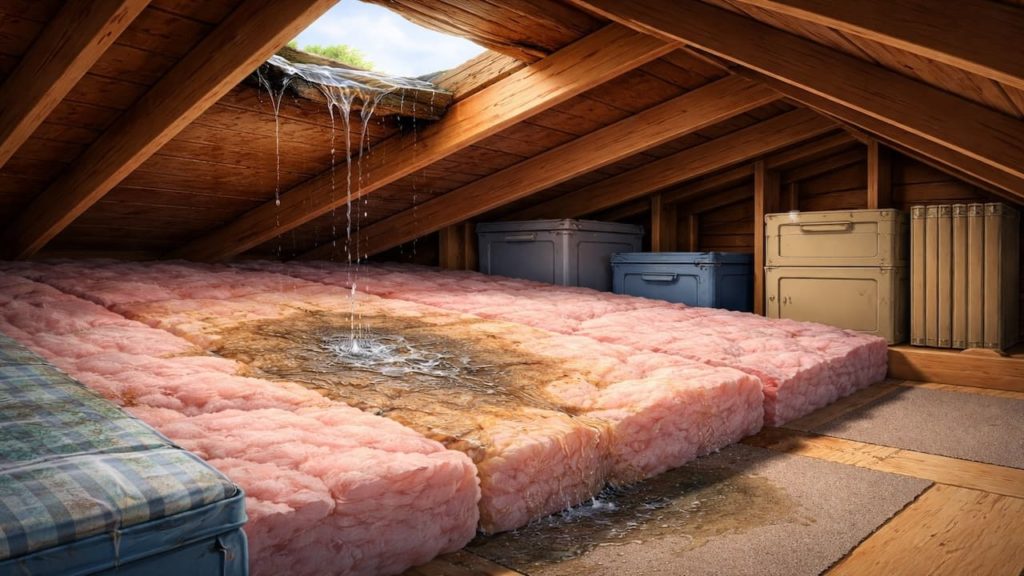
Yes, especially in Malaysia where humid air slows drying inside the ceiling void. Water can sit on insulation or concrete, then drip later when it shifts.
Q2. Why does the stain show far from the real entry point?
Ceilings act like a shallow tray, so water travels along beams, conduits, and gypsum seams. Track the highest wet point first, not the darkest stain.
Q3. Should I use a generic waterproof spray from the hardware store?
Only as a short stopgap, and only on the confirmed area, because the wrong coating can peel fast in tropical heat. Temporary sealing is not a real fix if flashing is loose.
Q4. Is this more common in terrace houses or condos?
Both, but the failure points differ, with terrace houses leaking at gutters and awning ties, while condo top floors leak at slab cracks and parapet caps.
Q5. When is it urgent to call a professional?
If water is near lights, fans, or the DB, act the same day and keep the circuit off. If the ceiling sags or smells musty, stop waiting.
Pro’s Tough Talk

I’ve been on site for 20+ years and handled hundreds of jobs, and first-rain leaks after a dry spell are classic Malaysia nonsense.
You hear one drip at 2 a.m., then you stare at the ceiling like it owes you money. Relatable.
Cause 1 is sealant that turned into crunchy plastic from heat.
Cause 2 is flashing that got lifted or disturbed by “small” works like aircond piping.
Cause 3 is gutters and edges that overflow in the first heavy burst, because debris sat there all dry season. Three hits.
Step 1, kill power to that room and move valuables, because wet wiring is a snake in tall grass.
Step 2, mark the stain edge and time the drip, because guessing wastes days.
Step 3, do a controlled hose test in zones, because you need proof, not vibes. That’s the game.
Fix the joint not the stain.
Don’t beat yourself up, because anyone can get fooled by a ceiling that hides the path, and not every contractor is a villain either.
But the structure is cold: heat hardens, rain drives, cavities spread, and your bill grows if you delay. Two metaphors for you, like duct tape on a dam and lipstick on a cracked wall.
And yeah, the “just add more silicone, bro” guy deserves a little side-eye, because that shortcut dies fast in tropical sun.
If you ignore the first drip, the next storm will clap your ceiling again, and you’ll pretend you didn’t hear it. Go on, be brave.
Summary
After a long dry spell, the first rain often exposes seals, flashing, and roof edges that hardened under Malaysia heat, even if the leak looks “new.”
If the stain grows, repeats in the next storm, or appears near electrical points, treat it as a real entry point problem, not a cosmetic ceiling issue.
Do the safe power off plus zone test today and then pick the right repair, and if you want to keep reading, check the guides on gutter overflow and vent-pipe leaks next.