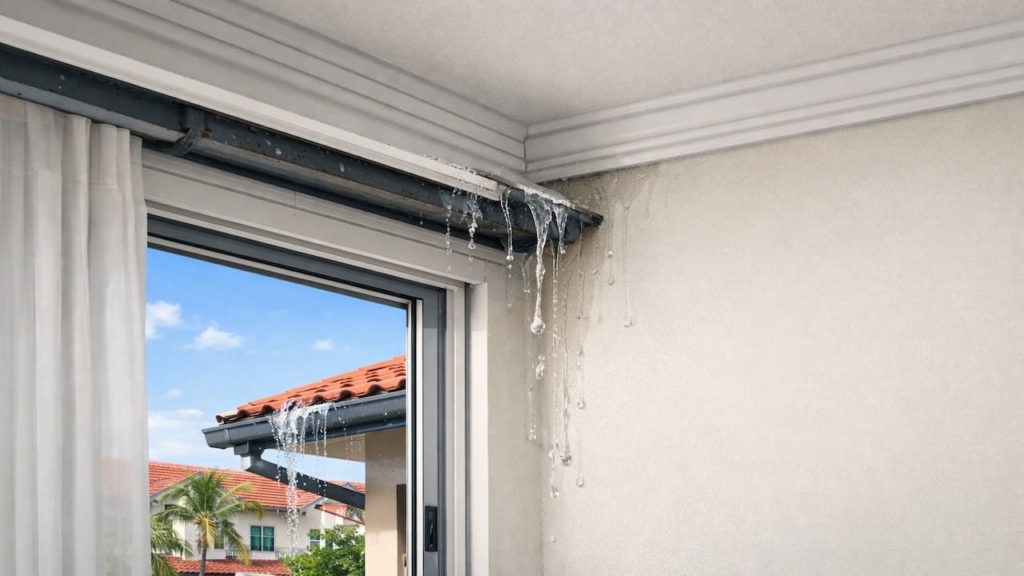
A leak that looks like a roof problem can actually start at the gutter edge in Malaysia, because overflow water splashes into places it never reaches in normal rain. Wet season trick.
When gutters clog or slope is wrong, water runs behind the gutter, wets the fascia and soffit, then travels inside the ceiling and shows up as an indoor drip. Misleading.
In this guide, you’ll learn how to confirm gutter edge overflow as the real source with quick checks that fit terrace houses and condo roofs in heavy tropical downpours.

Hi, I’m Ken. I write practical home guides for Malaysia—no fluff, just what works.
I hold a formal building design qualification and have spent about 20 years on job sites across hundreds of projects. My goal is simple: help you avoid costly mistakes with clear, safe steps—a quick way to decide what to do next.
1. Roof leak from gutter edge: 5 checks
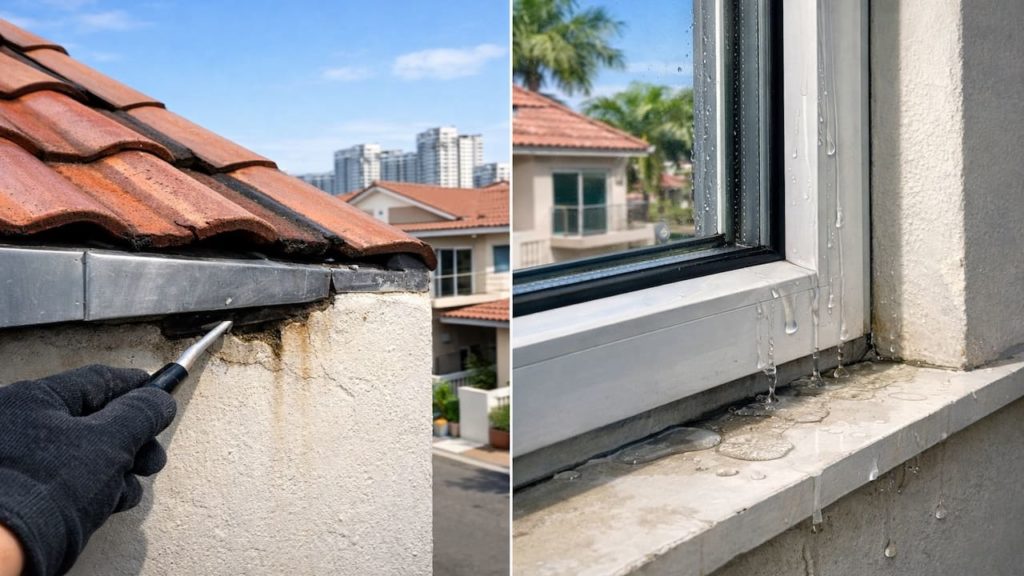
Overflow leaves clear marks along the eave line.
Malaysia storms dump water fast—if the gutter cannot carry it, water jumps the lip, runs behind the gutter, and enters the soffit return, then drips indoors later. Travel happens.
- Look for water stains under gutter outer lip
- Check fascia board for dark wet streaks
- Inspect soffit joints for damp line and sag
- Check downpipe inlet for debris and slow flow
- Inspect gutter seams for seep after heavy rain
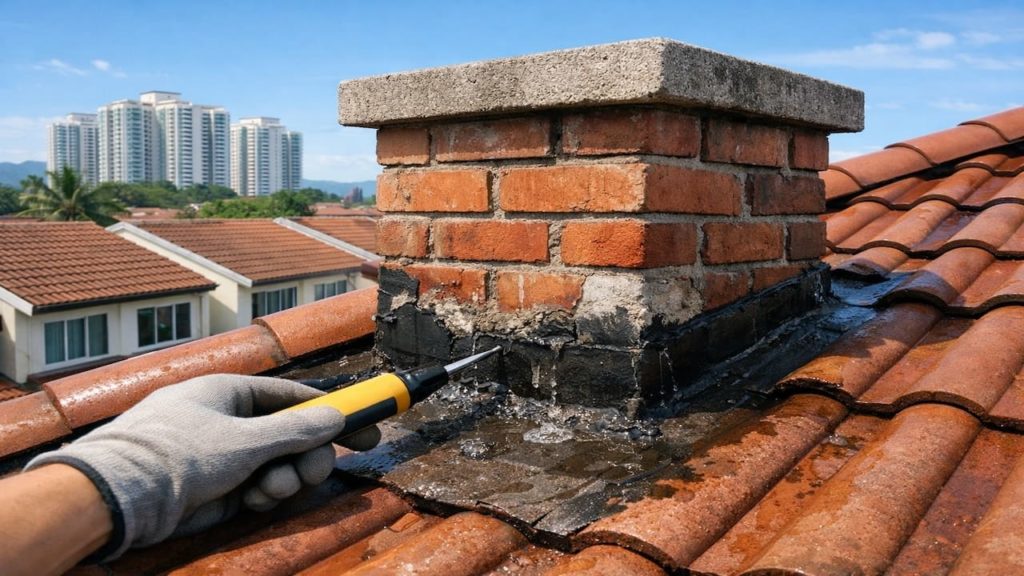
Some people assume a roof leak must come from tiles or metal laps, because the drip is inside. Gutter edge overflow can feed the ceiling void first, so verify eave marks before touching the roof surface. Smart.
2. Overflow mimics a roof leak indoors
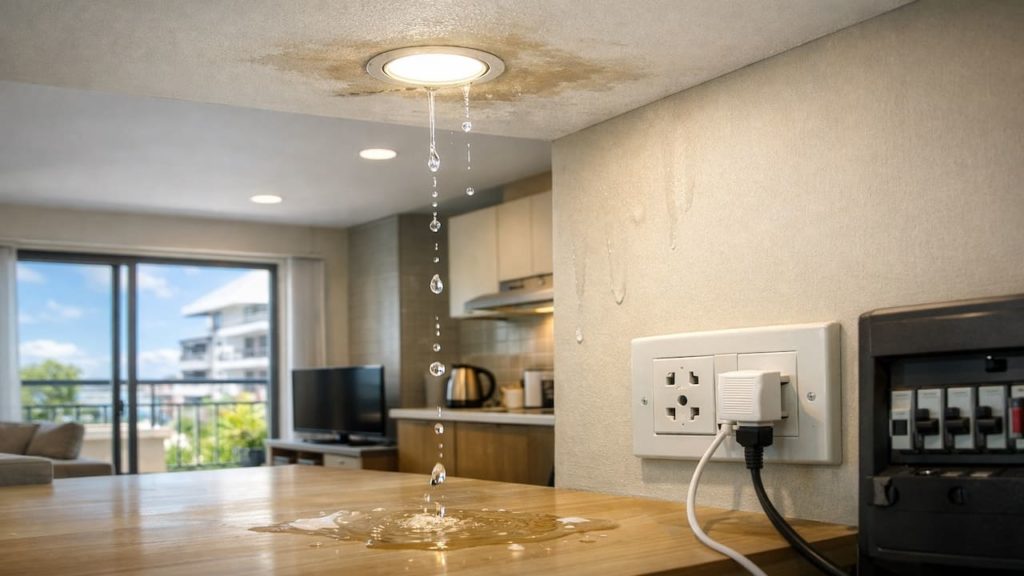
Indoor drips can be overflow water running behind the gutter.
In Malaysia humidity, damp fascia and soffits stay wet longer, so the drip may continue after rain ends, making it look like a hidden roof hole. Same symptom, different cause.
- Check paint bubbling under eaves near the drip
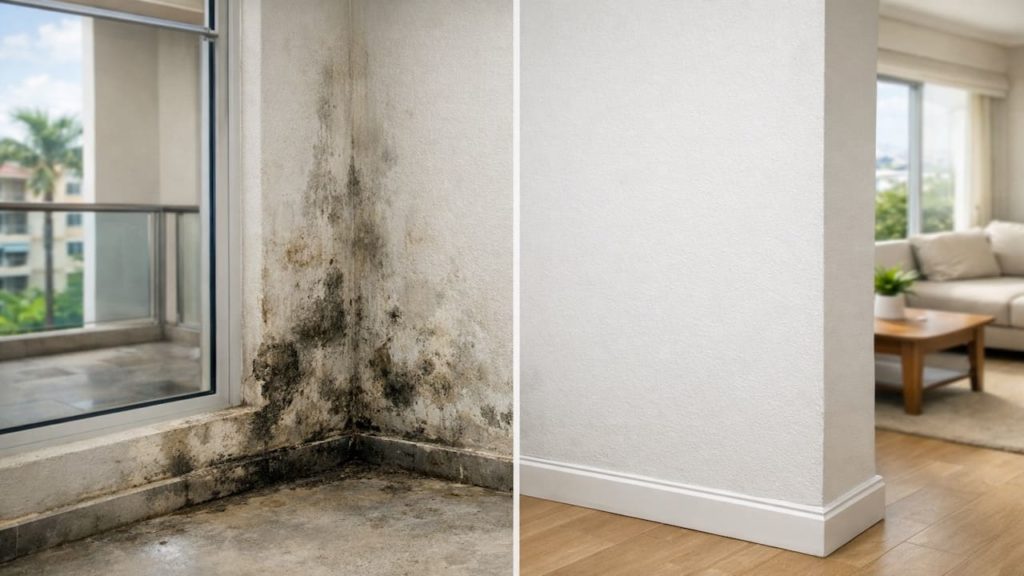
- Look for mold specks at soffit vent slots
- Inspect ceiling edge stain near exterior wall line
- Check gutter back edge for lift and gaps
- Look for splash marks on wall just below gutter
You might think “I cleaned the gutter once, so it cannot be that.” One storm can wash grit and leaves into the outlet again, so confirm flow at the downpipe during heavy rain. Reality.
3. Why + Overflow starts from clogs and wrong gutter fall
Small blockages create big overflow during downpours.
Malaysia rain intensity overwhelms even small restrictions—leaf paste, roof sand, and moss can slow the outlet, then water stacks up and spills into soffits and behind the gutter. Predictable.
- Check gutter fall with water pour test
- Inspect outlet mouth for leaf paste and grit
- Look for standing water line inside gutter
- Check hanger brackets for sagging low spots
- Inspect roof edge drip line for misalignment
Some blame the contractor instantly, and sometimes the fall is wrong from day one. But even a good gutter fails if the outlet clogs in wet season, so treat maintenance and alignment as a system. Cold truth.
4. How + Stop overflow and confirm the leak disappears
Restore flow first then recheck indoor drips after storms.
Random roof sealing fails in Malaysia humidity—if overflow is the real cause, you waste money while the drip continues. Fix drainage, then watch the indoor timing. Control.
- Flush gutter and downpipe with bucket water
- Clear outlet mouth and remove leaf paste
- Re-seat gutter back edge against fascia line
- Seal leaking gutter seam on clean dry surface
- Run hose test and watch for behind-gutter flow
Some want to coat the roof immediately because the ceiling looks scary. If overflow is feeding the soffit, coating does nothing—restore gutter flow, then the “roof leak” vanishes. Done.
5. FAQs
Q1. How can gutter overflow cause an indoor ceiling drip?
Overflow can run behind the gutter and wet the fascia and soffit, then enter the ceiling edge and travel before dripping inside. Malaysia humidity keeps the wood and joints wet longer.
Q2. What is the fastest sign of behind-gutter overflow?
Look for wet streaks on the fascia and splash marks under the gutter lip right after a storm. If the soffit edge stain grows, suspect overflow first.
Q3. Does this happen more in terrace houses?
Yes, shared eave lines and long gutters can create sagging low spots and outlet bottlenecks. One clogged outlet can overflow a long run quickly.
Q4. What if the drip is near lights on the wall?
Cut power to that circuit and avoid the area until checked. Water near wiring is dangerous and humid air increases the risk.
Q5. When should I call a professional?
If gutters are high, unsafe to access, or repeatedly sag and overflow, call help. If fascia is soft or termites appear, treat it as urgent.
Pro’s Tough Talk

I’ve been on site for 20+ years and handled hundreds of roof and ceiling jobs, and gutter edge overflow is the king of fake roof leaks in Malaysia. It looks like a roof hole, but it is a drainage tantrum.
It is usually 3 causes. Outlet clogs with leaf paste and roof grit. Gutter fall is wrong or brackets sag into low spots. Back edge lifts and water runs behind the gutter into soffits. Predictable.
Two relatable moments. You stare at the ceiling stain and feel cursed, then you find a gutter outlet packed like a wet sandwich. You clean one section and the next storm refills it like it was sponsored by leaves.
Fix the flow and the mystery drip often disappears with 3 steps. Flush the gutter and downpipe and watch speed. Re-seat the gutter back edge and check sag points. Hose test and confirm no behind-gutter sheet flow.
Do not blame yourself, and do not call every contractor evil, but the structure is cold: blocked flow always finds a new path. The silicone cowboy who says “seal the roof” gets my jab. Ignore overflow and enjoy your midnight drip soundtrack.
Summary
Gutter edge overflow in Malaysia can mimic a roof leak indoors by sending water behind the gutter into fascia and soffit joints. The ceiling stain is the exit point.
Restore flow, fix sagging fall, and confirm behind-gutter sheet flow is gone before you spend money on roof sealing. If stains keep growing, inspect roof junctions next.
Flush the outlet today then hose test the eave line and continue with our guides on valley debris dams, soffit rot warning signs, and ceiling mold control for wet season homes.