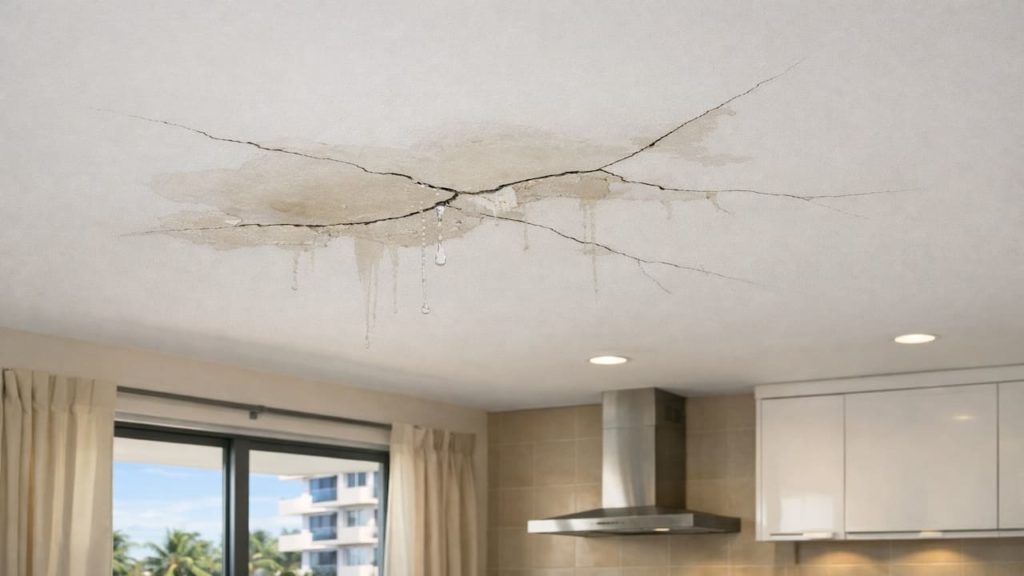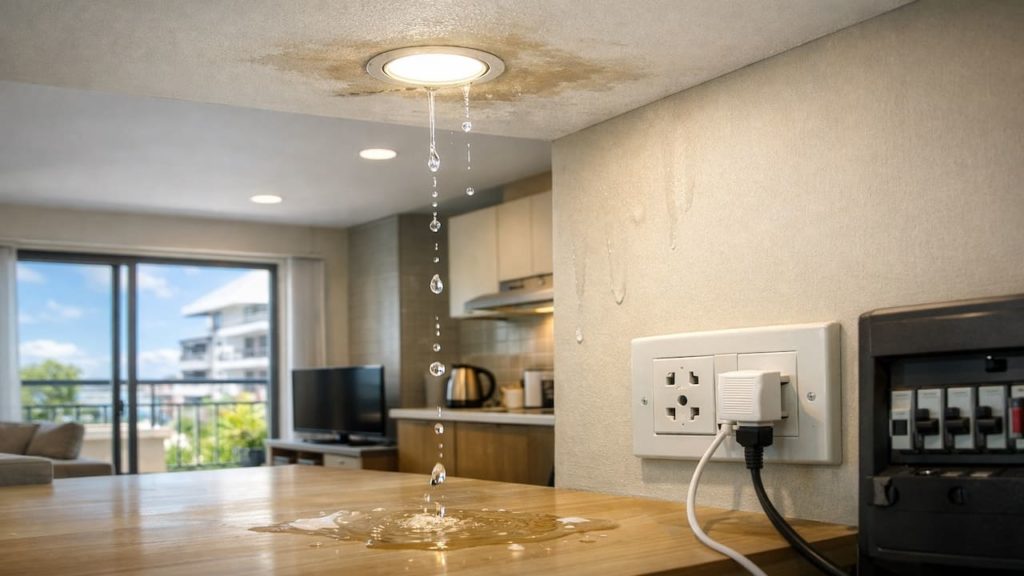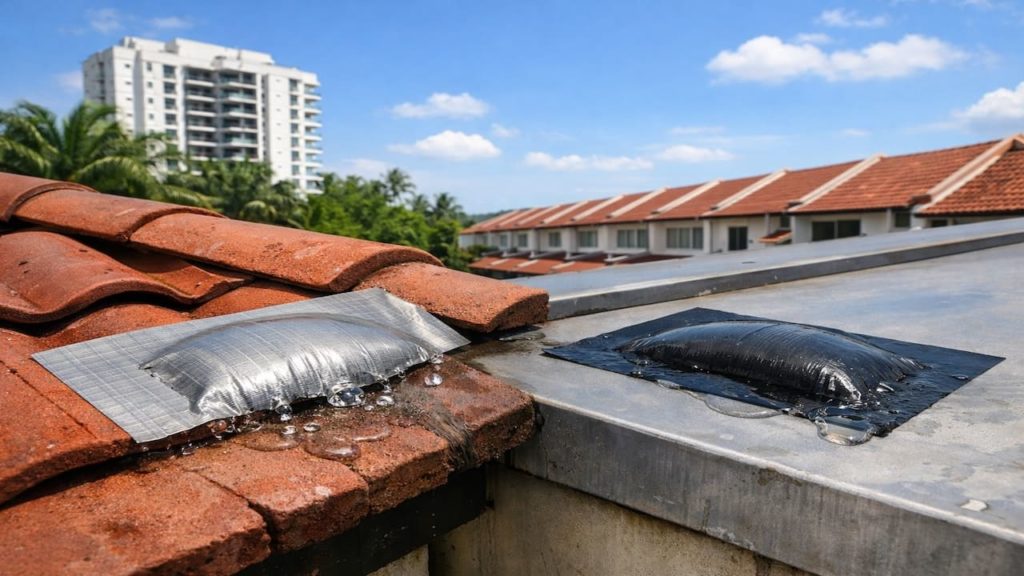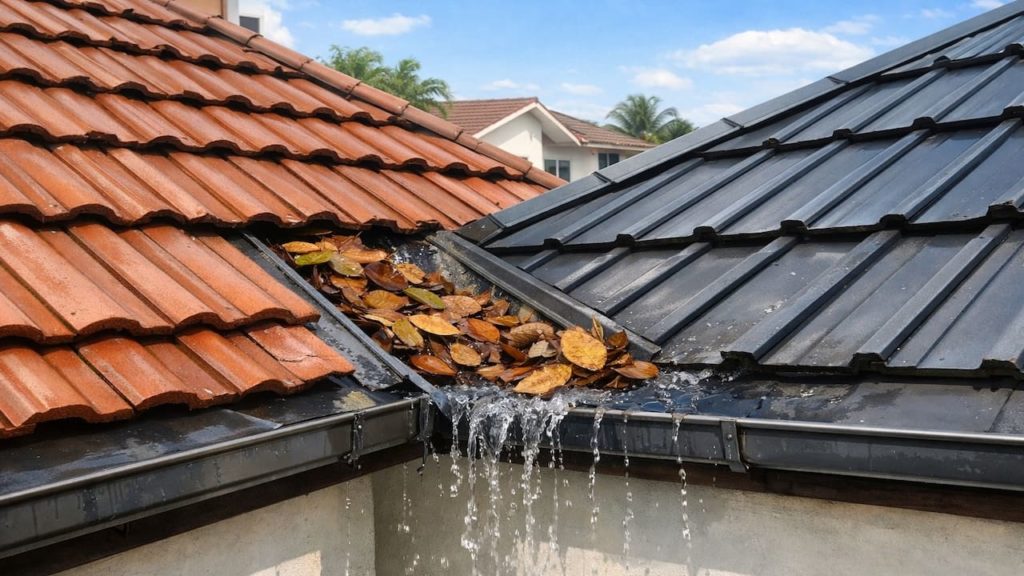
A roof leak during heavy wind in Malaysia feels unfair, because the roof stays quiet in normal rain, then a squall hits and water appears inside fast. Wind changes everything.
Strong gusts can lift edges, push rain uphill, and drive water into laps and corners, so tiny gaps become active paths in wet season storms. Pressure finds weakness.
In this guide, you’ll learn how to spot wind driven leak signs at roof edges so you can fix uplift points before the next storm shifts the drip again.

Hi, I’m Ken. I write practical home guides for Malaysia—no fluff, just what works.
I hold a formal building design qualification and have spent about 20 years on job sites across hundreds of projects. My goal is simple: help you avoid costly mistakes with clear, safe steps—a quick way to decide what to do next.
1. Roof leak during heavy wind: 5 signs
Wind leaks usually start at edges and laps not the middle.
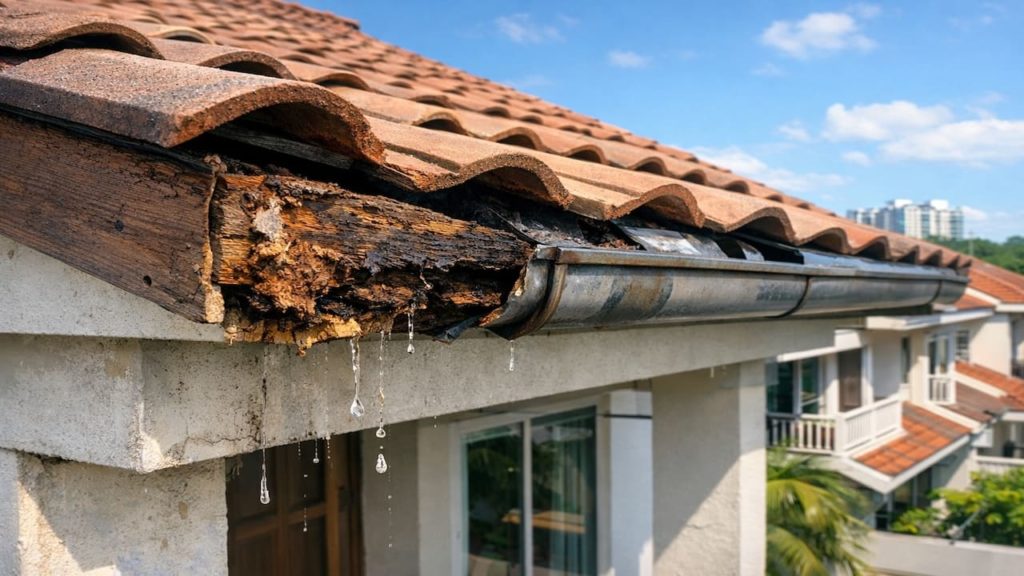
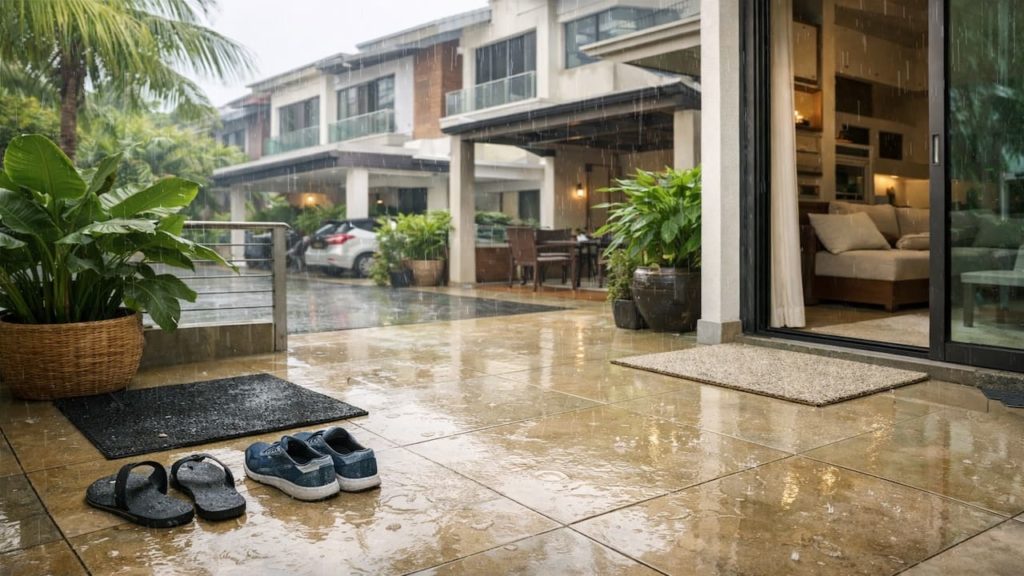
In Malaysia squalls, rain hits sideways and pressure builds at ridges, eaves, and corners—water slips under lifted laps, then travels along underlay before dripping later. Delay happens.
- Check windward eave for lifted edge line
- Inspect ridge cap lap for open seam gap
- Look for splash marks under soffit return
- Check attic for shiny trails near roof edge
- Inspect fasteners for rust halos and looseness
Some assume a wind leak means a big hole, because the drip feels sudden. Often it is a small edge gap that only opens under uplift, so focus on windward edges first. Simple.
2. Look for uplift and edge gaps
Uplift opens gaps that look closed on calm days.
Malaysia heat cycles loosen fasteners, and wind then flexes metal sheets or shifts tiles—so the edge lifts just enough for rain to sneak under the lap. Tiny movement. Big result.
- Run hand near eave and feel loose edge
- Check tile clips and nails for missing pieces
- Inspect metal sheet overlap for lifted corner
- Look for torn underlay near edge battens
- Check barge board joint for open seal line
You might think adding sealant along the edge fixes it forever. If the edge still lifts, the seal line splits again, so secure the edge first, then seal the confirmed gap. Order matters.
3. Why + Wind driven rain defeats laps and corners
Wind can push water uphill under overlaps.
During Malaysian storms, gusts create negative pressure that pulls at edges while rain is driven sideways—so laps, ridge ends, valleys, and roof-to-wall corners become entry points. Storm physics.
- Inspect ridge end cap corner for open joint
- Check valley head for debris dam overflow
- Inspect flashing corner for split seal bead
- Check vent pipe boot lip for lifted edge
- Look for gutter overflow behind gutter edge
Some say “It only leaks in wind so it is unavoidable.” In Malaysia, wind storms are normal, so the roof must handle them—fix the edge details and the leak stops repeating. Certain.
4. How + Confirm the windward entry and lock it down
Test the windward edge and reinforce the weak detail.
Random patching fails in Malaysia humidity—moisture gets trapped and mold grows, while the drip moves to a new spot, so you need proof from a controlled test. Discipline.
- Record wind direction and rain time during leak
- Check attic for wet nails near windward edge
- Spray test windward edge at a low angle
- Tighten fasteners and replace failed washers
- Seal confirmed edge gap on clean dry surface
Some people want to coat the whole roof after a wind leak, because it feels safe. If uplift is the cause, coating fails unless the edge is secured, so lock the edge, then seal the joint once. Done.
5. FAQs
Q1. Why does it leak only when the wind is strong?
Wind pushes rain sideways and can lift edges slightly, opening laps that stay sealed on calm days. Malaysia squalls create the perfect conditions for uplift leaks.
Q2. Where should I check first for wind leaks?
Start on the windward side at eaves, ridge laps, barge boards, and corners. Those zones see the highest pressure and movement.
Q3. Can wind cause water to travel far inside the ceiling?
Yes, once water enters at an edge gap, it can ride underlay and rafters before it drops at a low point. Track the first wet line, not the biggest stain.
Q4. What if the leak is near lights or ceiling fans?
Cut power to that circuit and avoid the area until checked. Water near wiring is dangerous and humid air increases risk fast.
Q5. When should I call a professional?
If the roof is high, steep, or unsafe after rain, call help and do not climb. If multiple edges are lifting, a systematic fastener and edge detail repair is better than spot sealing.
Pro’s Tough Talk

I’ve been on site for 20+ years and handled hundreds of roof and ceiling jobs, and wind leaks in Malaysia are the classic “only when you need sleep” problem. Calm rain is fine, squall rain is chaos.
It is usually 3 causes. Edges lift because fasteners loosen and clips fail. Laps and corners have tiny gaps that only open under uplift. Gutters overflow and splash water into eave returns during gusts. Predictable.
Two relatable moments. You hear the wind and your brain starts counting buckets like a bedtime story. You seal one edge and the leak shows up 1 meter away like it is playing hide and seek. Roof water is a sneaky snake.
Lock the windward edge before you chase the stain with 3 steps. Record wind direction and timing. Check the attic for wet nails near the edge. Spray test low angle on one edge zone and watch.
Do not blame yourself, and do not call every contractor evil, but the structure is cold: wind will always punish loose edges. The silicone cowboy who says “just coat it” gets my jab. Ignore uplift and enjoy your midnight drip soundtrack.
Summary
Wind-only roof leaks in Malaysia usually come from uplift at windward edges, open laps, and corner gaps that let rain travel under roof layers. The stain is the exit point.
Record wind direction, inspect windward edges and fasteners, and confirm entry with a low-angle spray test before sealing. Secure movement first, then seal the proven gap.
Check the windward eave after the next squall and continue with our guides on ridge cap gaps, gutter edge overflow, and ceiling mold control for wet season homes.