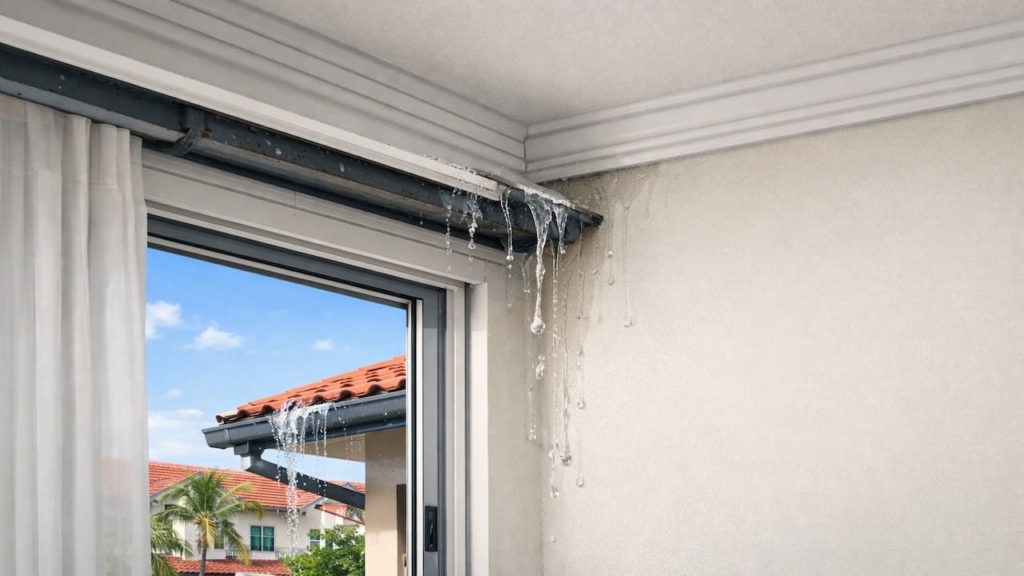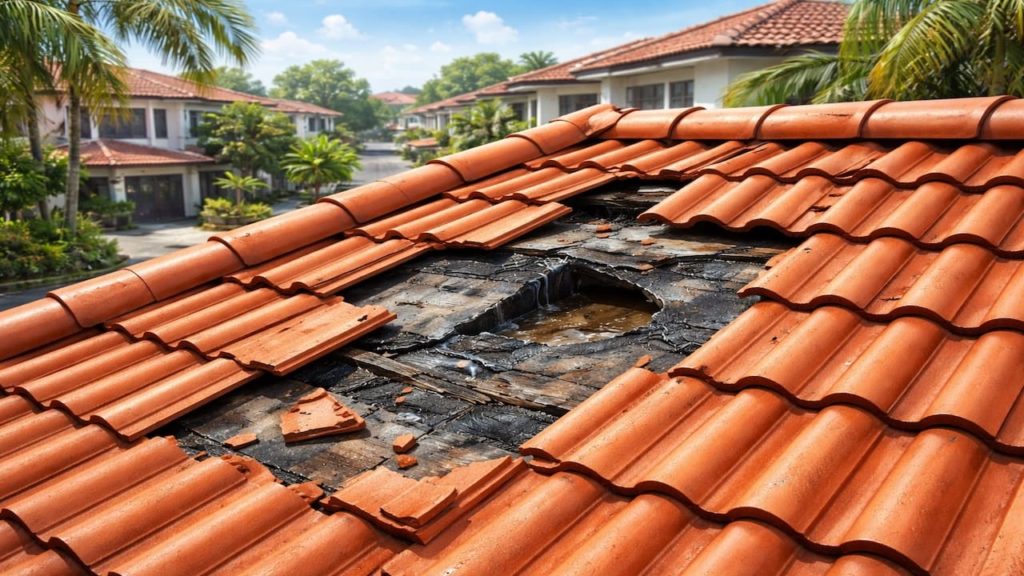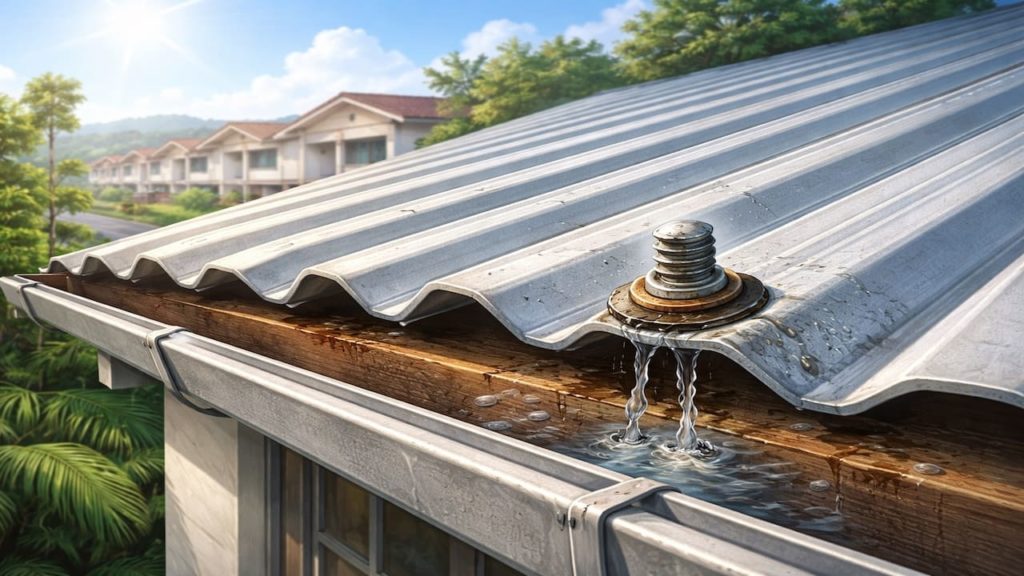
A leak under a metal roof in Malaysia can feel random, because the roof looks perfect from the ground and then the ceiling stains after a hot day and a storm. Common.
Metal expands in heat, cools at night, and gets hammered by wet season rain, so tiny failures at screws, washers, laps, and flashings become active leak paths. Humid air keeps it wet.
In this guide, you’ll learn why metal roofs leak and how to pinpoint the weak joint with checks that fit terrace houses and top-floor units in tropical weather.

Hi, I’m Ken. I write practical home guides for Malaysia—no fluff, just what works.
I hold a formal building design qualification and have spent about 20 years on job sites across hundreds of projects. My goal is simple: help you avoid costly mistakes with clear, safe steps—a quick way to decide what to do next.
1. Roof leak under metal roof: 5 reasons
Most metal roof leaks start at fasteners not panels.
In Malaysia heat, metal moves every day—washers harden, screws loosen, and small gaps open during storms, then water travels along underlay before dripping inside. Movement matters.
- Inspect screws for backing out and wobble
- Check rubber washers for cracks and flattening
- Look for rust halos around fastener heads
- Inspect lap joints for lifted edge lines
- Check flashing corners for split seal beads
Some people assume a metal leak means the panel is punctured. Panels rarely fail first, while washers and laps age fast under sun and rain. Start with fasteners and joints, then confirm. Clean logic.
2. Screws and washers fail in heat
Heat cycles destroy washers faster than you expect.
Rubber washers get baked by UV and heat, then cool and shrink—Malaysia humidity adds corrosion, so the seal line breaks and water slips under the head during heavy rain. Slow failure.
- Press washer and check for brittleness
- Look for washer split ring around screw
- Check screw head tilt for uneven clamp
- Inspect fastener line for repeat rust marks
- Check purlin line for wet streak alignment
You might think “Just tighten all screws and done.” Over-tightening crushes washers and creates new leaks, so tighten only loose screws and replace failed washers. Control.
3. Why + Laps and flashings leak only in storms
Wind driven rain forces water uphill under laps.
During Malaysian squalls, gusts push water sideways and uphill—lap joints and flashing corners that stay dry in calm rain become entry points under pressure. Storm physics.
- Inspect lap direction on windward roof side
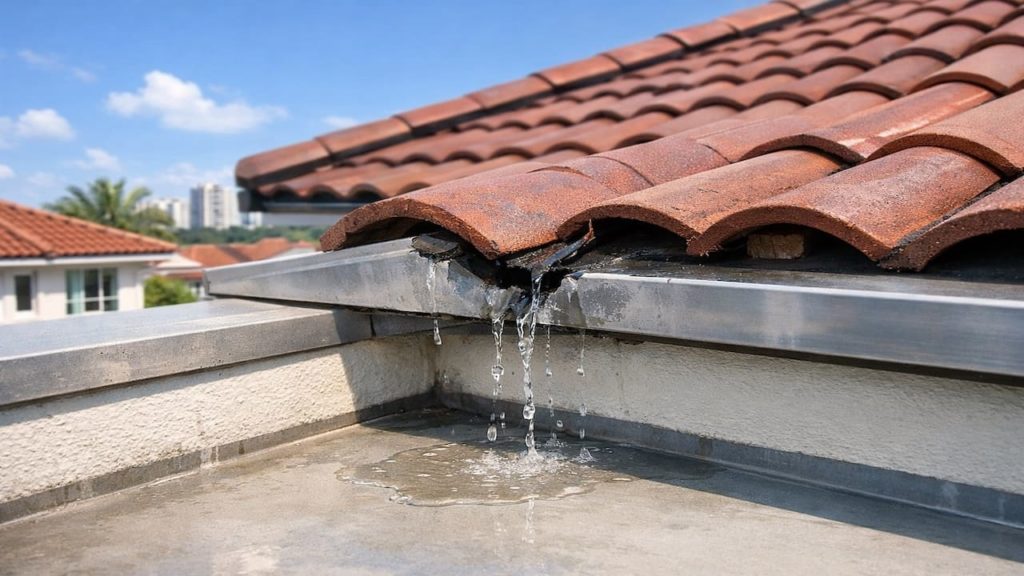
- Check ridge cap lap for lifted edge
- Look at valley transition flashing for open gap
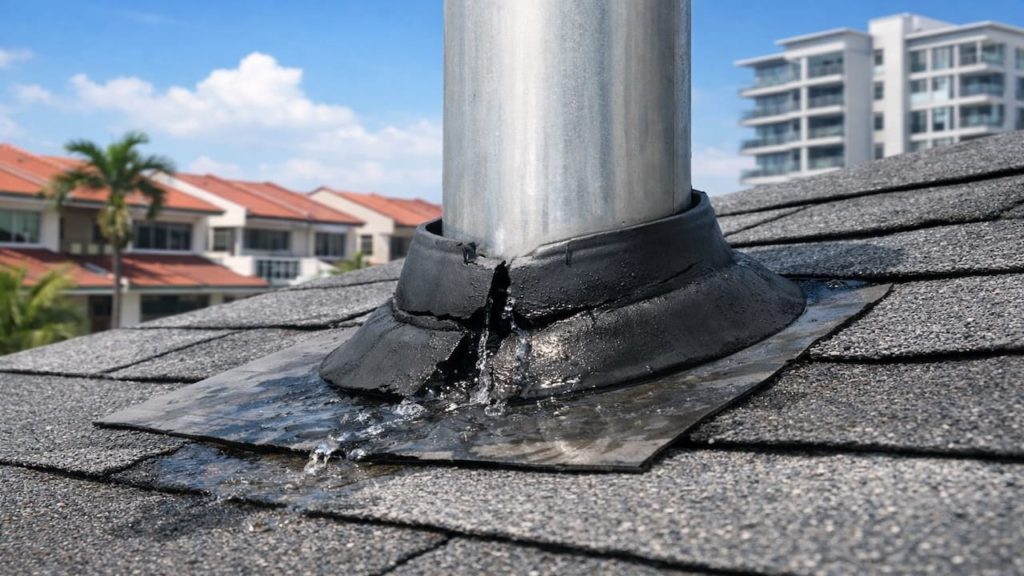
- Inspect pipe boot for loose clamp and cracks
- Check gutter overflow splash near eave return
Some say “It leaks only in storms so it is unavoidable.” That is a myth, because storms are normal in Malaysia, and the roof must handle them. Fix the windward joints and laps. Period.
4. How + Find the leak path before resealing
Map inside trails then test one roof zone at a time.
Random sealant smears fail in Malaysia humidity—trapped moisture grows mold and the drip shifts, so you need a repeatable test and a confirmed joint before repair. Discipline.
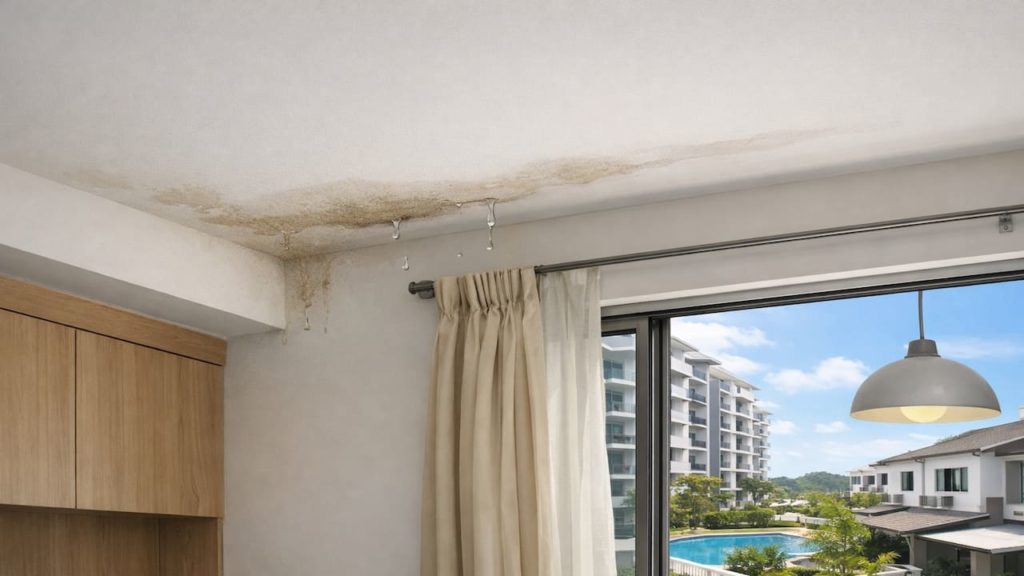
- Circle stain edge and record rain time
- Check attic for shiny trails and wet nails
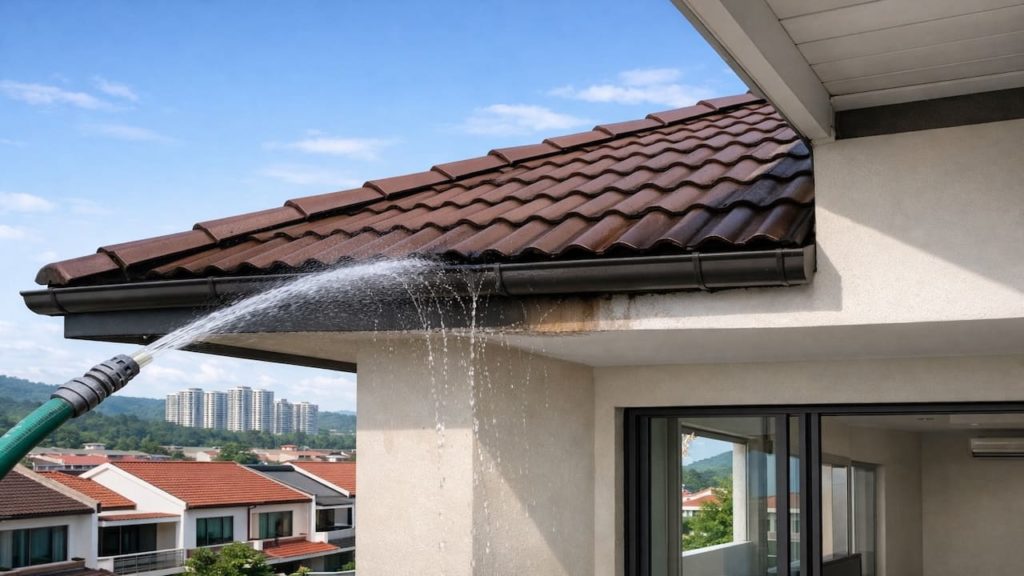
- Hose test one fastener line for ten minutes
- Spray test one lap joint with angled water
- Seal confirmed joint with roof grade compound
People want to coat the whole metal roof quickly, because it looks clean and new. Coating can help, but it fails if loose screws and cracked washers stay underneath. Fix hardware first, then seal. Done.
5. FAQs
Q1. Why does it leak after a hot day?
Heat expands metal and stresses fasteners and seal lines, then cooling tightens and opens micro gaps. When rain hits after that cycle, water finds the weak spot.
Q2. Should I tighten every screw I can see?
No, over-tightening crushes washers and creates leaks. Replace cracked washers and re-seat only loose screws, and keep an eye on repeated rust halos.
Q3. Can lap joints leak even if they look closed?
Yes, wind-driven rain can push water uphill under laps during storms. Check windward sides and ridge cap laps where pressure is highest.
Q4. What if the leak is near lights or sockets?
Cut power to that circuit and avoid the area until checked. Water near wiring is dangerous and humidity raises the risk quickly.
Q5. When should I call a professional?
If the leak is heavy, the ceiling feels soft, or the roof is unsafe to access, call help. If fastener lines are widespread, a systematic replacement plan is better than spot fixes.
Pro’s Tough Talk

I’ve been on site for 20+ years and handled hundreds of roof and ceiling jobs, and metal roof leaks in Malaysia are the daily grind. Hot sun cooks it, rain slaps it, and the screws complain.
It is usually 3 causes. Washers harden and crack from heat. Screws loosen from movement and vibration. Laps and flashings open tiny gaps that only storms can exploit. Predictable.
Two relatable moments. You tighten one screw and three more look suspicious like a conspiracy. You seal one lap and the drip moves 50 cm like it has legs. Metal roofs are a drum skin.
Fix the hardware before you chase fancy sealant with 3 steps. Find the fastener line above the stain. Replace failed washers and re-seat loose screws. Spray test one lap joint and seal only the confirmed gap.
Do not blame yourself, and do not call every contractor a villain, but the structure is cold: heat cycles will punish weak fasteners every year. The silicone cowboy who says “just smear more” gets my jab. Ignore it and enjoy your midnight bucket playlist.
Summary
Metal roof leaks in Malaysia usually come from failing washers, loose screws, windward lap gaps, and flashing corners under storm pressure. The ceiling stain is the exit point.
Map the interior trail, inspect fasteners and laps in daylight, and fix hardware first before any coating or reseal. If failures are widespread, plan a full fastener and washer refresh.
Check washers and screws after the next hot day and continue with our guides on ridge cap leaks, valley blockages, and ceiling mold control for wet season homes.