A roof leak near a window in Malaysia feels unfair, because the rain hits sideways and the drip shows up where you least expect it. Annoying problem.
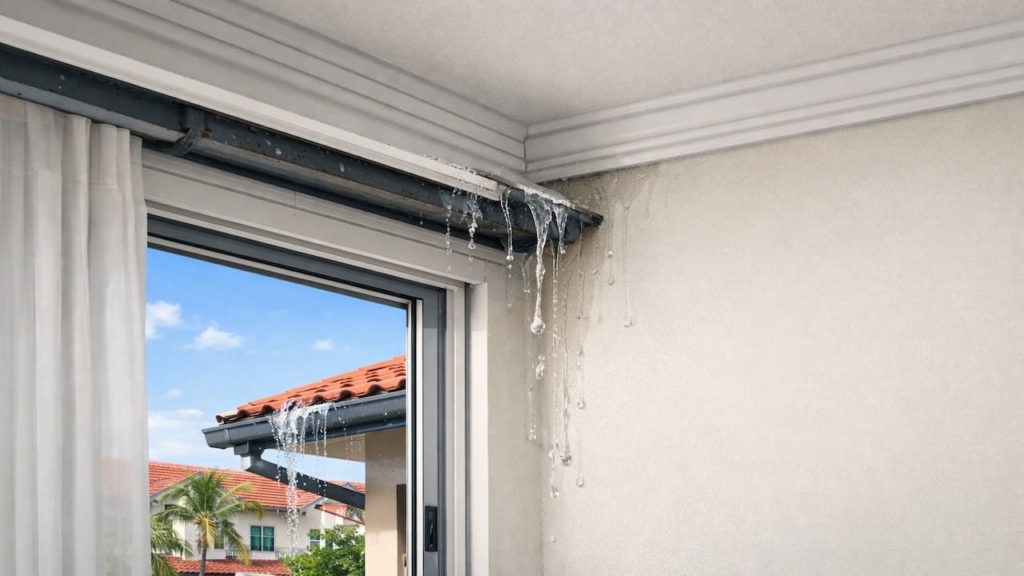
It can come from window head flashing, cracked sealant, wall hairline cracks, or gutter overflow splash, and humidity keeps the area damp so stains spread faster. Wet season reality.
In this guide, you’ll learn how to trace the true gap around the window using quick checks that fit terrace houses and condo units in hot humid weather.

Hi, I’m Ken. I write practical home guides for Malaysia—no fluff, just what works.
I hold a formal building design qualification and have spent about 20 years on job sites across hundreds of projects. My goal is simple: help you avoid costly mistakes with clear, safe steps—a quick way to decide what to do next.
1. Roof leak near window: 5 checks
Most window side leaks start above the frame line.
In Malaysia storms, wind pushes rain under laps and into tiny joints—then the water rides inside the wall and drops near the window later. Travel happens.
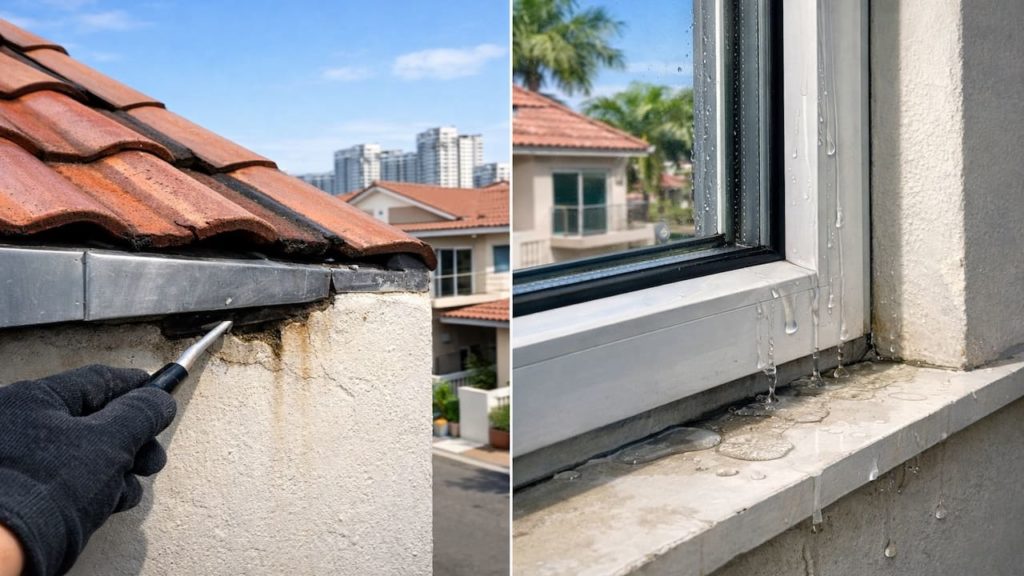
- Check window head flashing for open lap gap
- Inspect top frame sealant for cracks and voids
- Look for damp wall line above window trim
- Check gutter overflow marks near eave edge
- Inspect external sill joint for water track
Some say the stain proves the frame is leaking, because it sits right beside the glass. That can be true, but roof edge water often migrates first, so start higher and confirm. Simple rule.
2. Flashing gaps and frame seepage
Flashing failure and frame seepage look identical indoors.
Malaysia humidity slows drying, so both sources leave brown rings and soft paint—one clue is where the first wet spot appears during wind driven rain. Pattern matters.
- Run tissue test along top frame corners
- Check weep holes for blockage and dirt
- Inspect flashing edge for lifted seal bead
- Look for bubbling paint on wall head area
- Check curtain box area for hidden dampness
You might think “Just reseal the whole window and done.” That sometimes helps, but if the flashing above is open, the seep returns through the wall. Confirm the source, then seal once. Clean.
3. Why + Wind driven rain targets window head details
Wind driven rain forces water into joints that stay dry.
During squalls, rain hits the facade at an angle—Malaysia storms can turn a small head flashing gap into a steady drip behind plaster. Pressure wins.
- Check wall crack line above window head
- Inspect parapet cap joints near window zone
- Look at roof edge flashing for loose fasteners
- Check sealant shrink at corner miter joints
- Inspect soffit return for blowback damp streaks
Some people blame the contractor instantly, and sometimes workmanship is part of it. But heat and UV age sealant fast here, so even decent joints fail over time. The real cause is the detail gap. Period.
4. How + Confirm the leak path and stop it safely
Isolate one edge and reproduce the leak in daylight.
In Malaysia, random patching traps moisture—then mold grows and the leak “moves” to a new spot near the same window. Controlled tests save money.
- Photograph stain and record rain direction notes
- Dry wall surface then wait for new wet
- Angle spray one small edge zone only
- Check inside wall for shiny trail droplets
- Seal confirmed joint with roof grade compound
People say “Storm only leaks cannot be tested,” because wind is random. You can still isolate zones and watch the first wet line, then fix the exact joint. Do that and the window stays dry. Done.
5. FAQs
Q1. Why does it leak near the window only in storms?
Wind can push rain sideways into head flashing laps and corner joints that stay dry in calm rain. Malaysia squalls make small gaps behave like big holes.
Q2. Roof leak or window frame seepage?
If the first wet spot appears above the window trim and spreads downward, suspect flashing or roof edge travel. If it starts at the frame corners, suspect frame sealant and weep issues.
Q3. Can gutter overflow cause a window area leak?
Yes, overflow can splash back under eaves and into wall joints, then drip down inside near the window later. Check overflow marks after heavy rain.
Q4. What if the damp area is near sockets or a curtain motor?
Cut power to that circuit and stop using the area until checked. Water near wiring is dangerous and humid air raises the risk.
Q5. When should I call a professional?
If the wall feels soft, the stain spreads fast, or you cannot access the exterior safely, call help. For light stains, mapping and one zone testing is a good first step.
Pro’s Tough Talk

I’ve been on site for 20+ years and handled hundreds of roof edge and window leak jobs, and leaks near windows are top tier stress. You look at glass and blame it. Classic.
Cause is usually 3 things in Malaysia. One, head flashing has a tiny lap gap and wind drives rain under it. Two, sealant shrinks from heat and UV and opens corners. Three, gutter overflow splashes water into wall joints and it runs inside.
Two relatable moments. You wipe the stain and it comes back bigger next storm like it is growing teeth. You put a towel on the sill and the drip shows up 30 cm away because water travels like a sneaky snake.
Stop chasing the stain and chase the first wet line with 3 steps. Mark the earliest damp spot and time it. Angle spray one small exterior zone only. Open an access point and look for shiny trails before sealing.
Do not blame yourself, and do not call every contractor a villain, but the structure is cold: tiny gaps plus wind equals indoor water. The guy who says “just silicone everything” gets a jab from me. Enjoy your midnight curtain drip comedy if you ignore it.
Summary
A window area leak in Malaysia usually starts at head flashing, corner sealant, wall cracks, or overflow splash, and the stain is often far from the entry point. Fact.
Map the first wet line, check windward head details, and isolate tests in daylight before resealing anything. If it keeps returning, focus on flashing laps and wall cap joints.
Log the next storm then test one edge zone after it and continue with our guides on gutter overflow, flashing repair, and ceiling mold control for wet season homes.