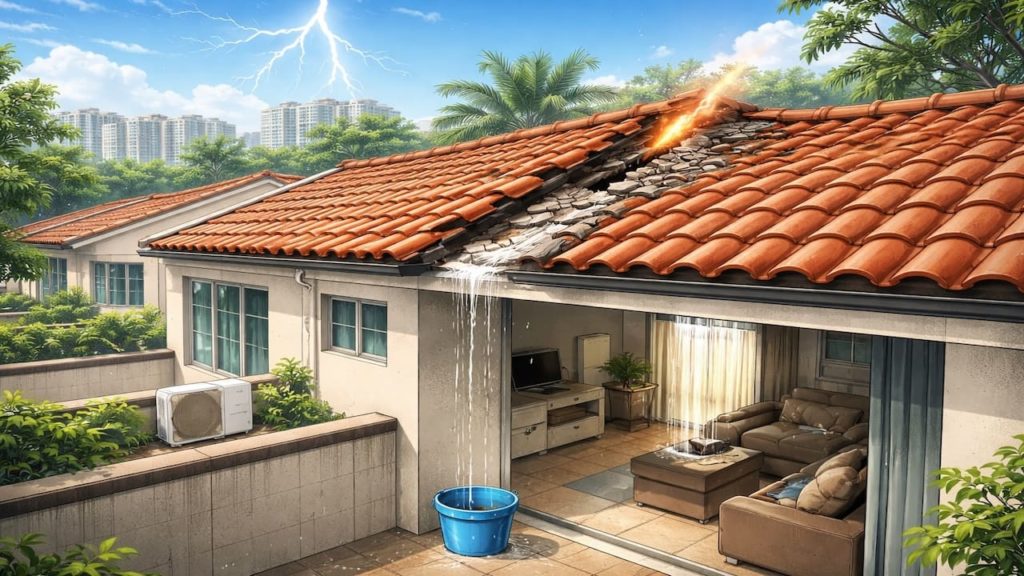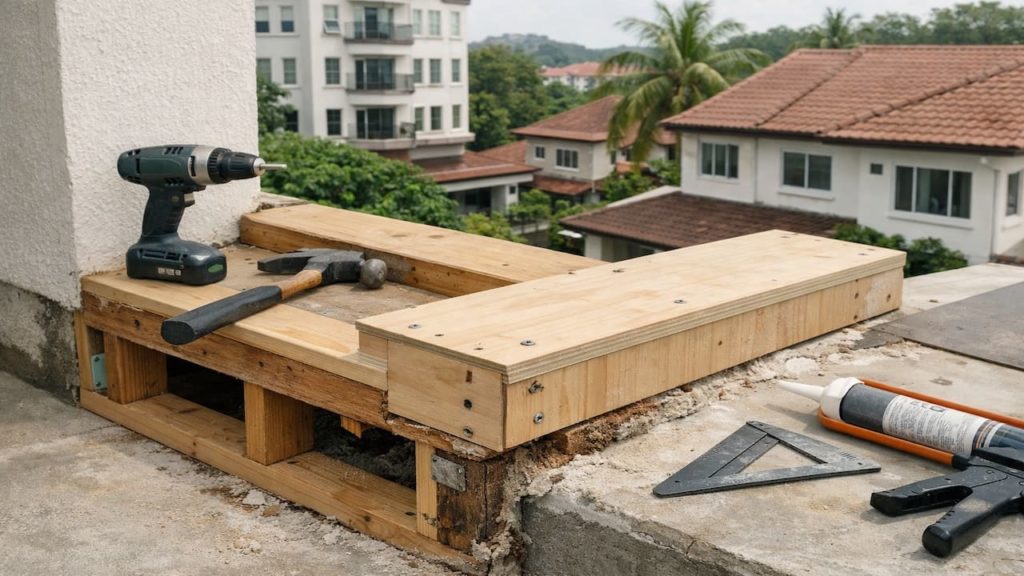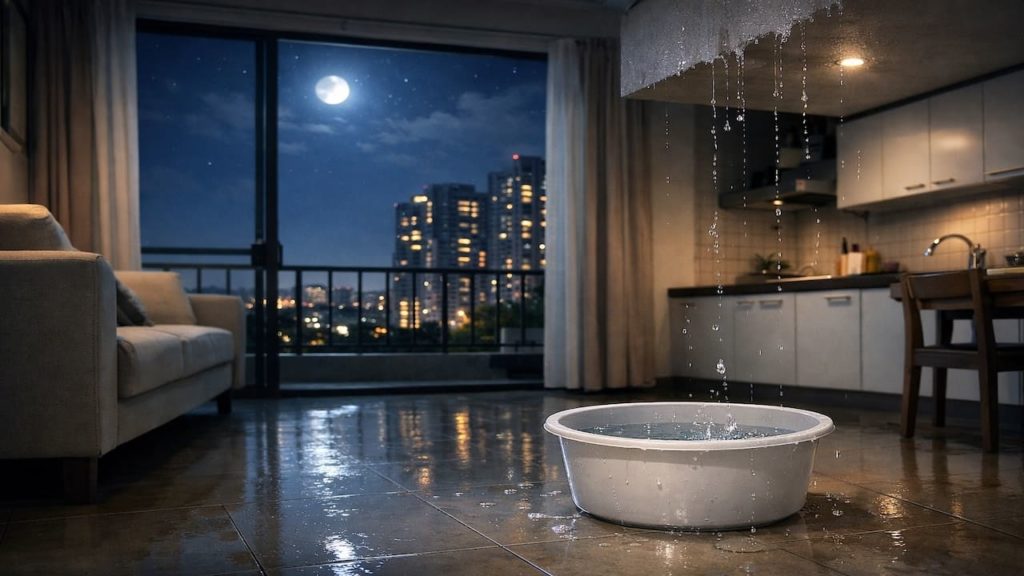
A roof drip that starts after dark in Malaysia feels extra nasty, because the house gets quiet while the air stays hot and wet. Sleep gets wrecked.
Night timing can come from delayed rainwater, roof movement after cooling, or condensation from aircond lines, so the first goal is separating these paths. No panic.
In this guide, you’ll learn how to find the true leak path before you seal anything by using quick checks that work in terrace houses and condo top floors during humid nights.

Hi, I’m Ken. I write practical home guides for Malaysia—no fluff, just what works.
I hold a formal building design qualification and have spent about 20 years on job sites across hundreds of projects. My goal is simple: help you avoid costly mistakes with clear, safe steps—a quick way to decide what to do next.
1. Roof leak at night: 5 checks
Night drips usually mean stored water is releasing late.
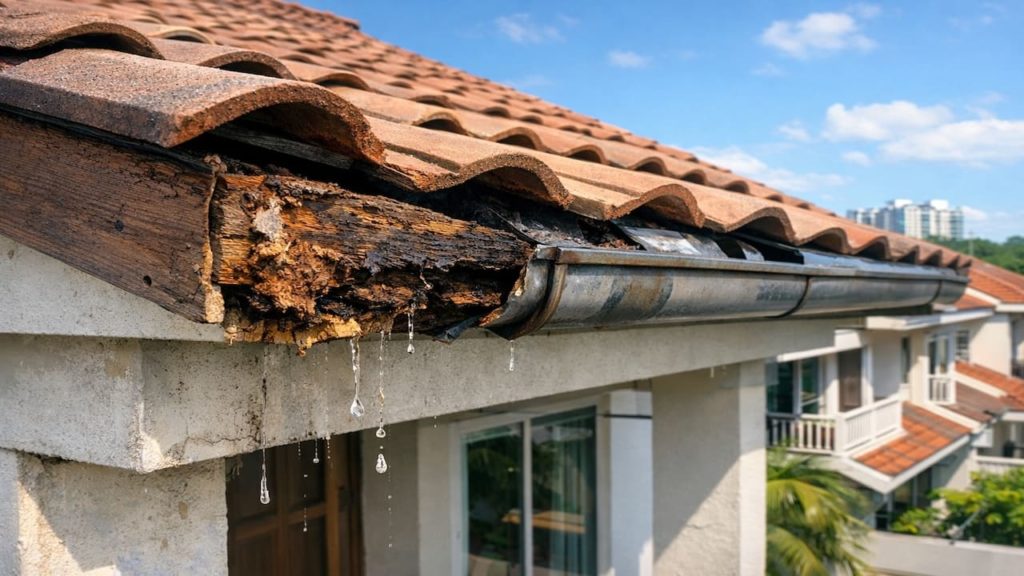
Malaysia downpours can load valleys and gutters fast, then leftover water creeps through overlaps and corners. It can show up hours later—so the drip feels “random” when it is not. Reality.
- Mark stain center with tape and timestamp
- Wipe stain edge and note new damp spread
- Inspect roof valley for leaf paste blockage
- Check box gutter seam for dark seep trail
- Inspect downpipe joint for wet streak marks
Some people say a night drip proves the roof is failing, and that can be true. But delayed runoff is common after intense rain, especially with shallow pitch roofs. Confirm the route, then patch. Control.
2. Why it drips after dark in Malaysia
Cooling at night can open tiny gaps in joints.
Strong sun heats metal sheets and ridge caps, then night cooling tightens them and flexes old sealant—Malaysia humidity helps water cling and creep through micro gaps. Wet season makes this worse. Fact.
- Check metal screws for hardened rubber washers
- Inspect ridge cap laps for lifted edges
- Look at flashing corners for cracked sealant
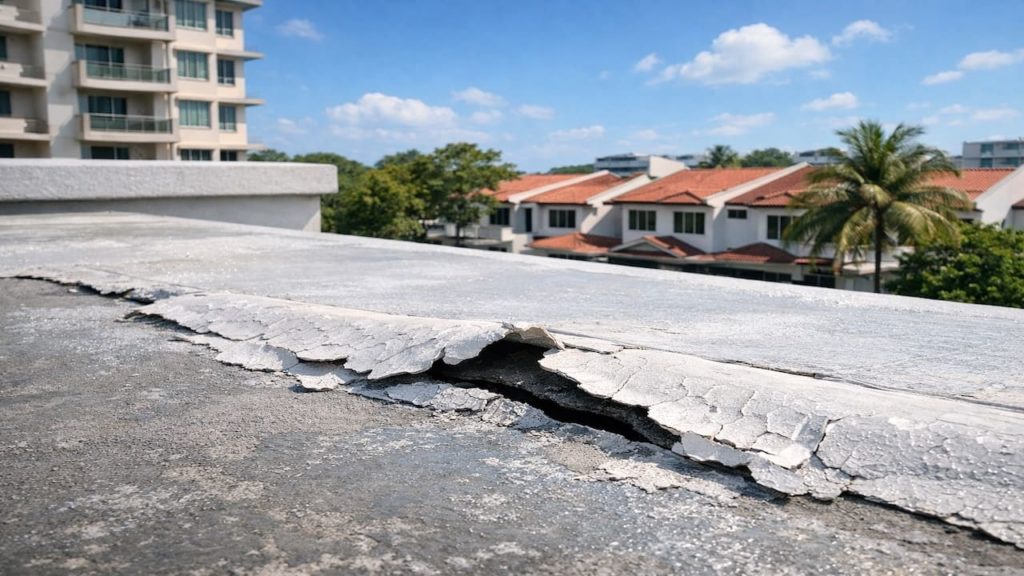
- Check parapet top coat for hairline cracks
- Find damp insulation above gypsum ceiling board
You might think “It only drips at night so it is minor,” and that is a tempting story. In humid homes, small wet spots grow mold and soften gypsum, then sag shows up later. Fix early, not late. Simple.
3. Why + Condensation and hidden water travel paths
Condensation can mimic a roof leak with perfect timing.
When aircond runs at night, cold copper lines and ducts sweat, and moisture can drip onto framing—then travel and fall far from the cold source. Condos and tight terrace ceilings see this often. Tricky.
- Touch cold copper line and check water beads
- Inspect aircond drain pipe for loose fittings
- Check bathroom duct for wet outer surface
- Inspect water tank overflow pipe for dripping
- Check attic vents for blocked insect screens
Some people blame the roof because the stain is on the ceiling, and that makes sense emotionally. But if the drip matches aircond hours and pipes sweat, the roof may be innocent. Test timing and surfaces before you pay. Fair.
4. How + Map the drip and isolate one roof zone
Map inside first then test outside in small steps.
In Malaysia, random sealant smears fail fast because moisture gets trapped and the leak “moves,” while mold quietly wins. Controlled testing beats hope every time. Discipline.
- Draw ceiling map and write dates beside stains
- Follow stain trail along joist shadow direction
- Check attic for wet timber and shiny droplets
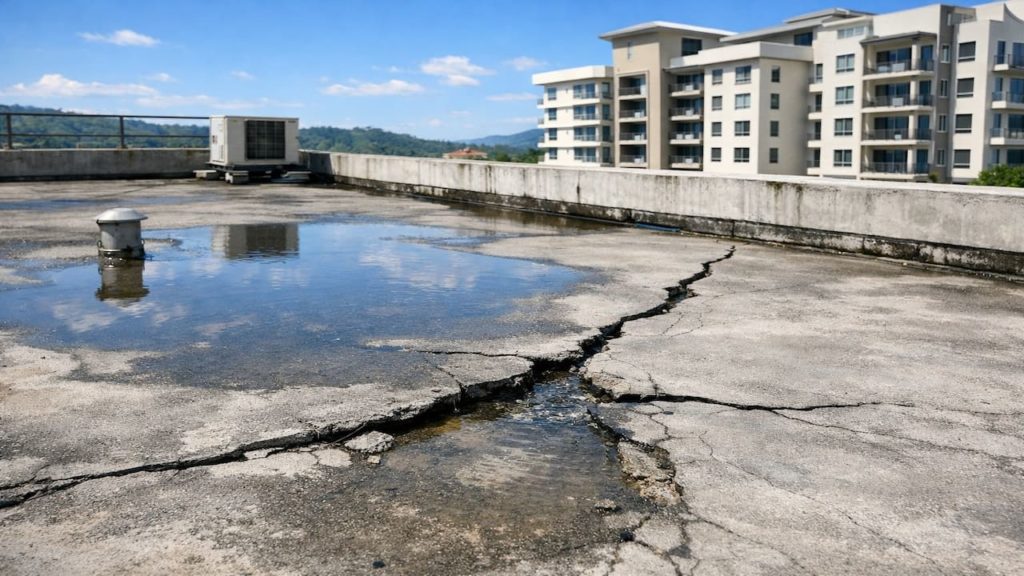
- Hose test one roof zone for ten minutes
- Seal flashing with roof grade polyurethane compound
People say “Just reseal everything this weekend,” because it feels efficient. That usually hides the true entry point and wastes money, especially on old flashings and box gutters. Reproduce the leak in one zone, then seal one target. Clean.
5. FAQs
Q1. Why does it drip hours after the rain stops?
Valleys, box gutters, and tile overlaps can store water, then release it slowly as airflow and temperature shift at night. In Malaysia wet season, delayed runoff is common.
Q2. How can I tell a roof leak from aircond condensation?
Compare drip timing to aircond run time and check for beads on cold copper lines and ducts. If aircond is off and it still drips after storms, focus on runoff travel paths.
Q3. Is it safe to inspect the roof at night?
No, dew makes tiles and metal slippery, and fine gaps are hard to spot under poor light. Do torch checks from inside, then inspect the roof in daylight.
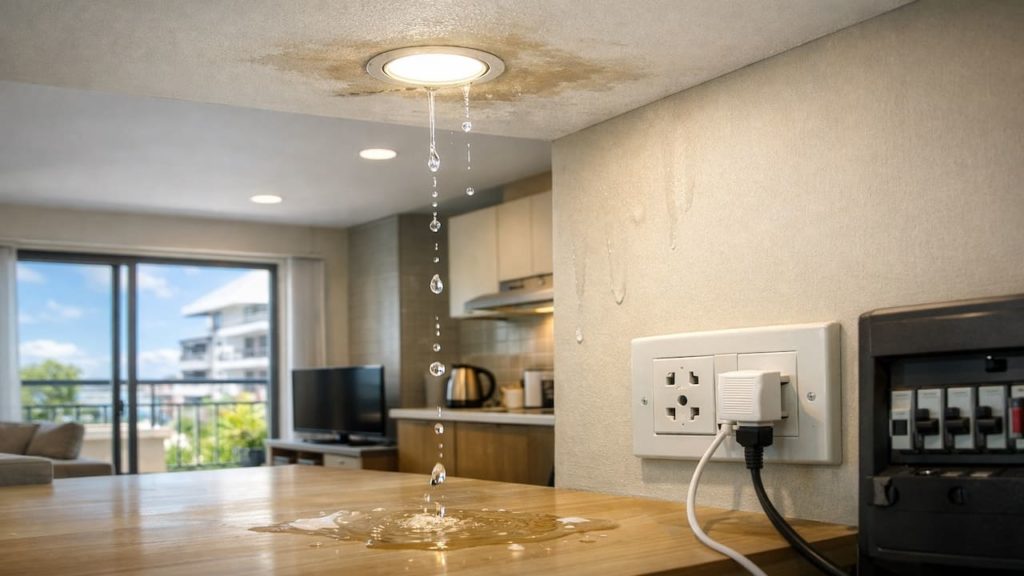
Q4. What should I do if the stain is near lights or sockets?
Cut power to that circuit and stop using the area until it is checked. Water near wiring is a real hazard in humid homes and can escalate quickly.
Q5. When should I call a roofer instead of DIY checks?
If the ceiling is bulging, dripping is heavy, or the wet area spreads fast, call help immediately. For small stains, map first and run one-zone testing before repairs.
Pro’s Tough Talk

I’ve been on site for 20+ years and handled hundreds of roof and ceiling jobs, and night leaks are the ones that steal your sleep. You lie down, then drip, then your brain starts counting like a broken metronome. Annoying.
In Malaysia humidity, this mess usually splits into 3 buckets. Stored rainwater crawls through valleys and box gutters after the storm. Night cooling flexes screws and tired sealant. Aircond sweat drops like a sneaky tap and frames your ceiling as the villain.
Two relatable moments, because this is always the same movie. You put a bucket, then the drip shifts 30 cm like it has legs. You wipe the stain, then it comes back bigger the next morning like it is mocking you.
Make the leak repeat under your control with 3 steps, and stop paying for guesses. Tape the stain center and write the time. Find wet nails or shiny timber lines above it. Hose one small roof zone only and watch.
Here is the structure nobody wants to admit: water travels sideways, blame travels downward, and money flies away if you rush. The “just silicone everything” guy deserves a side eye, not a medal. If you want a ceiling surprise at 2 AM, keep ignoring it.
Summary
In Malaysia, a night roof drip is usually delayed runoff, roof joint movement after cooling, or condensation from aircond systems. Timing alone is not proof. Trace it.
If your map and one-zone hose test cannot reproduce the drip, focus next on flashings, box gutter seams, and sweating ducts or pipes. Treat electrical proximity as urgent.
Map the stain tonight then test one roof zone tomorrow and move on to related guides about gutter overflow, aircond condensation, and ceiling mold control for wet season homes.