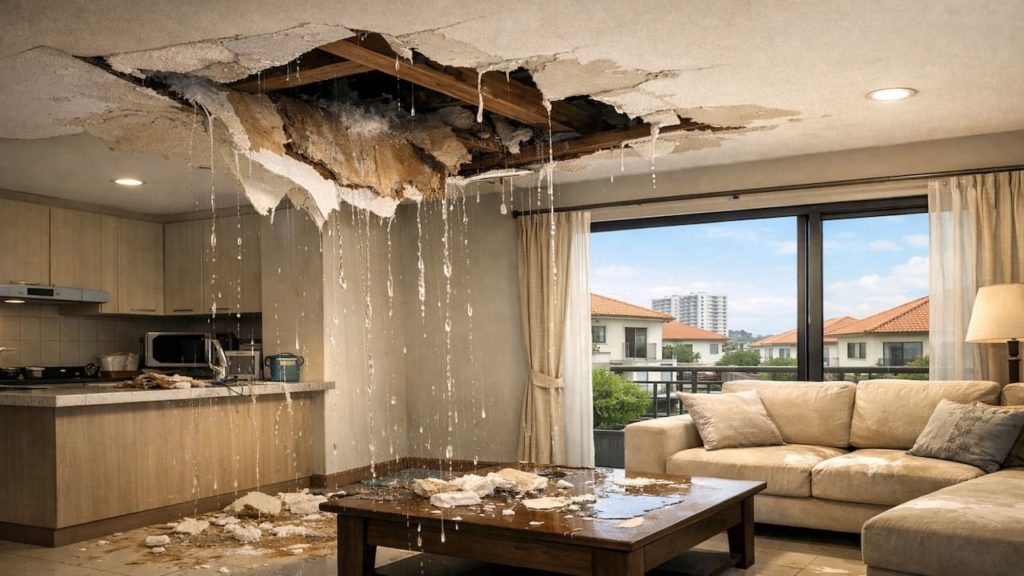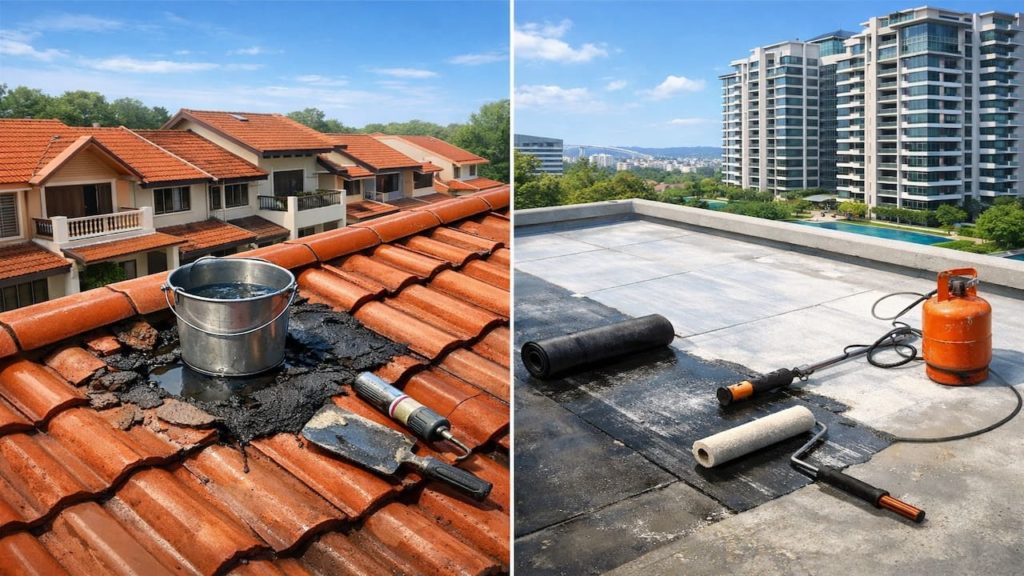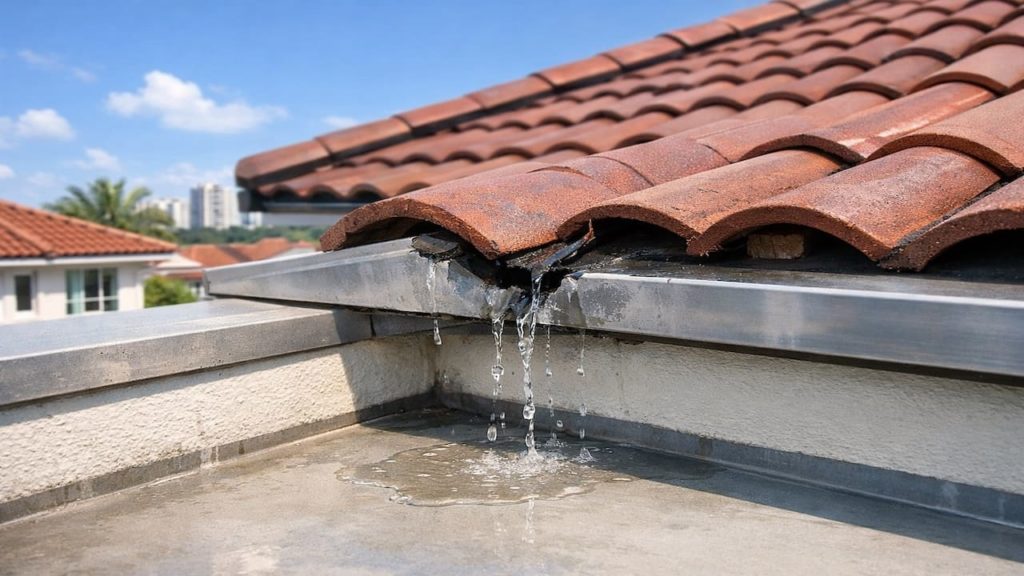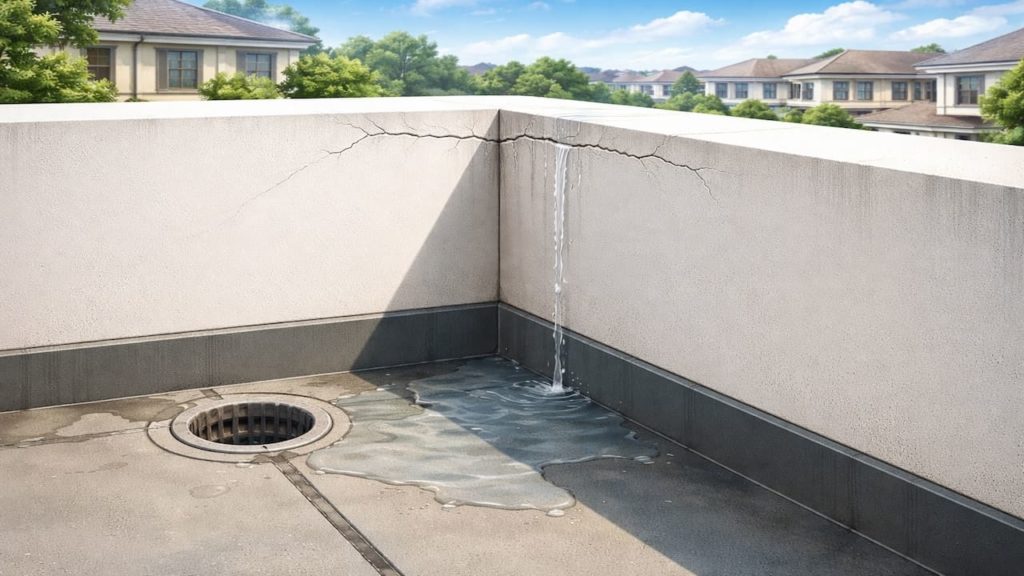
A roof leak at a parapet wall is maddening, because the wet mark shows inside the room while the outside wall looks “solid” in Malaysia heat.
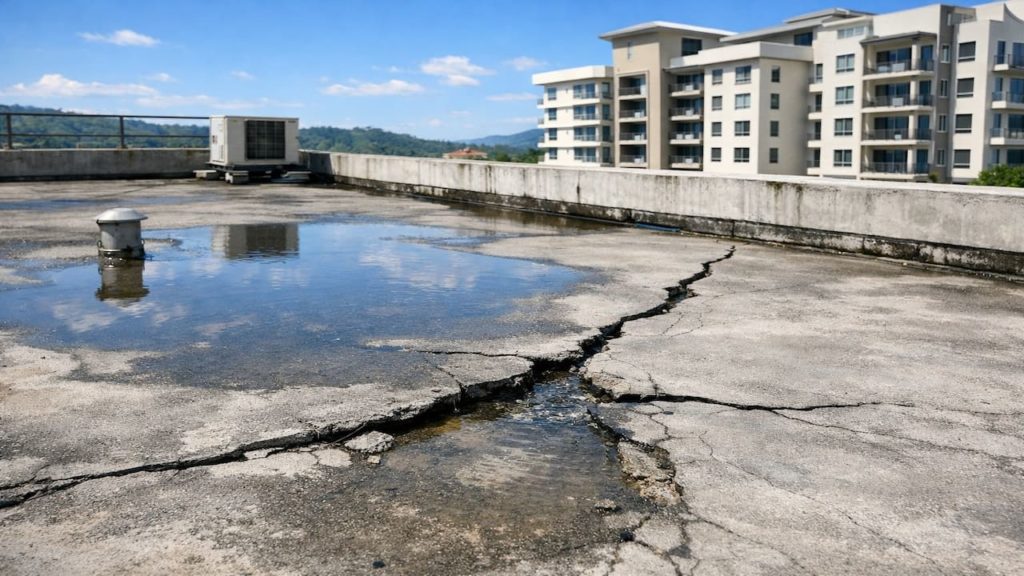
Parapets fail in several small ways, like hairline cracks, loose cap coping, and bad sealant at upturns, and wind-driven rain makes the path hard to see.
In this guide, you’ll learn how parapet cracks feed water into ceilings and how to test the right spots, so terrace houses and condo top floors stay dry in humid weather.

Hi, I’m Ken. I write practical home guides for Malaysia—no fluff, just what works.
I hold a formal building design qualification and have spent about 20 years on job sites across hundreds of projects. My goal is simple: help you avoid costly mistakes with clear, safe steps—a quick way to decide what to do next.
1. Roof leak at parapet wall: 5 checks
Parapet cracks let rain travel behind waterproofing.
Malaysia sun dries and shrinks plaster, then storms push water into micro gaps, and the parapet acts like a sponge wall that feeds the roof edge.
Hidden route.
- Inspect parapet face for hairline crack lines
- Check wall base flashing for loose edges
- Look for damp streaks under coping joints
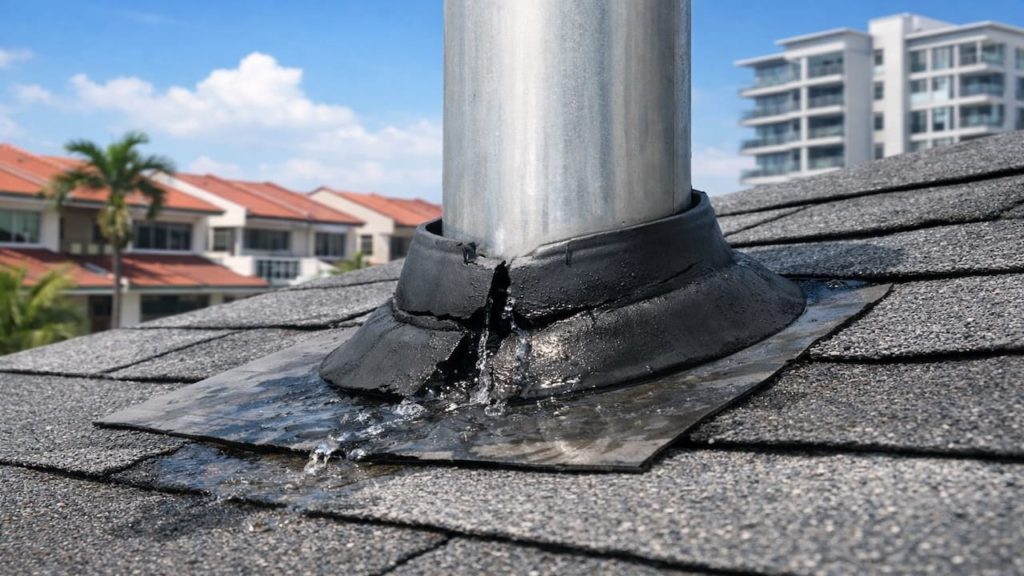
- Test sealant at wall upturn termination bar
- Map indoor stain position relative to parapet
Some people focus only on the main roof field because it is the big surface that gets rain.
But parapet edges are complex joints, so start there and you often find the real entry point faster.
2. Hairline cracks act like funnels
Hairline cracks funnel water deep into the wall.
A thin crack can pull water by capillary action, then it runs down behind plaster and into the ceiling void—especially after long wet spells in Malaysia.
Sneaky physics.
- Spray water on crack line for 5 minutes
- Watch inside for drip delay patterns
- Check crack ends near corners and returns
- Look for efflorescence white salt on wall
- Probe soft paint bubbles near parapet interior face
You might think a hairline crack is too small to matter because it looks like a pencil mark.
But small cracks can transport water like a straw, so treat them as entry points and not decoration.
3. Why parapet leaks are common in Malaysia roofs
Parapets combine heat stress with rain pressure.
Parapet walls heat up on both sides, then cool fast during storms, and that movement stresses coping joints and sealant more than flat fields.
Movement damage.
- Inspect coping cap joints for open seams
- Check metal flashing chase for cracked sealant
- Look for gaps where railing posts penetrate
- Check tile skirting grout for missing sections
- Inspect rain head box for overflow backwash
People blame “concrete cracks are normal” and stop there, which feels true and still leaves you with a wet ceiling.
Normal cracking exists, but leaking happens when cracks connect to a water path, so find the path and break it.
4. How to confirm parapet entry and fix the right joint
Use targeted wet tests and joint repairs.
First protect indoors and turn off nearby circuits, then test the parapet in zones, because Malaysia humidity keeps surfaces damp and hides the trail.
Evidence wins.
- Turn off lighting circuit near stain
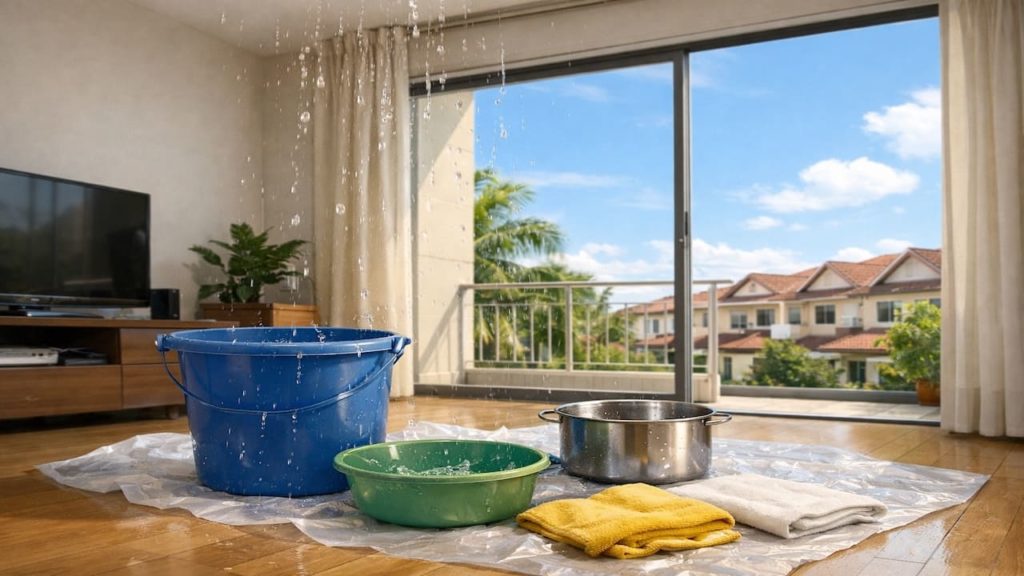
- Cover floor and furniture with plastic sheet
- Hose test parapet face then coping top
- Seal termination bar with compatible sealant
- Patch cracks with elastomeric crack filler
Some will suggest coating the entire roof because it sounds like a one-shot solution.
But if the parapet joint detail is loose, full coating still leaks at the wall, so fix the joint, retest, and then expand only if needed.
5. FAQs
Q1. Can a parapet leak look like a window leak?
Yes, because water can run inside the wall and appear around the window head or corner. In Malaysia storms, wind-driven rain makes the pattern messy.
Q2. Why does the stain show on the ceiling, not the wall?
Water often enters high at the parapet, then travels along slab edges and beams before dripping. The first visible spot may be the ceiling joint.
Q3. Do I need to repair cracks on both sides of the parapet?
Usually yes, because exterior cracks admit rain and interior cracks show movement. Address the exterior entry path first, then seal and repaint inside.
Q4. What quick check tells me the coping cap is the problem?
Look for open joints or missing sealant on the coping top and ends. Loose coping joints can pour water behind the wall during heavy rain.
Q5. When should I call a waterproofing specialist?
If you see multiple cracks, damp smell, or repeated leaks after storms, call early. Parapet leaks spread inside the wall and enlarge repair scope.
Pro’s Tough Talk

I’ve been on site for 20+ years and handled hundreds of jobs, and parapet leaks in Malaysia are the kind that make smart people feel dumb. You look at the wall and it looks fine, then your ceiling drips like it has opinions. That’s the trap.
Cause 1 is hairline cracks that act like funnels, because water loves tiny gaps more than big obvious holes. Cause 2 is coping joints that opened up, because heat cycles pull them like a zipper that lost teeth. Cause 3 is bad termination sealing at the upturn, because one loose edge lets water run behind the waterproofing. Three villains.
Step 1, kill power near the wet spot and protect the room, because wet wiring is a snake under the bed. Step 2, test the parapet in zones, because one big hose blast just confuses the trail. Step 3, fix the joint detail and retest, because sealing the field while the edge is open is like mopping while the tap is on. Reality.
Parapet leaks are edge detail failures not roof bad luck. Don’t blame yourself, because nobody climbs a roof wall for fun, and not every contractor is a clown either, sometimes the detailing was just weak from day one. But the structure is cold: cracks pull water, cavities spread it, and Malaysia humidity keeps everything damp, so delays turn small repairs into bigger bills.
And the “just paint over the crack” advice gets a side-eye, because paint is not waterproofing when the crack moves. You know the relatable moment: bucket under the drip, towel on the floor, and you pretend it is temporary. Keep ignoring it, and that parapet will keep feeding your ceiling like a vending machine for stains. Enjoy.
Summary
Parapet wall leaks usually come from hairline cracks, loose coping joints, or weak upturn termination sealing, and Malaysia storms push water into those edges.
If leaks repeat or spread, treat it as an edge detail and drainage path issue, not just a random ceiling stain that dries later.
Do the parapet zone test and joint fix today and then retest before coating anything else, and if you want the next guide, read the one on flat roof ponding leaks.