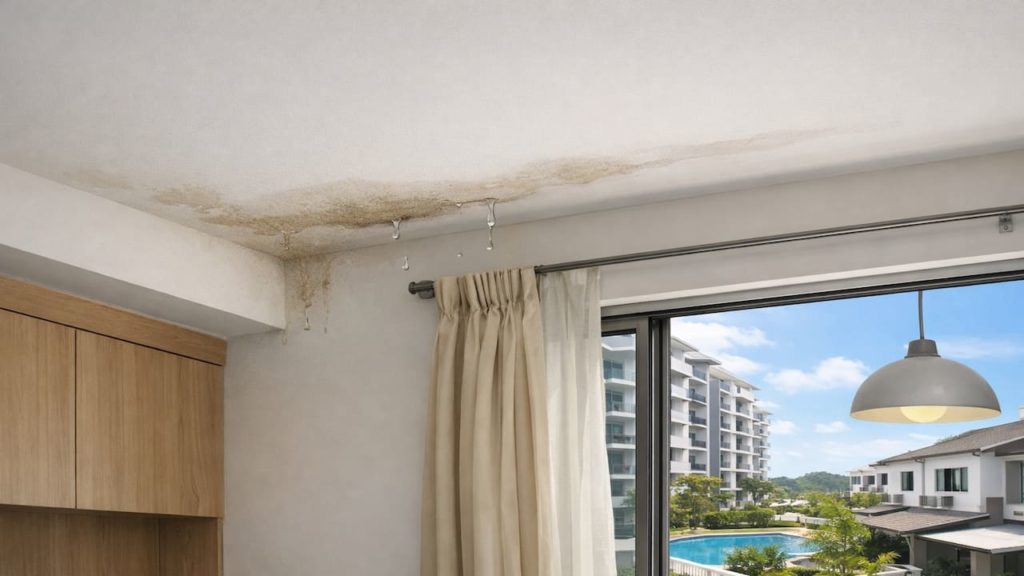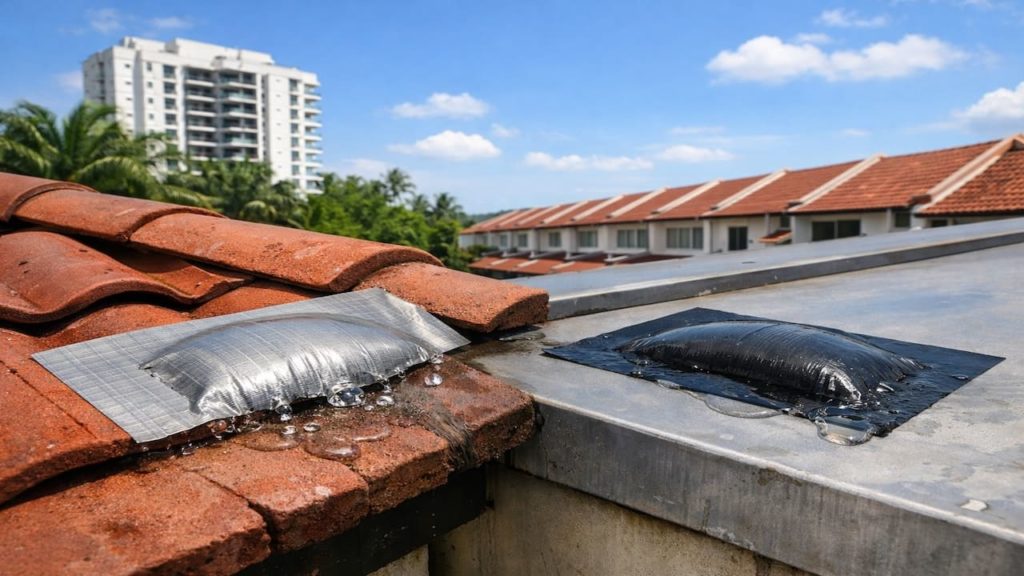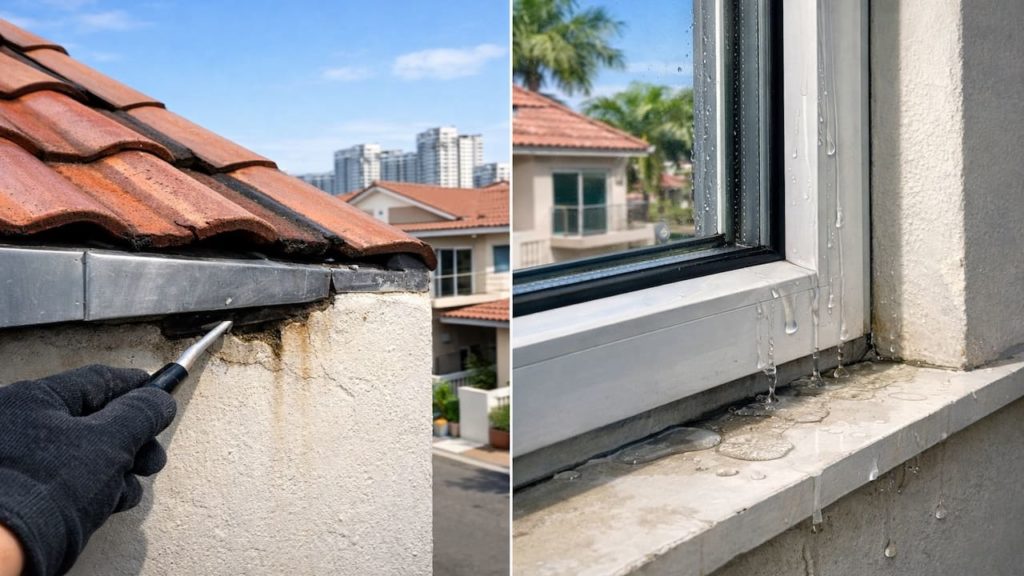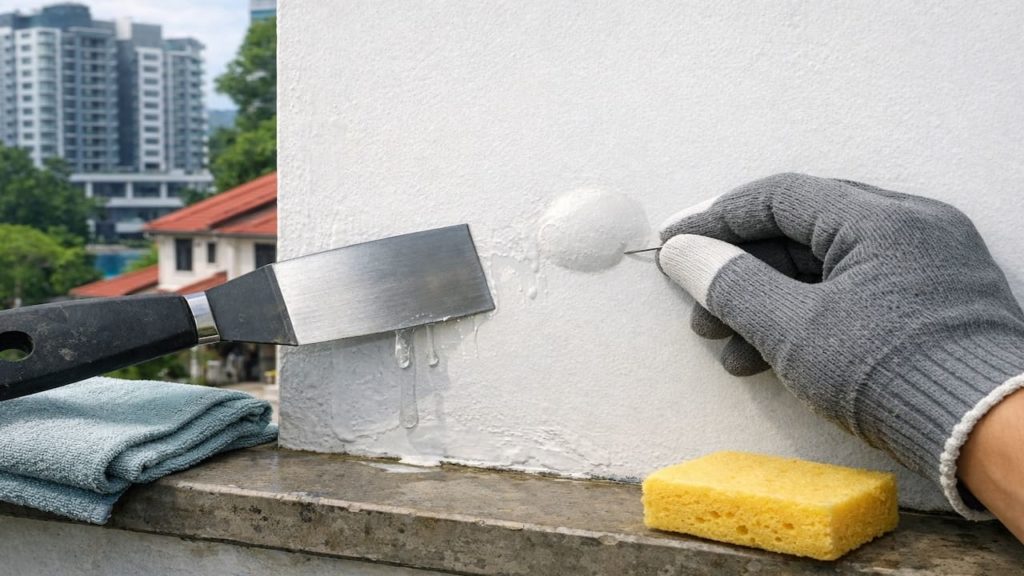
A leak at the ridge cap in Malaysia can feel confusing, because rain hits the roof hard, yet the stain shows up later inside. Wet season behavior.
Ridge caps fail from loose fixings, cracked mortar, aged sealant, and wind-driven rain that pushes water under laps, especially after hot sunny days. Humid air keeps it active.
In this guide, you’ll learn how to spot ridge cap failure before the ceiling softens using simple signs that fit terrace houses and condo top floors in tropical weather.

Hi, I’m Ken. I write practical home guides for Malaysia—no fluff, just what works.
I hold a formal building design qualification and have spent about 20 years on job sites across hundreds of projects. My goal is simple: help you avoid costly mistakes with clear, safe steps—a quick way to decide what to do next.
1. Roof leak at ridge cap: 5 signs
Ridge cap leaks leave repeatable signs on both roof and ceiling.
The ridge line is the highest pressure zone during storms in Malaysia—wind lifts edges and water sneaks under laps, then travels along underlay and timber before it drops. Delayed drips happen. Common.
- Check ridge cap for visible edge lift
- Tap cap gently and listen for hollow sound
- Look for hairline cracks along mortar lines
- Inspect ceiling for thin ring stain pattern
- Check attic for wet nails near ridge
Some say a ridge leak must show right under the ridge, but water can travel sideways inside the roof space. Track the first wet line, then confirm the ridge joint—same rule. Practical.
2. Loose caps and cracked mortar lines
Loose caps and cracked mortar lines open a storm only entry.
Heat and UV harden mortar and sealant, then night cooling tightens joints and cracks open—Malaysia humidity keeps the crack wet, so the leak grows even if the gap looks tiny. A trap.
- Check mortar for powdery surface and gaps
- Inspect cap fasteners for rust and looseness
- Look for missing seal bead under cap lap
- Check ridge end caps for open corner joint
- Inspect tile alignment under ridge cap line
You might think a quick smear of silicone fixes everything, and it can look good for a week. If the cap is moving and the mortar is cracked, the smear splits again—secure first, then seal. Clean.
3. Why + Ridge cap leaks worsen in wet season storms
Wind driven rain forces water under ridge laps.
During Malaysian squalls, gusts push rain uphill and sideways, and ridge laps become a funnel point—once water enters, humid insulation and dusty underlay help it wick and travel before dripping. Physics.
- Check windward ridge for lifted lap edge
- Inspect underlay tear line near ridge timber
- Look for damp trail along rafter direction
- Check ridge vents for broken mesh gaps
- Inspect roof screw washers near ridge area
Some blame the newest storm like it is a one-time freak event. In Malaysia, storms are the normal test, so small ridge gaps will keep failing—fix the detail or it returns. Certain.
4. How + Secure ridge caps and stop the seep
Secure the cap movement then reseal the joint once.
Random patching fails fast in humid Malaysia—trapped moisture feeds mold, and the drip reappears at a new ceiling point, even if the ridge looks shiny. Controlled work wins. Discipline.
- Mark ceiling stain edge and record rain time
- Inspect ridge line in dry daylight hours
- Tighten or replace loose ridge cap fasteners
- Remove cracked mortar and clean joint surface
- Apply roof grade compound on dry joint
People say full roof coating is safer, because it feels like a blanket fix. If the ridge cap is loose, coating does not stop movement—secure the cap, then seal the lap, and the leak stops. Done.
5. FAQs
Q1. Why does a ridge cap leak show up far from the ridge?
Water can enter at the ridge, then travel along underlay, rafters, or wiring trays before it drops at a low point. In Malaysia humidity, that travel can last for hours after rain ends.
Q2. Is cracked mortar always the main cause?
Cracked mortar is common, but loose caps, failed seal beads, and aged fasteners also create entry points. Check movement first, then decide whether mortar repair is enough.
Q3. Can ridge leaks happen only during storms?
Yes, wind-driven rain pushes water under ridge laps that stay dry in calm rain. Wet season storms in Malaysia expose tiny gaps like they are big holes.
Q4. What if the stain is near a light fitting?
Cut power to that circuit and avoid using the area until it is checked. Water near wiring is dangerous and humid air increases the risk.
Q5. When should I call a professional?
If the ceiling feels soft, bulges, or drips heavily, call help fast. If the roof is steep or slippery after rain, do not climb and risk a fall.
Pro’s Tough Talk

I’ve been on site for 20+ years and handled hundreds of roof and ceiling jobs, and ridge cap leaks are the sneaky ones. The roof looks fine from the ground, then the ceiling stains like it is playing games. Annoying.
In Malaysia wet season, this is usually 3 causes. Caps get loose and wiggle with heat cycles. Mortar lines crack and turn into little channels. Sealant ages under sun and splits when storms hit. Predictable.
Relatable moment one, you put a bucket under the stain and it drips 20 cm away anyway. Relatable moment two, you patch one crack and the leak pops up at the next cap like whack-a-mole. Roof water is a slippery snake.
Stop chasing stains and lock the ridge first with 3 steps. Check cap movement in daylight. Replace loose fasteners and remove cracked mortar. Seal one cleaned dry joint with the right compound.
Do not blame yourself, and do not call every contractor evil, but the structure is cold: moving caps break seals, then water travels sideways. The “just silicone everything” hero gets my jab. Keep ignoring it and enjoy your midnight bucket hobby.
Summary
Ridge cap leaks in Malaysia usually come from loose caps, cracked mortar lines, and storm pressure that pushes water under laps. The ceiling stain is only the symptom. Fact.
Check for movement, confirm damp trails near the ridge, and fix the ridge detail before you chase interior paint. If symptoms keep returning, treat it as a ridge system issue, not a single crack.
Inspect the ridge in daylight after the next storm and then move to our guides on gutter overflow splashback and ceiling mold control for wet season homes.