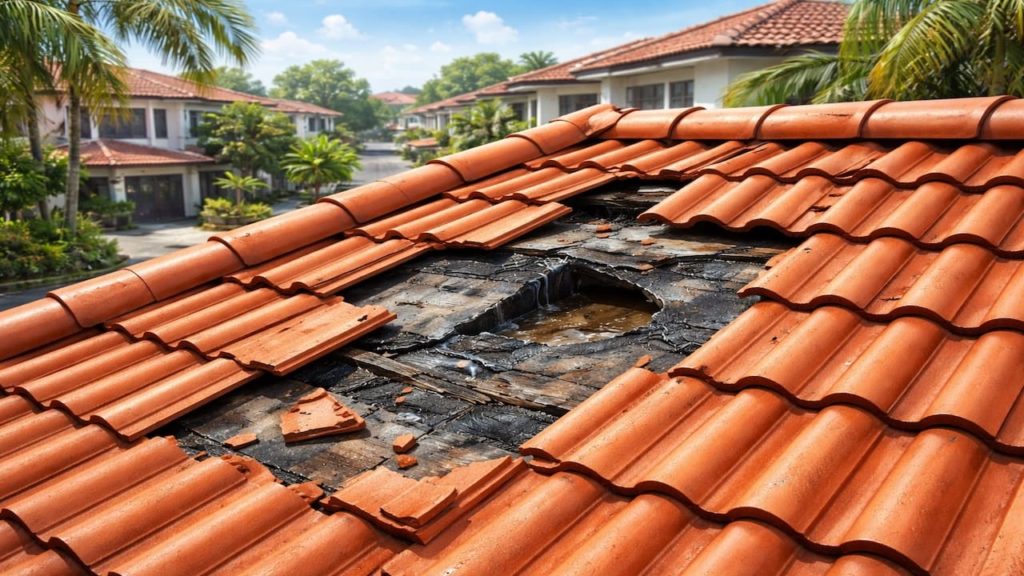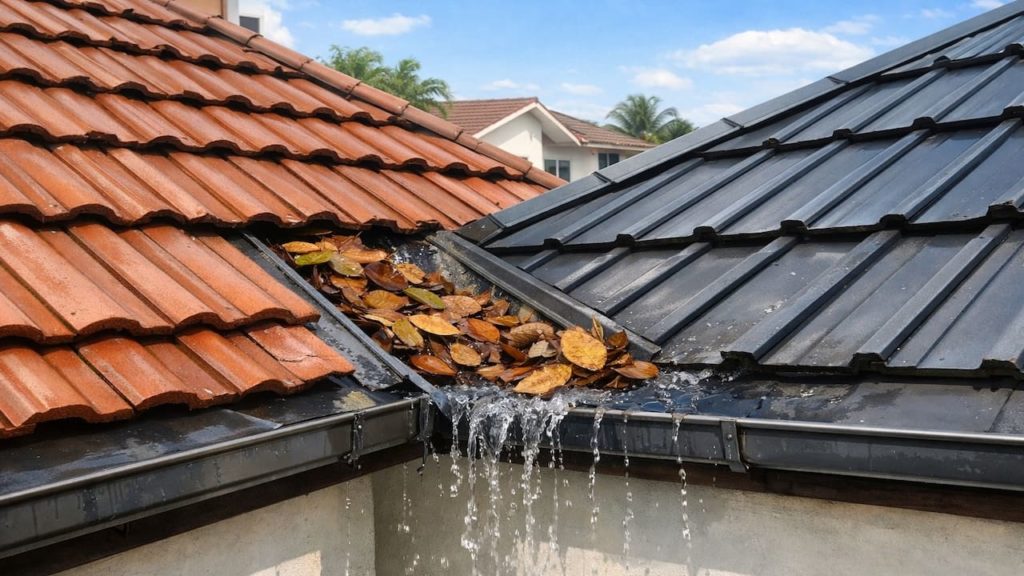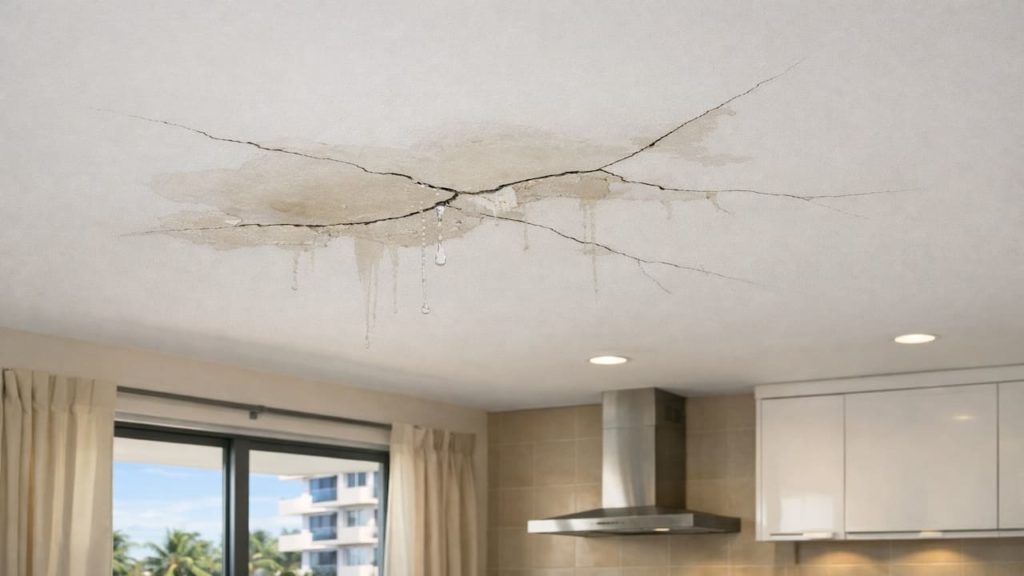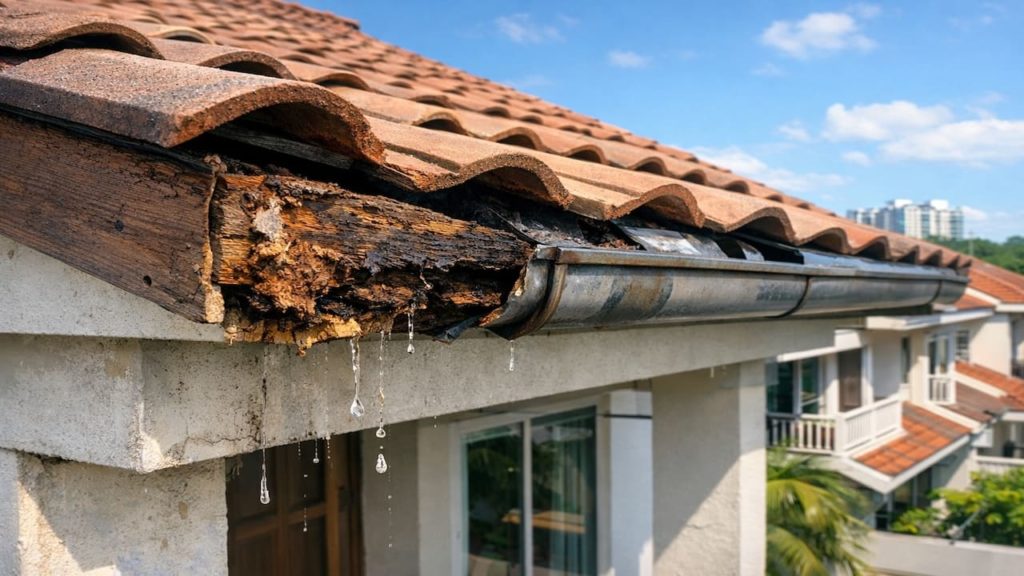
A roof leak from a roof joint feels tricky, because the roof surface can look fine while the joint line quietly lets water in during Malaysia storms.
Joints move with heat, rain cooling, and building settling, so gaps open slowly over time, then the first hard downpour reveals the weak seam.
In this guide, you’ll learn how to spot joint movement before it spreads and how to confirm the seam is the entry point in terrace houses and condo top floors.

Hi, I’m Ken. I write practical home guides for Malaysia—no fluff, just what works.
I hold a formal building design qualification and have spent about 20 years on job sites across hundreds of projects. My goal is simple: help you avoid costly mistakes with clear, safe steps—a quick way to decide what to do next.
1. Roof leak from roof joint: 5 signs
Joint leaks show repeatable patterns after rain.
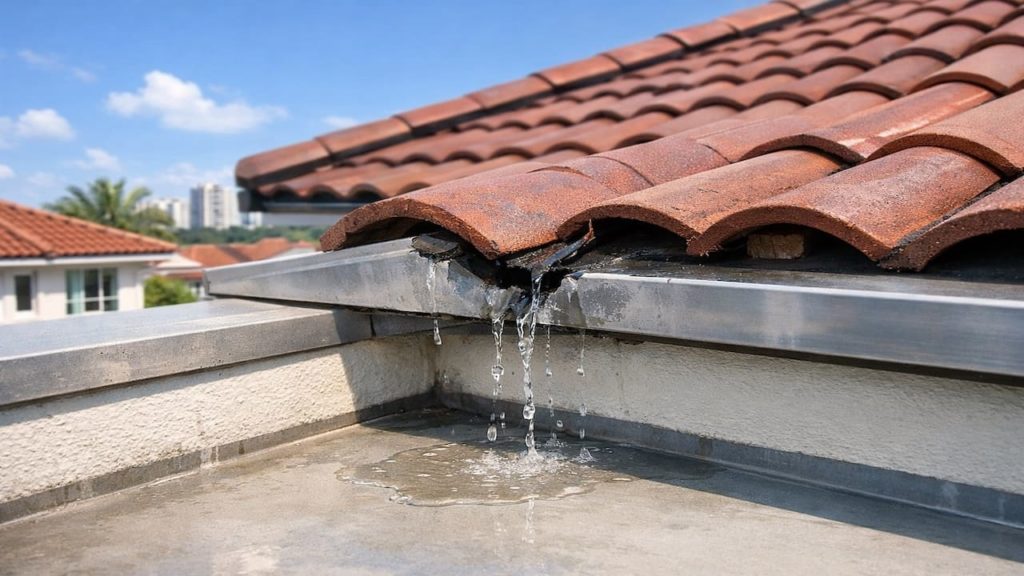
Roof joints fail at the seam, not the field, and Malaysia heat cycles stretch and shrink materials—so the leak often repeats in the same line.
Pattern.
- Look for stain line matching joint direction
- Check for drip only during heavy rain
- Inspect seam sealant for shrink gaps
- Watch for dampness after hot afternoon storms
- Find rust marks near joint fasteners
Some people assume any drip is a random hole somewhere, so they chase the biggest wet spot and miss the seam.
But joints fail predictably, so follow the line and you usually find the entry point faster.
2. Movement opens gaps over time
Movement slowly pulls sealant away from the joint.
When one side expands more than the other, the seam works like a hinge, and sealant loses adhesion, especially after long dry heat in Malaysia.
Slow separation.
- Press seam edge and feel loose sections
- Look for hairline split along sealant bead
- Check joint cover flashing for lifted corners
- Inspect screw heads for missing washers
- Look for dirt lines where water reentered
You might think movement means the roof is “unsafe” or the whole structure is failing, which spikes anxiety.
But most movement is normal, so the fix is the right flexible joint detail, not panic repairs.
3. Why roof joints fail in Malaysia: heat shock and moisture
Heat shock and moisture weaken joint details fastest.
Malaysia roofs heat up hard, then cool fast in sudden rain, and that shock stresses seams, laps, and fasteners more than flat areas.
Stress zone.
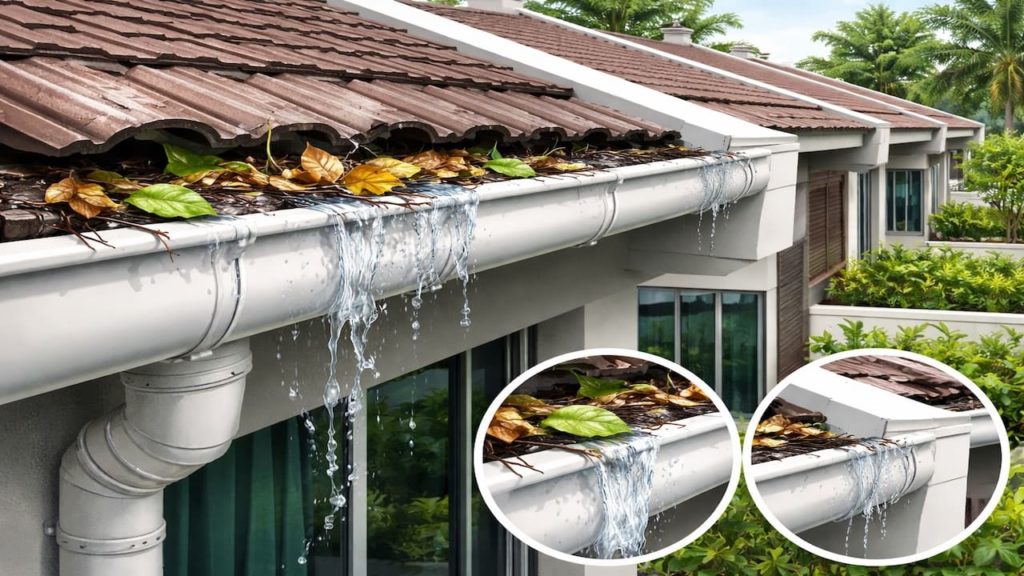
- Inspect valley joints for debris and wet lines
- Check ridge joint mortar for crumbly sections
- Look for tile slip near joint transitions
- Inspect metal lap joint for corrosion streaks
- Check expansion joint cover for cracked sealant
People often blame “poor workmanship” only, and sometimes that is true, but it stops you from diagnosing the current failure.
Environment matters too, so target the joint detail that cannot handle tropical cycles.
4. How to confirm and fix a roof joint leak
Test the joint zone before sealing everything.
Start with safety, then isolate the seam with a controlled hose test, because Malaysia humidity keeps areas damp and hides the true path for days.
Proof first.
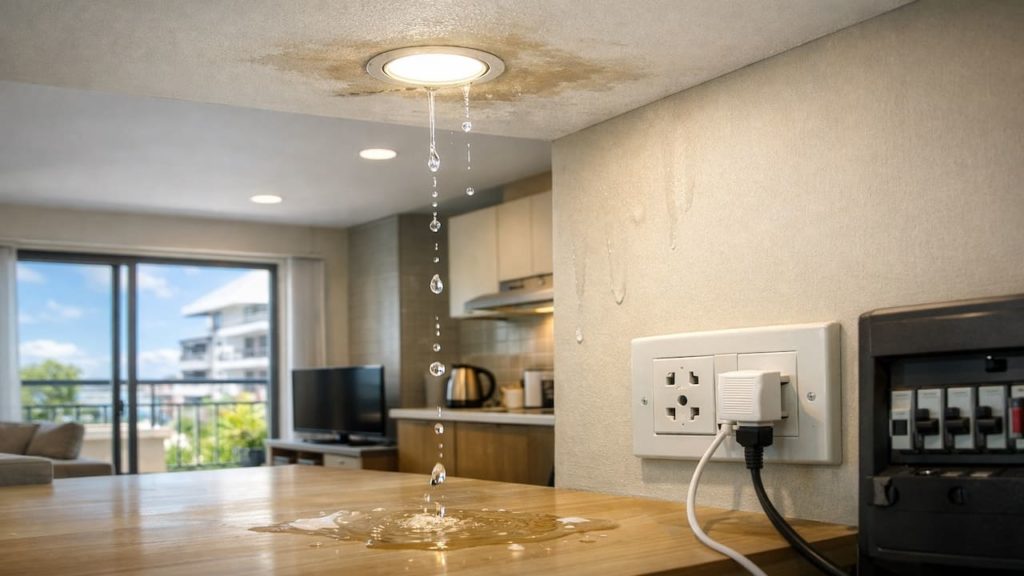
- Turn off circuit near leak stain
- Mark stain edge with pencil and date
- Hose test seam zone for 15 minutes
- Replace missing washers and tighten fasteners
- Re-seal joint with compatible flexible sealant
Some will advise coating the whole roof because it feels like a one-time reset and looks neat.
But coatings fail if the seam keeps moving, so fix the joint detail, retest, and only then consider broader waterproofing.
5. FAQs
Q1. What exactly counts as a roof joint?
It can be tile transitions, metal lap seams, ridge and valley joints, or expansion joints between roof sections. Any place two parts meet and move.
Q2. Why does the leak appear only during heavy rain?
Because wind-driven rain and ponding increase pressure at the seam. Light rain may not reach the gap, so the leak looks “random” in Malaysia storms.
Q3. Can I just add more silicone along the seam?
Only if the surface is clean, dry, and the gap is stable. If movement keeps pulling the sealant, it will peel and leak again.
Q4. What is the fastest way to confirm the joint is the source?
Do a controlled hose test on the seam, not the whole roof. One-zone testing beats guessing every time when water paths are hidden.
Q5. When should I call a roofer instead of DIY?
If the seam is high, steep, or near electrical penetrations, call a roofer. If multiple joints show gaps, it may need professional resealing.
Pro’s Tough Talk

I’ve been on site for 20+ years and handled hundreds of jobs, and roof joint leaks in Malaysia are the slow-burn kind that make people lose patience. It starts as a “maybe” stain, then one storm later it upgrades itself to a real drip. Classic progress.
Cause 1 is movement, because the seam is basically a little door that opens and closes with heat. Cause 2 is sealant fatigue, because sun turns flexible stuff into crunchy stuff. Cause 3 is fasteners and washers aging, because tiny parts fail first and water takes the invitation. Three-piece set.
Step 1, shut off power near the wet spot and protect the room, because wet wiring is a trap door. Step 2, do a seam-only hose test, because spraying everything just makes you feel busy. Step 3, fix the joint detail, not the stain, because the stain is the messenger, not the criminal. Fact.
Joints leak because they move so your fix must flex. Don’t blame yourself, because most people never think about seams until the ceiling tattles, and not every contractor is useless either, the environment is brutal. But the structure is cold: movement opens gaps, rain drives in, cavities spread it, and Malaysia humidity slows drying, like a sponge that refuses to quit.
And the “just paint over it” move gets a side-eye, because paint is not a hinge repair. Relatable moment 1: bucket under the drip at midnight. Relatable moment 2: towel pile on the floor like a mini dam. Ignore it, and that joint will keep sending you brown postcards. Enjoy.
Summary
Roof joint leaks usually come from seam movement, tired sealant, or aging fasteners, and Malaysia heat shock makes those gaps open faster than you expect.
If the leak repeats during heavy rain or follows a seam line, treat it as a joint detail failure, and use zone testing before paying for broad coating.
Do the seam-only hose test today and then repair the flexible joint detail, and if you want a next read, check the guide on parapet wall leaks.