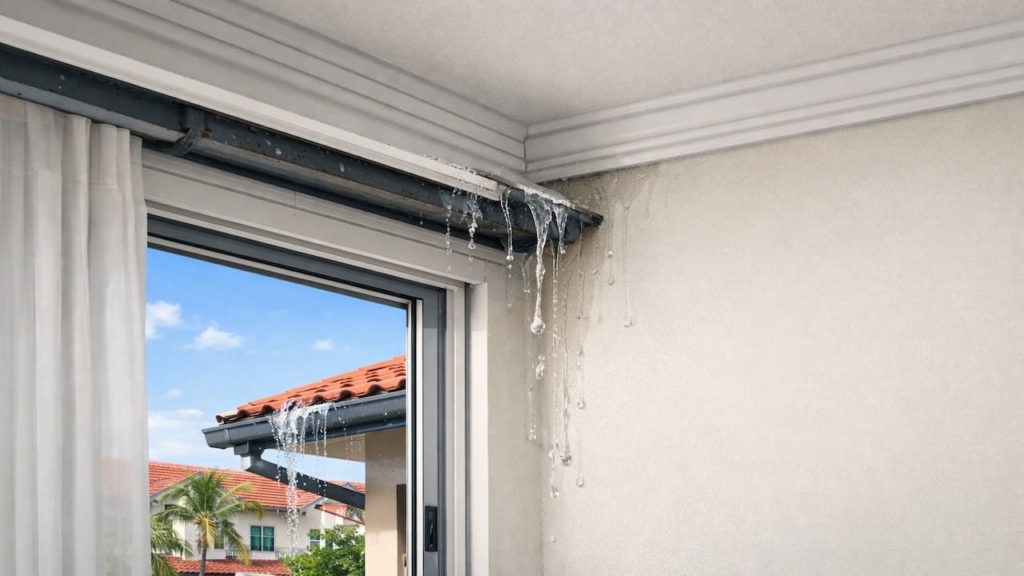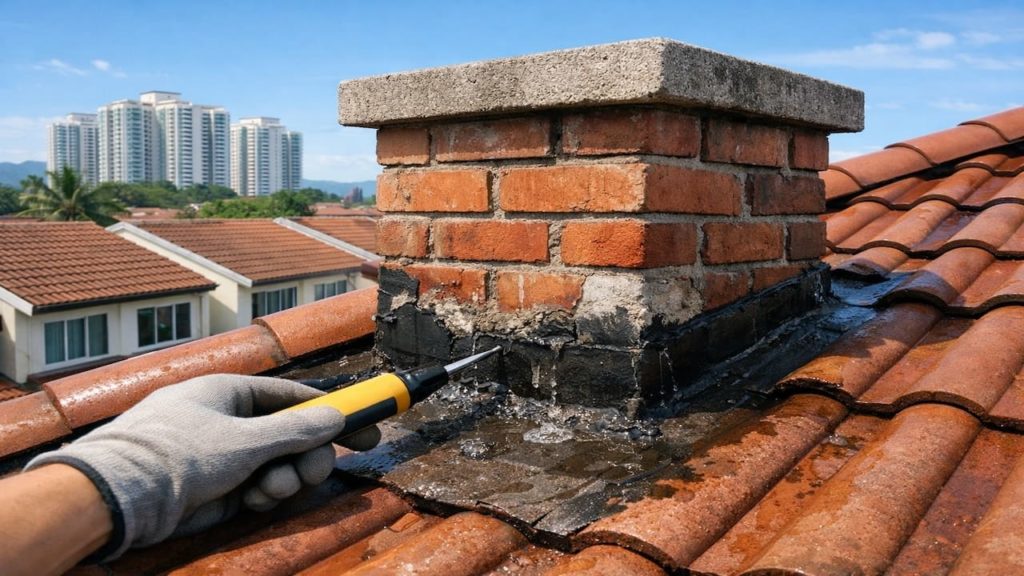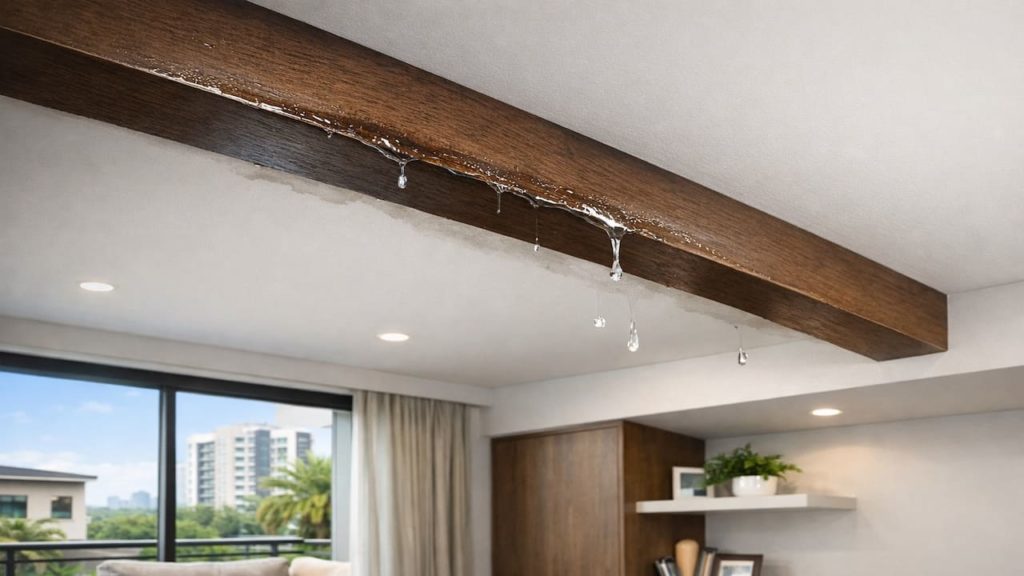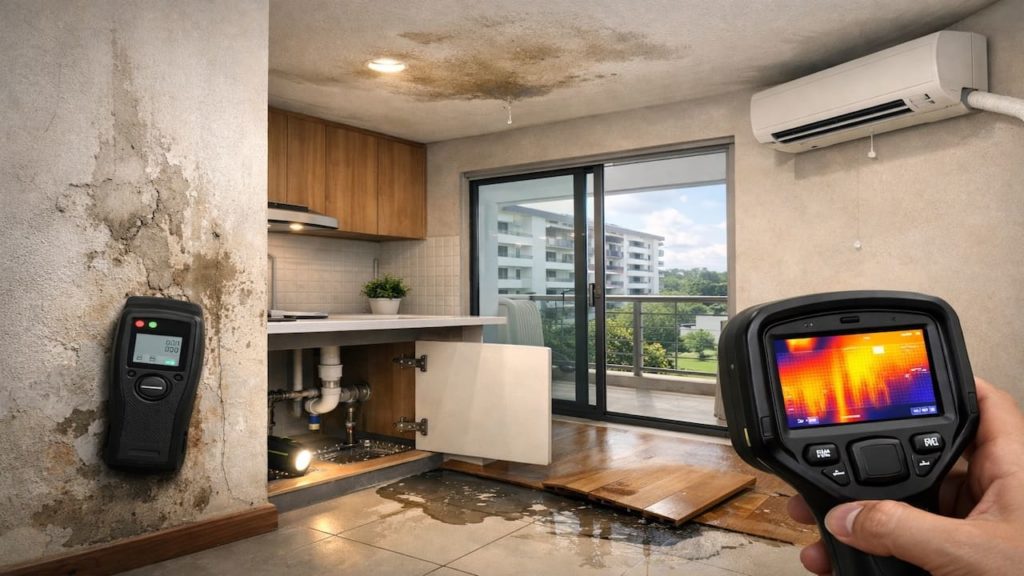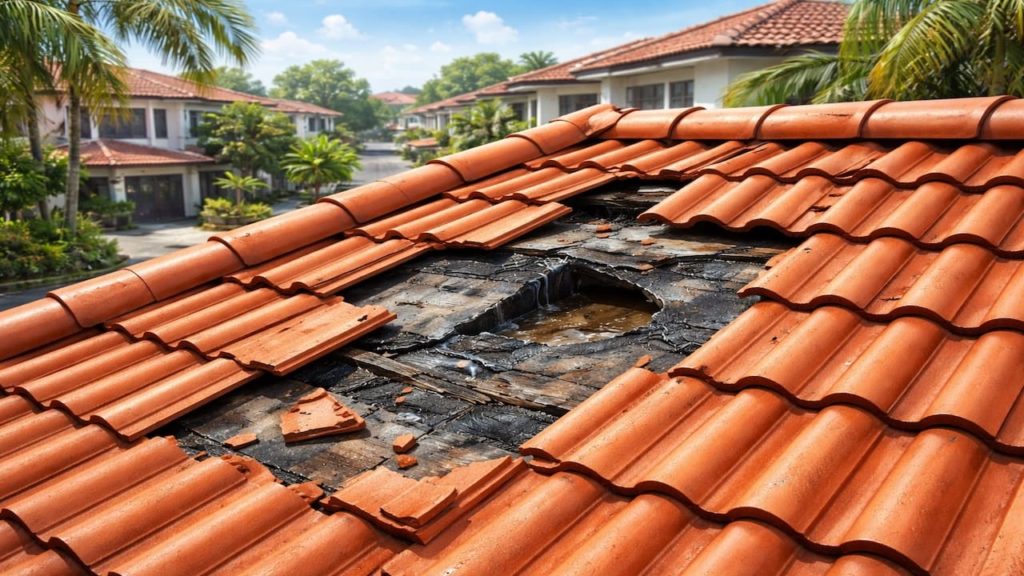
A leak on a tiled roof in Malaysia can feel unpredictable, because tiles look solid until one storm shifts them and the ceiling stain appears later. Wet season surprise.
Broken tiles matter, but underlay tears, ridge and valley joints, and gutter overflow can be the real entry, then water travels inside warm humid roof cavities. Hidden route.
In this guide, you’ll learn how to confirm tile and underlay problems before damage spreads using simple checks that fit terrace houses and tropical downpours.

Hi, I’m Ken. I write practical home guides for Malaysia—no fluff, just what works.
I hold a formal building design qualification and have spent about 20 years on job sites across hundreds of projects. My goal is simple: help you avoid costly mistakes with clear, safe steps—a quick way to decide what to do next.
1. Roof leak on tiled roof: 5 checks
Start by finding the highest active wet line not the stain.
In Malaysia humidity, water can keep moving long after rain ends—so the ceiling stain is often the exit point, not the entry. Track the path first.
- Circle stain edge and record rain end time
- Check attic for shiny trails and wet nails
- Look for damp insulation bands near rafters
- Inspect roof valleys for leaf mud blockages
- Check ridge line for lifted caps or gaps
Some people assume the tile above the stain must be cracked. That can happen, but tiled roofs often leak at joints and underlay tears, so confirm the travel line before replacing tiles. Practical.
2. Broken tiles and underlay tears matter
A single broken tile can expose underlay and start a seep.
Tiled roofs rely on overlap and underlay—when tiles crack or shift, wind-driven Malaysian rain can reach the underlay, and if it is torn, water drops into the roof space. Simple chain.
- Scan for cracked tile edges near ridge and valley
- Check for slipped tiles creating open overlaps
- Inspect underlay for tears and curled edges
- Look for daylight pinholes through roof layers
- Check tile battens for damp and dark stains
You might think “Underlay is waterproof so it is fine.” Underlay can tear from heat, age, and foot traffic, so a small tear becomes a real leak path in storms. Truth.
3. Why + Tiled roofs leak more in storms and wind
Wind driven rain defeats tile overlaps during squalls.
Malaysia storms push rain sideways and uphill—overlaps that work in calm rain can fail under pressure, especially at ridge ends, valleys, and roof-to-wall junctions. Storm physics.
- Check windward tile laps for lifted edges
- Inspect ridge end caps for open corner joints
- Look at flashing corners for split seal beads
- Check valley metal seams for rust pinholes
- Inspect gutter overflow splash under eave returns
Some say tiled roofs never leak unless tiles break. In wet season squalls, joints and corners leak even with intact tiles, so check the system details, not only tile faces. Certain.
4. How + Replace tiles and repair underlay the right way
Fix the entry point then restore overlaps and drainage.
Random patching fails in Malaysia humidity—trapped moisture feeds mold, and the drip shifts to a new ceiling point, so repair must follow confirmed evidence. Discipline.
- Photograph damage and mark tile location on plan
- Lift tiles carefully and inspect underlay condition
- Patch underlay tear with compatible repair tape
- Replace broken tile and re-seat correct overlap
- Clear valley and gutter so runoff exits fast
People say “Just silicone the crack and forget it.” Silicone on dusty wet tiles peels fast, and it does not fix a torn underlay or slipped overlap. Replace and patch properly, then the leak stops. Done.
5. FAQs
Q1. Can one cracked tile really cause a ceiling stain?
Yes, if wind-driven rain reaches the underlay and the underlay is torn or poorly lapped, water can enter the roof space. In Malaysia humidity, the stain can grow quickly.
Q2. How do I know if the underlay is torn?
You often see shiny wet trails, damp battens, or daylight pinholes from inside the roof void. The sure check is lifting tiles in the suspected zone.
Q3. Why does it leak only in storms?
Storm wind pushes rain sideways under overlaps and into corners that stay dry in calm rain. Wet season downpours also increase runoff volume and overflow risk.
Q4. What if the stain is near a ceiling light?
Cut power to that circuit and avoid using the area until checked. Water near wiring is dangerous and humid air increases risk fast.
Q5. When should I call a professional?
If the roof is steep, high, or unsafe after rain, call help and do not climb. If many tiles are cracked or slipped, a systematic repair plan is better than spot fixes.
Pro’s Tough Talk

I’ve been on site for 20+ years and handled hundreds of roof and ceiling jobs, and tiled roof leaks in Malaysia are the classic “looks fine until it isn’t.” One storm and boom, stain party.
It is usually 3 causes. A tile cracks or slips and opens the overlap. The underlay tears from age, heat, or careless foot steps. Valleys and gutters clog and force overflow into edges. Predictable.
Two relatable moments. You replace one broken tile and then find two more cracks hiding like ninjas. You put a bucket under the stain and it drips 20 cm away because water travels like a sneaky snake.
Do the boring checks and the leak stops being magic with 3 steps. Trace the highest wet line in the roof void. Lift tiles in the suspected zone and inspect the underlay. Replace the tile and patch the underlay, then restore the overlap.
Do not blame yourself, and do not call every contractor a villain, but the structure is cold: tiles are only the skin, underlay is the real shield. The silicone cowboy gets my jab. Ignore it and enjoy your midnight bucket hobby.
Summary
Tiled roof leaks in Malaysia come from cracked or slipped tiles, torn underlay, and storm-driven rain at joints and corners. The ceiling stain is the exit point.
Map the wet trail, inspect valleys and ridges, then lift tiles to confirm underlay condition before you repair. If many tiles are failing, plan a wider refresh.
Check the roof void after the next storm then lift tiles in one zone and continue with our guides on valley debris, ridge cap gaps, and ceiling mold control for wet season homes.