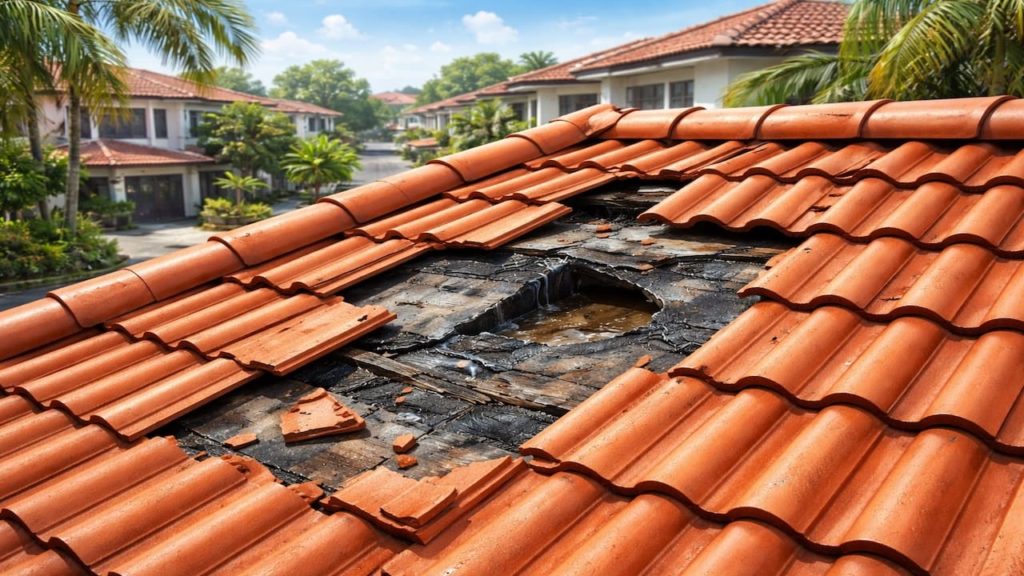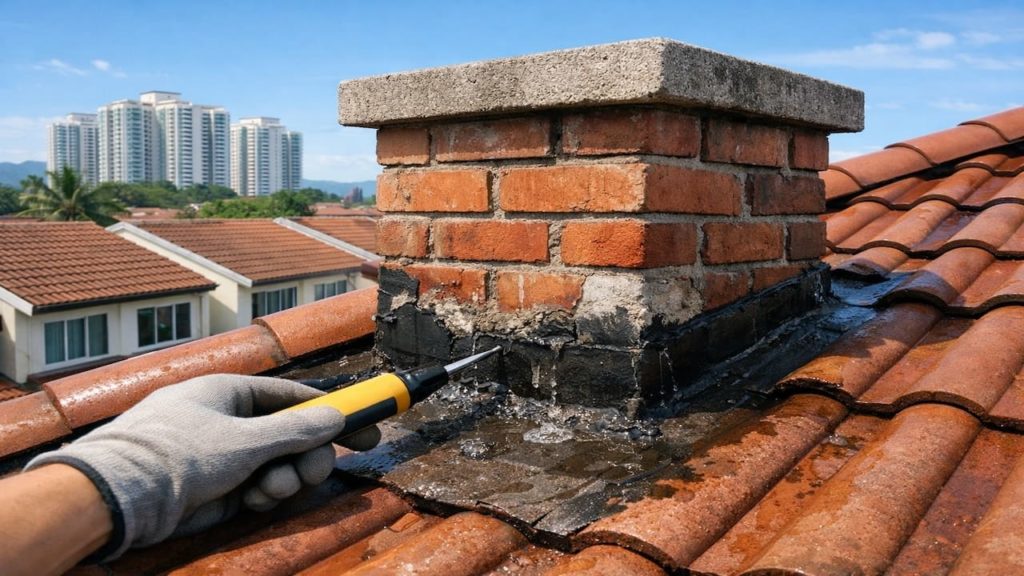
A roof leak around a vent pipe in Malaysia can feel sneaky, because the roof looks fine until one wet season storm turns a small crack into a steady drip. Frustrating.
Vent pipes rely on rubber boots and flashing seals, and Malaysia heat and UV harden rubber fast, while humidity keeps joints damp and dirty, so bonding fails. Common.
In this guide, you’ll learn how to confirm a vent pipe boot leak before ceiling damage spreads with quick checks that work on tiled roofs, metal roofs, and slab roofs.

Hi, I’m Ken. I write practical home guides for Malaysia—no fluff, just what works.
I hold a formal building design qualification and have spent about 20 years on job sites across hundreds of projects. My goal is simple: help you avoid costly mistakes with clear, safe steps—a quick way to decide what to do next.
1. Roof leak around vent pipe: 5 checks
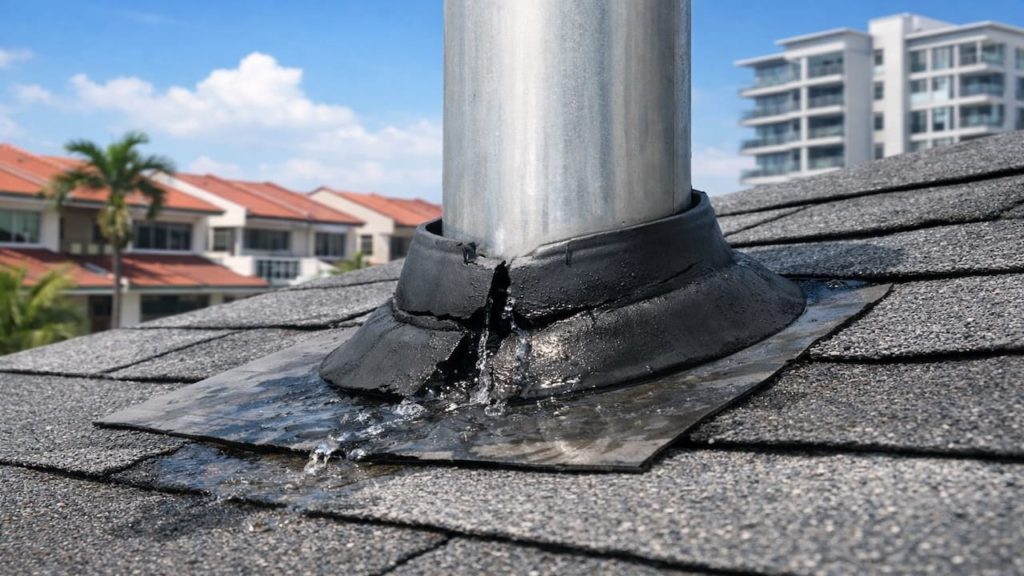
Most vent pipe leaks start at the boot not the pipe.
In Malaysia storms, wind pushes rain under the boot lip and into tiny cracks, then water travels along underlay and rafters before it drops inside. Delay happens.
- Inspect boot rubber for cracks and hard edges
- Check boot lip for lift and gaps
- Look for rust halos on boot fastener screws
- Inspect pipe clamp ring for looseness
- Check attic for wet nails near pipe line
Some people assume the pipe itself is leaking like plumbing, because the drip is near the pipe. If it happens after rain, the boot is the first suspect, so start outside and confirm. Simple.
2. Boots crack and let rain through
Cracked boots leak only when rain hits at an angle.
Malaysia heat bakes rubber, then night cooling tightens it and opens micro splits—wet season rain hits sideways, and water slides under the boot and into the roof layers. Predictable failure.
- Press rubber and feel for brittleness
- Check for split ring around boot cone
- Inspect sealant bead for peeling edges
- Look for dirt track lines entering under boot
- Check pipe penetration for wobble movement
You might think “Add more silicone around the boot and done.” If the rubber is cracked and moving, silicone peels, so replace the boot or reflash the penetration. Proper fix.
3. Why + Pipe penetrations are weak points in wet season
Penetrations interrupt the waterproof layer by design.
Any pipe hole cuts through tiles, metal sheets, or membranes, and Malaysia downpours add volume plus wind that forces water into that interruption—small defects become active leak paths. System issue.
- Inspect underlay around pipe for tear edges
- Check flashing base for lifted lap direction
- Look for ponding marks near pipe on slab roofs
- Inspect nearby ridge lap for windward pressure zone
- Check gutter overflow splash near pipe area
Some say “It is a tiny hole so it cannot matter.” A tiny hole at the wrong detail can leak more than a big crack, because it is a direct path through the roof system. Cold truth.
4. How + Test the boot and repair the real entry point
Reproduce the leak with a controlled spray test.
Random patching fails in Malaysia humidity—trapped moisture grows mold and the stain spreads, so you need a confirmed entry point before sealing anything. Control wins.
- Circle stain edge and record rain time
- Check attic for shiny trails near pipe
- Spray pipe boot area for ten minutes
- Dry and clean base before applying compound
- Replace cracked boot and reseal flashing base
Some people want to coat the whole roof immediately. If the boot is cracked, coating does not stop water at the penetration, so fix the boot detail first, then consider broader coating only if needed. Done.
5. FAQs
Q1. How do I know it is rain entry, not a plumbing leak?
If it happens only after storms and slows during dry days, suspect the roof boot. Plumbing leaks usually drip regardless of rain timing.
Q2. Can a boot leak show up far from the pipe?
Yes, water can enter at the boot and travel along underlay and rafters before it drops at a low point. Track the first wet line in the ceiling void.
Q3. Should I just tighten the boot clamp?
Tightening can help if the clamp is loose, but cracked rubber still leaks. Replace aged boots and avoid over-tightening that cuts the rubber.
Q4. What if the wet stain is near a light fitting?
Cut power to that circuit and avoid the area until checked. Water near wiring is dangerous and Malaysia humidity increases risk.
Q5. When should I call a professional?
If roof access is unsafe, the pipe is high near a ridge, or multiple penetrations are leaking, call help. A proper reflash is often faster than repeated patching.
Pro’s Tough Talk

I’ve been on site for 20+ years and handled hundreds of roof and ceiling jobs, and vent pipe leaks are the tiny villain with big consequences in Malaysia. One small boot ruins your ceiling.
It is usually 3 causes. Rubber boots crack from heat and UV. Clamps loosen and the boot lip lifts. Sealant is slapped on wet dusty surfaces and peels off after the first storm. Predictable.
Two relatable moments. You seal the top and it still drips because the lip gap is underneath. You think it is plumbing, then it stops when the sun comes out and you feel silly. Happens.
Replace the cracked boot and the leak often ends instantly with 3 steps. Check rubber hardness and split lines. Spray test the boot zone only and watch inside. Reflash the base on a clean dry surface.
Do not blame yourself, and do not call every contractor evil, but the structure is cold: penetrations punish lazy details. The silicone cowboy who says “just add more” gets my jab. Ignore it and enjoy your midnight drip soundtrack.
Summary
Vent pipe leaks in Malaysia usually come from cracked boots, lifted lips, loose clamps, and failed sealant at the penetration. The ceiling stain is the exit point.
Map timing to storms, inspect the boot and underlay around the pipe, and use a controlled spray test to confirm the entry before repairing. Replace cracked boots instead of layering silicone.
Check the boot after the next hot day then spray test one zone and continue with our guides on metal roof fasteners, ridge cap gaps, and ceiling mold control for wet season homes.