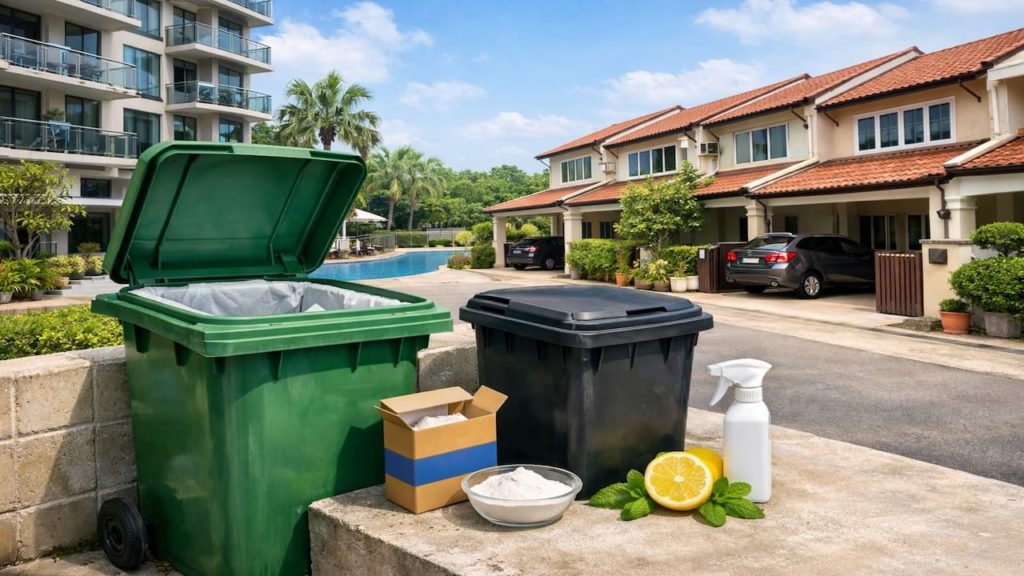
You searched “trash odor” because the bin smells even after you tie the bag, flies gather near the lid, or the stink leaks into the entryway.
In Malaysia, heat and humidity accelerate food rot, and wet season air keeps bins damp. That combination makes smell stronger and attracts flies fast, especially near condo doors and terrace kitchens.
In this guide, you’ll learn the 5 tips that stop bin stink and reduce flies near the door so your home smells cleaner even on hot days.

Hi, I’m Ken. I write practical home guides for Malaysia—no fluff, just what works.
I hold a formal building design qualification and have spent about 20 years on job sites across hundreds of projects. My goal is simple: help you avoid costly mistakes with clear, safe steps—a quick way to decide what to do next.
1. Malaysia trash odor guide: 5 tips
Bin stink comes from wet organic residue not the trash bag itself — smell lives on the bin walls.
Warm weather speeds bacteria growth, and humidity keeps moisture from drying out. In Malaysia, even a small drip of curry, soup, or meat juice can turn into a smell factory overnight. Residue.
- Check bin bottom for leaked liquid and sticky film
- Smell lid rim and note strongest odor point
- Inspect bag ties for small gaps and loose knots
- Look for flies around bin and nearby floor corners
- Track which food waste triggers smell within hours
You might think “my bin is just old”. But most stink is removable if you break the wet residue cycle and keep the inside dry.
2. 【Stop stink in bins and cut flies near the door】
Fast odor control is about drying and sealing before it rots — do it daily in hot weather.
Most fixes cost is mostly time/effort, because the biggest wins are bagging habits and quick wipe-downs. If you buy baking soda, bin liners, or a small deodorizer, RM5–25 is enough. Dry.
- Double-bag wet food waste and tie tightly
- Wrap fish and meat scraps before bin disposal
- Rinse containers and drain liquids before throwing away
- Keep bin lid closed and use foot pedal if possible
- Empty trash daily during wet season heat
You might feel daily emptying is annoying. But in Malaysia heat, one extra day is often the difference between “fine” and “why is my house cursed”.
3. Why bins stink and attract flies in Malaysia
Heat plus moisture turns food waste into fly bait quickly — flies follow scent and dampness.
Food scraps ferment faster at warm temperatures, and moist bin walls hold smell compounds. Flies also love sticky rims and leaked liquid near the bin, which becomes a breeding spot if ignored. Biology.
- Fermenting food releases strong odor compounds rapidly
- Leaked liquids soak into bin seams and corners
- Condensation keeps bin interior wet after washing
- Open lid time lets flies enter and lay eggs
- Nearby drains and wet mats add extra stink sources
You might assume flies come only from outside. They do, but once they find your bin, they keep returning because the odor trail is easy to follow.
4. How to deep clean and maintain a bin without harsh smell
Clean the bin fully then keep it dry so odor cannot rebuild — moisture control is the trick.
If you buy a mild cleaner, vinegar, or odor absorber, RM10–30 usually covers it. Avoid leaving the bin wet after washing, because Malaysia humidity slows drying and invites odor again. Routine.
- Empty bin and wash with detergent and warm water
- Scrub lid rim and hinge area where residue hides
- Rinse well and dry completely before new bag
- Sprinkle baking soda under liner to absorb smell
- Place bin where airflow helps drying between uses
You might think strong perfume spray solves it. It mixes with trash odor and becomes worse, so remove residue and dry instead of masking.
5. FAQs
Q1. Why does my bin stink even with a new bag?
Odor sticks to the bin lid rim and inner walls. Clean the bin itself, especially seams and hinges, not just the bag.
Q2. How do I stop flies from gathering near the door?
Reduce the odor trail by sealing wet waste and emptying daily. Also wipe the floor around the bin, because leaked droplets attract flies.
Q3. Is it okay to wash the bin and leave it wet?
Not in Malaysia humidity, because it stays damp and smells return fast. Dry it fully or sun it briefly so bacteria cannot regrow.
Q4. What should I do with fish and meat scraps?
Wrap tightly, double-bag, and freeze if you cannot dispose the same day. Those scraps rot fast and create the strongest odor.
Q5. Can the smell come from somewhere else?
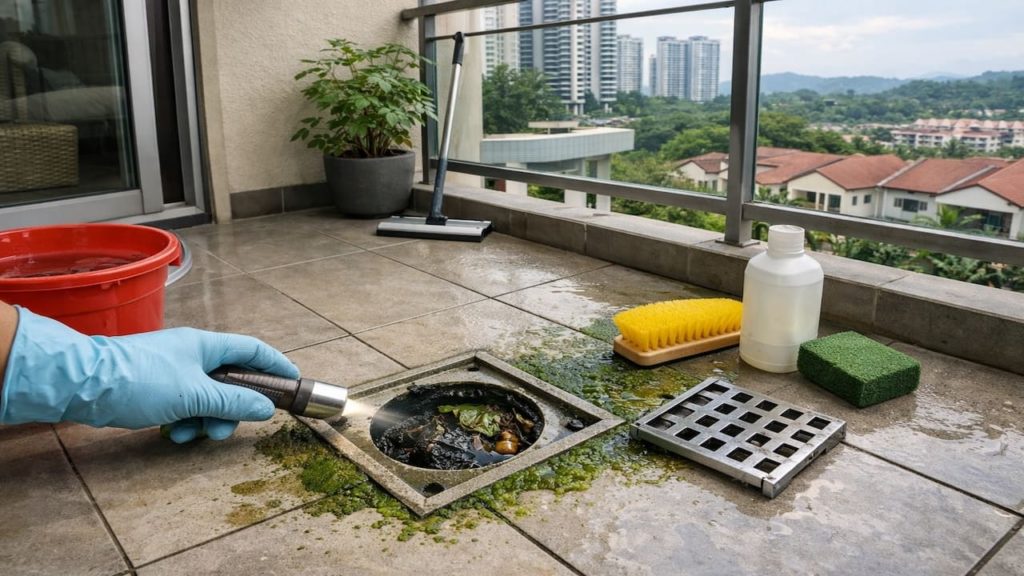
Yes, nearby floor traps, drains, or wet mats can add stink. If the bin is clean, check longkang smell sources near the kitchen or balcony.
Pro’s Tough Talk

Okay, I’ve been on site 20+ years, and I’ve done hundreds of jobs. Trash odor in Malaysia is like a durian left in a hot car. It doesn’t “fade”. It becomes your personality.
Cause is 3 pieces. Wet food residue, trapped moisture inside the bin, and flies following the scent trail. Contractors aren’t the villain here, but the structure is cold: heat plus humidity turns one spilled soup drop into a stink engine.
Do this now. Double-bag wet waste, wipe the bin rim every night, and empty daily when it’s hot. Wash the bin weekly, then dry it fully before a new bag. That’s it.
Dry bin walls and sealed wet waste stop most stink. Tsukkomi: you want the smell to disappear by “hoping” ah? Aruaru: you spray perfume and it becomes stink perfume. Aruaru: you notice maggots and suddenly become very motivated.
Ignore it and one day your guests will learn your bin’s name before yours lah.
Summary
Bin odor in Malaysia usually comes from wet residue, damp interiors, and fast rot in heat, which also attracts flies near doors.
Seal and dry daily, empty more often in wet season, and deep clean the rim and hinges where smell hides.
Do the rim wipe tonight and cut the odor source fast then read a related guide on drain flies or kitchen odor checks to keep entry areas fresh.