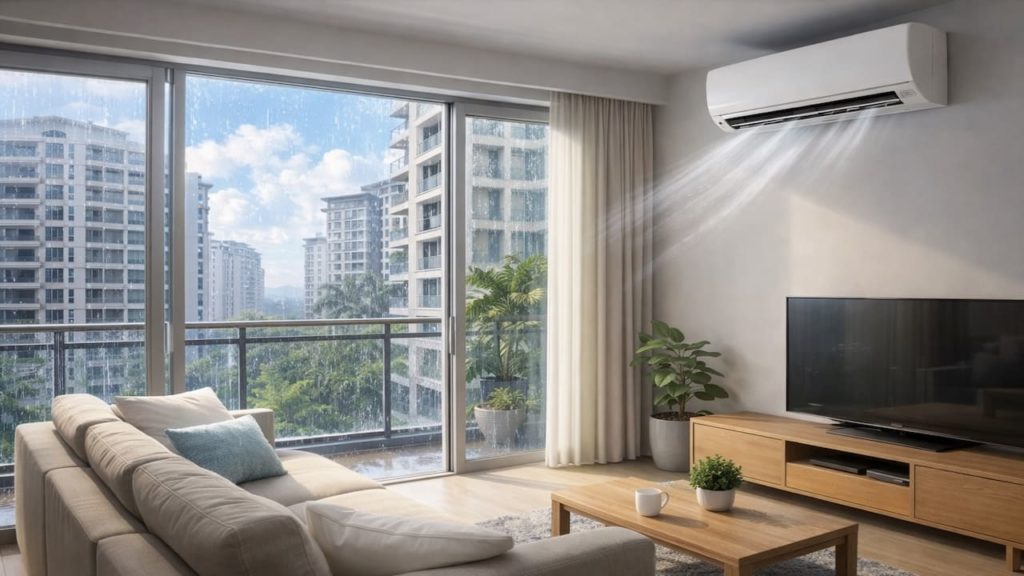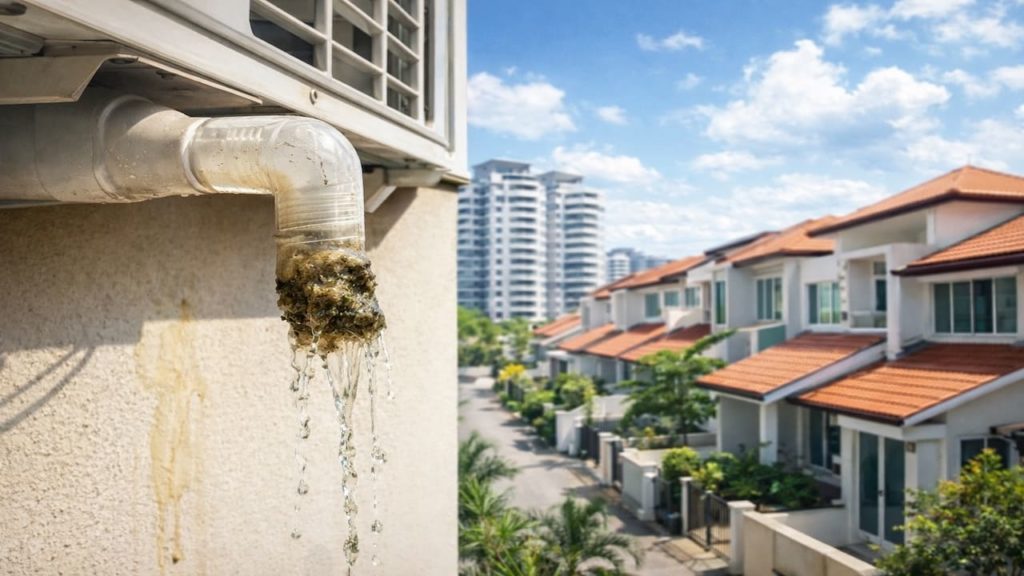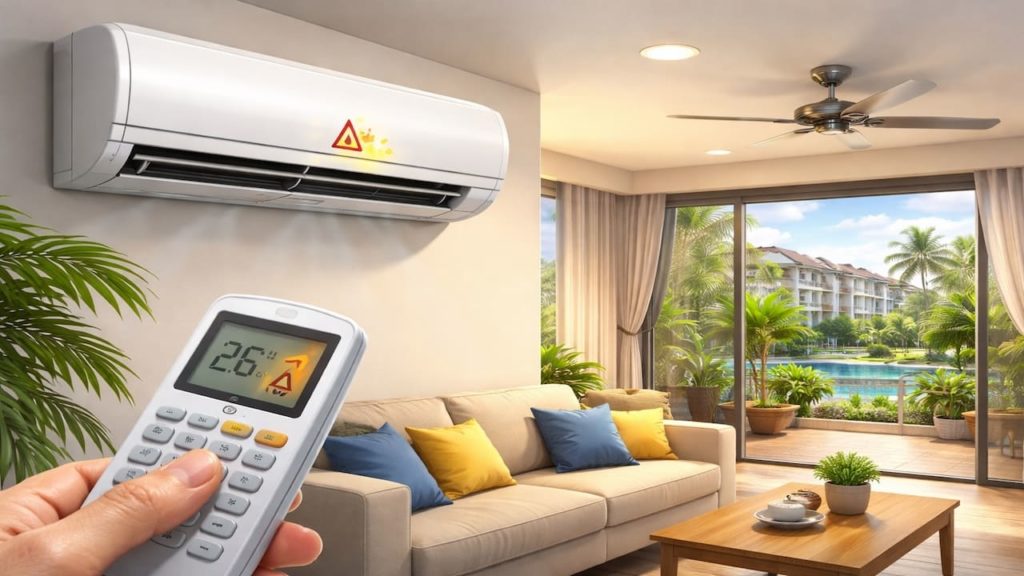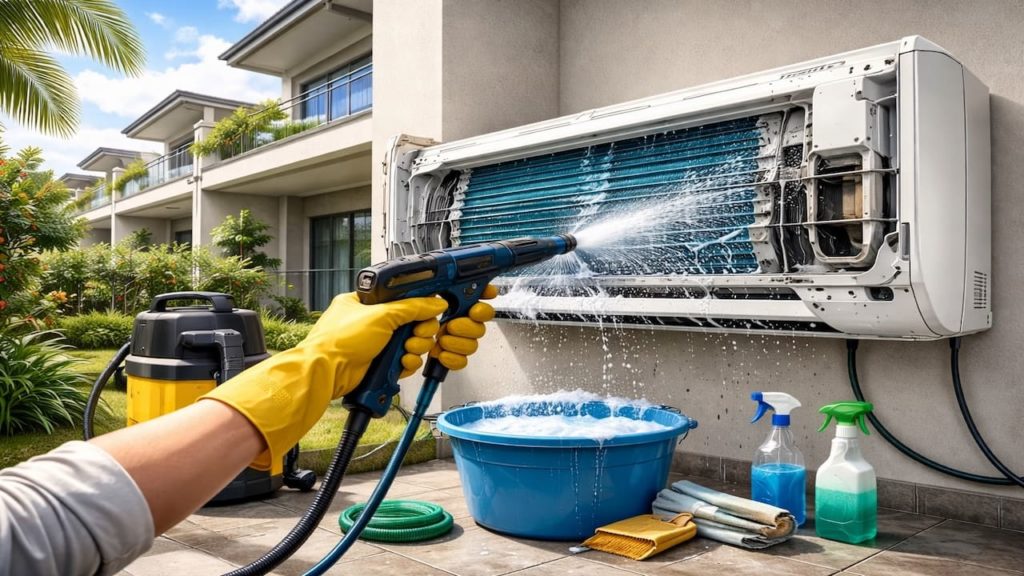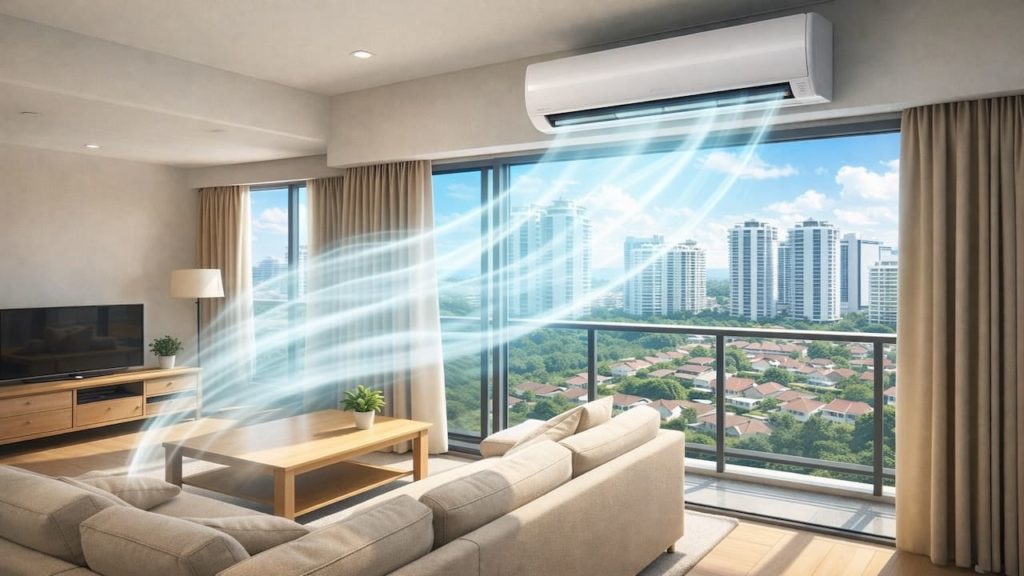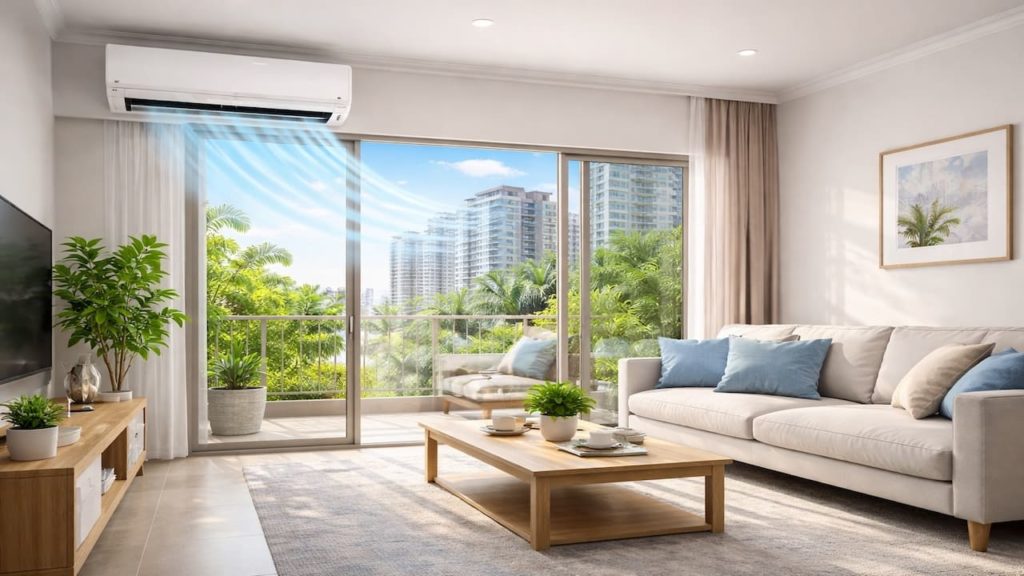
You’re trying to pick the right aircond BTU because your room feels hot, sticky, or never quite dry in Malaysia’s humidity.
Too small means weak cooling and nonstop running, but too big can short-cycle and leave the air damp. Condo layouts and terrace house heat gain change the math.
In this guide, you’ll learn the 5 BTU sizing rules that fit Malaysias humid homes so you can choose capacity with confidence and avoid regret later.

Hi, I’m Ken. I write practical home guides for Malaysia—no fluff, just what works.
I hold a formal building design qualification and have spent about 20 years on job sites across hundreds of projects. My goal is simple: help you avoid costly mistakes with clear, safe steps—a quick way to decide what to do next.
1. Aircond BTU sizing: 5 rules
Use room load to choose BTU in Malaysia condos and terrace houses
BTU is about heat and moisture load—humid air, sun, and airflow matter more than brand labels. Simple.
- Measure usable floor area not the whole unit size
- Add capacity for west sun large windows and poor shading
- Add capacity for high ceilings above about 2.7 m
- Add capacity for open doors open plan and kitchen heat
- Avoid oversizing that makes the room cold but still damp
You might hear that bigger is always safer. In humid Malaysia, too big often cycles off early and you feel clammy, so match the real load and win.
2. Choose the right capacity
Start with a baseline then adjust with 3 quick factors for your Malaysia room
A practical baseline for hot humid climates is about 600 to 700 BTU per m², then you adjust for sun, ceiling height, and openings—fast and clear.
- Baseline BTU equals room m² times 600 to 700
- Add about 10 to 20 percent for strong afternoon sun
- Add about 10 percent for high ceilings or top floor heat
- Add about 10 percent for open plan and frequent door opening
- Round to a standard size like 9000 12000 18000 24000 BTU
Some people want an exact number like a calculator. That helps, but these adjustments mirror real condo and terrace conditions, so your choice stays realistic.
3. Why BTU sizing goes wrong in Malaysia homes
Most sizing ignores humidity sun and airflow in real Malaysia layouts
Many sellers use floor area only, then humidity and glass heat load hit later—especially during rainy season when moisture stays trapped indoors. Common.
- Counting balcony or corridor space that the aircond never cools
- Ignoring west facing windows that bake the room in late afternoon
- Forgetting ceiling height so the room volume is larger than expected
- Ignoring air leaks from gaps under doors or weak window seals
- Choosing too large so it cools fast and stops before drying the air
It is easy to blame the unit when comfort feels wrong. In reality, sizing and installation set the ceiling, so fix the decision upstream and it works.
4. How to pick the right BTU in 10 minutes
Measure adjust round then confirm with comfort signs in Malaysia humidity
Do a quick check and write it down—then you can compare quotes without guessing. Clean decision.
- Measure room length and width then multiply to get m²
- Note ceiling height and whether the room is top floor or shaded
- Check sun direction and window size especially late afternoon
- Decide if doors stay closed or the room connects to a hallway
- Pick the nearest standard BTU then confirm dry comfort after install
You may worry about being slightly off. A small mistake is fine, but a huge oversize or undersize is not, so stay close to the adjusted number.
5. FAQs
Q1. Is higher HP always better for a bedroom
No, a bigger unit can short-cycle and leave humidity behind. In Malaysia, comfort needs dry air as much as cold air.
Q2. What if my room gets strong afternoon sun
Add extra capacity if the room heats up from glass or walls—curtains and shading can reduce how much you need. Test your room at 3 pm.
Q3. What is the biggest sign I oversized my BTU
Cold room but damp air. You feel chilly yet sticky, and the unit keeps turning on and off quickly.
Q4. What if my room is open plan to the living area
Treat it as a larger zone, not just the bedroom size. Open doors and hallways add load and make small units struggle.
Q5. Should I size up to reduce my electricity bill
Not automatically, because oversizing can waste energy through frequent starts. Right sizing plus good installation usually saves more.
Pro’s Tough Talk

I’ve been on site for 20+ years and handled hundreds of jobs, and BTU sizing is where Malaysia homeowners get quietly wrecked. Humidity in condos and terrace houses punishes bad guesses.
Three causes. People size by floor area only, ignore sun and ceiling height, and pretend the door will stay closed when it never does. So use 3 steps. Measure the m², add for sun and high ceilings, then add for openings and airflow paths and round to a standard BTU. Done.
Listen Do not buy BTU by feeling. Sizing is like shoes, if it does not fit you suffer every day. And “bigger is better” who said that, late night shopping. Two classics: the person who grabs a promo bigger unit and the room stays clammy, and the person who lets cold air spill into the hallway then complains it is weak. Expensive tuition.
Summary
In Malaysia’s heat and humidity, the right BTU is the one that cools and dries your room without nonstop running or short cycling. Decision first.
If your room stays clammy, swings between cold and sticky, or never reaches comfort, revisit sizing factors like sun, ceiling height, and openings.
Measure adjust round then test comfort. Today, calculate your m² and pick a standard BTU, then read the “installation” and “technician visit” guides to avoid leaks and weak cooling later.