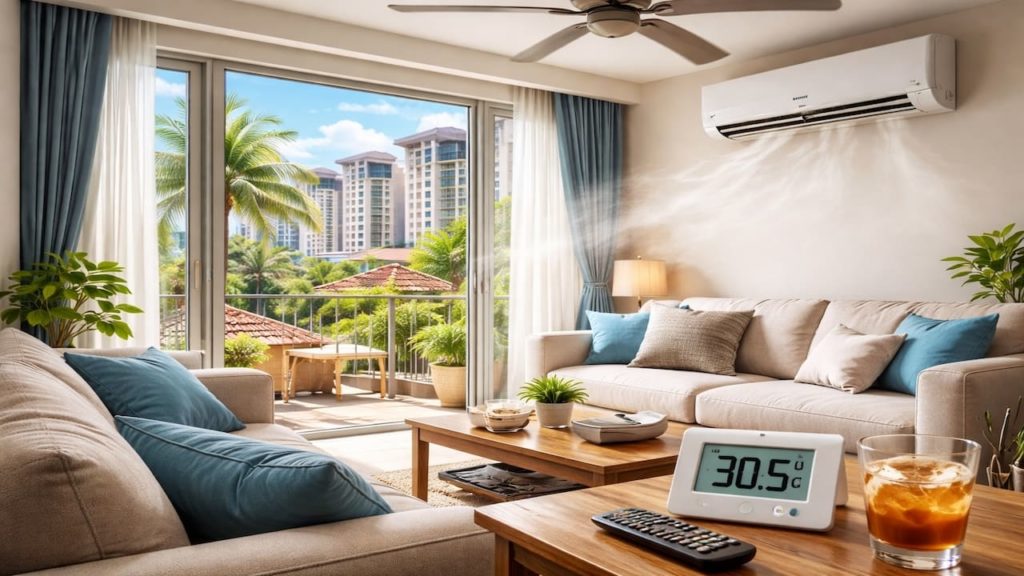
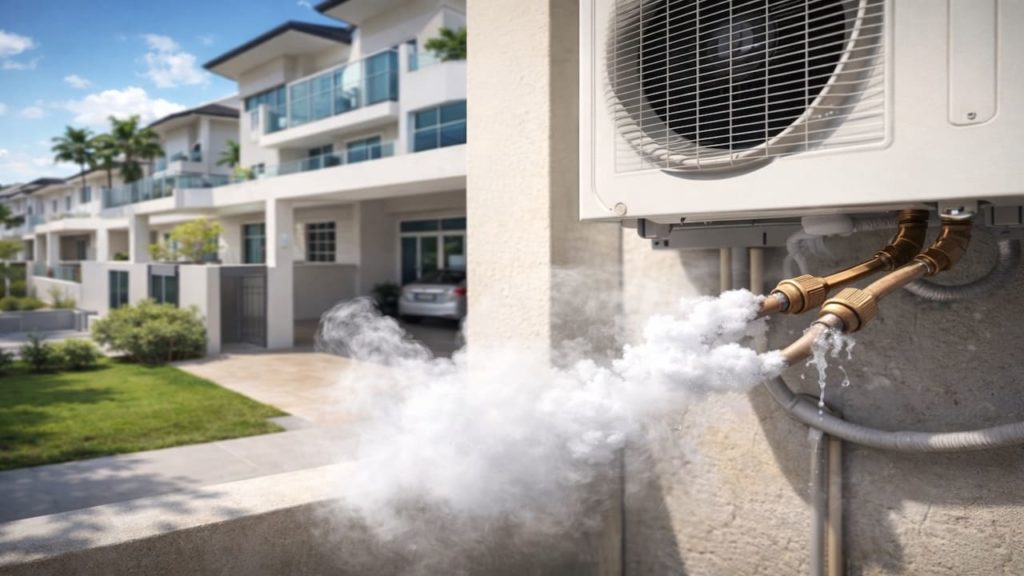
You touched near your aircond outdoor unit and it feels extremely hot, or you notice strong hot air blowing out and worry something is wrong.
In Malaysia’s heat and humidity, outdoor units run harder, especially on condo service ledges or tight terrace house side yards with weak ventilation.
In this guide, you’ll learn how to tell normal outdoor unit heat from real trouble using simple signs, so you stop guessing and act before damage happens.

Hi, I’m Ken. I write practical home guides for Malaysia—no fluff, just what works.
I hold a formal building design qualification and have spent about 20 years on job sites across hundreds of projects. My goal is simple: help you avoid costly mistakes with clear, safe steps—a quick way to decide what to do next.
1. Aircond outdoor unit too hot: 5 signs
Judge heat by performance and behavior not by touch
Outdoor units are designed to dump heat, so they will feel hot. What matters is whether cooling, airflow, and sound stay normal in Malaysia weather. Baseline.
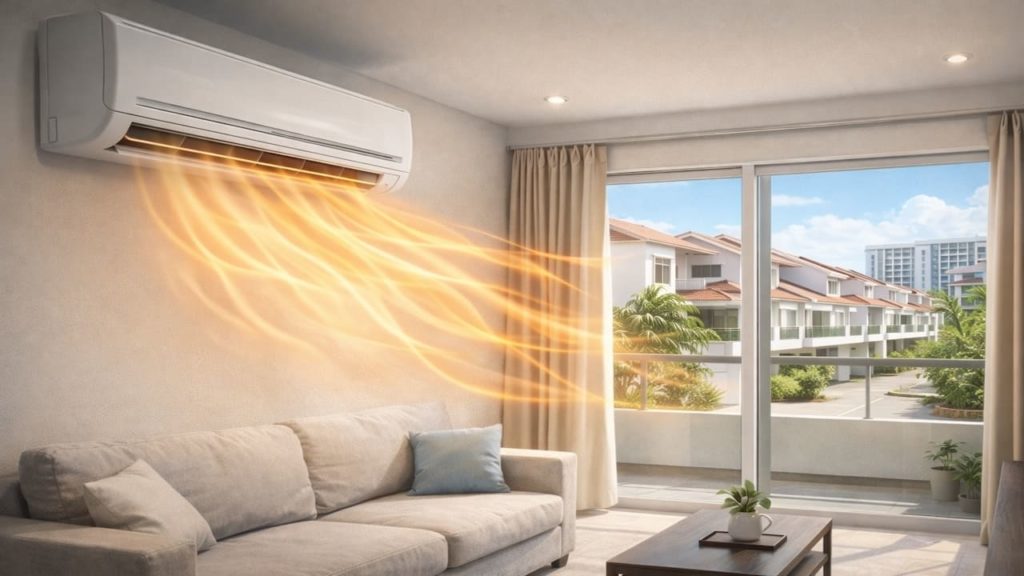
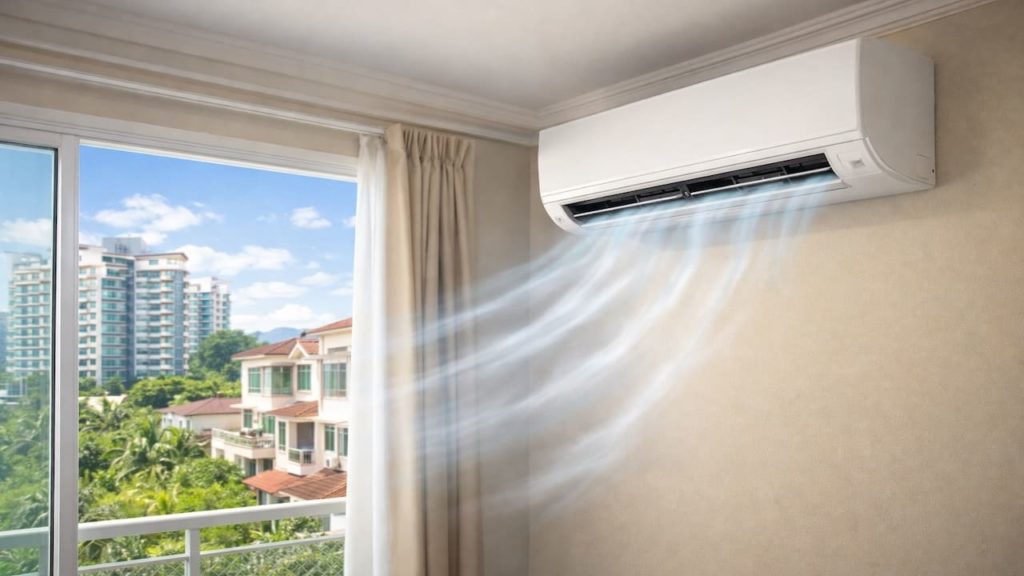
- Strong hot air blowing out while indoor air gets colder is usually normal
- Outdoor fan spinning steadily with no strange noise is a good sign
- Compressor sound is steady not clicking on off every few minutes
- Breaker is not tripping and lights are not flickering during operation
- Condensate is draining normally from the indoor side with no leaks
Some people assume “hot equals broken.” Heat is expected, but the pattern of cooling and cycling tells you if the system is healthy.
2. Normal heat vs real trouble
Real trouble shows up as weak cooling or unstable cycling
In humid Malaysia afternoons, a struggling unit often cannot reject heat fast enough, so temperatures rise and protection behavior appears. Warning.
- Indoor cooling becomes weak even though settings stay the same
- Outdoor fan stops or starts slowly while the unit is running
- Compressor cycles on off rapidly and comfort swings in the room
- You smell burning plastic or hear buzzing crackling or grinding
- The outdoor unit is boxed in or airflow is blocked by walls or items
You might think you need to top up gas immediately. Many times the real issue is airflow and heat rejection, so check ventilation first.
3. Why outdoor units overheat in Malaysia
Overheating is usually blocked airflow plus high ambient heat
Condo service ledges trap hot air, and terrace house side yards can become heat pockets. Add humidity and dust, and efficiency drops. Reality.
- Condenser fins clogged with dust reduce heat transfer
- Outdoor unit too close to a wall recirculates its own hot exhaust
- Direct afternoon sun heats the casing and raises working pressure
- Outdoor fan motor weakening reduces airflow and raises temperature
- Refrigerant charge issues or restrictions raise pressure and heat
It is not always a “bad unit.” In Malaysia, placement and airflow decide whether the outdoor unit can breathe.
4. How to cool the outdoor unit safely
Improve airflow and reduce heat load without risky DIY
You can make safe improvements without opening panels. In humid climates, the goal is better ventilation, not pouring water everywhere. Safety.
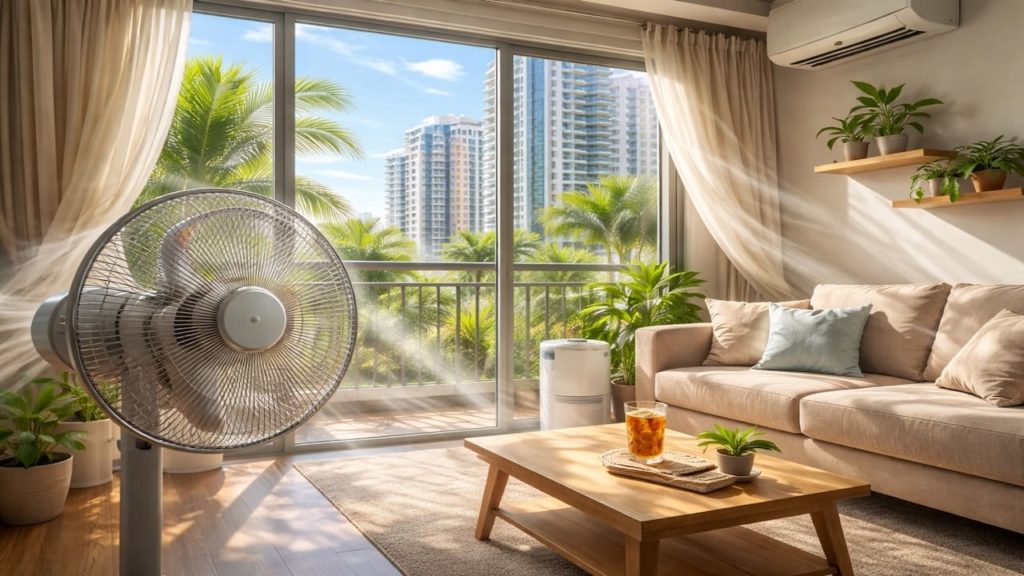
- Clear items around the unit and keep at least 30 to 60 cm space
- Remove leaves and dust from the outside fins with gentle brushing
- Shade the unit from direct sun without blocking airflow
- Do not place laundry racks or storage boxes in front of the fan exhaust
- If cooling is weak stop use and call a technician with observations
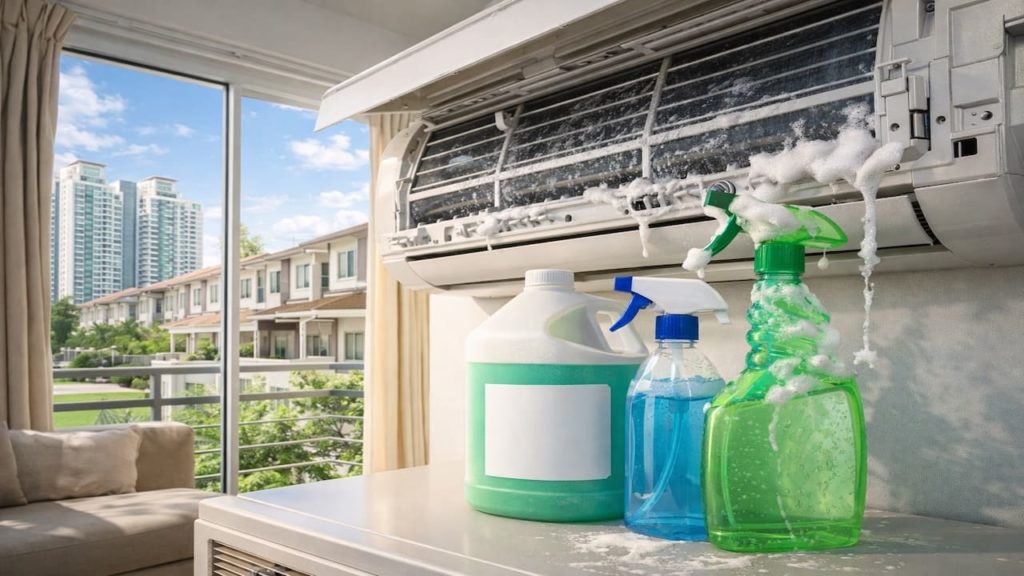
Some people want to spray water to cool it down. That can help briefly, but it can also push dirt deeper and adds risk on condo ledges, so avoid it.
5. FAQs
Q1. Is it normal for the outdoor unit to blow very hot air
Yes, that hot air is the heat removed from your room. In Malaysia heat, it can feel intense, especially when the unit is working hard.
Q2. Should I be worried if the casing is too hot to touch
Touch is not a reliable test. Focus on cooling performance, fan operation, and cycling behavior instead of skin temperature.
Q3. What is the most dangerous sign of overheating
Burning smell or fan not spinning. Turn it off and call for service, because continued running can damage the compressor.
Q4. Can a dirty filter inside cause outdoor overheating
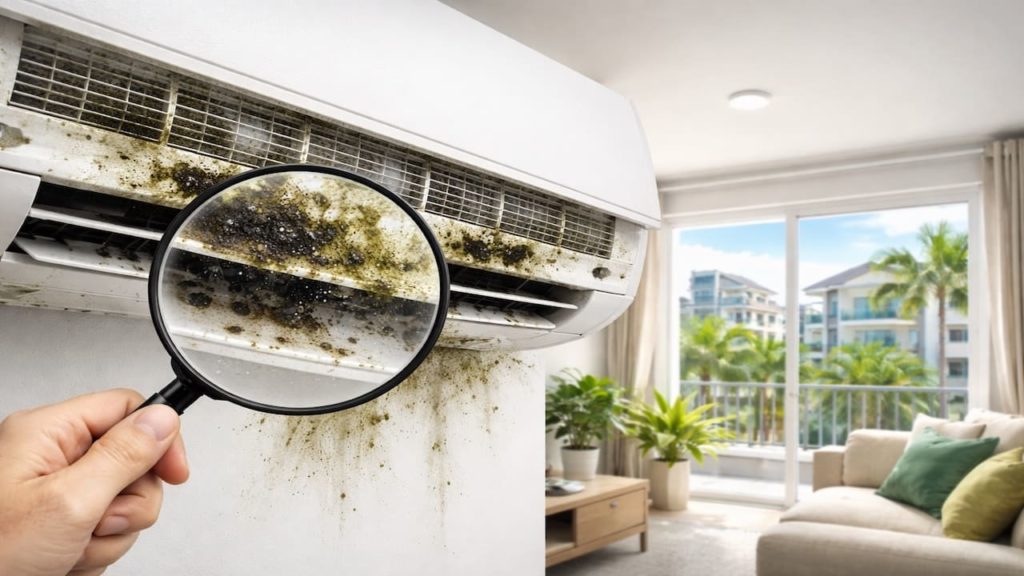
Indirectly yes, because low airflow can cause icing and unstable operation. Clean filters and ensure airflow is strong on both indoor and outdoor sides.
Q5. When should I call a technician
Call if cooling is weak, the unit trips the breaker, the outdoor fan stops, or you hear unusual noises. Share photos of placement and the service ledge space.
Pro’s Tough Talk

I’ve been on site for 20+ years and handled hundreds of jobs, and in Malaysia people panic about outdoor unit heat all the time. Hot weather plus humid air makes outdoor units work like a marathon runner.
Three causes. Airflow is blocked, the unit is sitting in its own hot exhaust, or a fan or refrigerant problem is pushing pressures up. Three steps. Check the outdoor fan is spinning, clear space around the unit, then judge by indoor cooling and cycling, not by touch.
Listen Hot is normal trouble is a pattern. The outdoor unit is basically a radiator, so of course it is hot. Blocking it is like putting a pillow over your face and wondering why you cannot breathe. And pouring water everywhere is like trying to fix a fever by jumping into a lake, messy and not smart. When someone says “just top up gas,” hit them with a mental comeback, sure and refill your car tire without checking the nail too. Two classics: condo ledges packed with storage boxes, and terrace side yards turned into a mini warehouse. Keep doing that and enjoy your outdoor unit sauna, VIP ticket included.
Summary
Outdoor units run hot in Malaysia, so normal heat is expected when airflow is strong and indoor cooling is stable. Baseline.
Real trouble shows up as weak cooling, rapid cycling, fan problems, burning smells, or blocked ventilation, especially on tight condo ledges.
Check fan clear airflow then judge cooling. Today, clear space around the unit and watch the cycling pattern, then read the “fan not spinning” and “technician visit” guides if any warning signs appear.