Landscape for a Malaysia terrace home can feel like a puzzle. Narrow lots, shared walls, and hard sun bounce off concrete all day.
You might be searching after puddles, slippery tiles, dying plants, or a porch that stays damp for days. Humid nights and sudden wet season storms make it worse. Common.
In this guide, you’ll learn how to plan shade and drainage before you spend on plants. You will use simple checks that fit terrace rows, car porches, and rainy tropical weather.

Hi, I’m Ken. I write practical home guides for Malaysia—no fluff, just what works.
I hold a formal building design qualification and have spent about 20 years on job sites across hundreds of projects. My goal is simple: help you avoid costly mistakes with clear, safe steps—a quick way to decide what to do next.
1. Landscape for terrace homes: 5 checks
Do five site checks before you choose any plants.
Terrace homes trap heat and slow drying, so a pretty layout can fail fast—start with what the sun and rain already do every week. If you skip this, wet season will punish you.
- Trace runoff from porch edge to drain
- Mark sun patches on paving at noon
- Test soil soak speed with one bucket
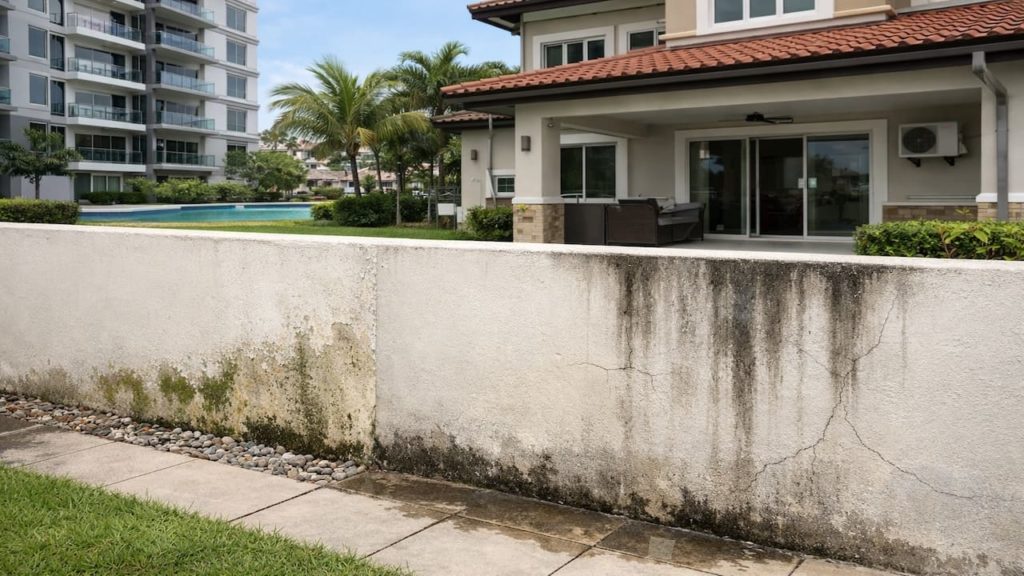
- Check wall base for damp after storms
- Locate AC drip point and wet splash
Some say you can copy a nice garden photo and adjust later. You can try, but terrace limits punish guessing, and these checks take 30 minutes, not 3 weekends.
2. Plan shade and drainage first in Malaysia
Shade and drainage come before decoration every time.
Malaysia heat cooks roots in shallow beds, then heavy rain floods the same area, and that swing stresses plants more than fertilizer—foundation first. Comfort matters. Safety too.
- Map morning shade line along the front wall
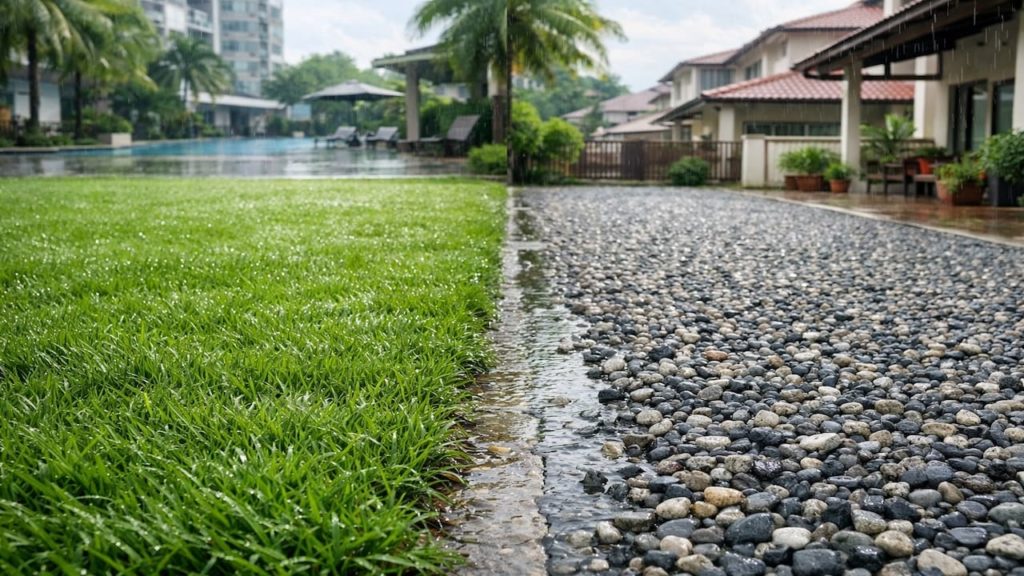
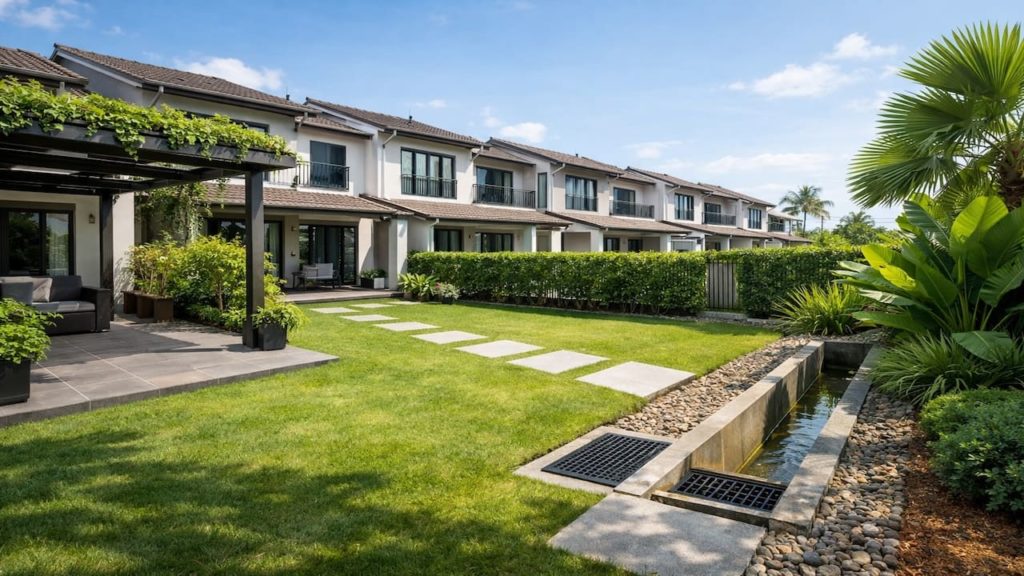
- Add gravel strip where water hugs the wall
- Extend downpipe outlet away from planting bed
- Keep one clear flow path to the gully
- Lift pots on feet for air underneath
People worry shade makes mold and mosquitoes worse. It can, but when drainage and airflow are set, shade becomes relief, and mosquitoes lose their easy water.
3. Why wet heat ruins terrace landscaping
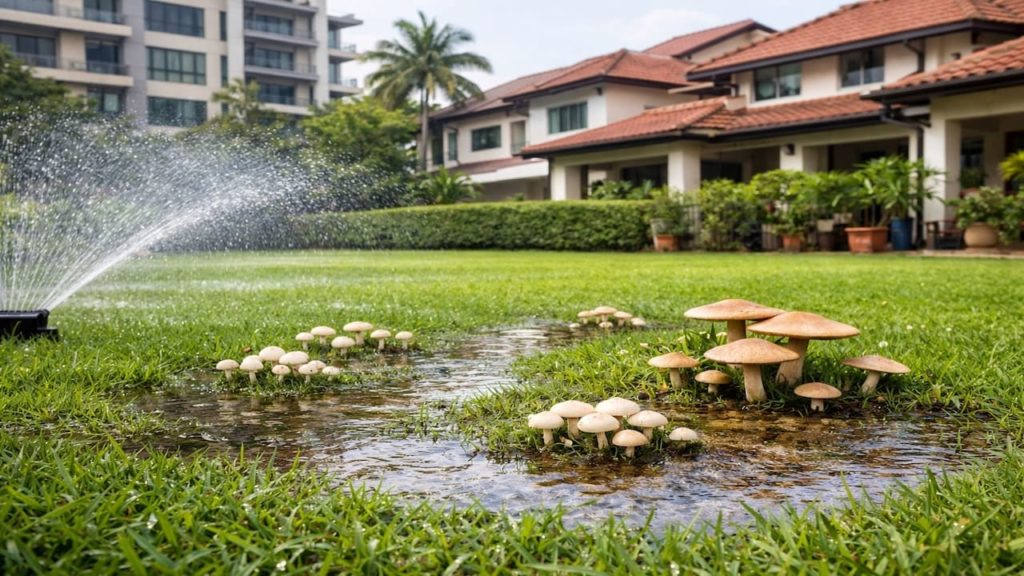
Most terrace yard problems start with trapped water.
Shared walls and porch roofs create dark pockets that stay wet, and warm air keeps moisture moving inside surfaces—algae grows before you notice. Early warning. Then smell.
- Spot algae film on tiles near the gate
- Check peeling paint along the wall bottom
- Look for moss in grout lines after rain
- Inspect planter edges for eroded soil gaps
- Scan pot saucers for standing water daily
You may think the plant is weak and needs replacing. Replace it and the same corner still stays wet, so the problem repeats until water can leave fast.
4. How to map shade and drainage before buying plants
Measure the microclimate for one week then buy.
One dry afternoon lies, because terrace shade shifts with neighboring roofs, while rain tracks change with wind, splash, and clogged gutters—collect simple notes. Proof beats vibes. Data wins.
- Photograph the yard morning noon evening same spot
- Chalk mark puddles right after a heavy rain
- Pour one bucket and watch the exit route
- Place a test pot and track drying time
- Sketch slope arrows toward the nearest outlet
It sounds slow when you want instant greenery. A week of mapping saves months of slippery tiles, sad plants, and endless cleaning, so measure first and buy once.
5. FAQs
Q1. What is the first landscaping fix for a terrace porch?
Fix the water exit, not the plant bed. If runoff has nowhere to go, the porch stays damp and dirt stains return. Drying speed matters.
Q2. How do I reduce heat bounce from a driveway?
Add shade in layers and leave airflow space. A small tree plus a light screen works better than sealing everything with dense shrubs. Keep the breeze path.
Q3. Do I need a French drain for a small terrace yard?
Not always, and many homes improve with a corrected slope and gravel strip. Use the simplest drain that moves water out fast before paying for deeper works. Test first.
Q4. Why do mosquitoes appear even when the yard looks clean?
Hidden water is the trigger, like pot saucers, trays, clogged gutters, and low spots behind planters. In humid weather, tiny pools last long enough. Remove trays.
Q5. What plants are easiest for wet season and strong sun?
Choose plants that handle both bright heat and sudden soaking. Match each plant to the shade map, and keep roots above standing water. Avoid soggy soil.
Pro’s Tough Talk

I’ve been on site for 20+ years and handled hundreds of jobs. Terrace landscaping is a small arena where water and heat beat ego every time. Malaysia humidity plays dirty.
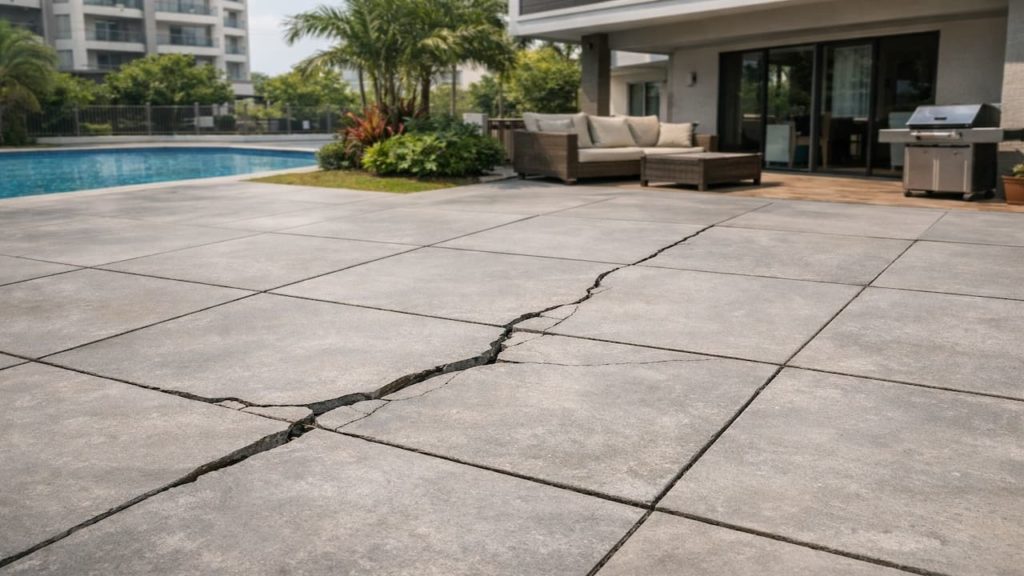
Three causes show up again and again. First is flat paving that traps water like a sponge. Second is heat reflection that turns tiles into a frying pan. Third is zero airflow where pots and walls kiss.
Three quick steps fix most headaches. Give water one clear exit route to the drain. Create one real shade zone for afternoon blast. Lift pots and open gaps so everything can dry overnight.
This is not about blaming you or calling every contractor a villain. Physics wins when drainage and shade are an afterthought so don’t chase an Instagram garden fantasy, chase a dry floor.
Relatable moment one, you step out in socks and slide like a cartoon. Relatable moment two, you find a mystery mosquito nursery in a pot tray. Do the boring fixes now, or enjoy your swamp chic.
Summary
Terrace-home landscapes in Malaysia succeed when you plan shade and drainage before decoration. Do the five checks, then design around what the site already does. Simple.
If puddles, algae, or mosquito water keep returning after small changes, treat it as a slope and outlet problem. Adjust hardscape before buying more plants. Stop guessing.
Do one water test today and mark one shade line. Then keep going with the next guide on small drainage upgrades that stop damp walls and slippery tiles. Your terrace gets safer, and cleaning gets easier.