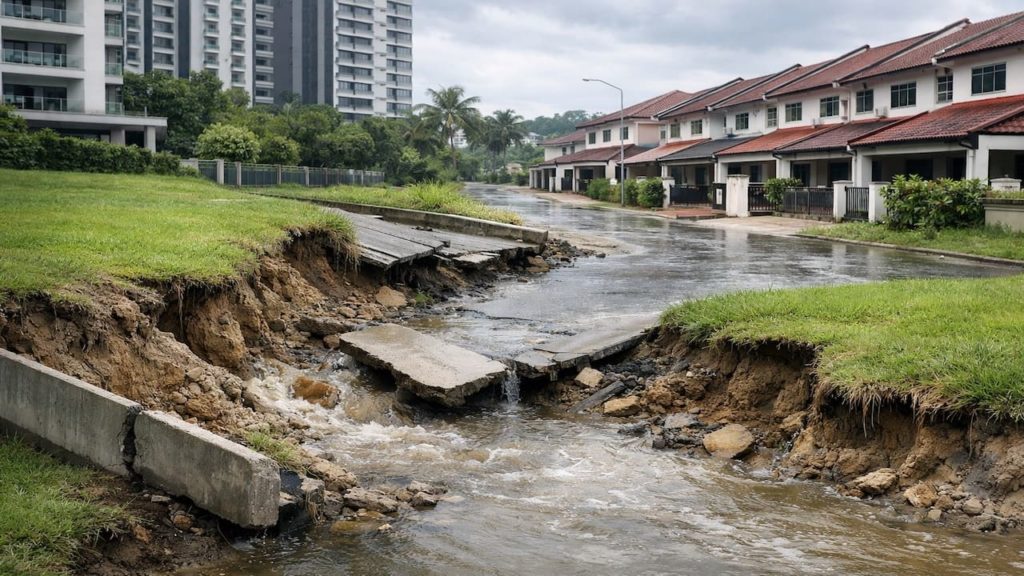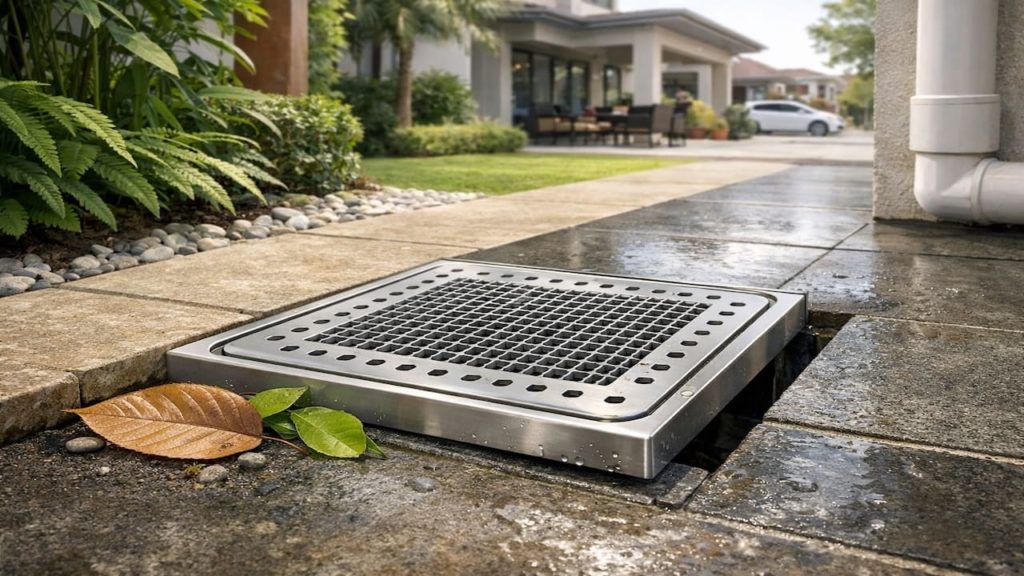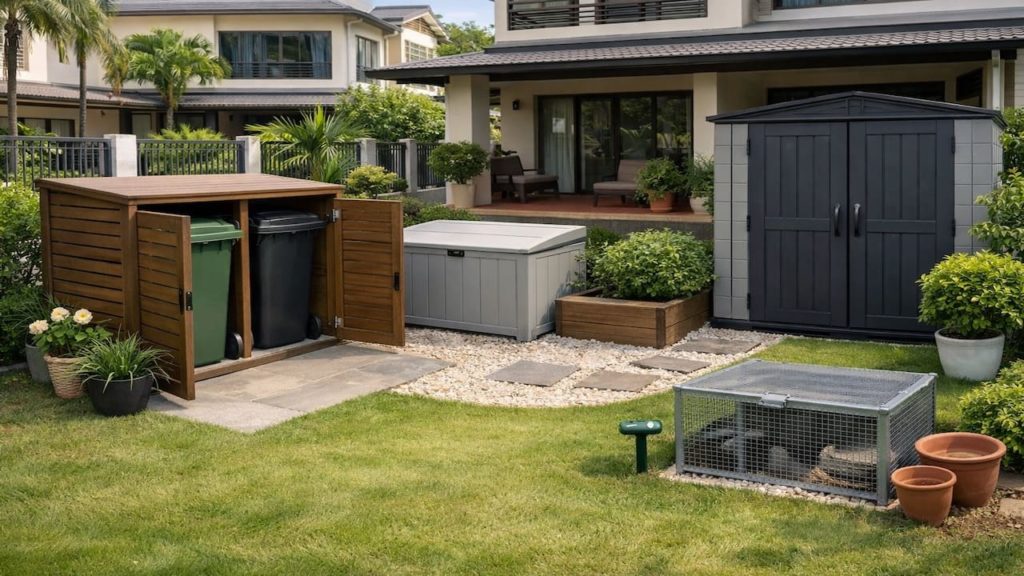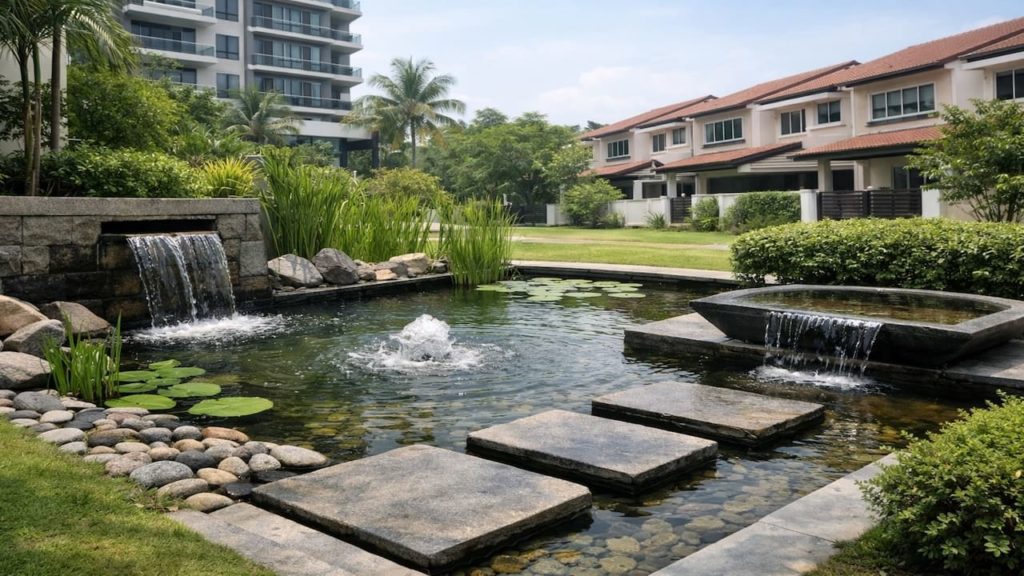
You want a water feature because the yard feels flat, but you are worried it will turn into a mosquito factory in Malaysia’s humid heat. Aedes mosquitoes love warm still water.
That fear is real, yet it is not automatic. Mosquito risk depends on stagnant pockets, hidden debris, and how rainwater behaves around a terrace house porch or a condo balcony ledge. Most problems show up after the first heavy storm.
In this guide, you’ll learn how to design a water feature that does not breed mosquitoes while still looking calm, running quietly, and surviving wet season downpours.

Hi, I’m Ken. I write practical home guides for Malaysia—no fluff, just what works.
I hold a formal building design qualification and have spent about 20 years on job sites across hundreds of projects. My goal is simple: help you avoid costly mistakes with clear, safe steps—a quick way to decide what to do next.
1. Landscape water feature risk: 5 checks
Check for any place water can stop moving because even small still zones in Malaysia can hatch larvae fast.
Look at the feature like a plumber, not a decorator—water flow, edges, and dead corners matter more than the stone color. No joke. Do this in the late afternoon when heat stress is highest.
- Test flow with leaf pieces in every corner
- Measure depth at edges and shallow shelves
- Inspect overflow route during heavy rain storms
- Check hidden sumps under rocks and planters
- Verify pump runtime across hot daytime hours
Some people say “a small bowl is harmless,” but in high humidity a puddle becomes an incubator, so treat every still pocket as a problem. It is cheaper than dealing with bites.
2. Avoid mosquito breeding by design
Design the feature so it cannot hold stagnant pockets even when rain hits hard and leaves drop in.
In Malaysia, warm water and fast plant growth amplify mistakes, especially in shaded corners near boundary walls where airflow is weak. Simple physics. The safest designs are the ones that shed debris easily.
- Choose steep sides that drain without flat shelves
- Install a solar pump for constant circulation
- Add a skimmer net basket for falling leaves
- Install fine mesh screens on overflow outlets
- Keep feature away from gutters and downpipes
You might hear that fish will solve it, yet fish die when oxygen drops or cleaning chemicals slip in, so design is your first defense. Design beats gimmicks—every time.
3. Why mosquitoes love bad water features
Mosquitoes win when you cannot see the water problem and Malaysia’s heat hides the timeline.
Eggs and larvae thrive in warm still water, and wet season bursts refill trays, clogged channels, and saucers near the feature without you noticing—sneaky stuff. Even a slow drip from an aircon line can keep it alive.
- Leaves block narrow channels and create still bays
- Algae coats walls and slows surface movement
- Rain fills decorative bowls beside the main basin
- Broken pumps stop flow during long weekends
- Shallow shelves warm up and speed breeding
People blame “mosquito season,” but the real cause is predictable micro-stagnation, so fix the structure and you cut risk without panic. Calm control.
4. How to keep a water feature mosquito safe
Run water like a system not a pretty object so circulation, cleaning, and drainage stay reliable in tropical weather.
Start with flow you can verify daily, then build habits that fit condo rules or terrace house routines, because you will not scrub every week. Keep the checklist tiny—doable beats perfect. Routine matters.
- Set pump timer to run morning and evening
- Brush slime off walls and rinse filter pads
- Flush channels after storms and clear leaf traps
- Drain and dry tiny bowls after every rain
- Use larvicide dunks only for emergency control
Some say maintenance is “too troublesome,” but a 3-minute check beats weeks of bites and dengue anxiety, so keep the routine small and consistent. Your skin will thank you.
5. FAQs
Q1. Do fountains prevent mosquitoes automatically?
Not automatically. If water circulates everywhere and there are no dead corners, risk drops a lot, but clogged channels can still create still pockets.
Q2. Is a small bowl on a balcony risky in Malaysia?
Yes, because it warms quickly and refills with rain. Any still water can breed mosquitoes so keep it drained or keep it flowing.
Q3. Can I rely on fish to control larvae?
Fish help only if the water stays oxygenated and clean. In tiny decorative features, fish stress and die, so design and flow should be your first defense.
Q4. What about plants in the pond?
Plants can shade water and reduce heat, but they also trap debris. Keep plant baskets removable and avoid dense mats that block circulation.
Q5. How often should I clean the feature?
Do quick checks daily and light cleaning weekly. After heavy rain, clear leaf traps and overflow paths the same day to prevent hidden puddles.
Pro’s Tough Talk

Listen, I’ve been on site for 20+ years, handled hundreds of jobs, and in Malaysia’s heat I’ve seen cute ponds turn into bite machines overnight. That sting. Real.
It happens for 3 reasons: you built shelves, you hid corners under rocks, and you trusted a pump that quits the moment power trips. That’s the structure.
So do 3 steps now: kill pockets, make flow you can see, and set a rhythm that fits your life, not fantasy. Adulting.
Don’t blame yourself and don’t call every contractor a villain, but stagnant design is the real enemy and it never gets tired. Fix the setup first.
Everyone does two classics: I’ll clean it later, and it’s just a little water, then you scratch at night and regret it. Brilliant. Congrats, you built a five-star mosquito spa.
Summary
A mosquito-safe water feature is mostly about preventing micro-stagnation, especially in Malaysia’s humid climate where rain refills hidden pockets quickly.
If you cannot keep flow moving everywhere, or you keep finding leaves clogging channels after storms, switch to a simpler design or remove small bowls entirely. Choose low-maintenance over fancy curves.
Design for drainage and visible circulation then link out to your guides on gutter runoff control and wet season yard maintenance for the full system.