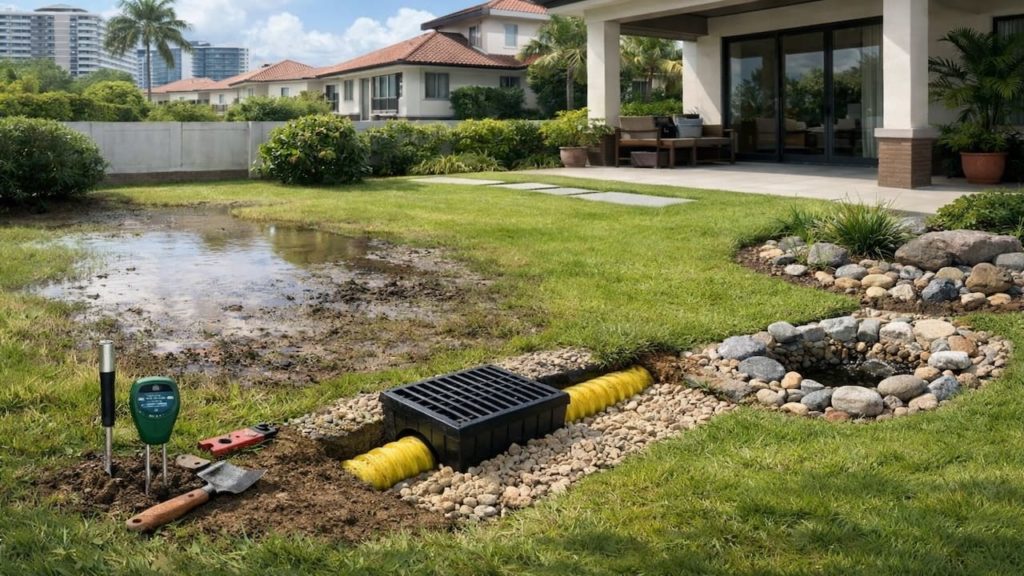
You searched because your yard stays wet after rain, and the soggy patch keeps turning into a muddy slip zone near your porch in Malaysia. It also smells and attracts mosquitoes. Annoying.
In hot humid weather, drainage problems show up fast, but the cause can be simple, like compacted soil, roof runoff, or a blocked outlet. Not always a full rebuild. Good news. No guesswork. Less mess. You can fix a lot in one weekend.
In this guide, you’ll learn how to diagnose soil drainage and fix soggy spots fast using simple checks and small targeted changes. Your yard dries quicker in wet season.

Hi, I’m Ken. I write practical home guides for Malaysia—no fluff, just what works.
I hold a formal building design qualification and have spent about 20 years on job sites across hundreds of projects. My goal is simple: help you avoid costly mistakes with clear, safe steps—a quick way to decide what to do next.
1. Landscape soil drainage: 5 checks
Find the real water source before you touch the soil because most soggy spots in Malaysia are fed by runoff you did not notice.
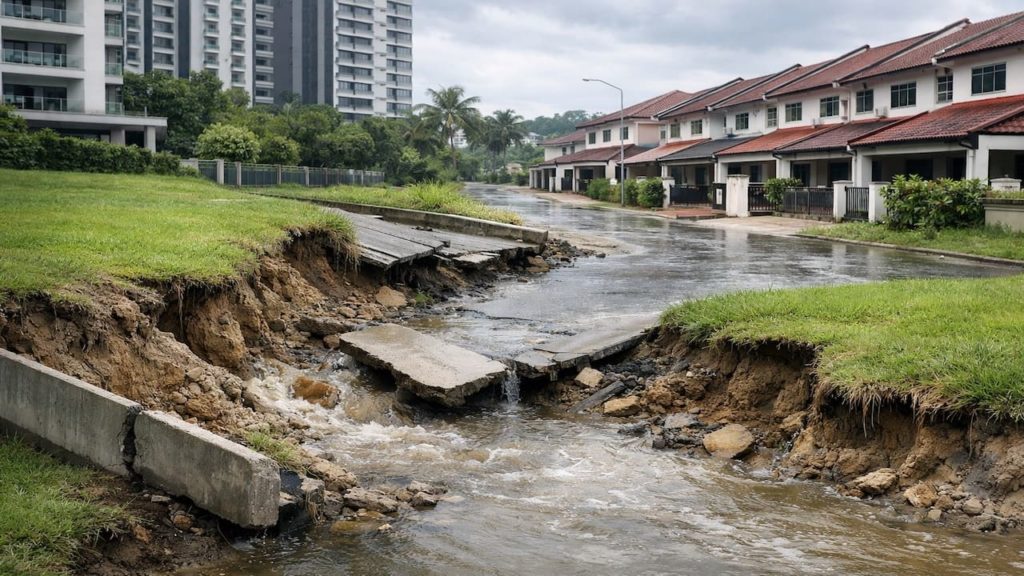
Walk the yard right after a storm—watch where water enters, where it pauses, and where it exits. One small inlet can saturate a whole corner. Take photos. Evidence first.
- Trace downpipe discharge to the lowest point
- Check gutter overflow marks on nearby walls
- Probe soil with screwdriver for compaction depth
- Time how fast puddles shrink after rain
- Look for algae film on shaded damp zones
People say “just add topsoil,” but if runoff keeps feeding the spot it will stay wet, so confirm the source and flow path, then act. Slow steps win. Your feet will notice.
2. Fix soggy spots without redoing all
Fix the smallest choke point not the whole yard so you stop water pooling without tearing up your entire Malaysia landscape.
Most yards fail at edges, not centers—like a blocked drain cover or a low strip along the fence. Even a flat joint by the car porch can trap water. Fix one outlet and the patch often disappears. Big impact.
- Raise low edge with compacted sand base
- Cut a shallow swale to guide runoff
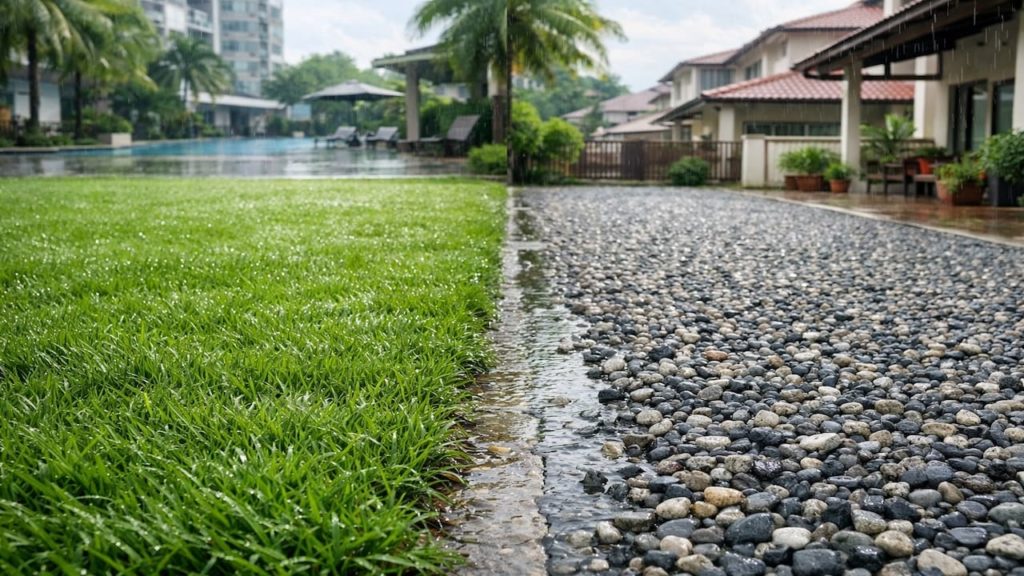
- Add a gravel trench along the fence line
- Extend downpipe to a safer discharge zone
- Install a small catch basin at low spot
Some worry a small fix looks patchy, but clean lines and matching gravel hide it. The yard dries faster, so targeted work beats panic. Your porch tiles stay cleaner. Practical.
3. Why soggy spots happen in Malaysia yards
Soggy spots form when water arrives faster than soil can absorb and Malaysia humidity slows drying after the rain stops.
The usual trio is compacted clay, constant roof discharge, and shade that keeps the surface damp—then leaves and silt seal the top like plastic. Add an aircon drip line and it never resets. No surprise.
- Compacted clay blocks infiltration under foot traffic
- Roof runoff concentrates water into one corner
- Flat grading traps water beside porch tiles
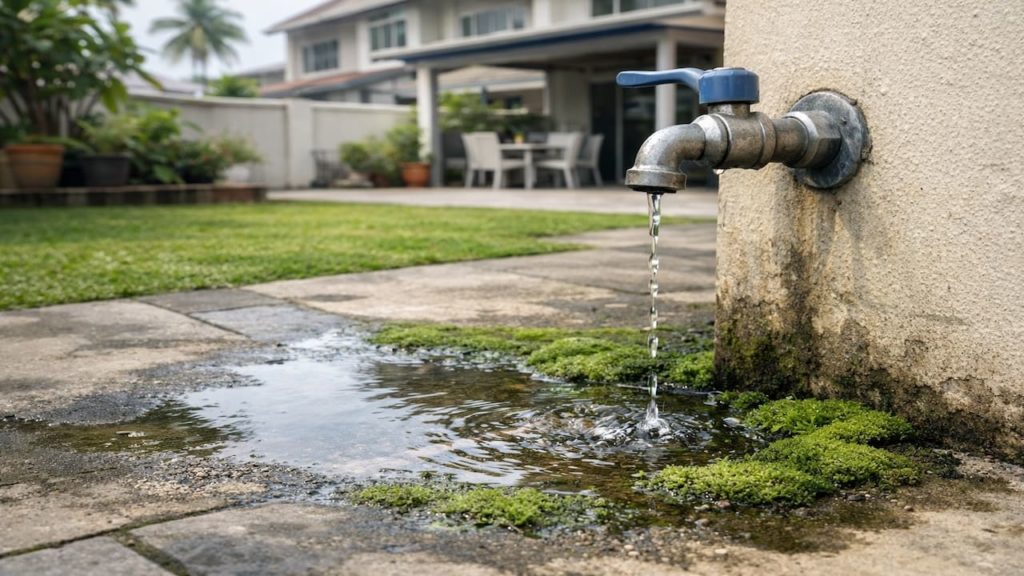
- Shade reduces evaporation and grows algae film
- Clogged drain covers back up storm water
Some blame only “bad soil,” yet the structure is water input plus exit. Fix one of those and the sogginess drops, even before planting changes. Simple mechanics.
4. How to improve drainage with minimal disruption
Improve drainage by creating a clear exit route so water leaves the soggy zone instead of sitting through warm nights.
Start with surface control, then add subsurface help only where needed—especially around terrace house side lanes and condo garden strips where walls trap airflow. Keep changes reversible at first. Faster wins.
- Regrade top 2 inches away from entry
- Topdress with coarse sand to open pores
- Add stepping stones to protect soft soil
- Use perforated pipe in gravel trench run
- Clear leaf traps after every heavy storm
Ripping everything out feels easier, but most yards improve when you redirect water and loosen compaction. Start with minimal disruption, then expand only if needed. Controlled. You will notice drier soil after the next storm.
5. FAQs
Q1. How do I know if the soil is compacted?
If a screwdriver stops quickly and water sits for hours, compaction is likely. In Malaysia heat, compacted clay stays slick and slow to drain.
Q2. Will adding sand fix drainage?
It can help when used as a topdress, but mixing the wrong sand into clay can make it worse. Test a small area before scaling.
Q3. Do I need a French drain for every soggy spot?
No. If the issue is roof runoff or a low edge, fixing the source can solve it. Start by moving water not adding more layers and you avoid unnecessary digging.
Q4. What is the fastest low cost fix after rain?
Clear drain covers and extend downpipes away from the wet patch. Then cut a shallow swale to guide water toward an outlet.
Q5. How long should improvements take to show results?
You should see puddles shrink faster after the next storm. Full drying changes may take a few weeks as the soil structure opens up.
Pro’s Tough Talk

I’ve been on site for 20+ years and handled hundreds of jobs. Malaysia rain loves one thing: finding the lowest lazy corner and camping there. Soggy forever.
3 causes I keep seeing: downpipes dumping in one spot, soil compacted like a brick, grading flat like a dining table. That combo.
Do 3 steps now: move the water source, open a path for exit, and protect the surface from being stomped into paste. Done.
Don’t blame yourself and don’t call every contractor trash, but drainage fails when there is no exit plan. The yard will punish you every wet season. Cold truth.
Two relatable moments: you step out to hang laundry and your slipper sinks, and you wash the porch then mud splashes back again. Like trying to mop a swimming pool, genius.
Summary
Check where the water comes from, where it pauses, and where it can leave. In Malaysia, soggy spots are usually a flow problem, not a mystery.
Redirect runoff and reduce compaction first. If puddles still sit longer than a few hours, add a small catch basin or gravel trench to create an outlet. If it is near foundations, act sooner.
Fix the exit route first then upgrade only the weak zone and follow your runoff control and wet season maintenance guides for a cleaner yard.