You searched because your plants look stressed even though you water often, and in Malaysia that usually means the soil stays too wet. Leaves yellow. Fungus shows up. Frustrating.
High humidity slows drying, sudden rain adds hidden water, and terrace house yards or condo planters often have poor drainage. So “more watering” can quietly become the mistake. Common trap. Fixable.
In this guide, you’ll learn how to avoid overwatering mistakes that trigger fungus and how to water smarter for Malaysia’s heat and wet season cycles.

Hi, I’m Ken. I write practical home guides for Malaysia—no fluff, just what works.
I hold a formal building design qualification and have spent about 20 years on job sites across hundreds of projects. My goal is simple: help you avoid costly mistakes with clear, safe steps—a quick way to decide what to do next.
1. Landscape watering mistakes: 5 traps
Overwatering is the fastest way to invite fungus because Malaysia humidity keeps leaves and soil wet long after you stop.
Most people water by schedule, not by soil condition—then rain doubles it. The plant does not get “extra love,” it gets suffocated roots and damp leaves. Reality.
- Watering daily without checking soil moisture depth
- Spraying leaves at night and trapping humidity
- Using small pots with no drainage holes
- Letting rainwater pool in saucers and trays
- Watering shaded corners that never dry out
Some say plants need more water in heat, but heat plus humidity is not the same as dry heat, so check soil first and you avoid fungal outbreaks. Simple rule.
2. Overwatering invites fungus in Malaysia
Fungus thrives when leaves stay wet for hours and Malaysia nights keep the air heavy and still.
Wet leaves plus weak airflow creates a perfect incubator, especially under dense shrubs near walls where breezes cannot pass. Wet season rain already wets foliage, so your hose can become the final push. Timing matters.
- Water early morning so foliage dries faster
- Water soil not leaves using drip or hose base
- Prune dense growth to improve airflow channels
- Space pots to avoid touching wet leaves
- Use mulch to reduce soil splash onto leaves
People think fungicide is the answer, but without drying time fungus returns, so fix wetness and airflow first and chemicals become optional. Better garden. Less drama.
3. Why plants rot and fungal spots appear fast
Roots rot when soil loses oxygen and constant wetness blocks airflow through the root zone.
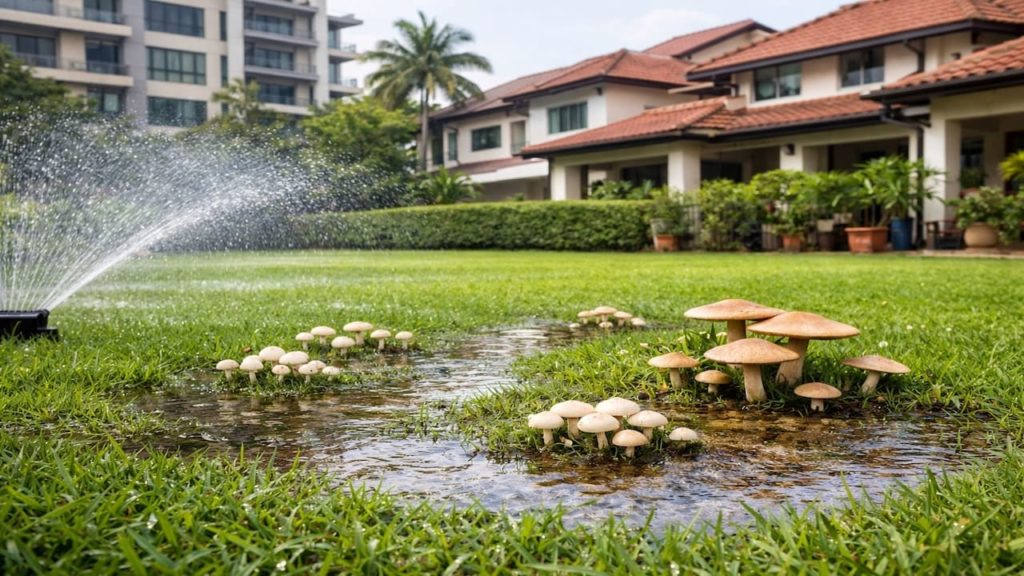
In Malaysia, warm wet soil accelerates microbial activity, so rot moves quickly from fine roots to the base stem. Leaves then yellow, drop, and show black spots. The plant looks thirsty even when drowning—classic. Deceptive.
- Compacted soil holds water and blocks oxygen
- Poor potting mix collapses into soggy sludge
- Rain adds extra water you did not count
- Soil splash spreads spores onto lower leaves
- Shaded wet areas slow evaporation for days
Some blame the plant species, yet many “weak plants” recover when drainage and watering timing improve, so fix the system before you replace plants. Save money.
4. How to water correctly in heat and wet season
Water deep and less often with drainage checks so roots grow stronger and fungus pressure drops.
Use a simple routine: check soil moisture at finger depth, water only when the top layer dries, and adjust after rain. Terrace house lawns and condo planters need different timing—match the container and location. Practical.
- Push finger 2 inches and feel moisture
- Water until runoff then stop and drain
- Raise pots on feet for air under base
- Switch to fast draining mix for humid areas
- Skip watering 24 hours after heavy rain
Some think deep watering wastes water, but shallow daily watering creates weak roots and more disease, so go deeper, less often, and the plant becomes tougher. Stronger growth.
5. FAQs
Q1. How do I know if I am overwatering?
If the soil stays wet for days, the pot feels heavy, and leaves yellow with soft stems, overwatering is likely. In Malaysia humidity, wet soil should still drain and dry at the surface.
Q2. Should I water every day in hot weather?
Not automatically. Check soil moisture first, and consider rainfall and shade. Many plants need less watering in humid heat than in dry heat.
Q3. What is the best time to water in Malaysia?
Early morning is best for fungus prevention because leaves can dry faster with daylight airflow. Avoid late evening watering that keeps foliage wet overnight.
Q4. Can mulch help reduce fungus?
Yes, mulch reduces soil splash that spreads spores onto leaves. It also stabilizes moisture so you water less often and avoid stress cycles.
Q5. What should I do when fungus already appears?
Remove infected leaves, improve airflow, and reduce wetness first. If needed, use an appropriate treatment, but do not keep watering the same way.
Pro’s Tough Talk

I’ve been on site for 20+ years and handled hundreds of jobs, and Malaysia gardens don’t die from “not enough water,” they die from too much love with a hose. Seen it too many times.
3 causes, always: watering on a fixed schedule, watering at night like a bedtime story, and pots sitting in trays like tiny bathtubs. That’s a fungus party.
Do 3 steps now: check soil before watering, water the base not the leaves, and give everything air and drainage. Quick wins.
Don’t blame yourself and don’t blame every gardener either, but wet leaves plus no airflow is the fungus engine and the structure will keep repeating until you change the routine. Cold truth.
Two relatable moments: you water in the evening and wake up to spots, and you see yellow leaves and water more because you panic. Like giving soup to someone already drowning, genius. Like drying clothes inside a bathroom, what did you expect.
Summary
Watering mistakes in Malaysia come from ignoring humidity and rain, which keeps soil and leaves wet long enough for fungus to thrive. Overwatering is the common trap.
If soil stays wet for days or leaves spot repeatedly, reduce frequency, improve drainage, and increase airflow before buying more treatments. If pots sit in water, fix that immediately.
Water only when the soil needs it and let leaves dry then read your soil drainage and pest control guides to keep plants healthy in wet season.