Starting a terrace home outdoor space in Malaysia can feel messy fast, because rain and heat punish every small mistake around the porch and side lane. You want it neat, dry, and easy.
The right layout is less about fancy plants and more about water flow, shade, and where you place things that stay wet. Humid air slows drying, and monsoon bursts expose weak drainage. Real life.
In this guide, you’ll learn the simplest outdoor layout that works in Malaysia so your terrace home stays usable through rainy season. You will set zones, keep longkang clear, and stop puddles and stains before they spread.

Hi, I’m Ken. I write practical home guides for Malaysia—no fluff, just what works.
I hold a formal building design qualification and have spent about 20 years on job sites across hundreds of projects. My goal is simple: help you avoid costly mistakes with clear, safe steps—a quick way to decide what to do next.
1. Landscape start here: 5 steps
Start with water flow and walking space first.
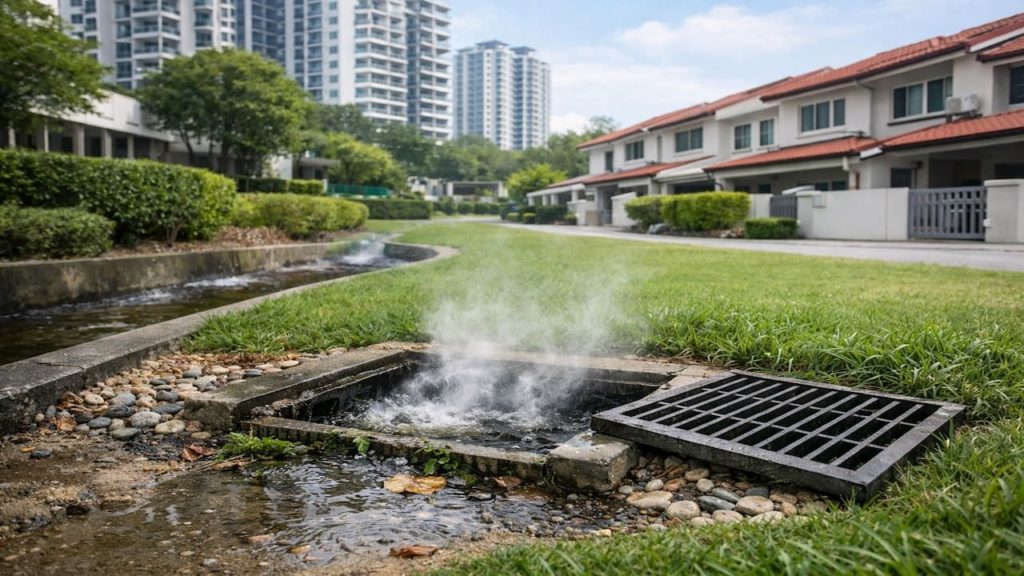
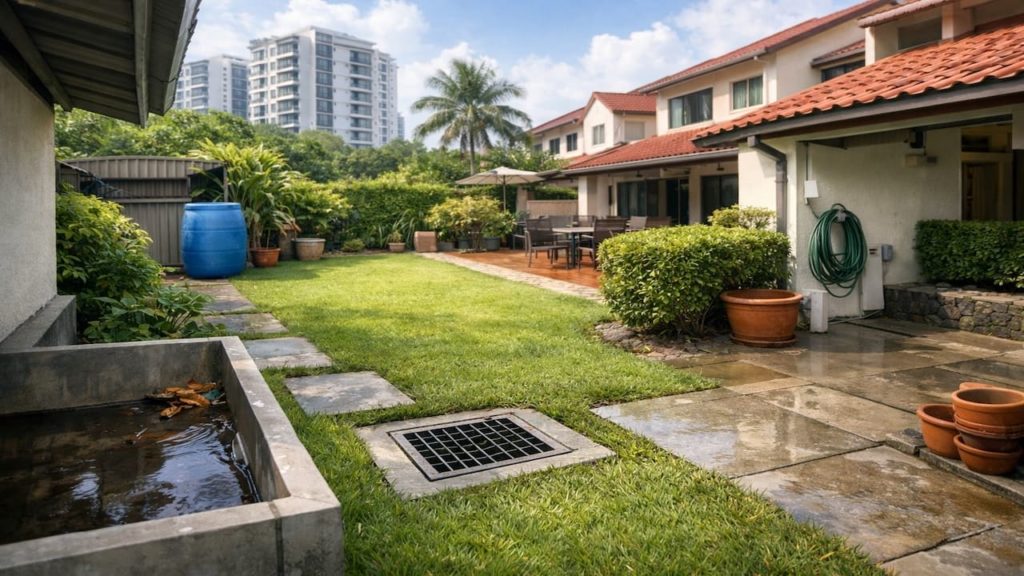
Terrace homes often have narrow fronts and shared drainage lines, so one blocked grate can turn your entry into a wet trap—then moss and smells arrive in Malaysia humidity. No clutter.
- Trace runoff path from gate to longkang outlet
- Keep a clear walking lane to the door
- Group pots on one side for drying
- Leave 10 cm gap along walls for airflow
- Place a squeegee near porch for quick drying
Some people start with decor and hope drainage works, but that flips the risk onto you when storms hit. Fix flow and space first, then styling becomes easy and the porch stays safe.
2. Simple layout for Malaysia terrace homes
Use three zones wet dry storage.
Malaysia rain comes sideways, and terrace porches trap damp if everything is packed tight, so zoning keeps wet items away from doors and keeps air moving—keep the exit path open. Simple layout.
- Wet zone near longkang for rinsing tools
- Dry zone near door for shoes and seating
- Green zone along edge with raised planters
- Storage zone under cover with ventilated shelves
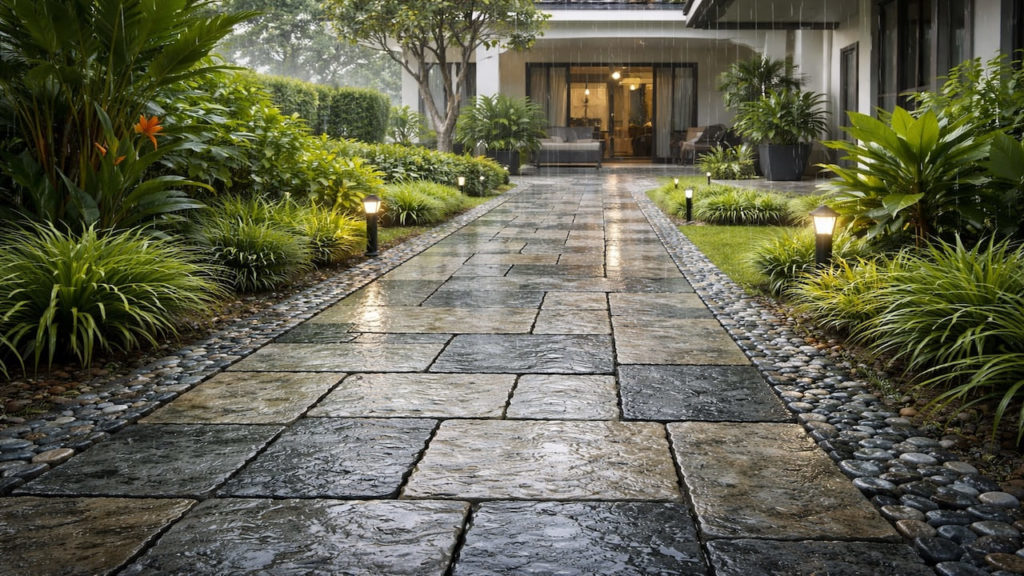
- Buffer strip of gravel to stop splashback stains
Some think zones are too strict for a small frontage, but small spaces need rules more than big yards. Keep the zones, adjust the sizes, and the whole area feels calmer.
3. Why terrace home outdoor areas fail in monsoon season
They fail when water lingers and air stalls.
In Malaysia, heat bakes the slab, rain soaks it again, and humidity slows evaporation, so puddles feed algae and joints loosen if you cannot move water out fast—then it repeats. Same cycle.
- Low spot near gate holds water after rain
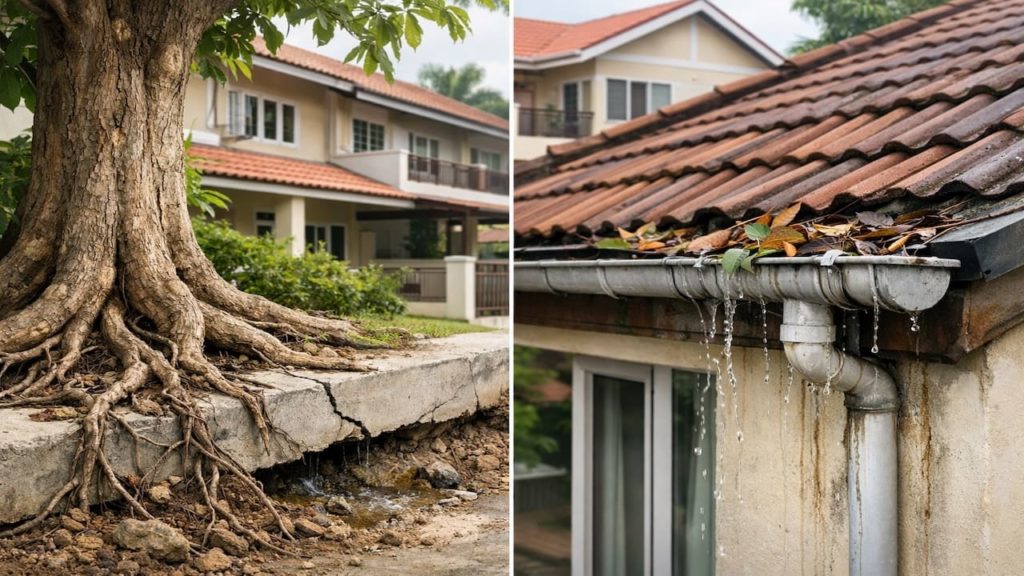
- Longkang cover traps leaves and oily sludge
- Pots sit flat and keep tiles constantly wet
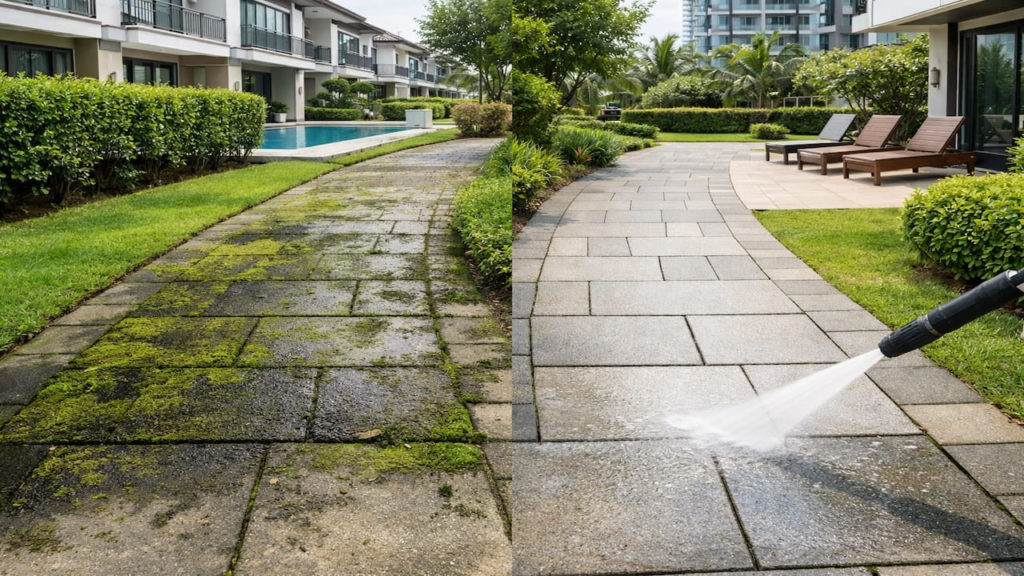
- Shaded wall stays damp and grows green film
- Downspout splash hits walkway and spreads stains
It is tempting to blame materials or luck, but the pattern is predictable in tropical weather. If water exits and air moves, most failures never start.
4. How to set a low maintenance layout this weekend
Build the layout around one visible drainage lane.
Pick a dry morning and work in short bursts, because Malaysia weather flips fast, and you want every wet corner to have an obvious exit path you can see—finish each small step. One lane.
- Mark a drainage lane with chalk and water
- Lift planters using pot feet and racks
- Clear longkang and add a simple leaf mesh
- Reposition mats only inside the dry zone
- Test with bucket pour and watch flow speed
Some owners want to cover everything with rugs, but rugs trap moisture and hide problems until the smell arrives. Keep the lane visible, keep drains clear, and maintenance stays light.
5. FAQs
Q1. What is the best first improvement for a terrace home porch?
Start by confirming where rainwater exits and how fast it flows. Once you see the lane, you can place pots and storage without creating a wet corner.
Q2. Can I keep shoes and bins outside in Malaysia humidity?
You can, but keep them in the dry zone under cover with airflow. Avoid placing bins right beside longkang where damp smells collect.
Q3. How often should I clean the longkang near the gate?
During rainy months, check it weekly and clear leaves before they rot. Clean longkang stops most terrace home outdoor headaches because flow stays open.
Q4. Are outdoor tiles or concrete better for slippery rain days?
Both can be safe if they have texture and dry quickly. The bigger factor is reducing puddles and removing algae film early.
Q5. What if my drain smell is coming from beyond my unit?
Take photos after rain and note when the odor peaks, then report it with clear details. Shared drainage lines sometimes need coordinated cleaning.
Pro’s Tough Talk

Alright, I’ve been on site for 20+ years and handled hundreds of jobs, and terrace home layouts in Malaysia fail for the same boring reasons. Rain does not care about your vibe.
Three causes. Water has no clean exit, so it sits and turns green. People cram pots and shelves everywhere, so air stops moving. Then they hose everything like a car wash and wonder why it smells. Rookie stuff.
Three steps. Make one drainage lane you can see, lift anything that touches the floor, then keep the longkang clear before storms. Do those, and the space behaves.
You are not dumb and contractors are not all villains, but bad layout turns a porch into a damp sponge and that structure is ruthless. It is like putting a lid on steaming rice, then blaming the rice for being wet.
Relatable moment one, you step out in slippers and almost skate. Relatable moment two, you mop at night and it is damp again by morning. Stop trying to decorate a swamp, fix the lane, and let the rain come if it dares.
Summary
Your best start is water flow, airflow, and a simple zone layout that keeps wet tasks away from doors in Malaysia humidity. Clean and dry.
If puddles and smells keep returning after you set zones and clear drains, the deciding factor is low spots, missing slope, or shared backflow that needs deeper inspection.
Do one chalk lane test today and move two items into the right zone this weekend. Simple layout beats constant cleaning in rainy season and your next guides here can cover drains, moss, and lighting.