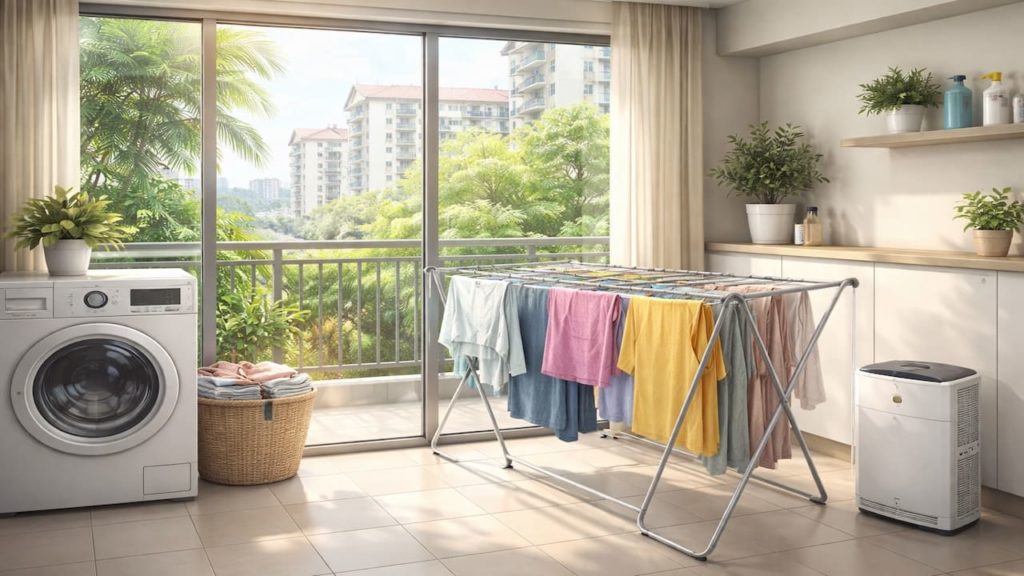
Your laundry is taking forever to dry, the room smells a bit “closed,” and you’re here because you want dry clothes without inviting mold.
In Malaysia, humidity stays high even when it’s sunny, and condo layouts often have limited airflow on balconies or yard areas. When you dry indoors, moisture can soak into walls and wardrobes fast.
In this guide, you’ll learn how to dry laundry indoors without mold using simple airflow habits and placement tricks that work in Malaysian homes during rain season and sticky nights.

Hi, I’m Ken. I write practical home guides for Malaysia—no fluff, just what works.
I hold a formal building design qualification and have spent about 20 years on job sites across hundreds of projects. My goal is simple: help you avoid costly mistakes with clear, safe steps—a quick way to decide what to do next.
1. Malaysia laundry drying guide: 5 tips
Indoor drying works if you move moisture out not just “wait longer.”
Wet clothes release liters of water into the air—if that stays trapped, you get musty fabric and mold spots on corners. In Malaysia heat, damp can feel invisible. It’s still there.
- Spin clothes longer to remove more water
- Hang items with space between every piece
- Place rack near window or balcony door
- Run dehumidifier or dry mode if available
- Keep wardrobe doors closed until fully dry
You might think “it’ll dry overnight,” but indoor humidity can keep fabric damp for hours. Don’t guess—touch the thick seams and collars.
2. Dry indoors no mold
Mold is prevented by airflow and timing not by perfume sprays.
Indoor drying is safest when you choose one drying zone and keep moisture contained. Condos with closed kitchens and small windows need extra intention—fresh air is your friend.
- Pick one room and keep other doors shut
- Open two windows for cross ventilation
- Point a fan across clothes not at wall
- Dry thick items first and lighter items later
- Wipe condensation on windows right away
Some people avoid fans because “it spreads damp,” but stagnant air is what grows mold. Air movement helps water leave fabric and exit the room.
3. Why indoor laundry causes mold in Malaysia
Moist air feeds mold when it stays trapped in corners and closets.
Mold loves three things: moisture, warmth, and still air. Malaysia gives it two for free, and indoor drying supplies the third. Add wardrobes against outer walls and you get that black dot problem. Common.
- Wet clothes raise indoor humidity quickly
- Still air keeps walls damp for hours
- Wardrobes trap moisture behind closed doors
- Thick fabrics dry slowly and stay musty
- Rainy season reduces natural ventilation windows
It’s not a cleanliness issue. It’s moisture management. If you’re not buying anything today, cost is mostly time/effort.
4. How to speed drying and protect your home
Create a drying system you repeat so mold never gets a chance.
If you want tools, a basic fan, moisture absorber, or small dehumidifier can help—RM20–300 depending on what you choose. But even without gear, layout and routine do most of the work.
- Use extra spin cycle to reduce dripping water
- Shake clothes before hanging to open fibers
- Hang shirts upside down to dry seams faster
- Run aircond dry mode for two hours
- Air out the room after clothes feel dry
You may think “dry mode costs too much,” but mold cleanup and ruined wardrobes cost more. Use short bursts and target the thick items first.
5. FAQs
Q1. Is it okay to dry laundry in the bedroom?
It’s possible, but it’s riskier because you spend long hours there and wardrobes are nearby. Use a fan and cross ventilation, and keep clothes away from walls. Do not hang directly in front of the wardrobe.
Q2. How do I know clothes are fully dry?
Check the thick parts not the surface. Feel seams, waistbands, and collars, and smell the fabric. If it’s cool and slightly damp, it’s not ready for storage.
Q3. Should I open windows during rain?
Open them only if rain won’t blow inside and wet the floor. Even a small gap can help, but prioritize safety and avoid slipping hazards. If windows must stay shut, use a fan or dry mode.
Q4. Do moisture absorber boxes help?
They help in small enclosed areas like wardrobes, but they won’t dry a full load of laundry fast. Use them as backup, not the main solution. Replace or empty them regularly.
Q5. My closet smells musty after indoor drying.
Air out the closet and wipe any damp surfaces. Don’t store clothes until fully dry, and consider a small absorber inside the wardrobe. Musty smell usually means trapped moisture.
Pro’s Tough Talk

I’ve been on sites for over 20 years and I’ve handled hundreds of “why is my room moldy” jobs. Indoor laundry is one of the sneakiest causes. Because it feels harmless—like a wet towel that “will dry later.” Yeah, later becomes fungus.
Cause splits into 3 pieces. One, you’re dumping moisture into a closed room. Two, the air doesn’t move, so walls stay wet. Three, you store clothes too early, then your wardrobe becomes a humid aquarium. You know that smell. The “I’m adulting” smell.
Immediate fix is 3 steps. Pick one drying zone. Add airflow with fan or cross ventilation. Dry the thick items first, then finish with a short dry mode burst if needed. Clothes are like nasi lemak—leave it out too long, and it turns on you.
Bottom line. Move moisture out fast. Do that and mold has no time to set up camp. Another common scene: people hang laundry in the living room, then wonder why the corners go black. That’s not mystery, that’s math.
Ignore it, and your “laundry day” becomes “mold repair month.”
Summary
Indoor laundry drying is safe when you control moisture—remove water early, create airflow, and keep wet clothes away from walls and wardrobes.
If drying is slow, focus on extra spinning, spacing items, and short targeted dehumidifying, especially during Malaysia’s rainy humid periods.
Do one consistent drying routine and you’ll avoid musty clothes, protect cabinets and closets, and naturally continue to another Malaysia home guide for the next upgrade.