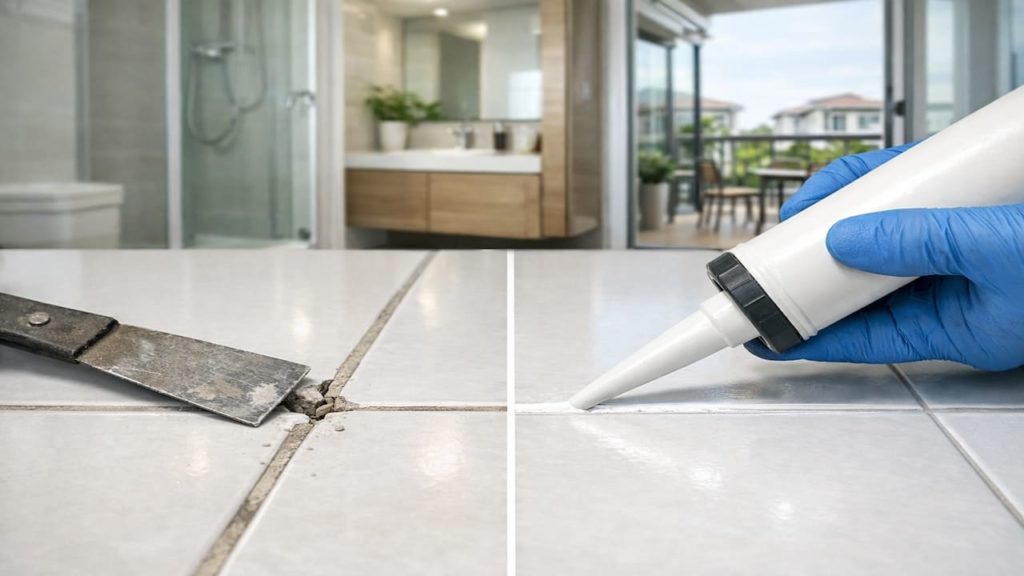
You searched “grout crack” because you saw hairline splits between tiles, bits of grout falling out, or dark lines that keep getting wetter.
In Malaysia, constant humidity, daily showers, and hot afternoons make tile joints expand and contract. Water then sneaks in, and cracks spread faster than you expect if you ignore them.
In this guide, you’ll learn the 5 steps to re-seal cracked grout so water stays out longer and you avoid hidden damp, loose tiles, and musty smells.

Hi, I’m Ken. I write practical home guides for Malaysia—no fluff, just what works.
I hold a formal building design qualification and have spent about 20 years on job sites across hundreds of projects. My goal is simple: help you avoid costly mistakes with clear, safe steps—a quick way to decide what to do next.
1. Malaysia grout crack guide: 5 steps
Cracked grout is a water entry point not just a cosmetic line — treat it like a small leak.
Grout is not waterproof forever, especially in wet zones like showers, kitchen backsplashes, and balcony tiles. In Malaysia’s damp climate, moisture that gets behind tiles dries slowly, which invites mold and loosens adhesion over time. Risk.
- Circle cracked joints and note where water hits daily
- Press joints gently and check for hollow movement
- Look for dark grout that stays wet after drying
- Inspect corners where wall meets floor tiles
- Check nearby paint bubbles or damp smell signs
You might think one crack is fine. But water follows the easiest path, and one failed line often turns into a wider damp zone under the surface.
2. 【Re-seal joints well and keep water out longer】
Good re-sealing is mostly about prep and drying time — not about buying expensive products.
If you re-seal over damp or dirty joints, the fix will fail fast in Malaysia humidity. Supplies like grout remover, cleaner, and sealer may cost RM15–80 depending on brand and area size. Prep.
- Let area dry fully before you start any work
- Remove loose grout and vacuum dust from joints
- Clean joints with mild detergent and rinse well
- Apply new grout evenly and pack joints tight
- Seal grout after curing and avoid water exposure
You might want to finish in one hour. But rushing cure time is how grout cracks again, so give it the full dry window even if it feels slow.
3. Why grout cracks in Malaysia wet areas
Most grout cracks come from movement moisture and poor curing — the joint takes the stress.
Heat and humidity create expansion cycles, and wet areas add constant saturation. If the substrate moves, tiles flex, or corners were grouted instead of caulked, cracks appear early and repeat. Movement.
- Building movement causes hairline cracks along long runs
- Wet substrate weakens grout and creates soft joints
- Improper mix ratio makes brittle crumbly grout lines
- No expansion gaps forces grout to take stress
- Corners need flexible sealant not rigid grout
You might assume “better grout” solves everything. Even premium grout fails if the base is moving or if corners are treated like flat joints.
4. How to re-seal grout joints step by step
Follow a clean remove replace seal sequence for durability — do not patch over failing lines.
Work in a controlled area so you can keep it dry, especially during rainy weeks in Malaysia. If you need silicone for corners, grout for joints, and a penetrating sealer, budget RM30–120 for a small bathroom section. Method.
- Score and remove cracked grout without chipping tiles
- Vacuum joints and wipe with damp cloth then dry
- Mix grout to firm paste and press into joints
- Tool surface smooth and wipe haze after set time
- Seal joints after cure and keep area dry
You might think thicker grout is stronger. Overfilling and weak tooling can trap moisture and crack, so pack firmly but finish clean and consistent.
5. FAQs
Q1. Should I use grout or silicone in corners?
Corners need flexible silicone because corners move. Grout is rigid, so it cracks first where wall and floor shift slightly.
Q2. How long should I wait before using the shower?
Follow product cure time, but in Malaysia humidity give extra drying if airflow is poor. Using it too early is the fastest way to re-crack the joint.
Q3. My grout is cracking in a straight line. Is that bad?
Straight-line cracking can signal substrate movement or a joint that was not packed well. Check for hollow tiles or slight flex when you press nearby.
Q4. Can I just paint over cracked grout?
Paint hides the line but does not block water well. If moisture is entering, it will continue behind tiles and cause mold or tile lift.
Q5. Why does grout turn dark even after cleaning?
Dark grout that stays dark can mean moisture is trapped below. Fix the crack and dry the area before sealing, or the stain returns.
Pro’s Tough Talk

Alright, I’ve been on site 20+ years, and I’ve done hundreds of jobs. Cracked grout in Malaysia is like a cracked umbrella in a storm. Looks small, then you’re soaked anyway.
The cause is usually 3 pieces. Movement in the building, wet substrate that never dries, and bad curing because people rush. Contractors aren’t all monsters, but the structure is cold: humidity plus water exposure punishes shortcuts.
Do this now. Dry the area, scrape out the loose grout, clean the joint, then re-grout properly. After it cures, seal it. Corners get silicone, not grout. Easy.
Prep and drying time decide whether the fix lasts. Don’t blame yourself, but don’t pretend “quick patch” is a solution. Aruaru: you re-grout at night and shower in the morning. Aruaru: the line cracks again and you act surprised.
If you enjoy redoing grout like it’s a weekend hobby, go on lah, champion.
Summary
Grout cracks are water entry points that can lead to damp, mold, and loose tiles in Malaysia’s humid conditions.
Remove failing grout, clean and dry well, re-grout properly, and seal after curing, with silicone in corners for movement.
Fix one wet zone today and stop water from creeping deeper then read a related guide on mold cleaning or ceiling stains to keep the home dry.