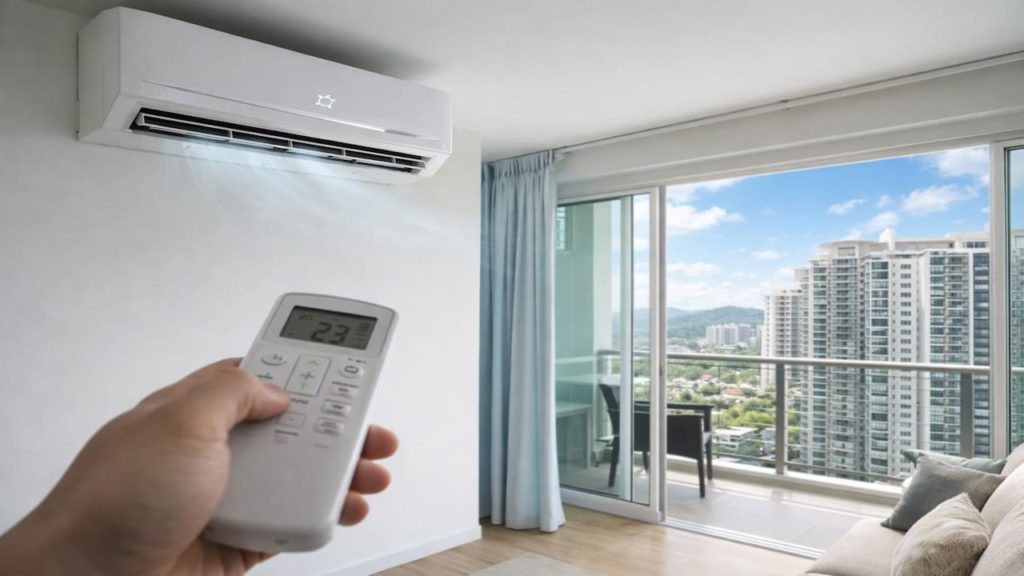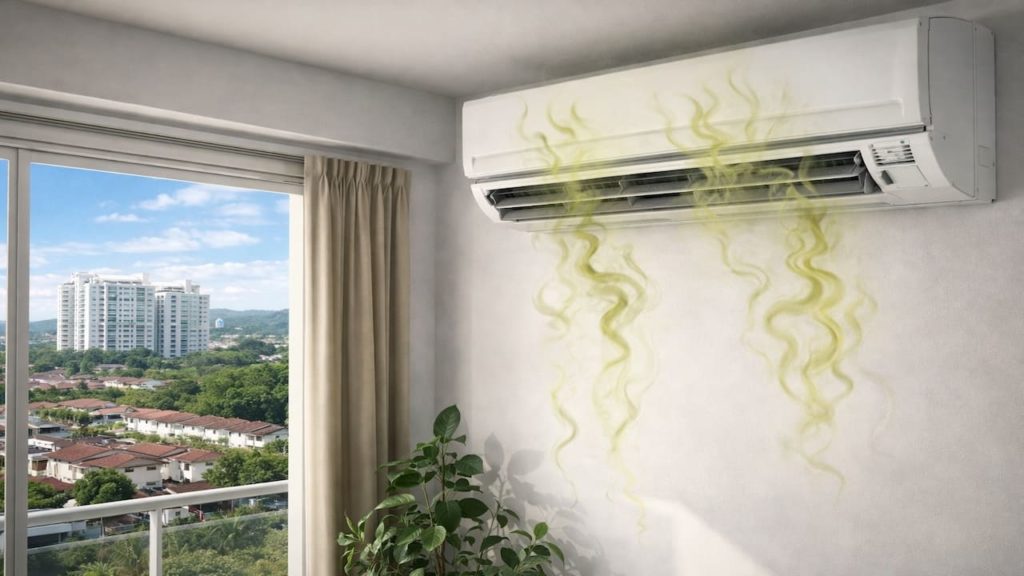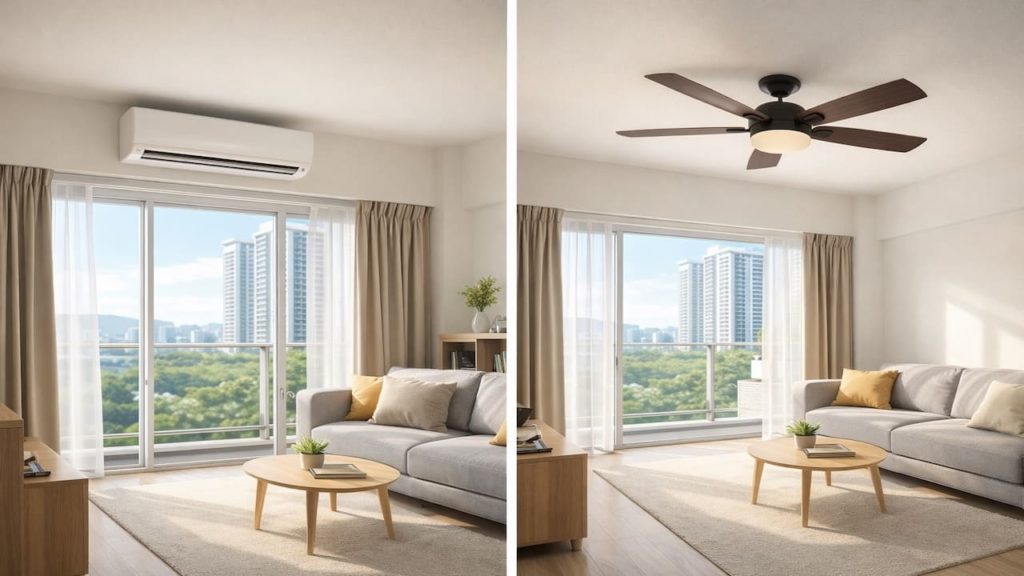
You are deciding between running the aircond or just using a ceiling fan, and the answer changes your comfort and your bill.
In Malaysia’s hot, humid climate, condos and terrace houses can feel sticky even when the temperature drops, so “cool enough” is not always comfortable.
In this guide, you’ll learn how aircond and ceiling fans differ in real life across cost, comfort, and humidity so you can choose the right setup for each situation.

Hi, I’m Ken. I write practical home guides for Malaysia—no fluff, just what works.
I hold a formal building design qualification and have spent about 20 years on job sites across hundreds of projects. My goal is simple: help you avoid costly mistakes with clear, safe steps—a quick way to decide what to do next.
1. Aircond vs ceiling fan: 5 key differences
Aircond changes the room air while a fan changes how you feel.
A fan moves air across your skin and helps sweat evaporate, but it does not truly lower room temperature, and it cannot remove moisture the way aircond can.
- Aircond lowers air temperature while a fan mainly improves perceived cooling
- Aircond can reduce humidity but a fan cannot remove moisture from the air
- Aircond needs closed rooms while fans still help in more open layouts
- Aircond can cause cold spots while fans spread airflow more evenly
- Aircond depends on maintenance while fans have simpler upkeep
Some people say fans are “just as good,” but that only holds when humidity is low—rare in Malaysia. Pick based on what problem you are solving, not habit.
2. Cost, comfort, humidity
Fans are cheaper to run but aircond wins on humidity.
In Malaysian wet weather, moisture makes rooms feel heavy, and aircond can pull water out of the air, which changes comfort more than a small temperature drop.
- Fans usually cost less because they use far less power than compressors
- Aircond can feel more comfortable at a higher temp if humidity is lower
- Fans work best when you are in the airflow path, not across the room
- Aircond works best in sealed bedrooms or offices where moisture is trapped
- Using both together can let you raise the aircond setting and save money
You may think aircond always means high cost, but pairing it with a fan often lets you set a warmer temperature and still feel cool—better trade.
3. Why the “best” choice depends on Malaysia homes
Humidity and layout decide more than preferences.
Condos often have smaller rooms that cool fast but trap moisture, while terrace houses can have warmer walls and larger spaces that need airflow planning.
- High humidity reduces the fan’s cooling effect because sweat evaporates slower
- Rainy season can make rooms clammy even when the fan feels strong
- Small sealed bedrooms benefit most from aircond dehumidifying effect
- Open living areas often feel better with fans plus spot cooling methods
- Dust and mold risk rises when damp air stays trapped without dehumidifying
Some people focus only on temperature, but comfort is a mix of temperature, airflow, and moisture. Malaysia proves that daily.
4. How to choose and use both safely
Use the fan to improve comfort and the aircond to control humidity.
This approach fits Malaysia’s humid weather and helps you avoid freezing the room just to feel dry and comfortable.
- Use a fan first if the room is warm but not humid and you just need airflow
- Use aircond when the room feels sticky, musty, or sweaty during wet spells
- Run both and raise the aircond temperature to reduce cost while staying comfy
- Redirect aircond airflow away from your bed and let the fan mix the air
- Clean aircond filters regularly because humidity makes dust and mold build fast
People sometimes overuse aircond at very low temps, but that creates cold drafts and higher bills. Use the fan to do the “feel” work, and aircond to do the “air” work.
5. FAQs
Q1. Can a ceiling fan replace aircond in Malaysia?
Sometimes, but not always. When humidity is high, a fan may feel weak because it cannot remove moisture, so aircond becomes more useful for comfort.
Q2. Is it cheaper to run a fan or aircond?
Fans are generally cheaper to run because they use much less electricity. Aircond costs more but can improve comfort by lowering humidity, not just temperature.
Q3. Does aircond always dry the air?
It can reduce humidity when it runs long enough and drains properly. If the room still feels sticky, you may need longer runs, Dry mode, or better sealing.
Q4. Should I use both at the same time?
Yes, often the best combo. The fan helps you feel cooler so you can set the aircond warmer, which can reduce cost while keeping comfort.
Q5. Which is better for mold prevention?
Aircond helps more because it can lower humidity, which reduces mold risk in damp Malaysian homes. Fans help airflow but do not remove moisture from the air.
Pro’s Tough Talk

I’ve been on site for 20+ years and handled hundreds of jobs, and people love arguing fan vs aircond like it is a sports team. In Malaysia’s hot, humid weather, that debate gets simple fast: a fan moves air, aircond changes air. Condos and terrace houses trap moisture, so the sticky feeling is not just “heat.” Reality check.
Three real differences run the whole show—humidity control, room sealing, and how comfort is created. Your 3-step move: use a fan when you only need airflow, use aircond when the room is clammy or musty, and combine both so you can set the aircond higher. Trying to solve humidity with a fan is like trying to dry laundry with motivational speeches. Nice energy, no results.
Two classics: you blast the aircond super cold and still feel sticky, then blame the unit, and you run the fan all night and wake up sweating because the air is wet. Another classic is mold creeping in the wardrobe corner during rainy season while everyone pretends it is “just smell.” Use aircond to remove moisture and a fan to spread comfort and stop paying extra for discomfort. Keep fighting it and you will be sweating in circles, literally.
Summary
Ceiling fans mainly improve perceived cooling by moving air, while aircond actually lowers temperature and can reduce humidity.
Fans are cheaper to run, but aircond is more effective when the room feels sticky, musty, or humid, especially during Malaysia rainy season. Using both often gives the best comfort-to-cost result.
Do one smart move today and your nights improve fast. Run the fan with a warmer aircond setting then read the next guides on Dry mode, high bills, and mold smells to build a Malaysia-ready comfort routine.