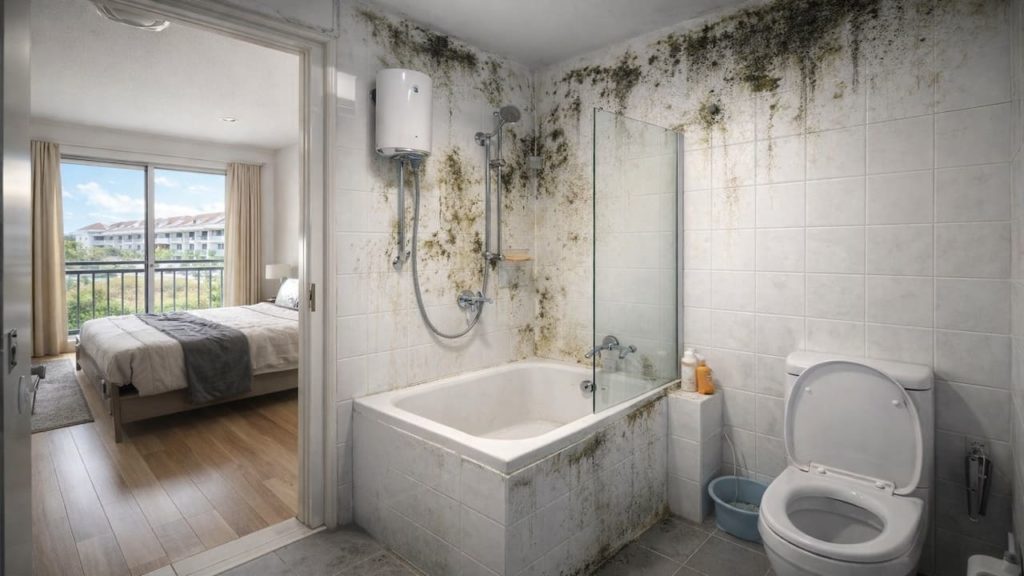
You look up and see dark spots spreading on the bathroom ceiling, even though you clean the walls and keep the floor dry.
In Malaysia, hot showers, high outdoor humidity, and small condo or terrace-house bathrooms can keep ceilings damp for hours, which feeds mold fast.
In this guide, you’ll learn 5 checks to find ceiling mold causes and stop regrowth by spotting leaks early and drying the air the right way.

Hi, I’m Ken. I write practical home guides for Malaysia—no fluff, just what works.
I hold a formal building design qualification and have spent about 20 years on job sites across hundreds of projects. My goal is simple: help you avoid costly mistakes with clear, safe steps—a quick way to decide what to do next.
1. Bathroom ceiling mold from humidity: 5 checks
Ceiling mold is a signal of repeated dampness not a one-off dirty patch.
Ceilings dry slow because warm steam rises and sits there, and in Malaysia’s humid weather the room may never fully reset between showers. Persistent moisture.
- Check if mold appears in the same corner or line, because patterns suggest a leak or condensation path.
- Check the exhaust fan performance, because weak extraction leaves steam trapped at the ceiling.
- Check for water stains, bubbling paint, or soft spots, because that points to ongoing moisture above.
- Check shower timing and door habits, because opening the door too early spreads moisture and keeps the ceiling wet.
- Check whether the bathroom stays damp for more than 30 minutes after use, because that usually means ventilation is failing.
Some people keep scrubbing the spots, but if the ceiling keeps staying wet, mold will return—find the moisture source before you fight the stain.
2. Find leaks and dry the air
Separate leak moisture from steam moisture because the fix is different.
In Malaysia condos and terrace houses, ceiling mold can come from daily shower steam, but it can also come from slow leaks from pipes, upper floors, or roof areas. Two causes.
- Look for yellow-brown staining, because that often signals a leak rather than pure humidity.
- Touch-test the area when dry, because a spongy ceiling suggests moisture inside the material.
- Observe after heavy rain, because roof or upper-floor leaks worsen then.
- Check around light fixtures and vent openings, because water often travels to weak points.
- Compare mold growth to shower direction, because direct steam zones spread differently than leaks.
It is tempting to assume “it’s just humidity,” but leak-driven mold will keep coming back no matter how much you ventilate—identify which one you have first.
3. Why bathroom ceilings mold in Malaysia
Warm steam hits a cooler ceiling and stays wet too long.
Malaysia’s air is already humid, so after a shower the bathroom can sit near saturation, and without strong extraction the ceiling remains damp, especially in small condo bathrooms. Ceiling trap.
- Steam rises and concentrates at the ceiling, so that surface gets wet first.
- Paint and drywall can absorb moisture and stay damp inside the layer.
- Weak airflow leaves a humid boundary layer that never clears.
- Rainy-season humidity reduces drying power even when the fan is on.
- Leaving wet towels and mats inside adds moisture long after the shower ends.
People think mold means they are not cleaning enough, but mold is mostly a drying-speed issue, so you fix drying time and mold loses its home.
4. How to stop ceiling mold from returning
Dry the ceiling fast after every shower and mold stops getting repeat moisture.
This matters in Malaysia because daily showers plus wet weather can keep the ceiling damp every day, which is enough for regrowth even after good cleaning. Daily prevention.
- Run the exhaust fan before the shower and keep it running 20–30 minutes after.
- Keep the bathroom door closed while extracting, then open only when humidity drops.
- Squeegee walls and glass to reduce total moisture that can re-evaporate upward.
- Use aircond Dry mode nearby for a short reset during wet weeks if the bathroom lacks strong ventilation.
- Clean existing mold with suitable cleaner, then dry the surface fully with airflow.
Some people repaint and hope it disappears, but paint alone does not fix dampness—drying speed is the real barrier that prevents regrowth.
5. FAQs
Q1. Is bathroom ceiling mold common in Malaysia?
Yes, it is common because humidity is high and bathrooms often stay damp after showers. It is especially common in small bathrooms with weak exhaust.
Q2. How can I tell if it is a leak or just shower steam?
Leaks often leave stains, soft spots, or worsening after rain, while steam mold tends to appear in broad patches near shower zones. If you see water marks, treat it like a leak first.
Q3. Should I use bleach on ceiling mold?
It can work on some surfaces, but it may discolor paint and does not always penetrate porous materials. Drying the ceiling after cleaning is the key so use the right cleaner and dry thoroughly.
Q4. How long should the bathroom dry after a shower?
Ideally it should feel noticeably drier within 20–30 minutes with a working fan. If it stays damp for hours, ventilation or moisture sources need fixing.
Q5. When should I get a professional to check?
If you see recurring stains, soft ceiling material, or mold returning quickly despite good ventilation, get it inspected. Persistent damp can indicate leaks or hidden moisture in the ceiling.
Pro’s Tough Talk

Listen. I’ve been on site for 20+ years and handled hundreds of jobs, and bathroom ceiling mold in Malaysia is almost always the same story: the ceiling stays wet too long, or there’s a quiet leak feeding it.
Cause is 3 buckets: steam trapped at the ceiling, weak exhaust, and water coming from above. Fix it in 3 steps: check the pattern and look for stains to rule out leaks, run the exhaust before and after showers with the door closed, then dry the room fast by reducing surface water and boosting airflow—done. Scrubbing mold without drying is like mopping while the tap is still running, and repainting over damp is like putting makeup on a bruise and calling it healed.
Two classics. Fan that sounds loud but moves no air, and towels left hanging inside like a humidity donation box. Come on. Find the moisture source and dry the ceiling fast or mold will return. Do the checks, fix the airflow, and stop feeding it, or keep collecting black dots like they’re wall art.
Summary
Bathroom ceiling mold grows when the ceiling stays damp after showers, which is common in Malaysia’s humid weather and small condo or terrace-house bathrooms. It can also signal a leak, so patterns and stains matter.
Use the 5 checks to separate steam from leaks: look for staining or soft spots, test exhaust airflow, watch what happens after rain, and track how long the bathroom stays damp. Then clean correctly and focus on fast drying after every shower.
Keep it repeatable—extract steam, keep the door controlled, and dry surfaces daily—mold stops when the ceiling stops staying wet.