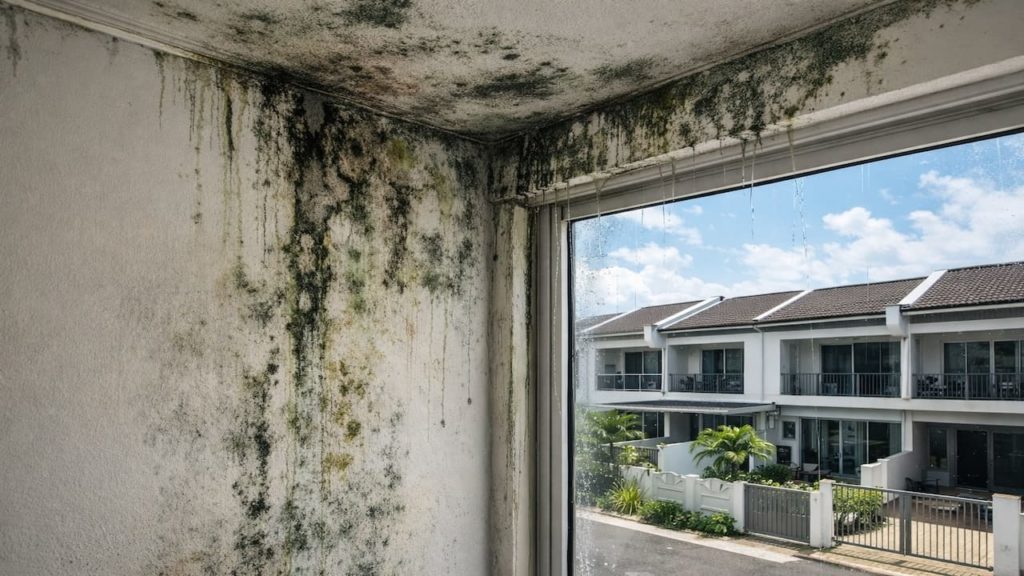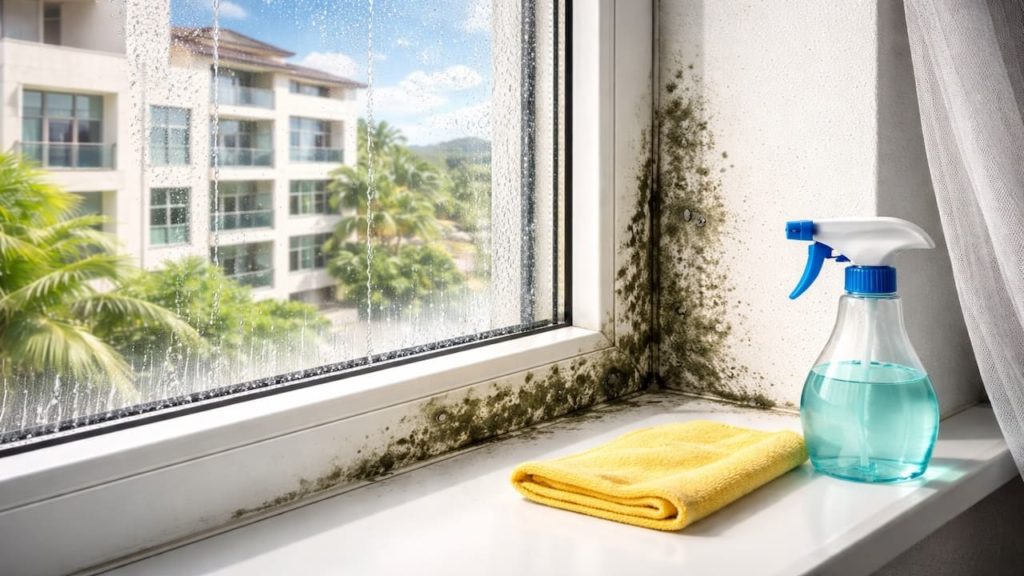
You searched because mold is showing up on your window frames, and in humid Malaysia it often returns even after wiping.
This usually comes from condensation, trapped moisture in tracks, and weak airflow around windows, especially in condos or terrace houses during wet nights.
In this guide, you’ll learn how to identify condensation traps quickly and fix airflow and moisture issues before window-frame mold spreads further.

Hi, I’m Ken. I write practical home guides for Malaysia—no fluff, just what works.
I hold a formal building design qualification and have spent about 20 years on job sites across hundreds of projects. My goal is simple: help you avoid costly mistakes with clear, safe steps—a quick way to decide what to do next.
1. Mold on window frames: 5 checks for condensation
Check the window for condensation patterns first because mold follows repeat wet spots.
Malaysia’s humid air hits cooler glass and frames at night, so water collects in tracks and corners—perfect conditions.
- Morning check: water beads on glass or damp frame edges
- Track check: standing water or black specks in the bottom rail
- Seal check: cracked silicone or gaps where air leaks in
- Curtain check: damp curtains touching the frame after rain
- Corner check: mold starts in the lowest corners and hinges
Some people blame “dirty windows.” Dirt helps, but the real engine is water sitting there daily. Find the wet pattern, then fix it. Clear win.
2. Fix airflow and moisture traps fast
Improve airflow around the window and dry the trapped water so the frame stops staying wet.
In condos with limited cross-breeze, window areas can stay damp even when the room feels cool, so you need a direct drying plan—simple.
- Pull curtains 5–10 cm away so air can move along the frame
- Wipe tracks dry after rain and remove water in corners
- Run aircond then finish with Fan mode to reduce lingering damp
- Use a small fan to push air toward the window for 20–30 minutes
- Open windows briefly only when outside air feels drier, not during heavy rain
You might think “opening windows fixes humidity.” Sometimes it makes it worse in wet season, so time it and keep it short. Strategy matters. Control.
3. Why window frames grow mold so often
Window frames grow mold because they cool down and collect moisture more than interior walls.
Glass loses heat fast, frames have tight corners, and tracks hold water, and Malaysia humidity turns that into a daily cycle.
- Night cooling makes the glass surface colder than the room air
- Tracks trap water and dirt like a tiny gutter
- Seals let humid outdoor air seep into cold edges
- Condensation drips down and sits where you cannot see it
- Furniture blocks airflow so frames stay wet longer
Some renters think mold means the window is “old.” Age helps, but moisture is the real cause. Fix moisture and even old frames behave better. Reality.
4. How to prevent mold from returning
Create a small daily routine that keeps tracks dry because prevention beats repeated scrubbing.
This works for terrace houses too, and it is especially useful when rain hits every afternoon and nights stay sticky—common pattern.
- After rain: wipe tracks and corners dry, then let air circulate
- Weekly: clean tracks with a brush and remove trapped grit
- Monthly: check seals and re-caulk small gaps before they widen
- Night routine: avoid overcooling, then dry the room after cooling
- Humidity control: use Dry mode or dehumidifier on wet weeks
People say “I’ll just use bleach every time.” Bleach does not fix condensation, and fumes in bedrooms are no joke. Dry first, clean second. Repeat stops.
5. FAQs
Q1. Is window frame mold always caused by condensation?
Often yes, but leaks from poor sealing can add water too. If the damp is worst after rain or only in one corner, check seals. Condensation is the most common trigger in Malaysia.
Q2. Why does mold come back even after wiping?
Because the track stays wet again the next night. If water sits daily, mold regrows fast. Drying the track and improving airflow makes wiping last.
Q3. Should I keep windows open to stop mold?
Not during heavy rain or very humid evenings, because it can bring in more moisture. Ventilate briefly when outside air is drier and use fans to move air. Timing matters.
Q4. What is the fastest way to dry window tracks?
Wipe with a cloth and use a small fan pointed at the frame for 20–30 minutes. Pull curtains away so airflow reaches corners. This is easy in condos and terrace houses.
Q5. When should I re-seal the window frame?
If you see cracked silicone, gaps, or water marks after rain, resealing helps. If mold is only on the inner edge, focus on condensation control first. Combine both for best results.
Pro’s Tough Talk

Listen. I’ve been on site for 20+ years and handled hundreds of jobs, and window-frame mold in Malaysia is basically a daily weather report. Humid air, cool glass, water beads up, then sits in the track like a tiny bathtub. That’s the whole movie.
Cause is 3 parts. One, condensation: you cool at night and the frame sweats. Two, traps: tracks and corners hold water and dirt, like a gutter you never clean. Three, airflow loss: curtains and furniture block air so it never dries. Fix is 3 steps—wipe the track dry after rain, pull curtains off the frame, and push air across the window with a fan after cooling—then check seals for gaps.
Wiping mold but leaving water in the track is like brushing teeth while eating sugar all day. And the “I wiped it yesterday, why is it back” face? Classic. Your window corners turn black and your curtains start smelling sour, two real-life classics. Bottom line, if the track stays wet the mold will always return, dry it fast or enjoy cleaning it forever like it’s your hobby.
Summary
Window-frame mold is driven by repeat condensation and trapped water in tracks, not just surface dirt.
If mold returns, follow a simple decision rule: fix airflow and drying first, then address sealing and any rain leaks.
Do this today: wipe the tracks dry and run a fan toward the frame after cooling, then read the next guide on managing bedroom humidity in Malaysia—dry corners stop mold coming back.