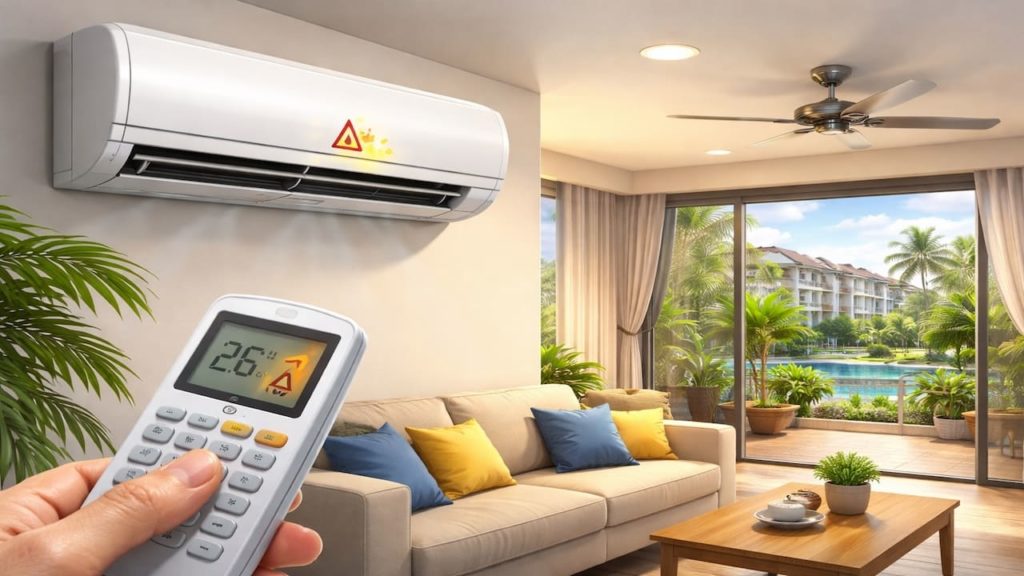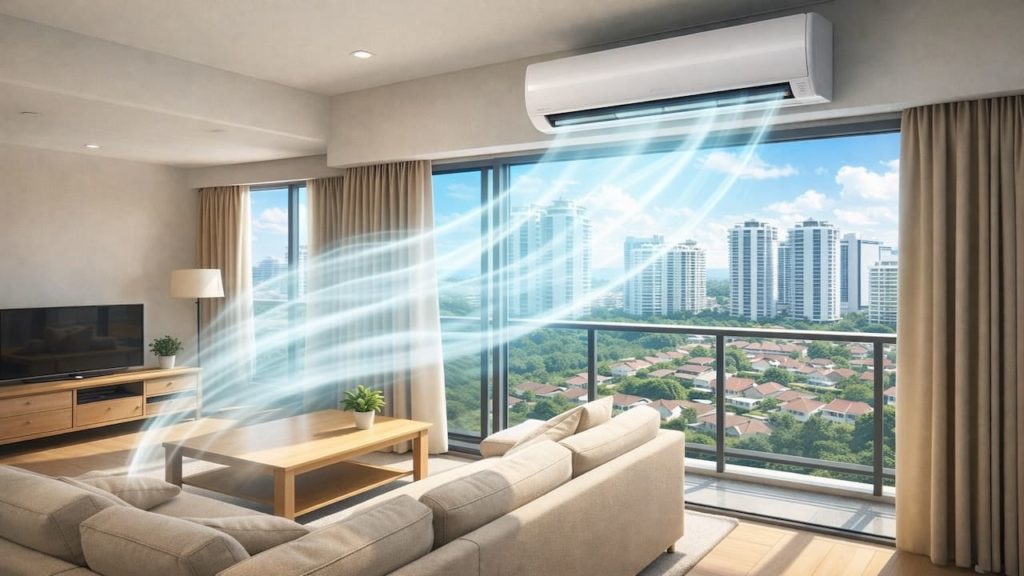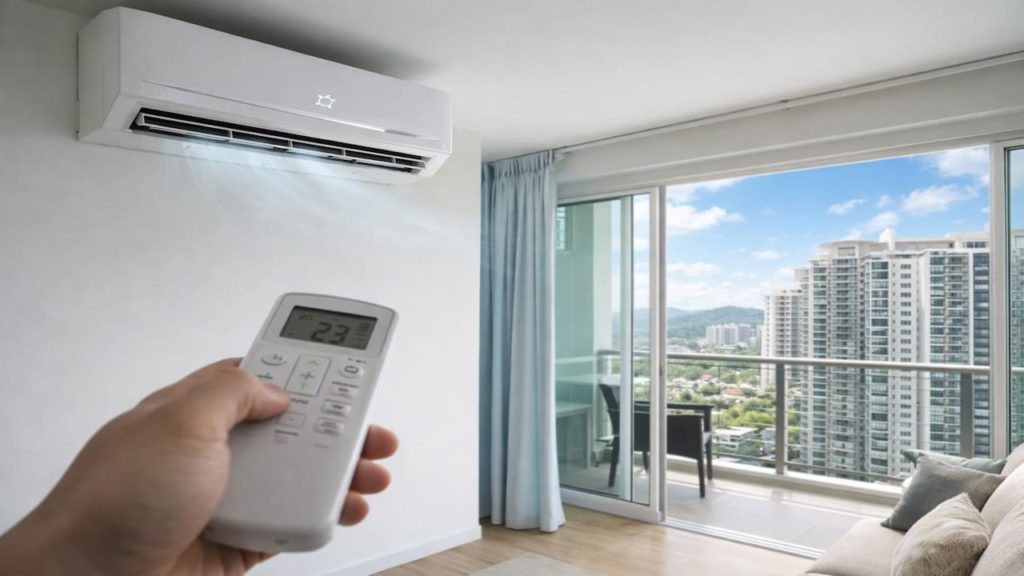
You set the temperature lower, but the room still feels uneven, and the bill keeps climbing anyway.
That usually happens when temperature is treated like a magic button, while airflow, humidity, and heat gain are doing the real work behind the scenes.
In this guide, you’ll learn how to set temperature for comfort and cost with 5 practical tips that keep you cool and stop wasting power.

Hi, I’m Ken. I write practical home guides for Malaysia—no fluff, just what works.
I hold a formal building design qualification and have spent about 20 years on job sites across hundreds of projects. My goal is simple: help you avoid costly mistakes with clear, safe steps—a quick way to decide what to do next.
1. Aircond temperature: 5 tips
Use temperature as a comfort target not a competition to hit the lowest number.
Most homes feel better when cooling is stable and humidity drops, not when the set point is extreme. Comfort first.
- Start at 24°C to 26°C and adjust by 1°C steps instead of jumping to 18°C
- Use Medium fan speed during long runs so the room cools evenly
- Keep doors and windows shut so your set point has a chance to work
- Clean the filter regularly so airflow stays strong and temperature holds easier
- Block afternoon sun with curtains or blinds so heat gain does not fight your setting
You might think lower always cools faster, but if airflow and heat gain are bad, you just pay more for the same comfort. Fix the system around the number.
2. Stay cool and control the bill
The best strategy is cool down fast then maintain gently so the compressor does less heavy lifting over time.
Comfort is a curve—get to the zone, then stay there with less effort. Simple control.
- First 15 to 20 minutes use Cool mode at 24°C to pull down room heat quickly
- After that raise to 25°C to 26°C to maintain and reduce compressor run time
- Use a room fan to circulate air so corners do not stay warm and force longer cooling
- Keep humidity sources out of the cooled room like drying laundry or open bathroom doors
- If the room feels cold but sticky try Dry mode for a short period then reassess
You may feel like changing settings constantly helps, but frequent changes often create unstable comfort. Set it, test it, then adjust once.
3. Why temperature alone does not fix comfort
Comfort fails when humidity and airflow are not controlled even if the thermometer looks low.
A room can be “cold but wet,” and that feels worse than a slightly warmer dry room. Real comfort.
- High humidity makes skin feel sticky and reduces perceived cooling
- Weak airflow prevents even distribution and creates warm spots
- Heat gain from sun and gaps replaces cool air and defeats your set point
- Dirty filters extend run time so the unit struggles to reach and hold temperature
- Short cycling wastes energy and can leave humidity high even at low settings
You might blame the temperature number, but comfort is the result of three variables working together. Temperature is only one.
4. How to choose the right temperature setting
The right setting is the highest temperature that still feels comfortable in your room.
This saves money because every degree lower can increase run time, especially in humid weather. Practical rule.
- Pick 25°C as a starting point and wait 20 minutes before judging
- If you feel sticky raise fan speed first before lowering temperature
- Use curtains and door sealing to reduce heat gain before you chase colder numbers
- Keep the outdoor unit airflow clear so the unit can reject heat efficiently
- Track your comfort at different times of day because afternoon sun changes the load
You might think 1°C does not matter, but it matters because it changes compressor behavior and total run time. Small changes add up.
5. FAQs
Q1. What temperature saves the most electricity?
Usually 24°C to 26°C feels best for many homes when airflow is decent and the room is sealed. The highest comfortable setting is the cheapest.
Q2. Is 18°C faster and cheaper because it cools quickly?
It can cool quickly at first, but it often increases total run time and cost, especially if humidity and heat leaks are not fixed. Lower is not always smarter.
Q3. Should I use Auto mode?
Auto can work if it keeps stable comfort, but some people prefer Cool mode control. What matters is stable temperature and humidity, not the label.
Q4. Why do I feel cold but still sweaty?
That often means humidity is still high or airflow is weak. Raise fan speed, seal the room, and consider short Dry mode instead of lowering temperature further.
Q5. How can I reduce the bill without feeling hot?
Clean the filter, block sun, seal gaps, and maintain at 25°C to 26°C with a fan. Those changes reduce run time while keeping comfort steady.
Pro’s Tough Talk

I’ve been on site for 20+ years and handled hundreds of jobs, and the temperature button is the most abused thing in the house. People treat it like a “make life easier” cheat code.
Causes split into 3 buckets: heat keeps entering, airflow is weak, and humidity stays high so the room feels sticky. Steps are 3 too: clean airflow, block heat gain, then set a sane temperature and hold it steady.
Chasing 18°C is like sprinting in sand with heavy shoes, and like turning the fridge colder while leaving the door cracked open. One comment: stop flexing the lowest number. Two aruaru: people leave curtains open in harsh sun, and people keep toggling settings every 5 minutes. Use the highest comfortable setting and you win or keep paying for cold pride.
Summary
Good temperature control is about stable comfort, not the lowest setting, and it works best with clean airflow, low heat gain, and controlled humidity. That is the real formula.
If you still feel uncomfortable at 24°C to 26°C after cleaning the filter and sealing gaps, look at humidity and airflow issues next. That is your decision point.
Start at 25°C, run Medium fan, close gaps, block sun, and test for 20 minutes today, then read the high bill and humidity guides next. Stay cool with smarter temperature choices.