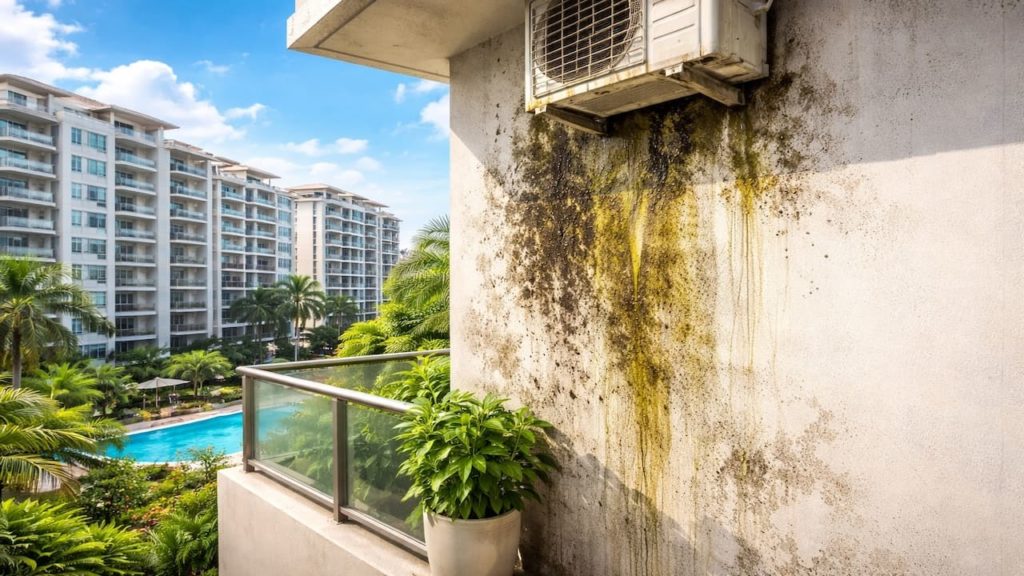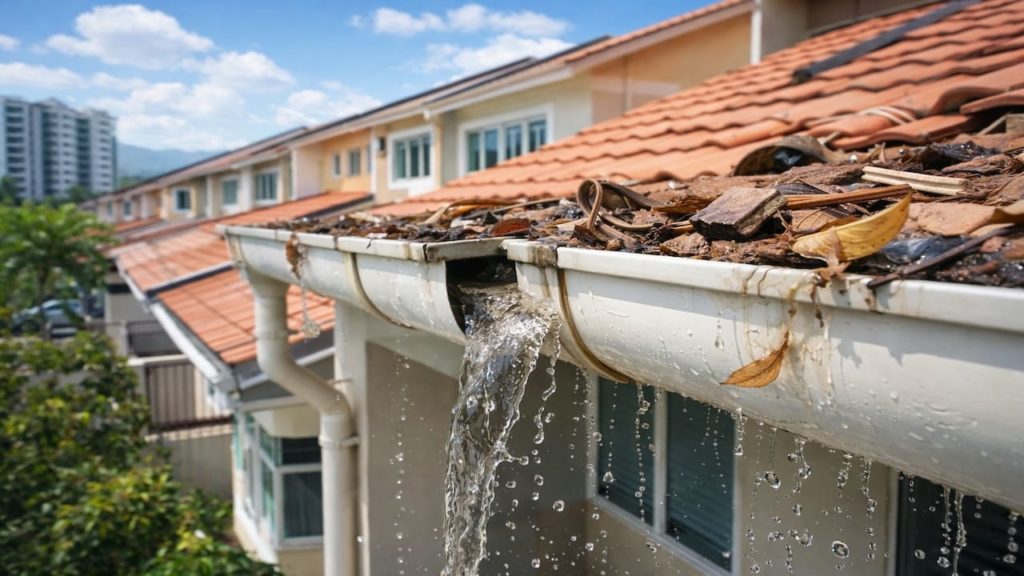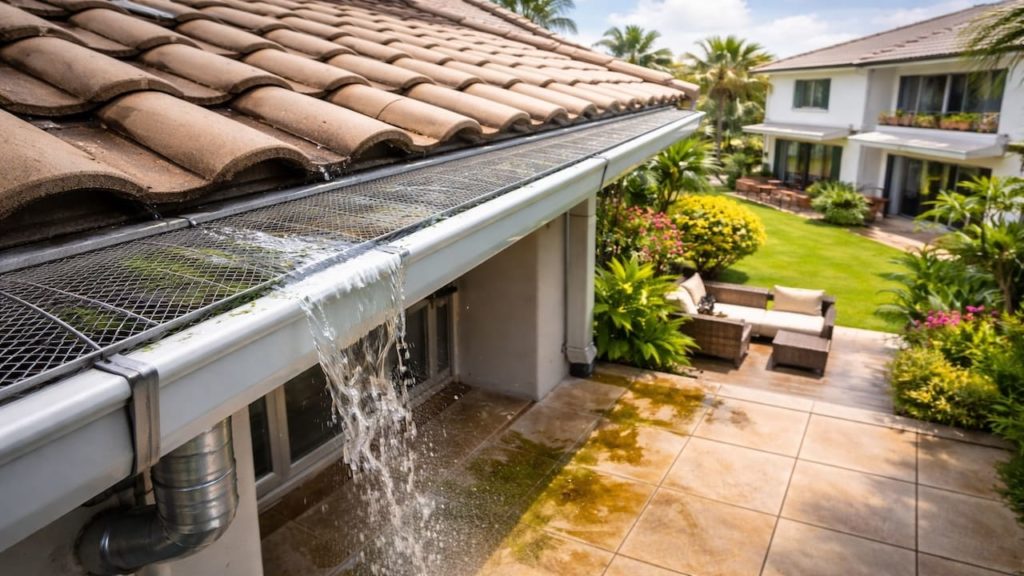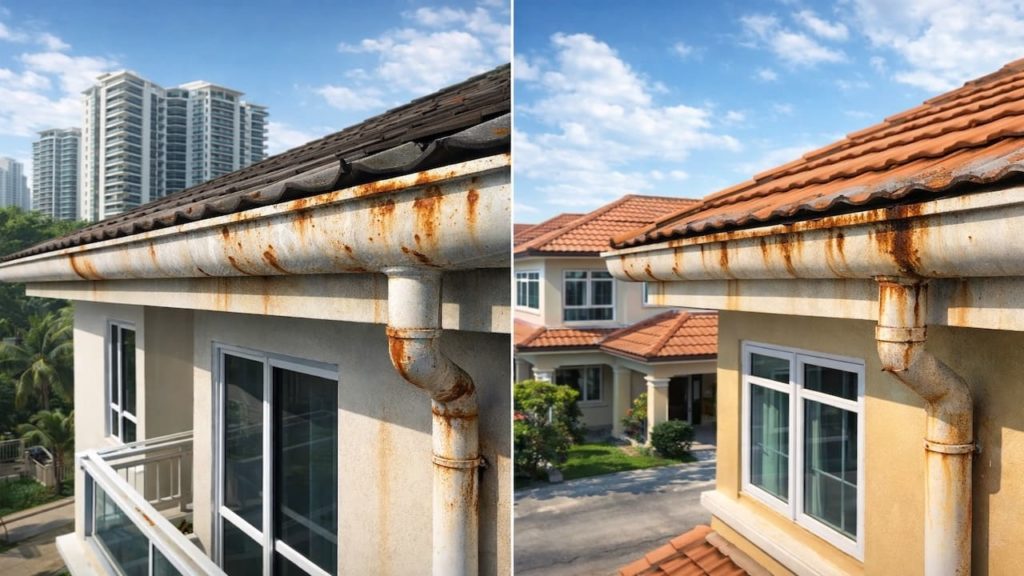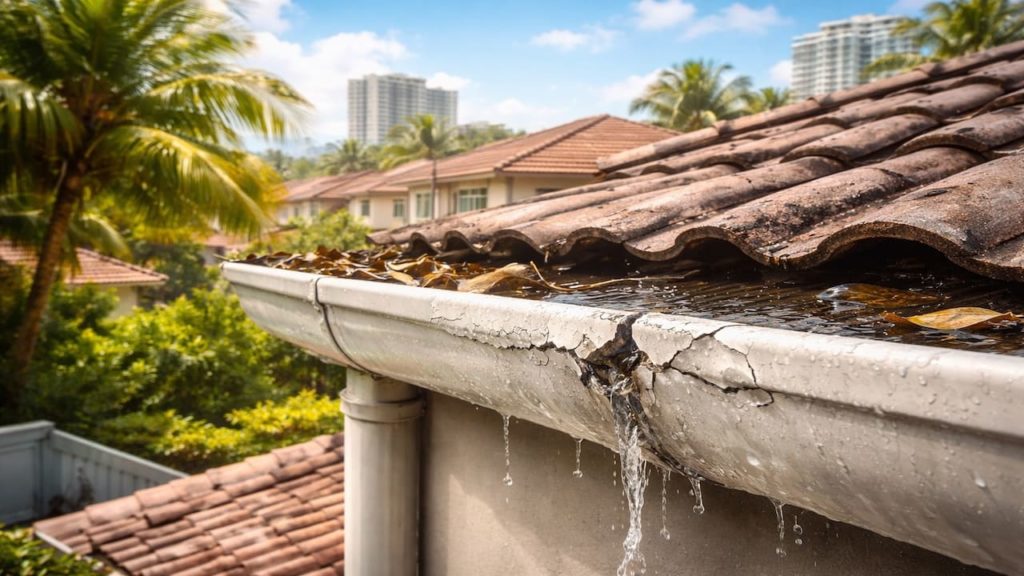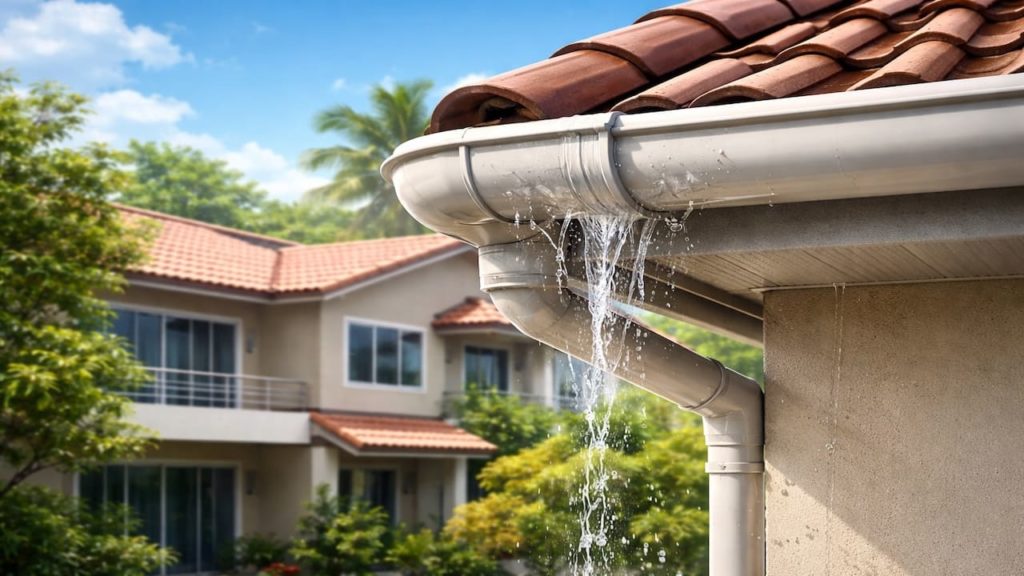
You see drips from a gutter seam, wet streaks on the fascia, or a mystery puddle after a heavy storm hits your building.
In Malaysia, heat expands metal and plastic, humidity feeds grime, and wet-season rain pressure tests every joint on condos and terrace houses.
In this guide, you’ll learn why gutter joints start leaking and how to find the weak point fast after storms.

Hi, I’m Ken. I write practical home guides for Malaysia—no fluff, just what works.
I hold a formal building design qualification and have spent about 20 years on job sites across hundreds of projects. My goal is simple: help you avoid costly mistakes with clear, safe steps—a quick way to decide what to do next.
1. Gutter leaking at joints: 5 causes
Most joint leaks come from movement plus dirt not from one dramatic crack you can spot from the ground.
When Malaysia swings from hot sun to sudden rain, joints flex and sealant ages faster. Common failure.
- Old sealant shrinks and peels, then water sneaks under during high flow.
- Joint clips loosen, so the seam opens slightly when the gutter fills.
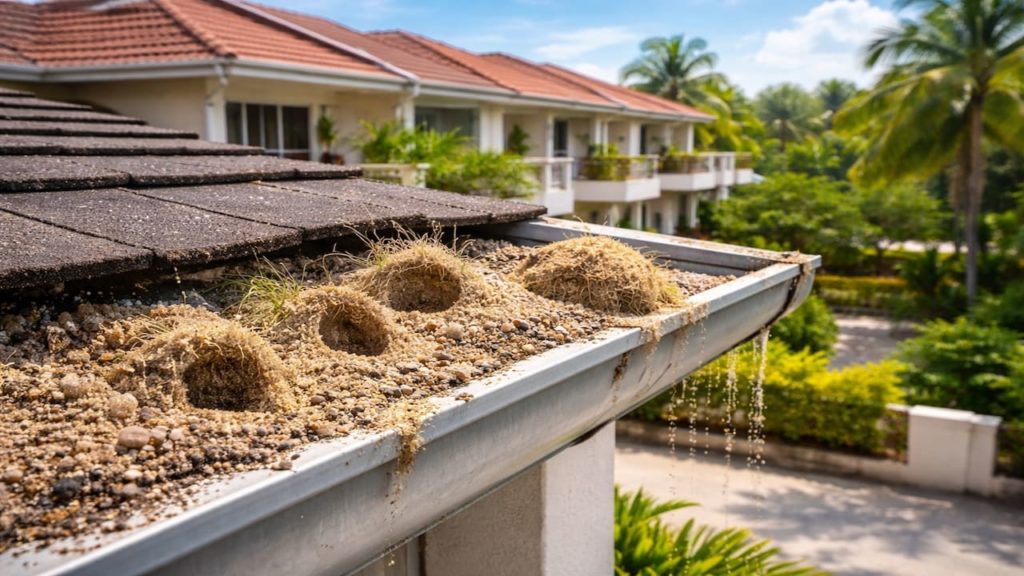
- Debris builds at the joint and holds water there longer, speeding wear.
- Poor slope creates a standing-water zone right at the seam line.
- Different materials expand differently, so the joint works like a hinge.
Some people blame “bad gutter,” but it’s often one tired seam doing all the leaking. Find that seam, then fix properly.
2. Find weak points after storms hit
Check right after rain while the evidence is fresh because dried seams can hide the true leak path.
Malaysia rain can be sideways, so water marks travel and confuse you—follow drip lines from the joint outward.
- Wait for a safe dry break, then look for the wettest seam and the darkest stain line.
- Trace drip trails on the fascia back up to the nearest joint above.
- Press lightly under the seam and feel for soft, gummy, or missing sealant.
- Look for a tiny gap at the clip line where two pieces meet.
- Do a short hose test starting upstream, and stop the moment the joint starts weeping.
“It leaks everywhere” is usually wrong. One joint starts it, then water spreads like gossip.
3. Why joint leaks get worse in Malaysia
Tropical heat and wet-season pressure accelerate joint failure so small seepage becomes a steady drip in months.
Constant moisture keeps dirt stuck at seams, and that dirt acts like sandpaper and sponge at the same time. Brutal combo.
- UV and heat bake sealant, then rain cools it fast and causes micro-splits.
- High rainfall rates push water over seams with more force than mild climates.
- Algae film makes joints stay wet longer, so corrosion and peeling speed up.
- Condos with long runs can flex more, stressing connectors during storms.
- Terrace house roof valleys dump surges that slam one joint repeatedly.
This is not rare. It is maintenance physics in a humid country.
4. How to stop leaks and prevent return
Dry clean and reseal the joint correctly then reduce stress so the seam stops opening again.
Do not smear sealant over wet grime and hope. In Malaysia, that “quick fix” peels fast. Short life.
- Clean the joint area, remove old flaky sealant, and wipe until the surface is truly dry.
- Reseat clips or screws so the pieces pull tight before you reseal.
- Apply outdoor-grade gutter sealant in a continuous bead, then smooth it for full contact.
- Fix slope or add a bracket near the joint so water does not pond at the seam.
- After the next rain, recheck the same joint and confirm no weeping lines.
If the joint is warped or cracked, sealant won’t save it. Replace the connector and move on.
5. FAQs
Q1. Can I seal a leaking joint while it is wet?
It might stick for a day, then peel in Malaysia’s humidity. Wait for a dry window and clean properly.
Q2. Is the leak always at the seam I see dripping?
Not always, because water can travel along the underside and drip later. Check one joint upstream during a hose test.
Q3. What sealant should I use for gutters?
Use an outdoor gutter-rated sealant designed for rain exposure. Surface prep matters more than brand so clean and dry first.
Q4. Why does it leak only in heavy rain?
High flow raises water level inside the gutter and pushes water over weak seams. Light rain may not reach that level.
Q5. When should I call a pro?
If access is dangerous, joints are warped, or multiple seams leak after resealing, call. Structural alignment may be needed.
Pro’s Tough Talk

I’ve been on site for 20+ years and handled hundreds of gutters in tropical sun and wet-season chaos. Joint leaks are the sneaky ones. They drip like a slow prank, then one big storm turns it into a wet wall buffet.
Three causes, no drama. One, old sealant shrank and cracked. Two, the joint got loose and flexes like a cheap hinge. Three, debris made a little dam so the seam stays wet. Steps: clean and dry the seam, tighten the joint, then reseal and brace the area so it stops moving.
Don’t blame yourself, and don’t call every installer a villain, but some joints are slapped together like tape on a broken toy. You know the “Malaysia rainy night” moment: you hear drip-drip, grab a torch, and pretend it’s fine. Find the one weak joint and fix it right or keep hosting the drip soundtrack like it’s your new hobby.
Summary
Gutter joints leak because sealant ages, clips loosen, debris holds water, and storms push high flow through weak seams. Malaysia accelerates it.
Inspect right after rain, trace stains to one seam, then do a short hose test to confirm the exact leak point. Fix tightness and slope.
Clean, dry, reseal, and recheck after the next storm so the drip does not return. One seam fixed saves the whole wall and next you should read leaf clog signs.