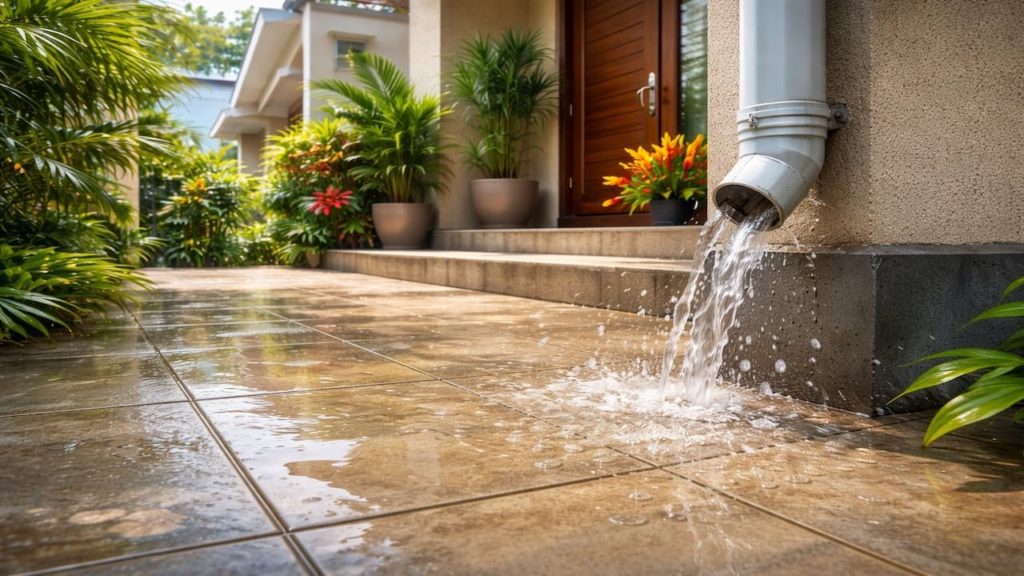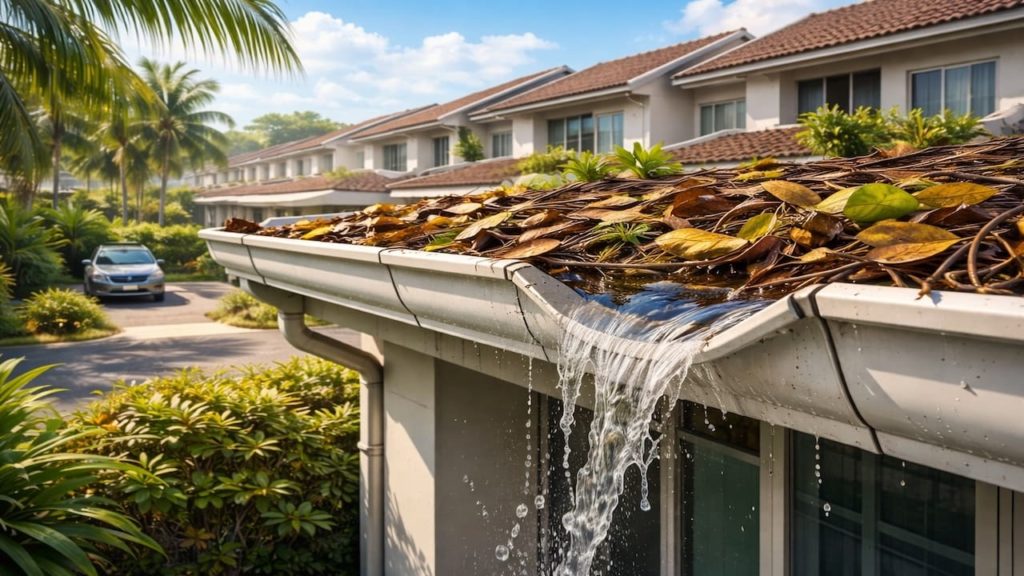
You notice a section of gutter looks bowed, water sits after rain, or a sudden overflow happens at one spot during a heavy downpour.
In Malaysia, humid heat softens grime, storms fill gutters fast, and both condos and terrace houses can develop sagging runs over time.
In this guide, you’ll learn how to spot gutter sagging early and prevent pooling that leads to surprise overflow.

Hi, I’m Ken. I write practical home guides for Malaysia—no fluff, just what works.
I hold a formal building design qualification and have spent about 20 years on job sites across hundreds of projects. My goal is simple: help you avoid costly mistakes with clear, safe steps—a quick way to decide what to do next.
1. Gutter sagging: 5 warning signs
One sagging section can flood the whole run because pooled water steals slope and blocks debris from moving out.
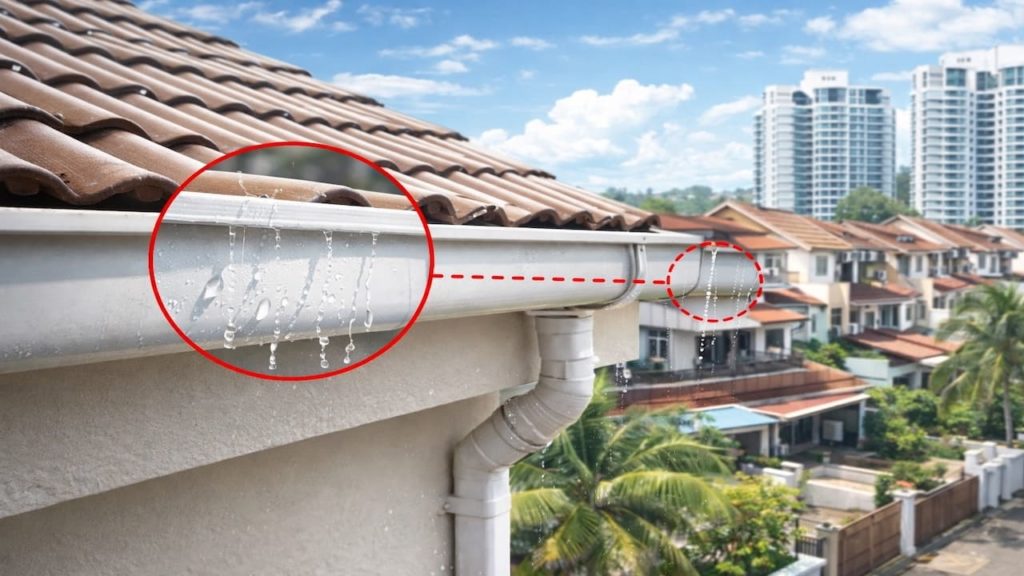
After a Malaysian storm, sagging shows up as standing water and strain—look for shape changes, not just drips.
- The gutter line looks wavy instead of straight when viewed from the side.
- Water stays in one section hours after rain ends, not draining to the outlet.
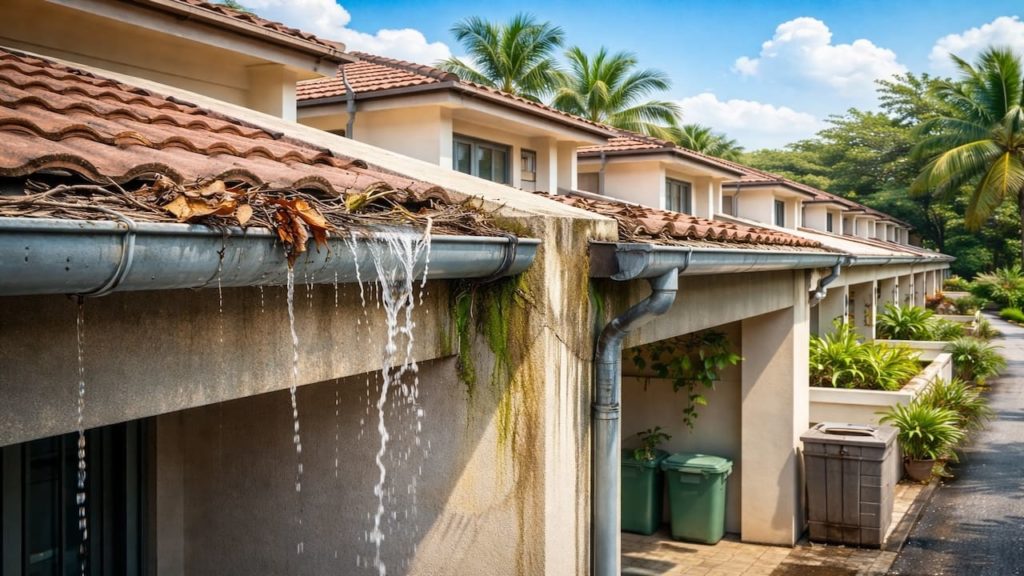
- Overflow happens at the same mid-run spot, even when the outlet seems clear.
- Brackets look tilted or pulled, with a visible gap between bracket and gutter.
- You see dark algae bands in one low area where water constantly sits.
Some people think “a little bend is fine,” but pooled water turns into stains and mosquitoes. Fix the low point.
2. Prevent pooling and sudden overflow
Restore slope and support before the next storm so water moves instead of collecting like a bathtub.
Malaysia rain can jump from calm to violent in minutes—so your goal is steady drainage, not perfection.
- Mark the low point after rain, then check which bracket area is closest to that dip.
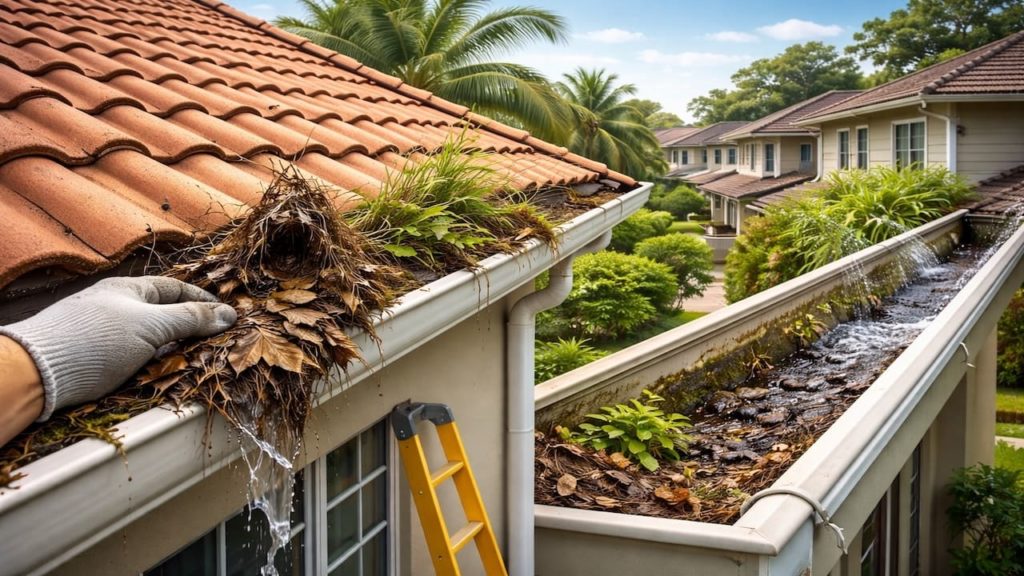
- Clear debris first so you are not “fixing” a sag that is really a leaf dam.
- Re-seat or tighten the nearest brackets so the gutter lifts back into line.
- Test with a small bucket of water and confirm it runs to the downpipe quickly.
- If the run is long, add support near joints where weight and movement concentrate.
“It only overflows in crazy rain” is how water damage starts. Stop pooling, and overflow becomes rare.
3. Why gutters sag in Malaysia
Sagging happens when weight plus heat slowly wins and Malaysia’s climate speeds up that sag cycle.
Wet debris is heavy, and tropical sun expands materials, then rain cools them fast—stress builds at brackets. Slow failure.
- Leaf sludge holds water, adding constant weight that pulls brackets down.
- Brackets are spaced too far, so the gutter bows between support points.
- Fast temperature swings from sun to storm loosen clips and screws over time.
- Joint areas flex more, especially on long condo runs exposed to wind.
- Undersized downpipes cause frequent full-gutter events that load the whole system.
This is not just “old house.” It is stress and support doing their thing.
4. How to fix sagging and keep it from coming back
Lift the sag then lock the support points so the gutter keeps its fall and drains even during monsoon bursts.
Do not rely on sealant or tape to “hold” a sag—support is mechanical, not magical.
- Clean out standing water and debris so you are not lifting a heavy, wet gutter.
- Tighten loose brackets, and replace cracked clips that no longer grip.
- Add an extra bracket at the lowest dip to remove the bow between supports.
- Check joint alignment and re-seat connectors so lifting does not open a seam.
- After the next storm, inspect the same area and confirm no pooling remains.
If the fascia board behind is rotten, the bracket will not hold. Structural base first.
5. FAQs
Q1. Is sagging the same as a clogged gutter?
No, but they team up. A clog creates pooling, and pooling adds weight that makes sagging worse.
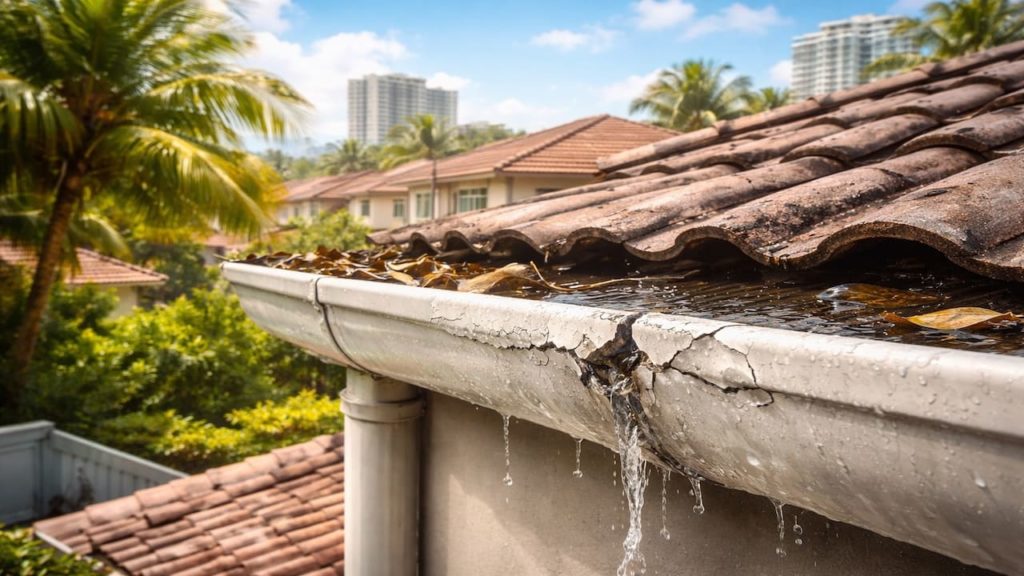
Q2. Can sagging cause leaks at joints?
Yes, because the seam flexes and stays wet longer. That speeds up sealant failure in Malaysia’s humidity.
Q3. How often should I check for sagging?
In wet months, do a quick look after big storms. Pooling after rain is the easiest clue and it costs nothing to notice.
Q4. Can I fix sagging myself?
Sometimes, if access is safe and it is only loose brackets. If it is high, slippery, or rotted behind, call a pro.
Q5. When is replacement better than repair?
If multiple sections sag, brackets keep pulling out, or joints keep opening, replacement may be cheaper long-term.
Pro’s Tough Talk

I’ve been on site for 20+ years and handled hundreds of gutters in tropical heat and wet-season hammer rain. Sagging gutters are like a tired hammock. They look “kinda fine” until they suddenly dump a bucket on your doorway.
Three causes, clear as day. One, wet leaf sludge is heavy and sits there. Two, bracket spacing is lazy, so it bows. Three, the base board is weak, so screws bite air. Steps: clear the weight, lift and tighten the supports, then add a bracket at the low point and test flow.
Don’t blame yourself, and don’t pretend every installer is a clown, but some jobs are done like “close enough bro.” You know the real scene: you hear the rain, you peek out, and you see the gutter doing a slow belly flop. Fix the support and the gutter behaves or keep enjoying the surprise shower like it’s a free attraction.
Summary
Sagging gutters create low spots that pool water, grow algae, and trigger sudden overflow during heavy rain. Malaysia’s storms make it show fast.
Mark the low point after rain, clear debris, then restore slope by tightening and adding support near the dip. Check the base if screws won’t hold.
Do one post-storm inspection this week and fix the lowest sag before it dumps again. Support fixes beat endless cleanup and next you should read about joint leaks after storms.