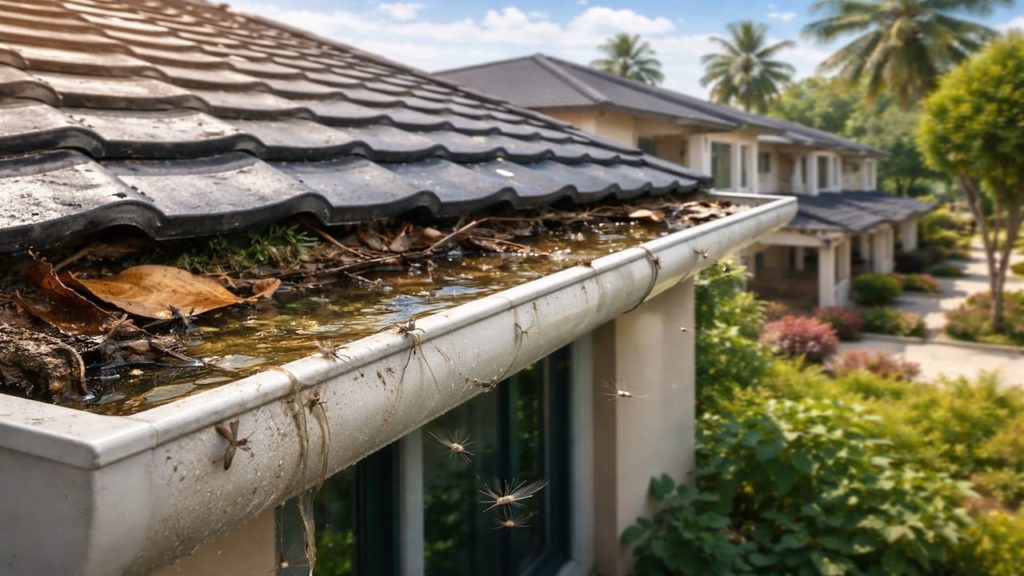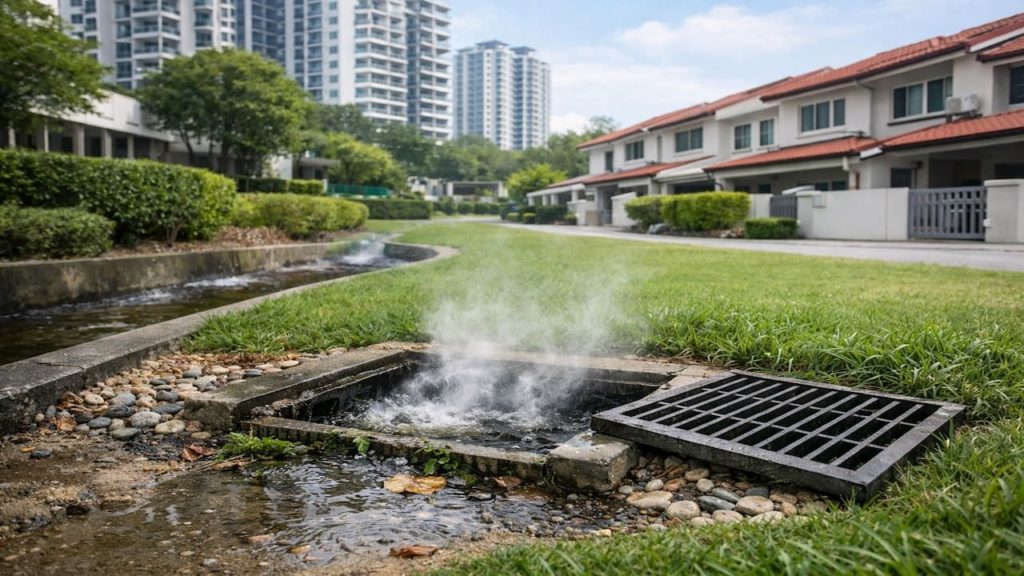
You get a sudden roof edge waterfall during storms, even though the gutter “looks fine” on normal days, and the porch becomes a splash zone.
In Malaysia, monsoon bursts, wind driven rain, and year round humidity stress gutters on condos and terrace houses, so weak flow gets exposed fast. Wet-season reality.
In this guide, you’ll learn why storm overflow keeps happening and how to pinpoint the exact reason before stains, mold, and slippery tiles spread.

Hi, I’m Ken. I write practical home guides for Malaysia—no fluff, just what works.
I hold a formal building design qualification and have spent about 20 years on job sites across hundreds of projects. My goal is simple: help you avoid costly mistakes with clear, safe steps—a quick way to decide what to do next.
1. Gutter overflowing in storms: 5 reasons
Storm overflow usually means one flow limit and the gutter is reaching its capacity during peak minutes of Malaysian rain.
When rain intensity spikes, water level rises and finds the easiest escape—often over the back edge or at one sag point near a joint. Predictable.
- Downpipe or outlet is partly blocked so the gutter fills faster than it drains.
- A sagging section creates a pond that overflows first when the run surges.
- Roof valley dumps concentrated water into one short gutter section.
- Joint gaps or end caps leak once water level climbs above the seam line.
- The gutter size is too small for the roof area and storm rate.
Some say “it only overflows in crazy storms,” but Malaysia storms are frequent and repeat damage builds. Fix the one limit and overflow stops.
2. Malaysia rain can overwhelm poor flow
High intensity rain punishes slow drainage so a small restriction becomes a wall stain problem within one wet season.
Short violent downpours fill gutters in minutes—if debris, algae film, or bad slope slows flow even a little, the system loses fast. No mercy.
- Warm humidity turns leaf bits into sticky sludge that narrows outlets quickly.
- Wind pushes water sideways and raises gutter water levels near corners.
- Frequent storms prevent drying so debris stays heavy and keeps sliding into outlets.
- Condos with long runs flex more and loosen clips that should hold alignment.
- Terrace house roof layouts often funnel water into one corner near the entry.
You might blame the rain itself, but good gutters handle heavy rain when flow is clean and slope is right. Poor flow is the real weakness.
3. Why gutters overflow in storms
Overflow happens when inflow beats outflow and storm peaks push inflow higher than your downpipe and slope can release.
In Malaysia, the combo of roof grit, algae, and fast rainfall makes outflow shrink over time—then one storm shows the failure point. Pure physics.
- Outlet screens clog and act like a plug during the exact minutes you need drainage most.
- Standing water from slight sagging reduces effective slope across the run.
- Debris dams at joints hold water and raise the internal waterline.
- Back edge overflow wets fascia and wall surfaces without obvious front spilling.
- Undersized downpipes cannot evacuate storm volume even if the gutter is clean.
People assume overflow is random, but it follows the same physics every storm. Restore outflow and the roof edge stays dry.
4. How to stop storm overflow and prevent return
Lower the water level by improving drainage then stabilize the gutter so it keeps slope and capacity through Malaysia wet months.
Work only in safe dry windows—wet ladders and tiles are trouble, and quick wet fixes peel fast in humid heat. Non-negotiable.
- Start at the downpipe outlet and confirm strong discharge during a short hose test.
- Clear debris at the outlet mouth and the first elbow where sludge often packs.
- Mark the first overflow point after rain and add a bracket if the section sags.
- Reseat joints and end caps, then seal only on clean dry surfaces.
- During rainy season, do a 2 minute check after major storms to catch early buildup.
Some prefer to wait for the next “service visit,” but repeated overflow creates stains and mold that cost more later. Fix flow now and overflow drops.
5. FAQs
Q1. Is overflow in storms normal in Malaysia?
Heavy rain is normal, but repeated overflow is not. Not normal. If it happens often, you have a restriction, sag, or undersizing issue.
Q2. How can I tell if the downpipe is the main problem?
Watch the outlet during rain or a hose test. If discharge is weak while the gutter stays full, the pipe path is restricted.
Q3. Does a gutter guard solve storm overflow?
Guards reduce big leaves, but they can clog with fine debris—so they help only if you still clean and confirm flow.
Q4. Can overflow cause mold on interior walls?
Yes, repeated wetting can seep into fascia and plaster and keep surfaces damp in Malaysia humidity. Drying stays slow.
Q5. When should I call building maintenance or a pro?
If access is unsafe, brackets are pulling out, or overflow returns after cleaning, call. Safety beats fast DIY every time.
Pro’s Tough Talk

I’ve been on site for 20+ years and handled hundreds of gutters and roofs in Malaysia heat and wet season rain. Storm overflow is not a mystery curse. It’s a bottleneck.
Three causes. Outlet half blocked like a straw stuffed with wet leaves. Sagging making a little pond like a tired hammock. Roof valley dumping water like a firehose in rainy season. Steps: clear the outlet from the ground, flush for steady discharge, then brace the low spot.
Don’t blame yourself, and don’t call every contractor evil, but some installs are “good enough” until the first real storm. You know the scene: midnight thunder, you hear a waterfall, you step out in slippers, and you go “again?” Fix the bottleneck and the storm loses or keep mopping like it’s your hobby.
Summary
Storm overflow is usually caused by one flow limit: a restricted downpipe, a sag pond, a joint dam, or gutter sizing that cannot match Malaysia storm peaks. Simple physics.
Confirm outlet discharge, mark the first overflow point, and correct slope and support before repainting stains. If overflow repeats, treat it as capacity and drainage.
Do one post storm check this week, clear the outlet, and brace the low spot, then retest at the next downpour—clean flow prevents mold spread and next read about wall stains checks.