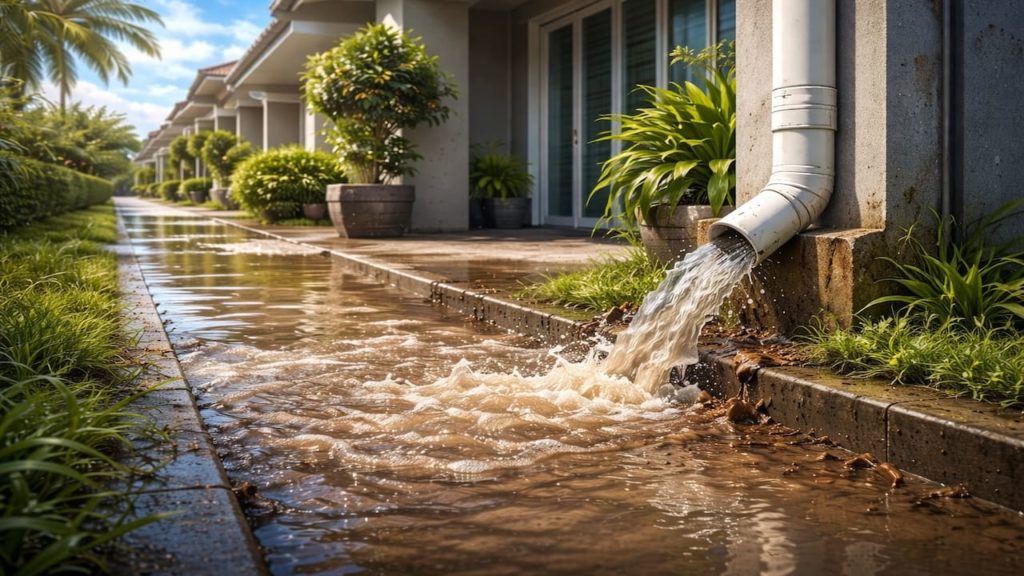
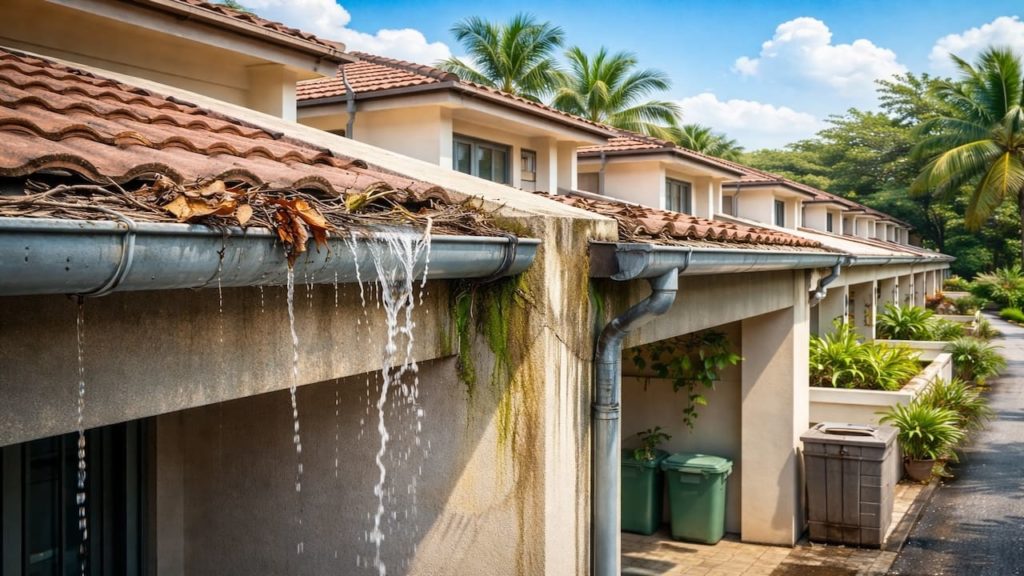
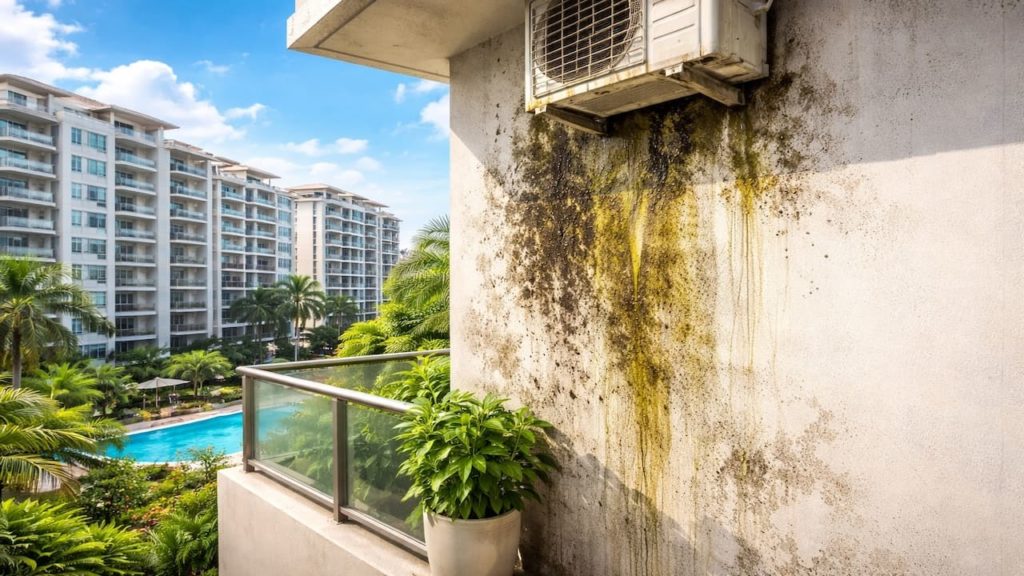
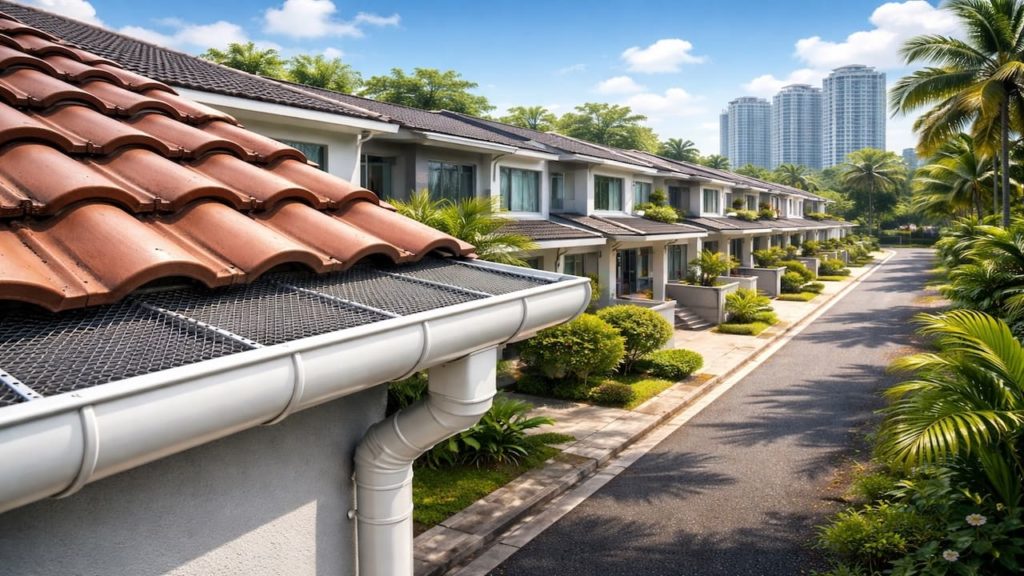
You notice water leaking from a gutter downpipe, and the wall below keeps getting streaks after rain in Malaysia.
In humid heat and sudden downpours, small cracks, loose joints, and weak brackets can turn a downpipe into a constant dripper that soaks walls and floors. Slow damage.
In this guide, you’ll learn the 5 downpipe leak signs and what to fix first so you can spot cracks and loose connections, stop wall wetting, and keep drainage strong.

Hi, I’m Ken. I write practical home guides for Malaysia—no fluff, just what works.
I hold a formal building design qualification and have spent about 20 years on job sites across hundreds of projects. My goal is simple: help you avoid costly mistakes with clear, safe steps—a quick way to decide what to do next.
1. Gutter downpipe leaks: 5 signs
Downpipe leaks show up as repeat wet trails even when gutters drain because water escapes at joints and runs along the wall line.
Malaysia rain can hide tiny leaks during the storm, but the stains and dampness after are clear. Follow the trail. A small drip becomes algae and paint bubbles fast.
- Vertical brown streaks under a downpipe joint that reappear after every rain
- Drips from a connector even when water is not overflowing at the gutter top
- Wet rings or splatter marks around a bracket point on the wall
- Gurgling sounds and slow discharge suggesting pressure at a partial blockage
- Mosquito activity near damp wall spots where water keeps collecting
You might think it is just splash from heavy rain, but joint leaks create a clear line pattern. If the streak always starts at one connector, that is the leak point.
2. Cracks joints and loose brackets to fix
Fix the structure first then seal because a moving pipe will break any patch in Malaysia heat and wet cycles.
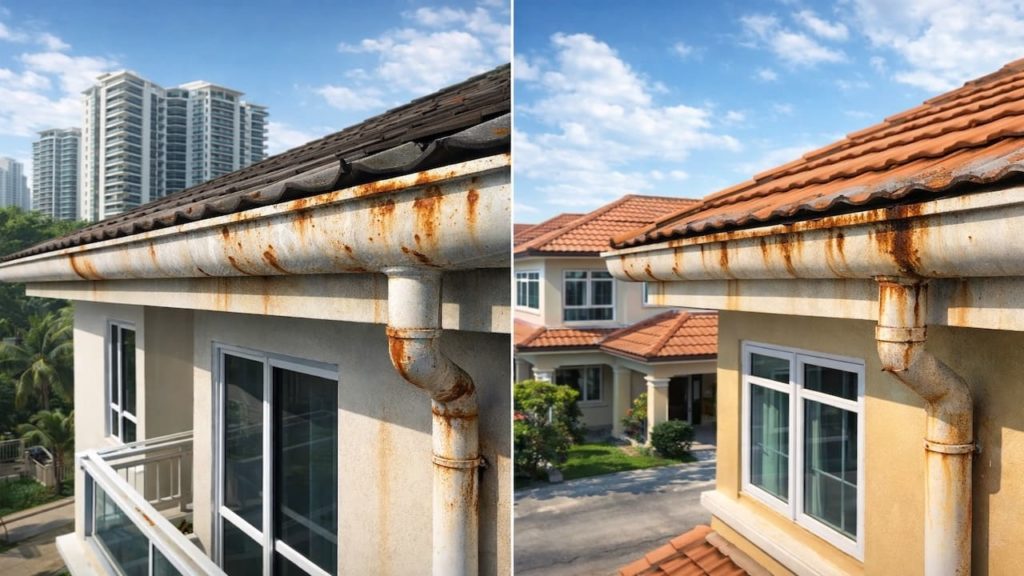
Downpipes shift when brackets loosen, then joints separate slightly. UV and heat also make plastic brittle, so hairline cracks start near stress points—often right by the bracket. Common spot.
- Check each joint by hand for wobble and confirm it seats fully into the socket
- Look for hairline cracks running from a screw hole or bracket clamp edge
- Inspect rubber rings or couplers for wear and gaps that let water weep out
- Check if the pipe is pulling away from the wall which strains the connectors
- Confirm the discharge elbow is not pushing back because the ground drain is blocked
You may want to smear sealant over the leak right away. That can stop drips briefly, but if the pipe is loose, the seal will tear again after the next hot day.
3. Why downpipe leaks get worse in Malaysia weather
Heat expansion and constant damp make joints loosen and cracks grow and the pipe rarely dries fully in tropical humidity.
When a downpipe stays damp, grime and algae build up and hide new weeps. Heavy bursts also increase pressure inside the pipe, so weak joints start spraying instead of dripping. Escalation.
- Plastic becomes brittle from UV and heat then cracks at stress points
- Metal brackets loosen from vibration and repeated wetting and drying cycles
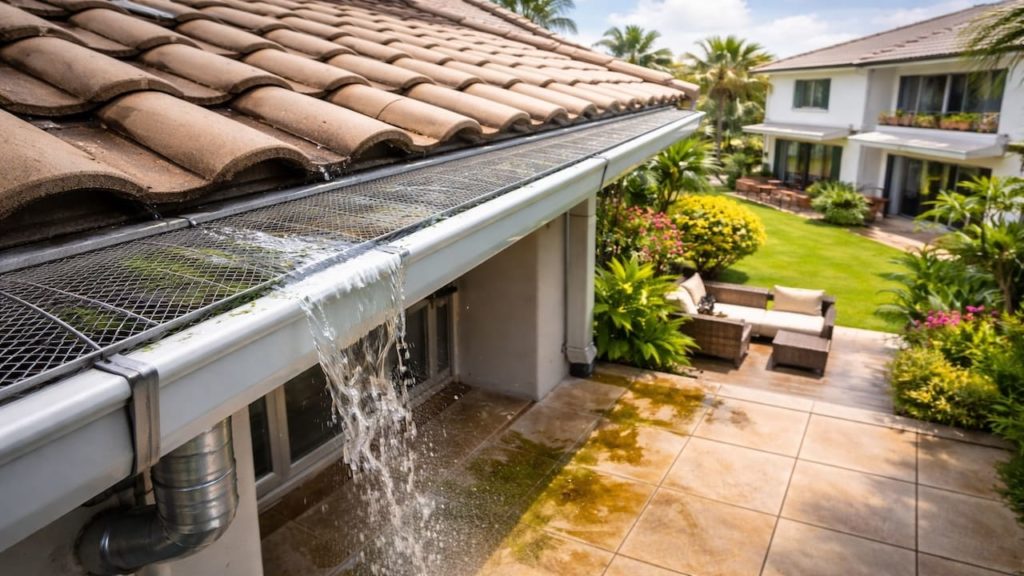
- Partial clogs create backpressure that forces water out at connectors
- Ground drain blockages cause water to rise and leak at lower joints
- Poor alignment creates a twist that keeps joints under constant strain
It is easy to blame the pipe material, but the bigger driver is movement and pressure. Secure the pipe, clear the flow, then patch the leak properly.
4. How to stop the leak and keep it from returning
Stop leaks by securing brackets and clearing pressure before patching so the repair survives storms instead of peeling off.
Do checks when dry and avoid ladders in wet Malaysia conditions. Safety first. Use a simple order: confirm flow, tighten support, then repair joints and cracks on clean dry surfaces.
- Test discharge strength and clear any blockage that causes backpressure
- Tighten or replace loose brackets and add support near wobbling joints
- Reseat joints fully and replace worn couplers or rubber rings if present
- Patch small cracks only after cleaning and drying the area thoroughly
- Retest with a controlled pour and watch joints for 2 to 3 minutes
You might think replacing the whole downpipe is easier, but many leaks are local. When support and pressure are fixed, a small repair often lasts long enough to avoid a full replacement.
5. FAQs
Quick answers for downpipe leaks in Malaysia, so you can confirm whether it is a crack, joint gap, or bracket movement before you waste time sealing the wrong spot.
Q1. How do I tell if the leak is from a joint or a crack?
Joint leaks usually drip from the connection seam and leave a line directly under that seam. Cracks often produce fine spray or wet patches around a bracket or stress point.
Q2. Can a partially blocked downpipe cause leaks?
Yes, backpressure forces water out at the weakest joint or coupler. If discharge is weak or gurgly, clear the blockage first.
Q3. Why do leaks appear only during heavy rain?
Heavy rain increases flow and pressure in the pipe, so small gaps start leaking under load. In lighter rain, the pipe may not fill enough to show it.
Q4. What should I fix first for a lasting repair?
Secure the pipe and remove pressure sources before sealing. Stability comes before sealant or the patch will split when the pipe moves in heat.
Q5. When should I replace the downpipe instead of repairing?
If the pipe is brittle with multiple cracks, joints no longer seat, or brackets cannot hold it straight, replacement may be smarter. One solid new run beats endless small patches.
Pro’s Tough Talk

I’ve been on site for 20+ years and handled hundreds of jobs, and downpipe leaks are never “mystical.” Malaysia rain just exposes what was already loose, cracked, or badly supported.
Cause is 3 things: a joint that is not seated tight, a crack starting at a stress point, or a loose bracket letting the pipe dance like it is in a music video. Steps are 3 too: clear pressure by confirming discharge, tighten and add support, then repair on a clean dry seam. Everybody has the “why is my wall always streaky” moment, and everybody has the “I sealed it last week” moment.
Here’s the real deal, a moving pipe will destroy your repair. Water is like a sneaky little snake, it finds the tiny gap, and it spreads like sweat under a backpack strap. One jab: the guy who patches without tightening brackets is basically doing arts and crafts. Fix the support today, or enjoy your next rain as a wall-washing service.
Summary
Downpipe leaks usually come from joint gaps, hairline cracks, or loose brackets that let the pipe move. In Malaysia humidity, repeated wetting turns small leaks into wall stains fast.
Confirm strong discharge first to remove pressure, then secure brackets and reseat joints before sealing or patching. Replace only when cracks and brittleness are widespread.
Check one joint and one bracket today with a controlled pour—one stable pipe stops repeated damp streaks and your home feels drier after the next storm.