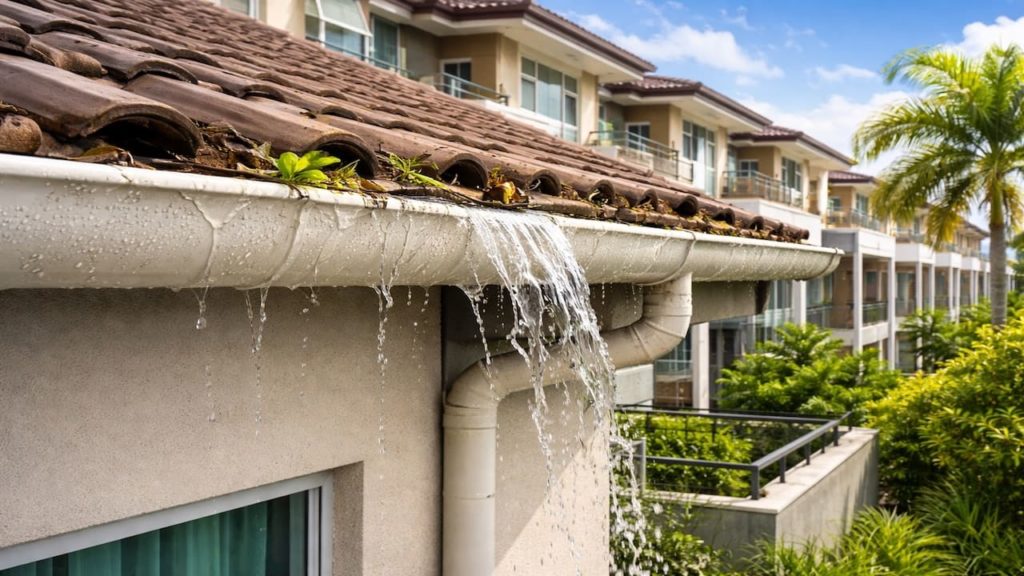
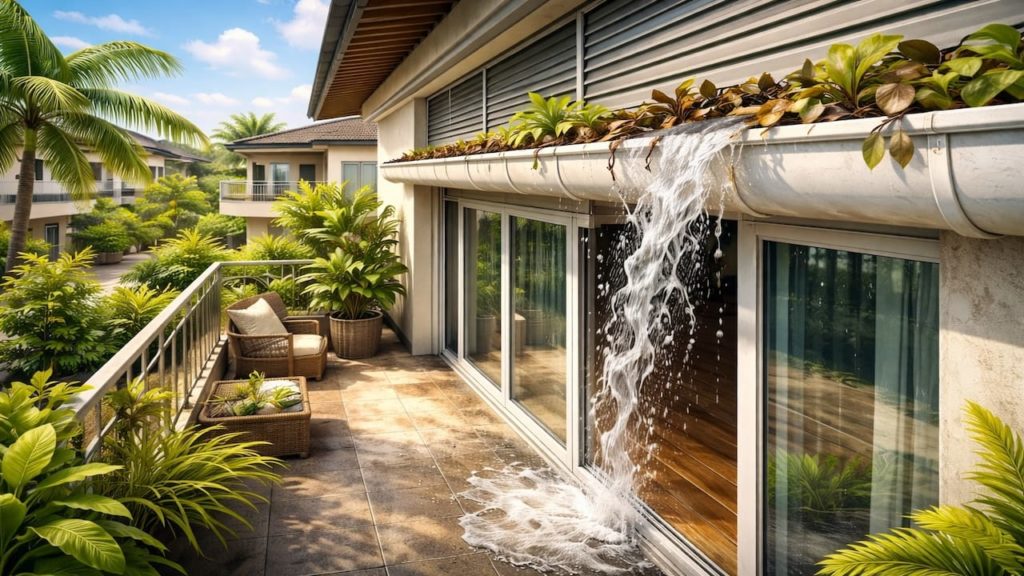
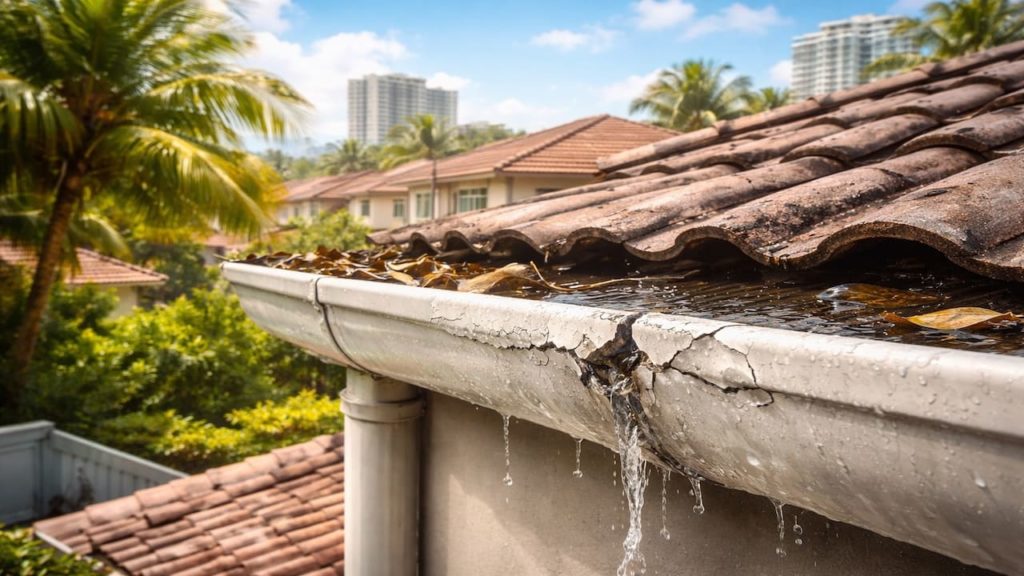
You see water sitting in your gutter long after rain, and sometimes you notice a sour smell when the sun comes back in Malaysia.
In hot humid weather, stuck water dries slowly, holds debris, and turns into a rust and mosquito problem fast, especially in condos and terrace houses. Stagnant water.
In this guide, you’ll learn the 5 pooling signs that show your gutter is not draining so you can find the low spot, restore slope, and stop rust and stink before it spreads.

Hi, I’m Ken. I write practical home guides for Malaysia—no fluff, just what works.
I hold a formal building design qualification and have spent about 20 years on job sites across hundreds of projects. My goal is simple: help you avoid costly mistakes with clear, safe steps—a quick way to decide what to do next.
1. Gutter water pooling: 5 signs
Pooling means your gutter line has a low spot or a restricted outlet and the water is staying long enough to leave marks.
Malaysia rain can hide the issue during the storm, but after the rain the evidence is clear. Standing water is heavy, and that weight stresses brackets and joints over time. Slow strain.
- Water still visible in the gutter 2 to 6 hours after the rain stops
- A dark dirt line inside the gutter showing where water always sits
- One section growing algae faster than the rest even after cleaning
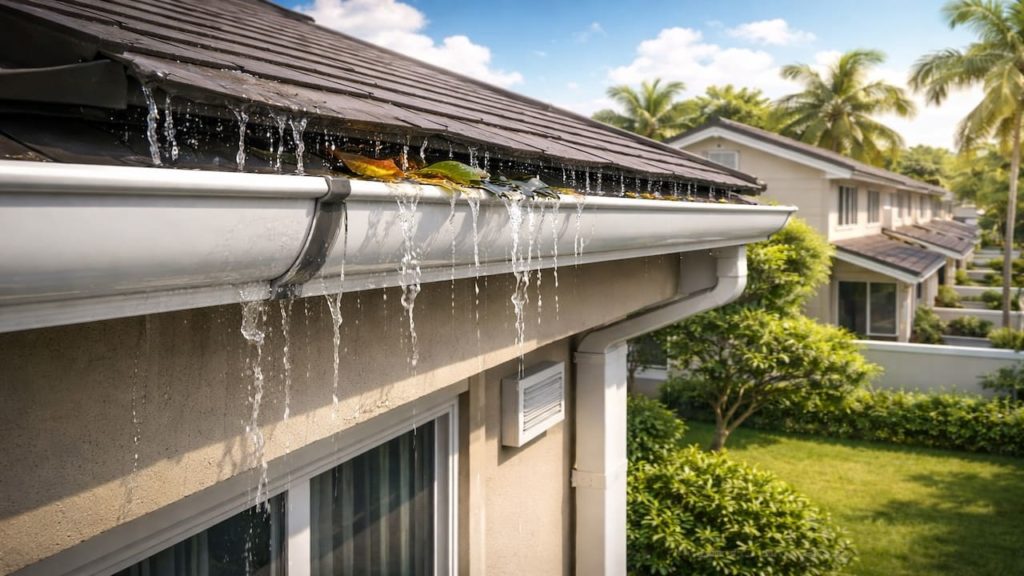
- Drips from joints the day after rain because water is trapped upstream
- More mosquitoes near one downpipe corner where dampness never ends
You might think some water is normal, but gutters should drain almost fully. If you see repeated puddles, it is a drainage fault, not “just humidity.”
2. Stuck water leads to rust and smell
Stuck water accelerates rust and creates a sour odor from trapped debris because organic sludge ferments in tropical heat.
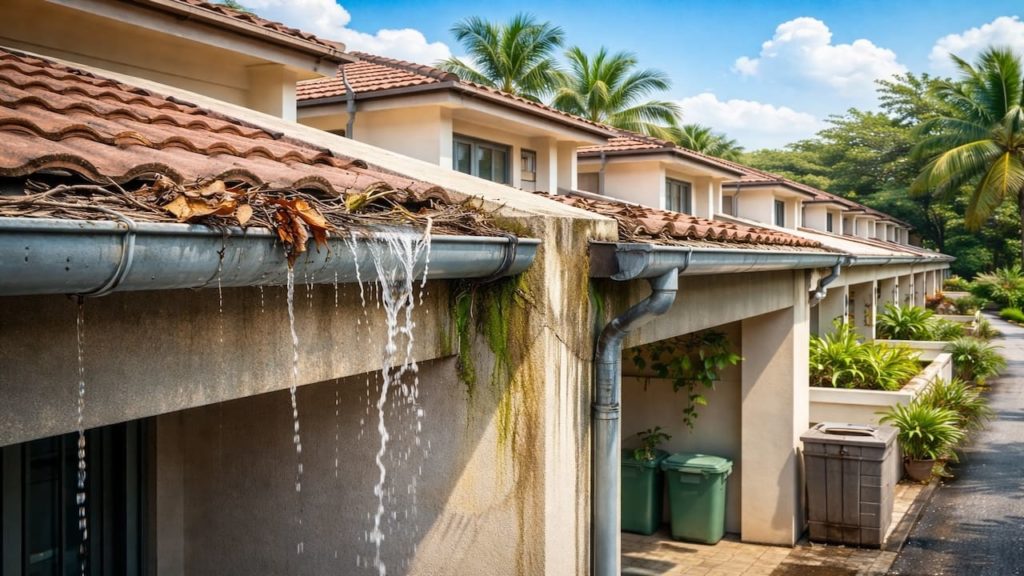
When leaf pulp and roof grit sit in warm water, it smells like stale drain water and can stain walls. It also weakens metal coatings and makes PVC joints slimy. Gross reality.
- Check for rust spots forming around the puddle zone and bracket points
- Smell near the low spot in the afternoon when heat warms the trapped water
- Look for black sludge that sticks and does not rinse out easily
- Inspect end caps and seams for soft sealant that has been soaking too long
- Check nearby walls for water stains from slow overflow during small rains
You may want to mask the smell with cleaners, but the smell returns if water keeps sitting. Fix drainage, then cleaning actually lasts.
3. Why gutters hold water in Malaysia homes
Gutters hold water when slope is wrong or the outlet is partially blocked and humidity makes debris stick like paste.
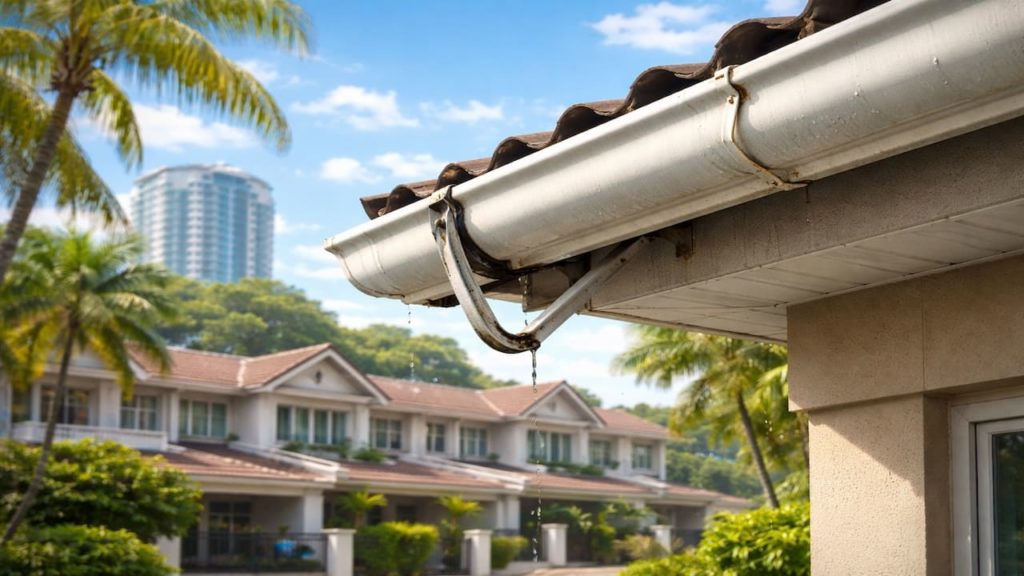
Common causes include loose brackets, warped runs, outlet screens packed with fine sand, or downpipe bends full of sludge. Heat expansion also creates micro-sags over time. Typical tropical wear.
- Loose brackets creating a dip that becomes the new lowest point
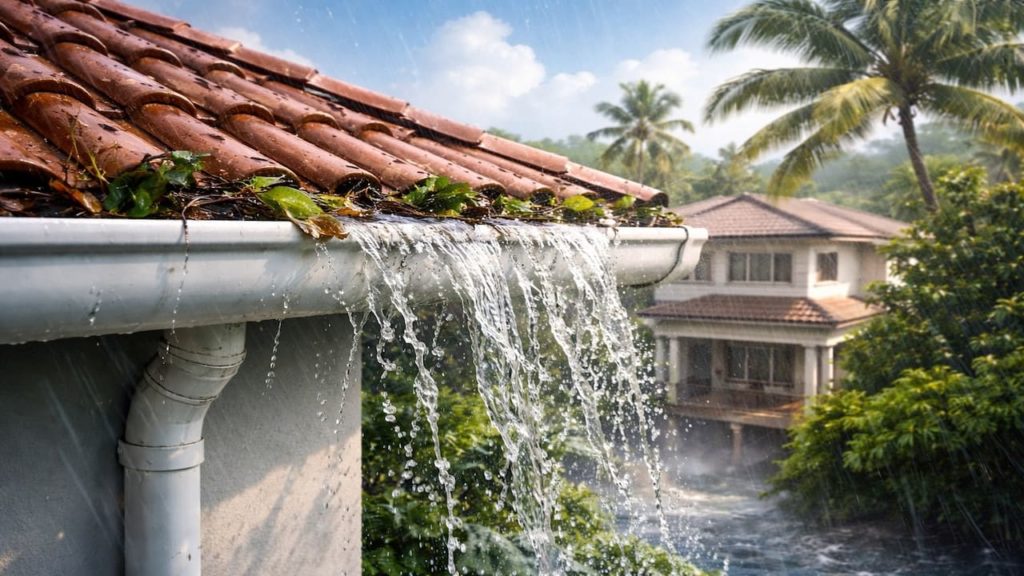
- Debris dam at the outlet that slows drainage even when the trough looks clean
- Downpipe elbow sludge narrowing flow and causing slow emptying
- Gutter lip or fascia misalignment that lets water sit away from the outlet path
- Blocked ground drain causing backpressure and slow release after rain
Some people blame “old gutters” and stop there. But many pooling cases are shape and flow issues that can be corrected without full replacement.
4. How to stop pooling and prevent rust fast
Stop pooling by restoring slope and clearing the full discharge path so water exits quickly after rain instead of sitting all day.
Choose a dry day and avoid wet ladders, because Malaysia humidity keeps surfaces slippery. Safety first. Use a clean-test-adjust routine and confirm results with a controlled pour. Practical steps.
- Scoop out sludge and debris into a bag instead of pushing it toward the outlet
- Clear the outlet opening and flush gently to confirm water does not rise
- Open and rinse the first downpipe elbow where slow-drain sludge collects
- Tighten brackets and add support near the puddle point to remove the dip
- Retest and confirm the gutter section drains within minutes after the pour
You might think adding sealant will help, but pooling is not a seam problem first. Drainage is the fix, then sealing becomes optional for small weeps.
5. FAQs
Quick answers for gutter pooling in Malaysia, so you can tell whether it is a slope dip, a hidden blockage, or a discharge problem causing the stink.
Q1. How long should a gutter take to drain after rain?
It should drain quickly and not hold visible puddles for hours. If you still see water after several hours, a low spot or restriction is likely.
Q2. Can pooling cause a bad smell even if the gutter looks clean?
Yes, fine sludge can sit at the low spot and ferment in heat. The smell often spikes in the afternoon when the trapped water warms up.
Q3. Does pooling always mean the slope is wrong?
Not always, it can also mean the outlet or downpipe elbow is partly blocked. A controlled pour test helps separate slope issues from discharge restrictions.
Q4. What is the fastest fix for rust risk?
Remove the standing water cause and clean out sludge, then let the metal dry fully. Drainage fixes rust faster than paint because rust grows when water stays trapped.
Q5. When should I replace the gutter instead of adjusting it?
If the gutter is badly warped, thin from rust, or keeps sagging even with new brackets, replacement may be smarter. A failing shape cannot be patched forever.
Pro’s Tough Talk

I’ve been on site for 20+ years and handled hundreds of jobs, and pooling water is the “slow poison” of gutters. Malaysia humidity turns that puddle into a stink factory by lunchtime.
Cause is 3 things: a sagging bracket making a dip, a half blocked outlet slowing the drain, or elbow sludge choking the downpipe. Steps are 3 too: scoop the sludge, clear the outlet and elbow, then tighten and add a bracket to remove the dip. Everybody has the “why does it smell after rain” moment, and everybody has the “I cleaned it but it came back” moment.
Here’s the rule, standing water will ruin gutters and your mood. Water is like a lazy guest, it refuses to leave, and sludge spreads like peanut butter in a narrow groove. One jab: the guy who says “just ignore the puddle” also ignores the rust bill later. Fix the dip now, or enjoy your free rooftop swamp.
Summary
Gutter pooling is a sign of a dip or a restricted discharge path, and in Malaysia humidity it quickly leads to rust, smell, and mosquitoes. Standing water is not harmless.
Clear sludge, prove outlet and elbow flow, then restore slope with tighter brackets and better support. Replace only when warping and rust make shape recovery impossible.
Check the lowest puddle point today and run a controlled pour test—fast draining gutters stay cleaner and smell free and your next rain becomes less stressful.