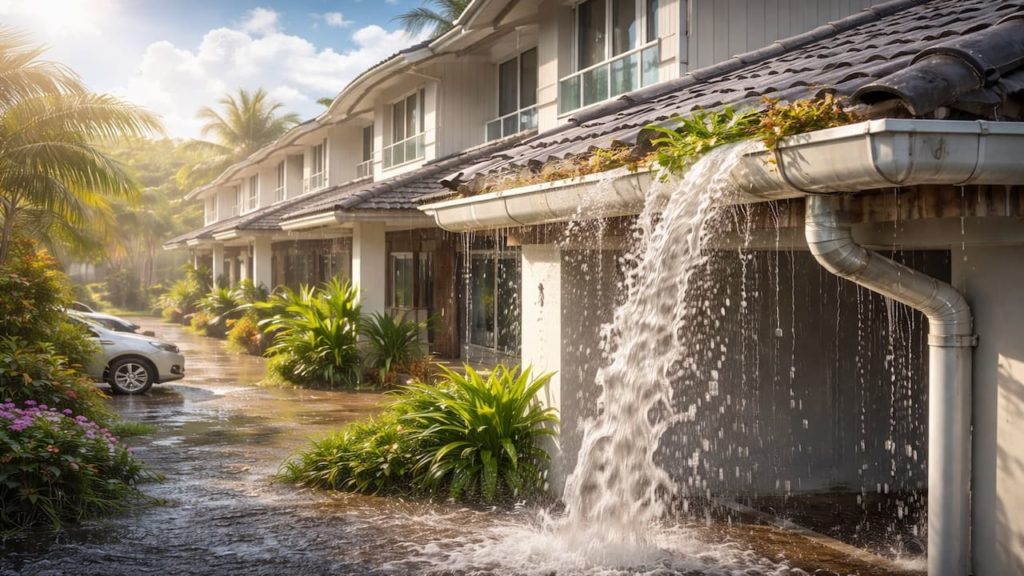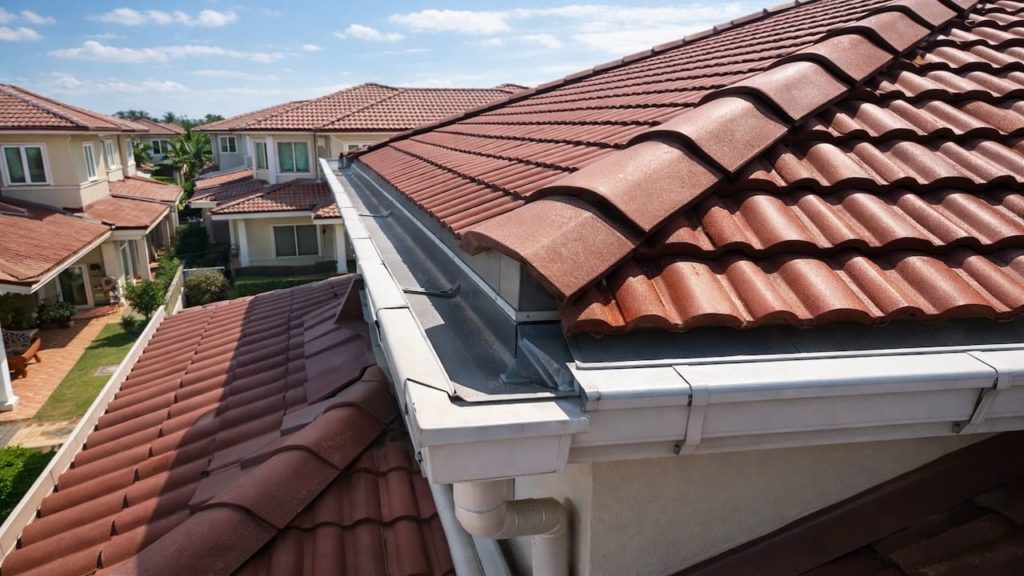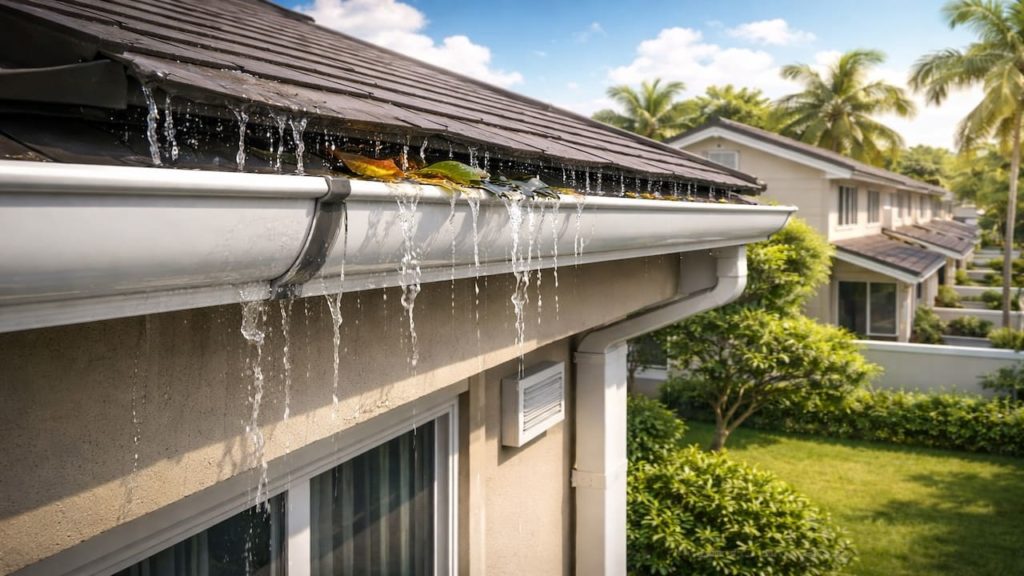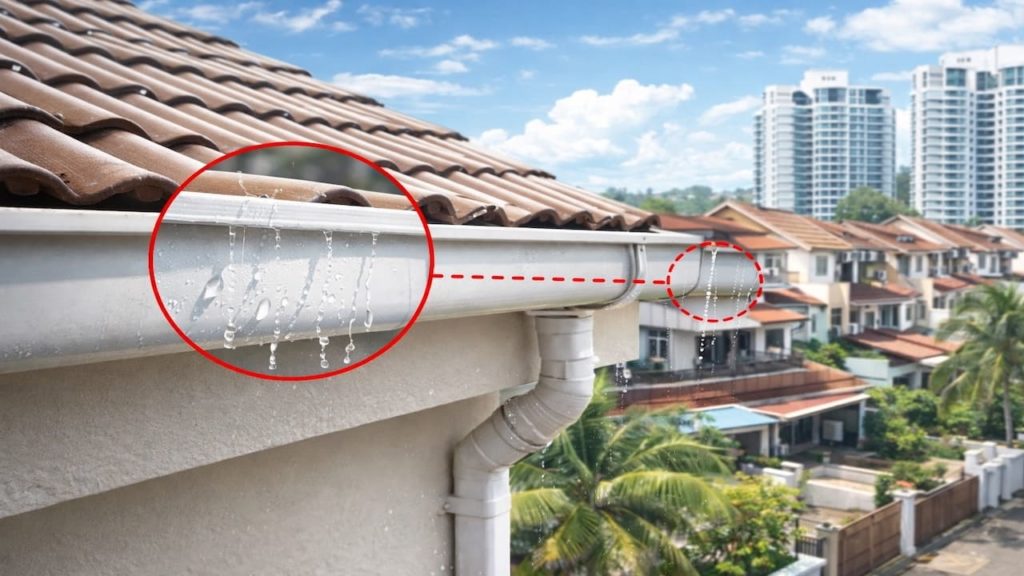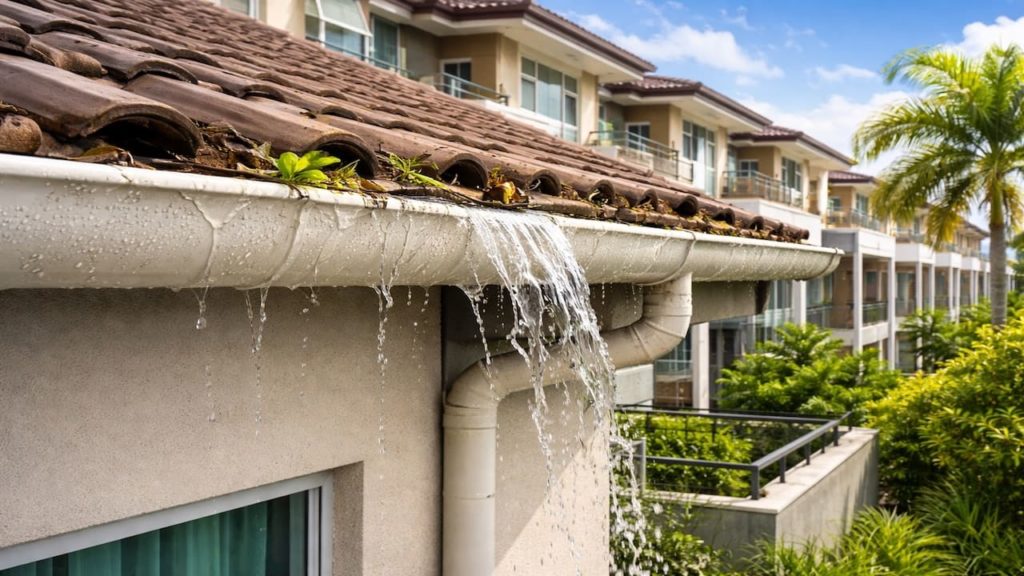
Your gutter overflows on one side of the house, while the other side seems fine, especially during Malaysia’s sudden heavy rain.
In humid heat, small slope errors, low spots, or a poorly placed outlet can make one run back up fast, even if the rest drains normally. One-side failure.
In this guide, you’ll learn the 5 checks to diagnose one side overflow from slope and outlet issues so you can find the low point, restore drainage, and stop repeat spills.

Hi, I’m Ken. I write practical home guides for Malaysia—no fluff, just what works.
I hold a formal building design qualification and have spent about 20 years on job sites across hundreds of projects. My goal is simple: help you avoid costly mistakes with clear, safe steps—a quick way to decide what to do next.
1. Gutter overflow on one side: 5 checks
One side overflow usually means that run cannot drain fast enough because slope or outlet capacity is weaker on that side.
Malaysia storms fill gutters quickly, so any small restriction shows up immediately. Compare the “good side” to the “bad side” and you will find the missing detail. Simple comparison.
- Check if water pools after rain on the overflow side but not on the other side
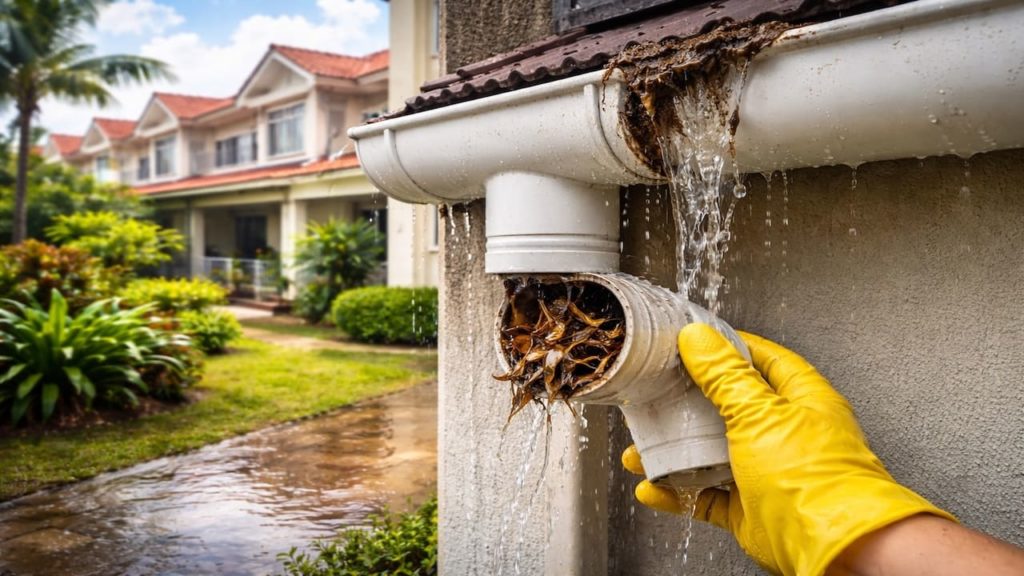
- Inspect the outlet opening for hidden sludge or sand nests near the downpipe
- Look for sagging brackets creating a dip that traps water upstream
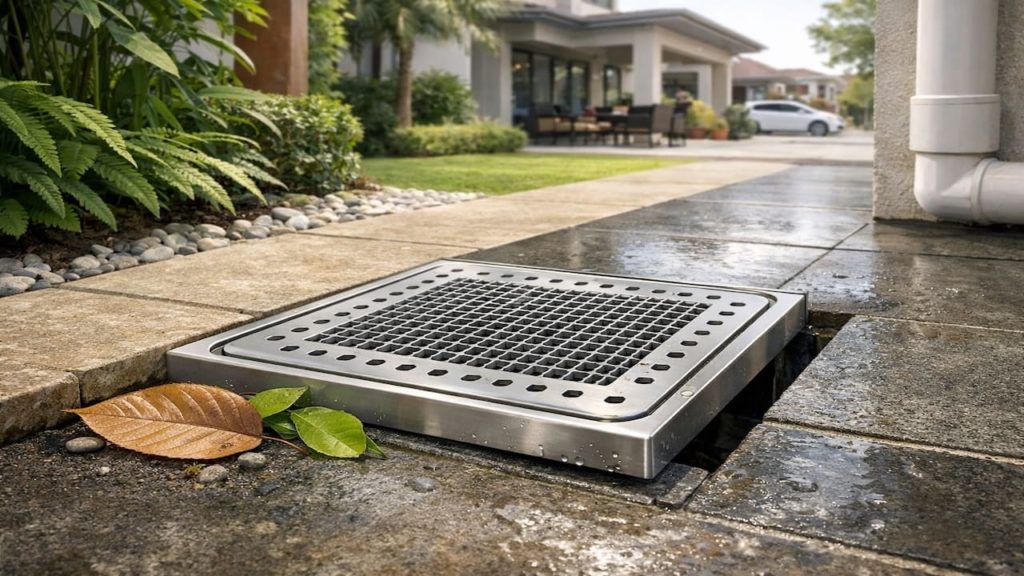
- Check the downpipe discharge for weak flow or pooling at the ground drain
- Look for overflow splash marks that start at a corner or mid run low spot
You might think the gutter size is wrong, but one-side overflow often points to a local shape or outlet problem. Fix the run, not the whole house.
2. Slope and outlet position issues
Slope and outlet placement decide whether water exits or backs up because gutters are shallow and need steady fall to drain.
If the outlet is placed too far from the highest flow corner, water must travel farther and any dip becomes a dam. In Malaysia humid weather, fine grit settles in dips and makes them worse—quietly. Geometry problem.
- Confirm the gutter falls toward the outlet and not away from it near the end
- Check for a mid run dip by looking for a permanent dirt line after rain
- Measure visual slope using a string line from end to end in daylight
- Check if the outlet is near a low corner that receives roof valley runoff
- Compare outlet size and downpipe size between the good side and bad side
You may want to “just clean it again,” but if slope is wrong, cleaning only buys time. Correct the fall and the system stays clear longer.
3. Why one side fails first in Malaysia homes
One side fails first because roof runoff is rarely balanced and the stressed side collects more grit, heat expansion movement, and debris.
Roof valleys often dump more water into one run, and wind can push rain toward one face of the house. That side then sees higher peak flow and more sediment. Uneven load.
- Valley exits feeding one gutter run with higher volume during storms
- Tree or dust exposure on one side increasing fine debris and sand buildup
- Bracket spacing differences causing more sag on the problem side
- Downpipe discharge blocked by a ground drain that is slow on that side
- Older sealant or warped sections on the problem side from sun exposure
It is tempting to blame “bad rain angle,” but repeated overflow in the same location means there is a fixable physical cause. Find it and solve it.
4. How to fix slope and outlet problems without guessing
Fix one-side overflow by restoring slope and proving outlet flow so you do not waste money resealing joints that are not the root cause.
Work only when dry, because Malaysia humidity keeps ladders slippery. Safety first. Use a test-adjust-test routine so every change proves improvement. Clear method.
- Clear the outlet and first elbow then do a controlled pour test and watch rise
- Tighten loose brackets and add a bracket at the dip point to remove pooling
- Realign the gutter run so the fall is consistent toward the outlet
- If the outlet is poorly placed add an additional outlet or downpipe where feasible
- Retest in moderate rain and confirm overflow stops at the previous failure point
You might think adding a guard will solve it, but guards do not fix slope or outlet placement. Fix the geometry first, then consider guards as support.
5. FAQs
Quick answers for one-side gutter overflow in Malaysia, so you can decide whether the culprit is slope, outlet position, or downpipe flow restriction.
Q1. Why does only one side overflow during storms?
That run likely has weaker slope, a low spot, or a restricted outlet and downpipe. Roof runoff may also be heavier on that side due to valleys and wind.
Q2. How can I check slope without special tools?
Look for standing water lines and dirt marks after rain, and compare height along the run. A string line can also show dips and uneven fall.
Q3. What is the most common outlet problem?
Outlet openings packed with sludge or sand nests and elbows clogged with sediment. Clear the outlet and elbow before changing slope so you know restriction is not the cause.
Q4. Should I add a second downpipe?
If the run is long or receives valley runoff and overflow continues after cleaning and slope correction, a second downpipe can help. Make sure discharge drainage is clear too.
Q5. When should I call someone?
If the gutter is high, the fascia is soft, or outlet relocation is needed, get help. Incorrect bracket work can create new low spots and new leaks.
Pro’s Tough Talk

I’ve been on site for 20+ years and handled hundreds of jobs, and one-side overflow is not a mystery. It is the house telling you one run is doing all the work.
Cause is 3 things: slope is wrong and water sits, the outlet is placed badly for the runoff, or the elbow and ground drain are choking that side. Steps are 3 too: prove discharge with a controlled pour, remove the dip by tightening and adding brackets, then upgrade outlet position if the run is overloaded. Everybody has the “only this side is cursed” moment, and everybody has the “it was fine last month” moment.
Here’s the deal, water follows the easiest path and punishes the weak side. Water is like traffic at a jammed exit, it backs up fast, and it spreads like soap on a driveway. One jab: the guy who keeps cleaning the good side is just doing exercise. Fix the slope and outlet logic now, or keep watching one side overflow like it is a hobby.
Summary
One-side gutter overflow usually comes from slope dips, poor outlet placement, or a restricted downpipe and ground drain on that run. In Malaysia storms, small weaknesses show quickly.
Start by proving outlet and elbow flow, then restore consistent slope and remove low spots. If the run is overloaded by roof valleys, consider adding or relocating an outlet.
Compare the good side to the bad side today and run a controlled pour test—one corrected run stops repeat overflow and your next storm feels normal again.