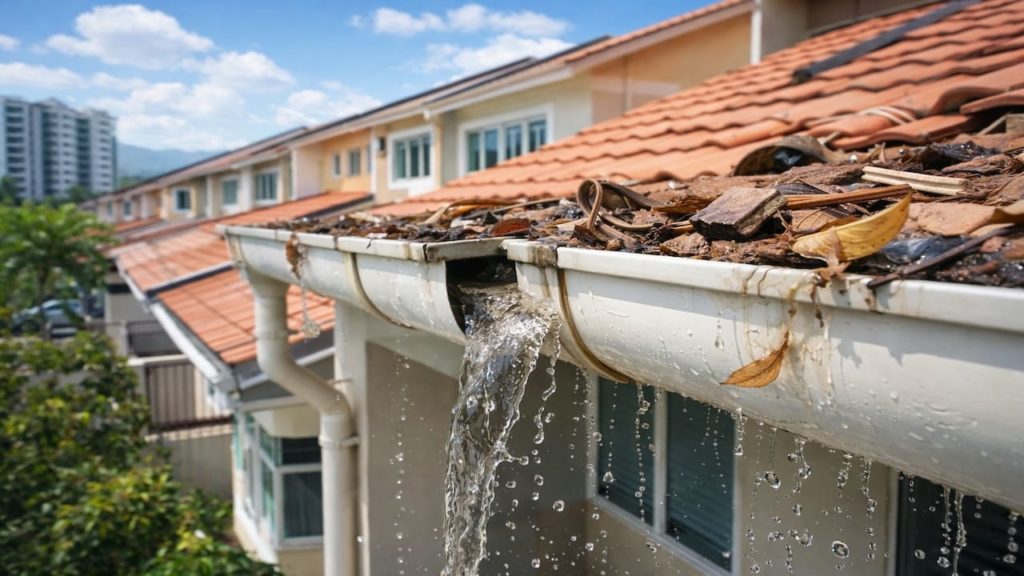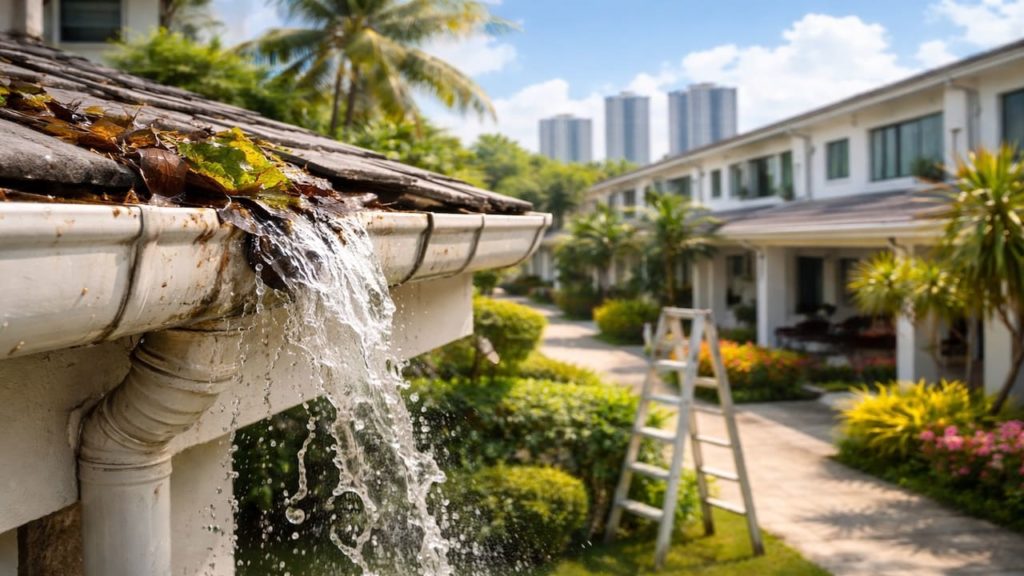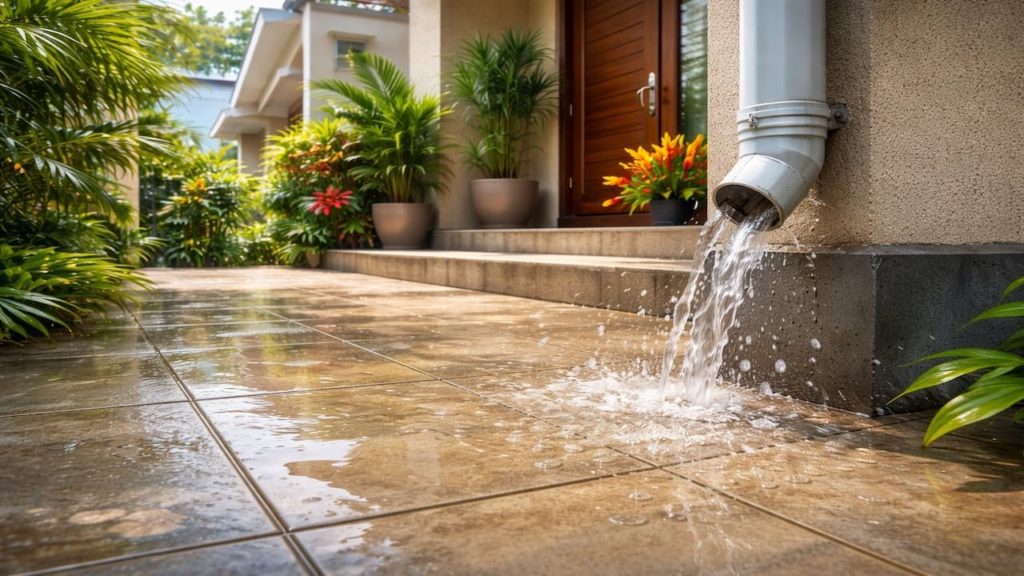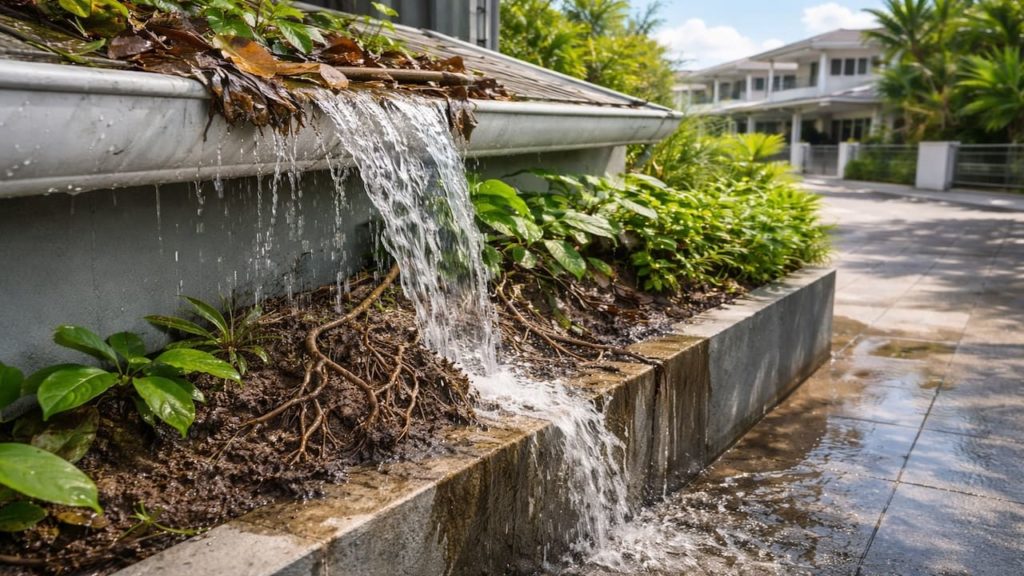
Your gutter overflows into a planter, and now the soil looks washed out after every Malaysia downpour.
Even without big leaves, tropical grit, sudden storms, and humid air can push water over the lip and straight into your plants. Real risk.
In this guide, you’ll learn the 5 signs that show overflow is damaging your planter and what to check at the roof edge so you stop erosion, protect roots, and keep runoff controlled.

Hi, I’m Ken. I write practical home guides for Malaysia—no fluff, just what works.
I hold a formal building design qualification and have spent about 20 years on job sites across hundreds of projects. My goal is simple: help you avoid costly mistakes with clear, safe steps—a quick way to decide what to do next.
1. Gutter overflow into planter: 5 signs
Planter overflow damage shows up before the gutter looks broken.
Malaysia rain can hit hard for 10 minutes, then stop, and the planter takes the punch. Corners clog fast—especially where roof valleys dump water.
- Check planter soil washout lines after each storm
- Look for exposed roots near planter edge
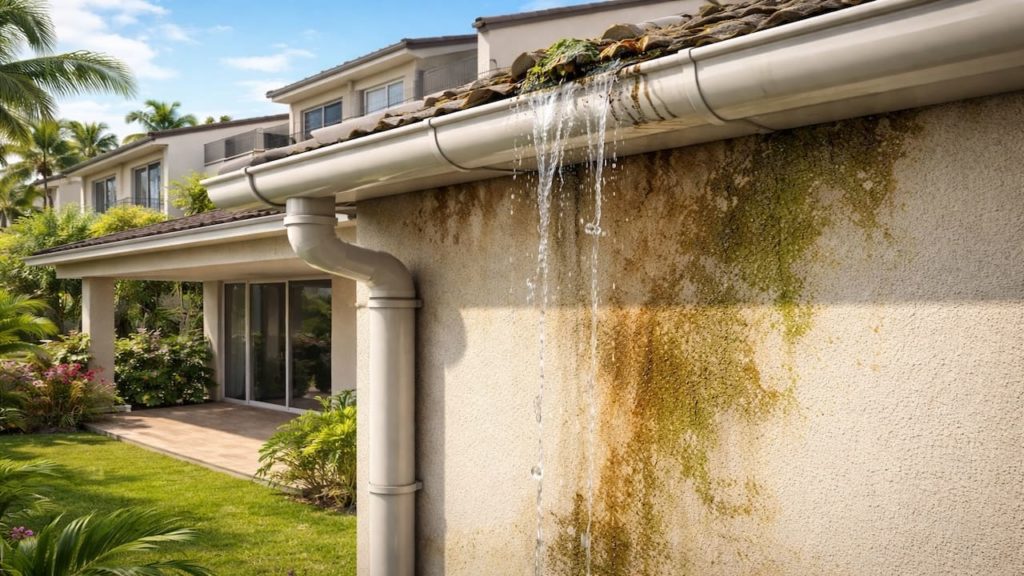
- Spot muddy splashes on wall behind planter
- Notice mulch drifting toward one corner outlet daily
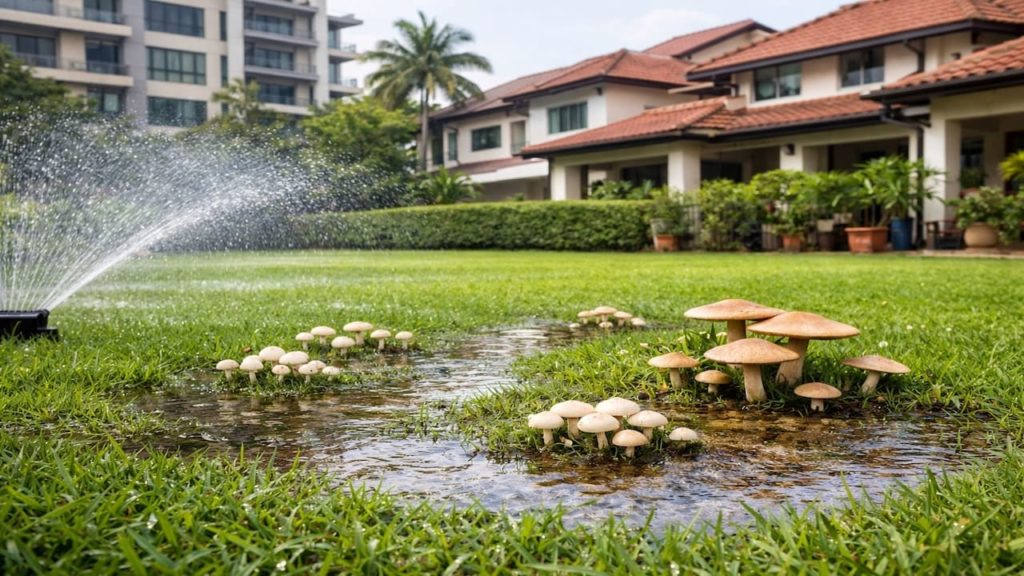
- See standing water in planter after rain hours
You might say the planter just needs more soil and mulch. That helps for a week, but the same overflow will carve it again. Fix the water path, then restore the planter.
2. Soil erosion and root damage risks
Repeated overflow can suffocate roots and strip soil fast.
Overflow does not just make a mess, it changes the root zone. Wet soil stays wet longer—perfect for rot in Malaysia humidity.
- Test soil firmness around roots with gentle press
- Check for sour smell near wet planter base morning
- Inspect leaf yellowing on plants closest to splash zone
- Look for ants termites along constantly damp edging lines
- Replace washed out topsoil then compact gently back
You might think plants love extra water, so this is harmless. They love steady moisture, not violent flushing and muddy pooling. Roots need air, not floods.
3. Why
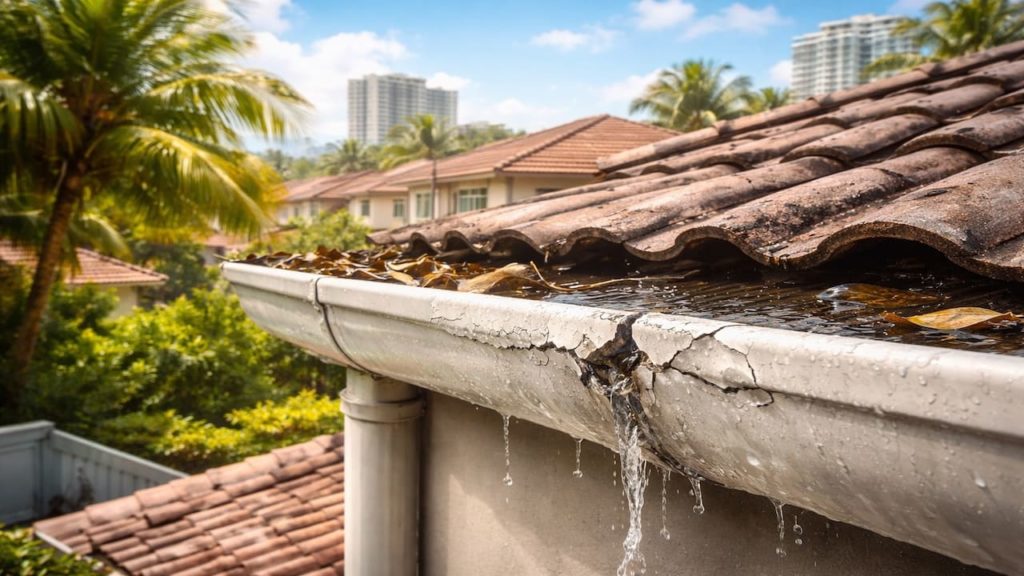
Overflow into planters happens when drainage is restricted or misdirected.
Most cases are not “too much rain” but “too little exit.” Fine grit compacts at bends—leaves are not required for a clog.
- Check outlet screen for sand nests sludge buildup
- Inspect first elbow for compacted grit plug inside
- Verify gutter slope using a string line
- Check bracket spacing for sagging low spots now
- Watch downpipe discharge for weak flow pooling below
You might assume the planter is placed wrong and move it. Sometimes that helps, but if the outlet and elbow still choke, overflow will hit the next thing. Find the restriction first.
4. How
Stop planter overflow by restoring flow then shielding the root zone.
Do the fixes in daylight and only when surfaces are dry in Malaysia humidity. Fix flow first—then protect the planter surface.
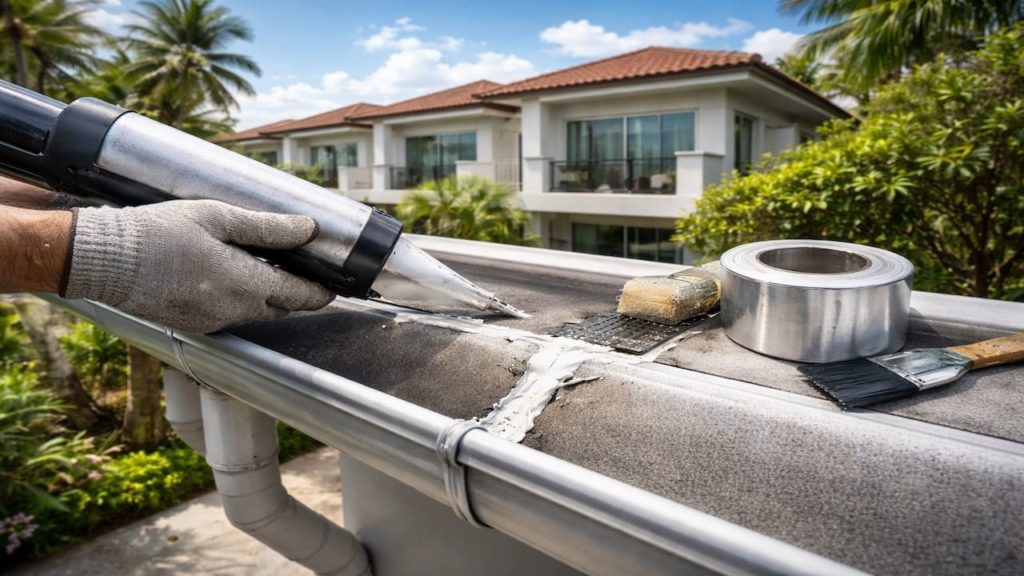
- Scoop outlet debris then flush with controlled pour
- Open elbow joint and remove packed sludge carefully
- Tighten brackets and restore fall toward outlet evenly
- Extend downpipe outlet away from planter soil line
- Add gravel splash strip to protect roots fast
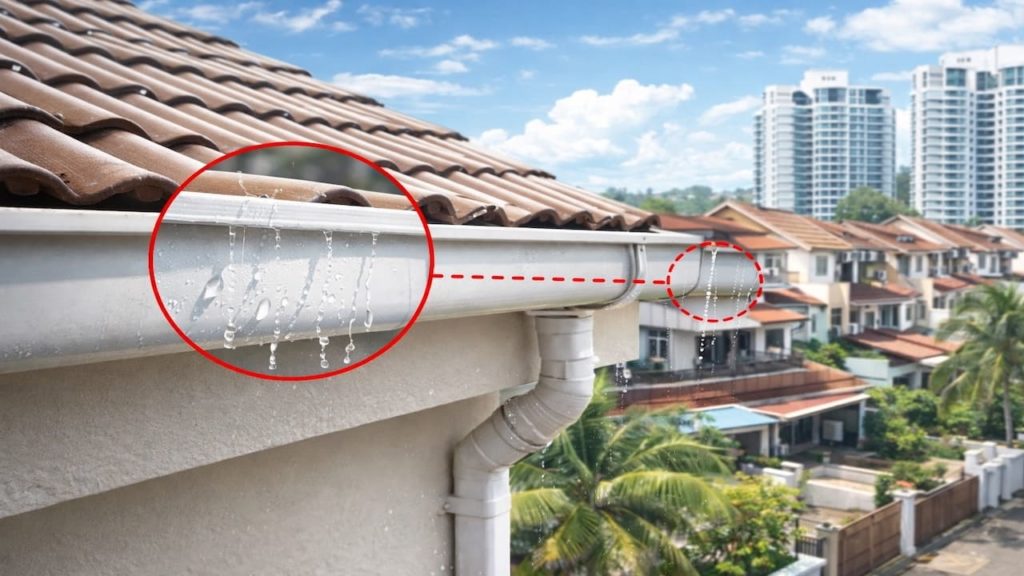
You might want to seal seams right away and call it done. Sealing helps only after water stops backing up and spilling. Restore discharge, then seal any true weeps.
5. FAQs
Short answers for Malaysia homes where overflow hits planters, so you can act quickly and avoid repeat erosion after the next storm.
Q1. How fast can overflow damage a planter?
In heavy rain weeks, you can see soil channels and mulch movement in days. Root stress can follow if the base stays waterlogged in humid weather.
Q2. Can overflow kill potted plants or herbs?
Yes, especially if the pot drains poorly and the mix stays saturated. Yellow leaves and sour smell are common early signals.
Q3. What is the best temporary fix for this week?
Clear the outlet and do a controlled pour test first. Strong downpipe discharge stops most planter overflow fast and buys you time for slope and bracket work.
Q4. Should I add rocks or gravel in the planter?
Gravel at the impact zone can reduce splash and protect exposed roots. It will not fix a blocked elbow or wrong slope, so treat it as a support step.
Q5. When should I call someone?
If access is high, the gutter line is warped, or overflow is also wetting ceilings or wiring, get help. Height work and hidden seepage are not worth the gamble.
Pro’s Tough Talk

I’ve been on site for 20+ years and handled hundreds of jobs, and this planter overflow thing is the classic “small problem that keeps bullying you.” Malaysia rain turns one corner into a mini waterfall, then your soil runs away like it owes money.
Cause is 3 buckets: outlet gets packed with sand grit sludge, the first elbow turns into a mud cork, or the gutter sags and holds water until it spills. Steps are 3 too: prove discharge with a controlled pour, open the elbow and pull the gunk, then tighten brackets and restore slope so water cannot sit. Everybody has the “I topped up soil again” moment, and everybody has the “why is the wall dirty again” moment.
Here’s the rule, control the roof runoff or the planter will keep losing the fight. Water is like a spoiled kid with a cup, it dumps it on the same spot, and sludge sticks like wet cement in a straw. One jab: the guy who says “plants like water” has never smelled rotten roots in humid heat. Fix the flow, save the roots, and stop feeding the planter to the rainy season clown show.
Summary
Overflow into planters leaves clear signs like soil channels, exposed roots, wall splashes, and standing water after rain. In Malaysia humidity, that turns into rot and repeated erosion quickly.
Start with the drainage chain: outlet, first elbow, slope, bracket support, and discharge path away from the planter. Add gravel splash protection only after flow is proven strong.
Do the outlet and elbow check today and run a controlled pour test—one clear discharge path protects soil roots and your walls and the next storm feels normal again.