```html
Your autogate jerks hard right at the start, then moves normally, or it shudders like it is struggling to wake up. That start-up jolt is a clue.
In Malaysia, heat and humidity age capacitors and dry out lubrication, and wet-season grit adds uneven load on hinges and rollers. A jerky start can be electrical or mechanical. Clear checks help.

Hi, I’m Ken. I write practical home guides for Malaysia—no fluff, just what works.
I hold a formal building design qualification and have spent about 20 years on job sites across hundreds of projects. My goal is simple: help you avoid costly mistakes with clear, safe steps—a quick way to decide what to do next.
In this guide, you’ll learn the 5 checks that explain why an autogate jerks on start by spotting capacitor weakness, hinge drag, and uneven load symptoms common in Malaysian porches.
1. Autogate jerks on start: 5 checks
A start jerk usually means the motor needs extra push to break friction or the start circuit is weak.
The first second of movement is the hardest moment for the system. If something is tight or the capacitor is tired, the motor jumps then settles. Pattern.
- Observe if jerk happens on open close or both
- Listen for a thump then smooth motor sound
- Check if jerk is worse after rain or morning
- Check if gate moves smoother after manual push
- Check if start jerk worsens over weeks
You might think it is “normal torque.” But a new jerk is not normal, and it is often the first warning before stalls, noisy motors, or gear wear. Treat it early.
2. Capacitor, hinges, & uneven load symptoms
Capacitor weakness and hinge drag are top causes because they hit hardest at start.
Capacitors help the motor start smoothly, and when they degrade in Malaysia heat, starting torque drops. Hinges and rollers also bind more when dirt and rust build up. Uneven load is common.
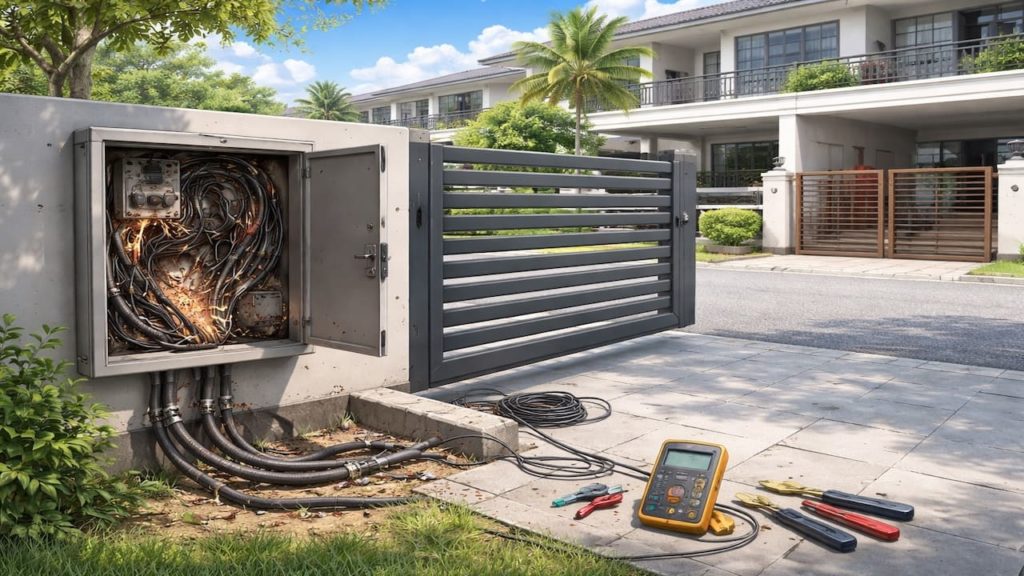
- Check capacitor bulge leak or burnt smell
- Test if motor hums before it starts moving
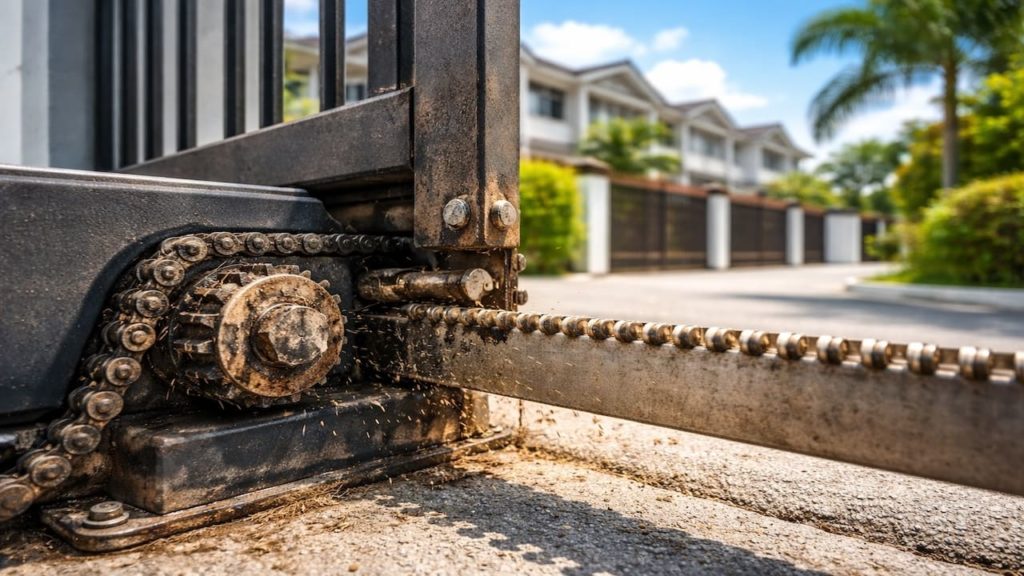
- Check hinge pivot for stiffness and rust
- Check roller bearings spin smoothly by hand
- Check gate alignment for rubbing at one spot
Some people immediately change the capacitor because it is a known fix. But if the gate is binding, a new capacitor only masks the load for a while. Fix load and confirm.
3. Why start jerks happen more in Malaysia homes
Humidity and heat create sticky starts and weaker start torque so the first second becomes rough.
Night condensation makes metal slightly tacky, rust forms on shafts, and grease thins or washes away in wet season. Capacitors also age faster in hot control boxes. That is the combo.
- Morning condensation increasing hinge and roller drag
- Rust on shafts creating a grabby first movement
- Heat aged capacitor losing starting performance
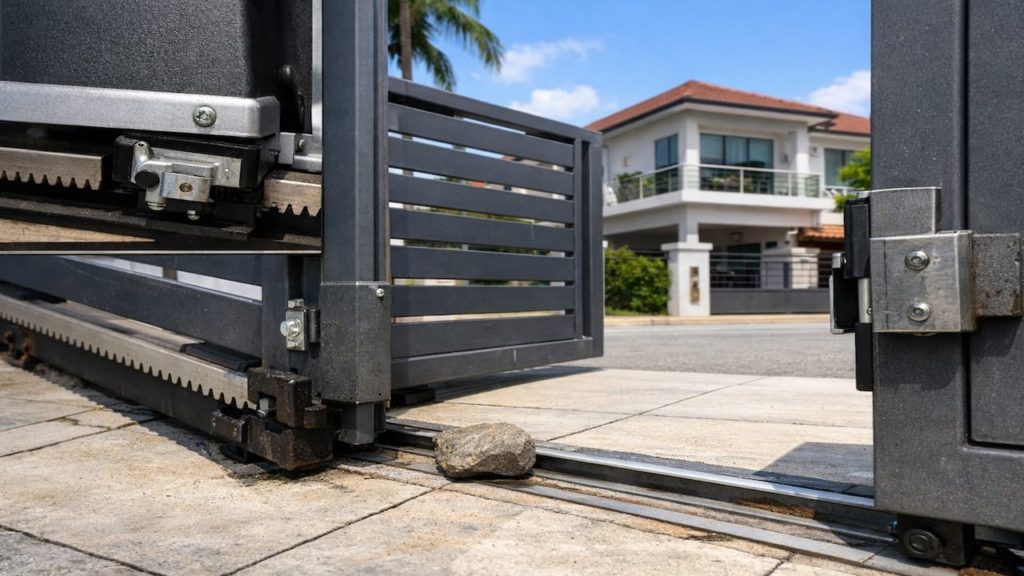
- Debris in track creating uneven initial resistance
- Gate sagging causing a rub at start position
You may think “it still moves so it is fine.” That is the trap, because repeated hard starts overheat windings and stress gears. Fix early while it is cheap.
4. How to smooth the start and prevent bigger failure
Reduce friction first then test electrical start health so you do not replace parts blindly.
Do checks when dry, and keep hands away from live terminals. Malaysia porches can stay damp, so start with mechanical inspection outside the box, then move inward. Safer.
- Clean track and remove grit near start point
- Lubricate hinges and pivot points lightly
- Check and tighten motor mount and brackets
- Test manual release travel for smooth movement
- Replace capacitor only if symptoms match clearly
You might want to increase force to push through the jerk. That can reduce visible jerk but increases stress and risk. Smooth travel is the real fix, not brute force.
5. FAQs
Q1. Is a small jerk at the start normal?
A tiny bump can be normal, but a new or worsening jerk is a warning. Compare open and close behavior and check if it is worse after rain or in the morning.
Q2. How do I know if the capacitor is failing?
Common signs include a motor hum before movement, weaker starting power, and worsening jerks over time. Some capacitors show bulging or leakage, but not always.
Q3. Can hinges cause jerking even if the motor is fine?
Yes, a stiff hinge or rusty pivot creates high breakaway friction at the start. Uneven load is often the real reason for start jerks in Malaysia where grit and rust build fast.
Q4. Should I lubricate everything to stop jerking?
Lubrication helps hinges and pivots, but do not spray oil everywhere because it traps dust. Clean first, then apply appropriate lubricant to the correct points only.
Q5. When should I call a technician?
If the jerk is accompanied by loud grinding, frequent stalls, burning smell, or the gate is hard to move in manual mode, call a technician. Electrical parts like capacitors can be dangerous to handle.
Pro’s Tough Talk

I’ve been on site for 20+ years and handled hundreds of autogates, and a start jerk is the gate saying “I’m fighting something.” Malaysia humidity makes hinges sticky, and heat cooks capacitors until they get lazy. That first second tells the truth.
3 causes, simple. First, friction, hinges, rollers, track grit, sagging rub. Second, capacitor weakness, the motor does not get a clean start kick. Third, uneven load, one side binds so it jumps then settles. Do 3 steps. Clean the start area and check manual travel for the tight spot. Lubricate hinges and tighten mounts. Then replace the capacitor only if you see hum-before-move and weak start torque symptoms.
Don’t blame yourself, and don’t call the installer useless, but the structure is brutal: outdoor mechanics plus Malaysian wet-season grime equals jerky starts on a schedule. A bad capacitor is like trying to sprint after skipping breakfast, and a stiff hinge is like a rusty door that needs a shove. And stop “helping” by pushing the gate every day like it is a stubborn cow. Two classics: it jerks hardest when you have passengers watching, and it acts smooth right after you complain. Bottom line Fix friction first then confirm capacitor symptoms or you will waste money and still get that ugly start jolt.
Summary
If your autogate jerks on start, treat it as a breakaway friction or weak start circuit problem and look for patterns on open versus close and wet versus dry days. The pattern matters.
If manual travel is smooth but the motor hums before moving and the jerk worsens, suspect a failing capacitor or electrical start issue. If manual travel is heavy, fix hinges, rollers, and alignment first.
Clean and lubricate the start area today, then read the next guide on noisy motors and mid-open stops—Hard starts are early warnings you can fix before costly failures.