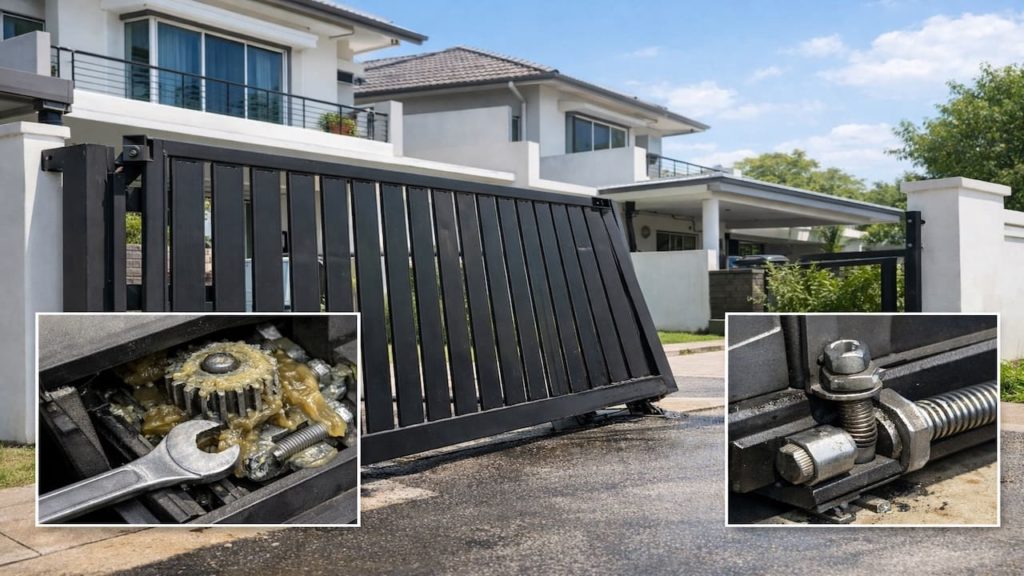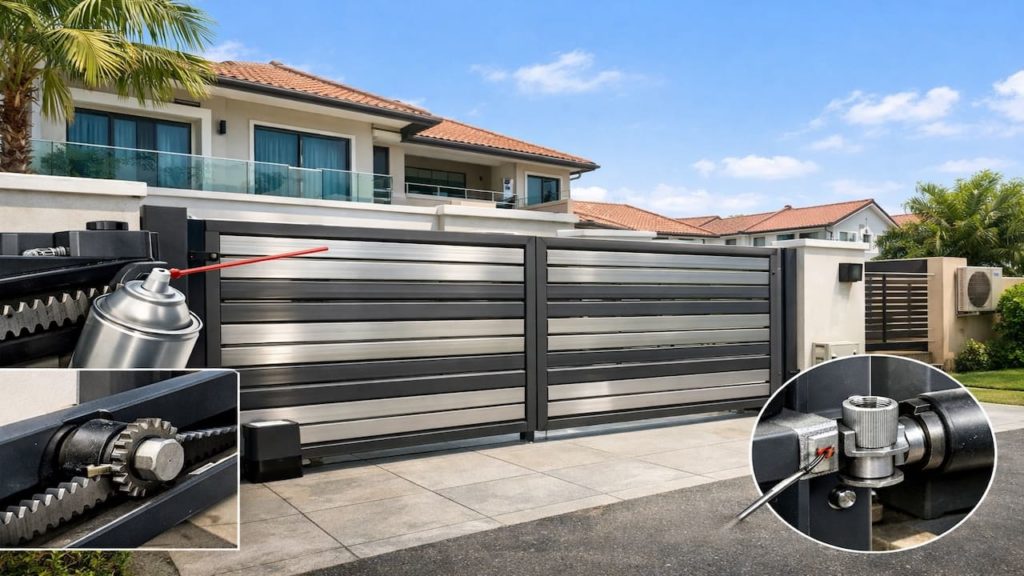
Your autogate squeals in the heat, and it gets worse right when the afternoon sun hits the driveway.
In a Malaysia terrace house or condo lane, that sharp noise feels louder than it should.
The squeal can come from dry rollers, tight hinges, track grit, or parts expanding under heat.
Malaysia humidity and sudden rain add sand and rust, so friction builds fast. A warning.
In this guide, you’ll learn how to stop heat squeals and keep your gate smooth by using dry lube correctly, finding the real friction points, and tuning movement for hot weather without forcing the motor.

Hi, I’m Ken. I write practical home guides for Malaysia—no fluff, just what works.
I hold a formal building design qualification and have spent about 20 years on job sites across hundreds of projects. My goal is simple: help you avoid costly mistakes with clear, safe steps—a quick way to decide what to do next.
1. Autogate squeals in heat: 5 tips
Heat squeals usually mean friction is rising somewhere.
When metal expands and grease thins, small rubbing spots become loud—Malaysia afternoons make that change obvious.
Noise is information. Use it.
- Clean track edges and roller grooves with brush
- Apply PTFE dry lube on metal contact points
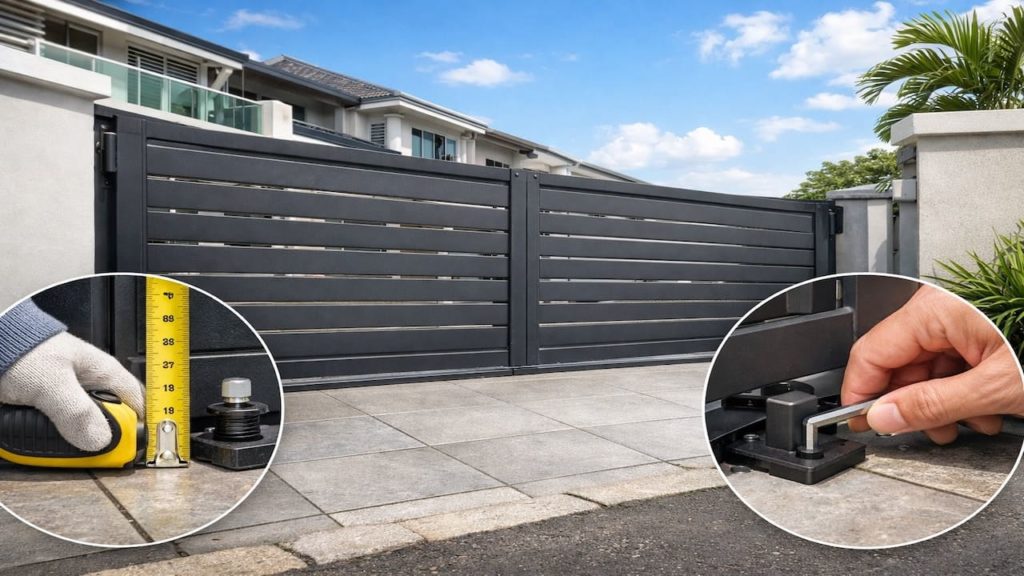
- Check roller alignment and tighten bracket bolts evenly
- Inspect hinge pins and add grease sparingly
- Shade motor area and avoid midday repeated cycles
You might think squealing is normal in hot weather and you can ignore it.
Heat does make parts expand, but squeal means rubbing is concentrated and wear is accelerating.
Fixing friction early protects rollers and motors in Malaysia humidity.
Do the tips and confirm the sound changes.
2. Dry lube, friction points, & summer tuning
Dry lube works best where wet grease attracts grit.
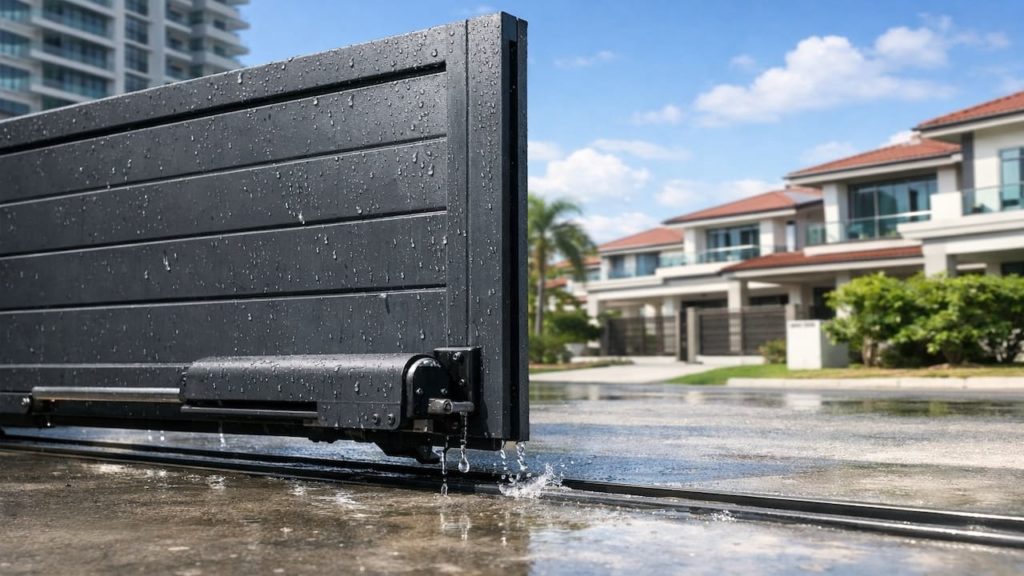
On dusty porches, wet grease turns into black paste—Malaysia rain splashes sand into it and the squeal returns.
Dry lube stays cleaner. Less mess.
- Use dry lube on track lip contact areas
- Use lithium grease only inside roller bearings
- Wipe old grease film before applying dry lube
- Check gate travel speed setting for overheating risk
- Reduce closing force setting after alignment correction
You may feel dry lube is weak compared to heavy grease.
It is weaker for high load bearings, but it is better on exposed sliding points where grit sticks.
Summer tuning means lowering stress, not overpowering it, so the gate stays stable in heat.
Choose the right lube for the right spot.
3. Why heat makes autogates squeal in Malaysia driveways
Heat expansion shifts alignment and creates tight rubbing points.
In strong sun, brackets expand and tracks flex, then humidity holds dust in place—Malaysia conditions create a perfect squeal loop.
Friction wins. Always.
- Check track straightness using string line reference
- Inspect rubbing marks on track paint surfaces
- Check roller side play and spacer condition
- Inspect hinge rust and stiffness in manual mode
- Check rack and pinion mesh for tight spots
Some people blame the motor because the sound happens during movement.
The motor is just the worker, and friction is the workload it must fight.
Malaysia heat makes small misalignment become a bigger load, so squeal shows up at peak temperature.
Find the friction point and the noise drops.
4. How to stop squeals and tune the gate for hot weather
Stop squeals by cleaning then aligning then lubricating lightly.
Do the steps in order—if you lubricate over grit, you lock abrasive paste into the contact area and it squeals again.
In Malaysia rainy weeks, repeat grit is common. Routine matters.
- Turn off power and secure gate from movement
- Clean track and rollers then dry completely
- Align roller brackets to remove side rubbing
- Apply dry lube then wipe excess residue
- Test cycles at noon and after sunset
You might want to increase force so the gate pushes through the squeal.
That can silence it briefly, but it increases current and heat, then protection trips arrive later.
Proper tuning is reducing drag and confirming smooth travel in Malaysia heat.
Quiet is a sign of health.
5. FAQs
Q1. Is it normal for an autogate to squeal only on hot days?
Heat can thin grease and expand metal, so a marginal alignment can become loud at midday. It is common in Malaysia, but it is still a sign to inspect friction points.
Q2. Should I spray WD-40 to stop the squeal?
It can quiet things briefly, but it attracts dust and evaporates faster in heat. Use it only as a short emergency step, then clean and apply the right lube.
Q3. What is the best dry lubricant for outdoor autogates?
PTFE dry lube is often a good choice for exposed sliding contact points because it stays cleaner in dusty areas. Use it on sliding contact points not sealed bearings and keep the track dry afterward.
Q4. Why does the squeal come back after rain?
Rain splashes sand into tracks and washes away light oils, then sun bakes the residue into a hard film. That film becomes a squeal source until you clean it out again.
Q5. When should I call a technician?
If you see bent brackets, cracked welds, or the gate binds in manual mode, you need alignment or structural repair. Also call if the motor overheats or trips breakers.
Pro’s Tough Talk

I’ve been on site for 20+ years and handled hundreds of autogates, and heat squeals are a loud message, not a random mood swing.
Malaysia sun turns metal into a frying pan, and humidity keeps grit sticky like candy.
It’s 3 causes most of the time: dry rollers with dust paste, hinges getting stiff from rust, and alignment drifting so the gate rubs hard at one point.
Not your fault, and not every installer is a scam, but the physics is ruthless.
Do 3 steps now: clean the track and roller grooves, then check manual movement for tight spots, then apply dry lube on exposed rub points only.
Think of it like sand in a zipper, you do not fix that by pulling harder. Simple.
Fix friction instead of turning up force and you stop the repeat squeal.
Forcing it is like running with a stone in your shoe, you can finish but you will pay later.
And yeah, if your plan is “spray anything and pray,” that’s a lazy move.
Two relatable moments: the squeal starts at noon and you pretend it is the neighbor’s gate, then you press the remote again to “test” and it screams louder.
Also the classic “I’ll service it after rainy season” lie, then rainy season never ends.
Keep ignoring it and your gate will start singing every day. Enjoy.
Summary
Heat squeals usually come from friction that rises when metal expands and lubrication thins, and Malaysia humidity helps grit stick to every moving surface. Clean and inspect first, not force.
If squeals only happen at midday, focus on alignment, rubbing marks, and dry lube on exposed contact points. If the gate binds in manual mode, fix hinges or brackets before changing settings.
Clean the friction points today and test at noon to confirm the fix.
Next, read our guide on autogate track full of sand to stop the buildup cycle that makes squeals return in tropical weather.