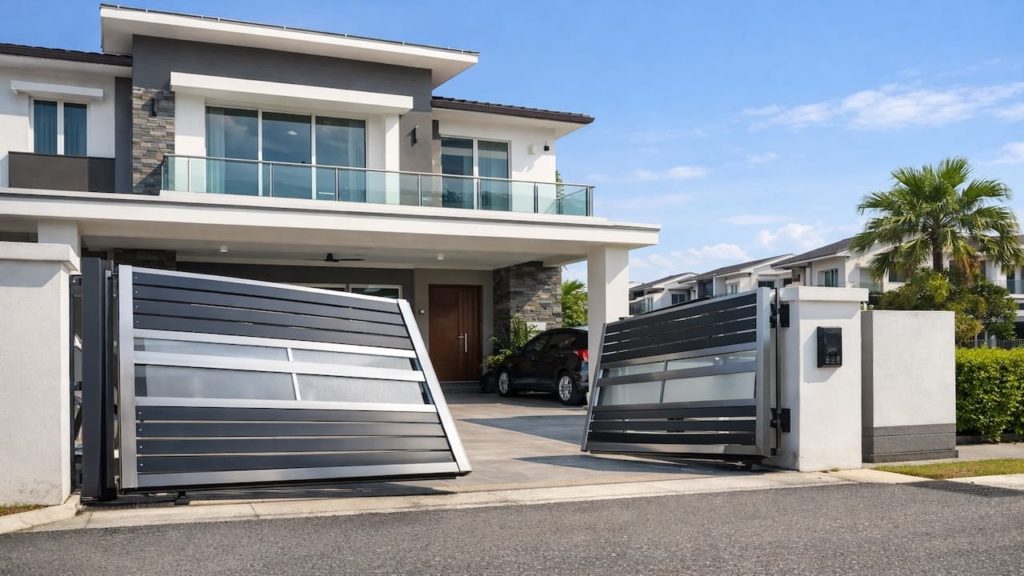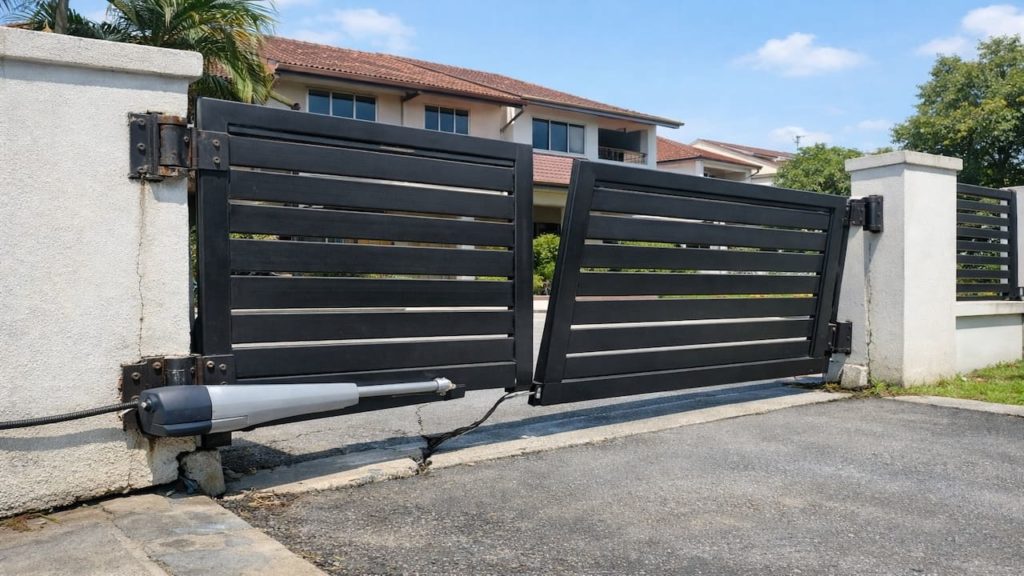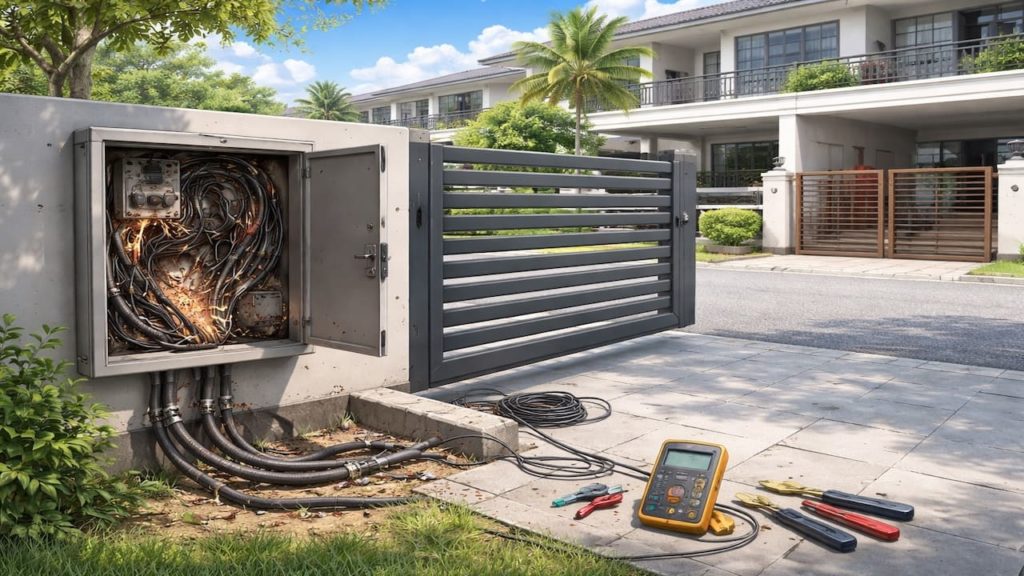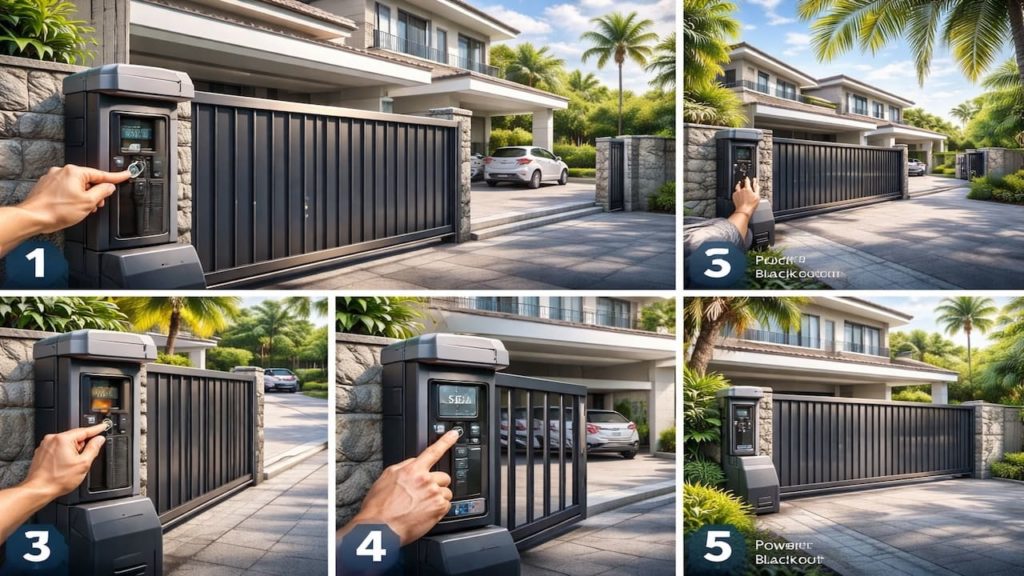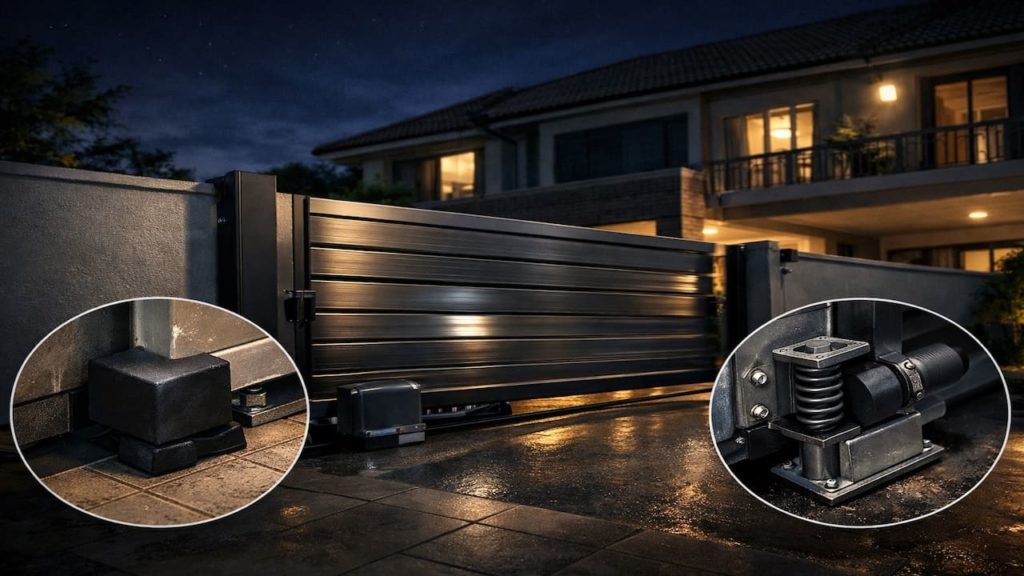
Your autogate is quiet in the daytime, but at night it suddenly sounds louder, harsher, and more annoying than it should.
In a Malaysia terrace house or condo basement, that noise can echo.
Night noise is usually not “mystery noise.”
Temperature drops, humidity rises, and quiet surroundings amplify vibration, while worn stops and loose hardware start talking.
Normal physics.
In this guide, you’ll learn how to quiet an autogate at night without weakening safety.
You’ll spot vibration sources, tune speed gently, and add rubber stops that suit tropical homes.

Hi, I’m Ken. I write practical home guides for Malaysia—no fluff, just what works.
I hold a formal building design qualification and have spent about 20 years on job sites across hundreds of projects. My goal is simple: help you avoid costly mistakes with clear, safe steps—a quick way to decide what to do next.
1. Autogate noisy at night: 5 tips
Night noise means vibration is leaking into the frame.
After a hot Malaysia afternoon, metal contracts and clearances change—small contacts become sharp taps.
A quiet night makes the same tap sound twice as loud.
Real.
- Stand near motor and pinpoint loudest vibration
- Touch gate frame lightly to feel buzzing
- Check end stop contact point for hard impact
- Listen for rattling bolts on cover panels
- Run one cycle and note noise timing
Some people think it is only noise and you can ignore it.
Noise is wear in disguise, so confirm the source and reduce vibration.
The gate stays quieter and healthier.
2. Rubber stops, speed tune, & vibration control
Rubber stops and gentle tuning reduce night impact noise.
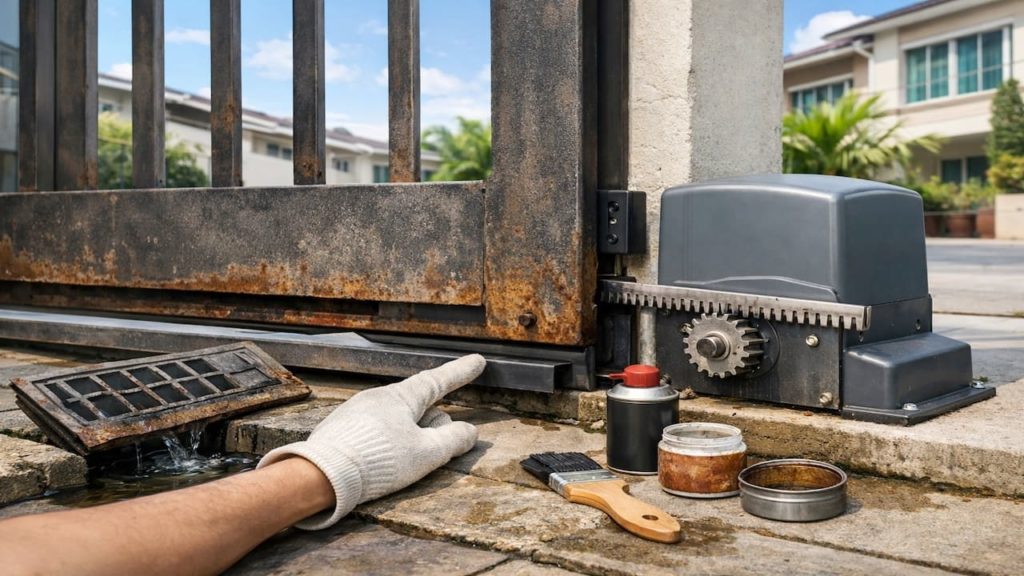
Hard metal to metal hits create the loudest night sound, and Malaysia humidity adds a thin rust film.
That makes the hit sharper—rubber absorbs energy and stops echo.
Simple.
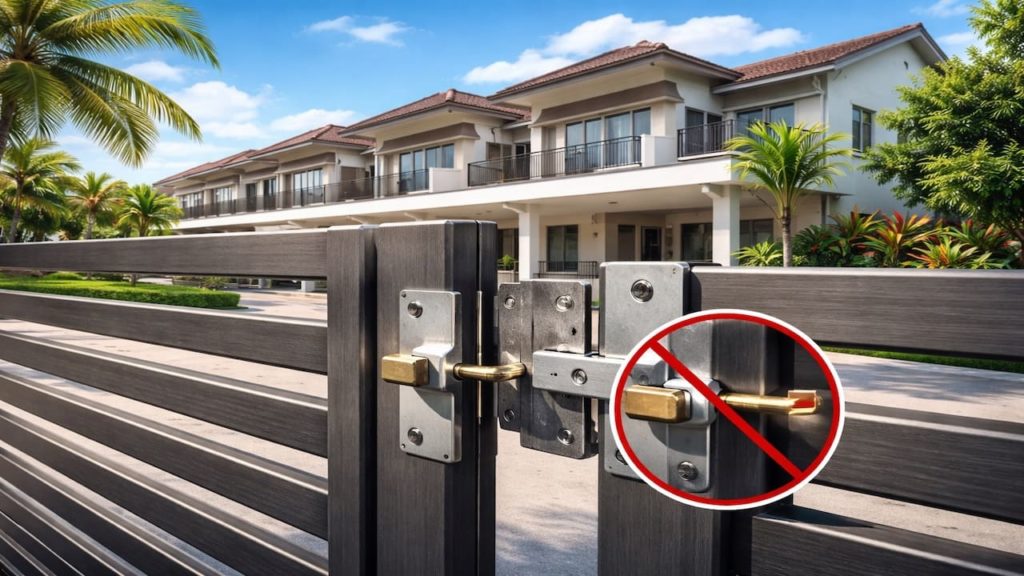
- Install rubber stopper at close end position
- Install rubber stopper at open end position
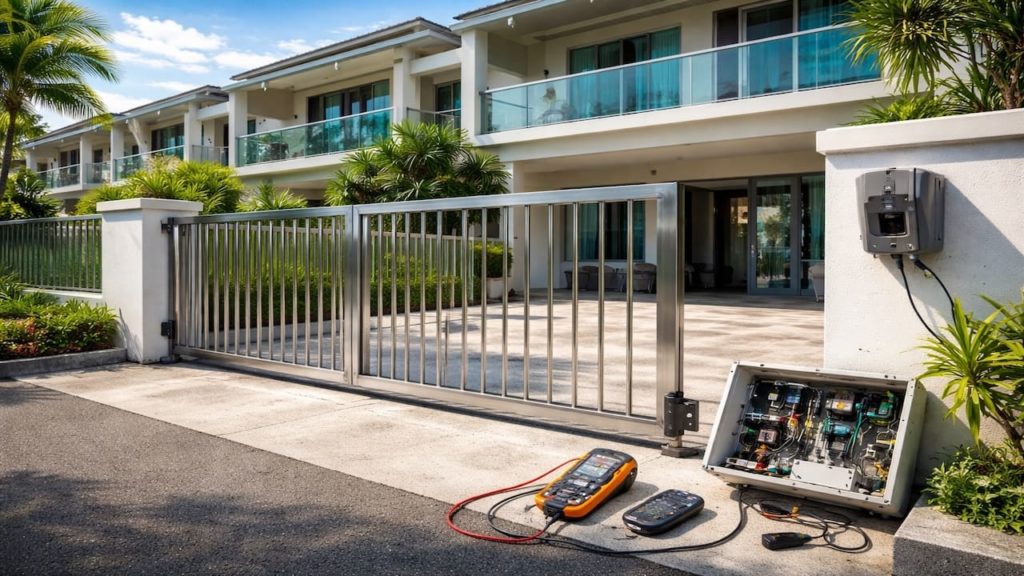
- Lower closing speed one step in controller menu
- Lower opening speed one step for smoother start
- Tighten bracket bolts and add spring washers
You might worry rubber stops will make the gate bounce and drift.
If you place them correctly and keep speed moderate, they prevent slams while holding position.
Better control.
3. Why night noise happens: temperature shift and resonance
Night noise happens when parts tighten and resonance grows.
Malaysia evenings bring cooler air and higher humidity, and the background becomes quiet fast.
Any small looseness becomes a speaker—tracks, arms, and covers resonate together.
Amplified.
- Inspect hinge pins for play and dry squeal
- Check roller bearings for rough spin feel
- Check track joints for gaps and tapping
- Check motor base plate for loose anchor bolts
- Check gate leaf flex near latch area
People say it only happens at night so it is imaginary.
It is not imaginary, it is resonance plus contact points, so fix looseness early.
Night stays quiet.
4. How to quiet it tonight: stepwise adjustments and isolation
Quiet the gate by isolating impacts and damping vibration.
Start with the biggest noise maker first—end slams and rattling covers.
Tune speed only after impact is softened, because speed cannot fix loose metal contact.
Order.
- Replace worn stoppers and realign closing end point
- Add rubber pad between cover and mounting frame
- Apply threadlocker to loose bolts then retighten
- Lubricate hinges lightly and wipe off excess
- Test night cycle and confirm noise drops
You might think more force will push through the noise and end it.
That increases impact and vibration, so soften contact and secure hardware first.
Then tune speed for quiet movement.
5. FAQs
Q1. Why is my autogate louder at night than daytime?
At night the environment is quieter, and cooler temperatures change clearances, so impacts and vibration stand out.
In Malaysia humidity, metal surfaces can feel tackier and hit harder.
Q2. Will lowering speed always fix night noise?
It helps for slam noise, but it will not fix rattling covers or loose base plates.
Find the contact point first, then tune speed second.
Q3. Are rubber stops safe for autogates?
Yes when installed at the correct end positions and not blocking safety sensors.
Use rubber stops to absorb impact not to hide misalignment.
Keep latch alignment correct.
Q4. What if the noise is a buzzing vibration sound?
Buzzing often comes from loose covers, a vibrating arm bracket, or a motor base plate.
Touch and feel tests help you locate the vibrating panel quickly.
Q5. When should I call a technician?
If the gate binds in manual mode, the post is moving, or the motor overheats, get help.
Noise plus resistance can mean structural issues, not only tuning.
Pro’s Tough Talk

I’ve been on site for 20+ years and handled hundreds of autogates, and night noise is the complaint that starts neighbor wars.
Malaysia evenings are quieter, so a small slam sounds huge.
It’s 3 causes most of the time: stoppers worn so metal hits metal, bolts loosened by vibration and humidity, and alignment drift that makes the gate scrape.
Then it starts to sing.
Not your fault. Physics doesn’t negotiate.
Do 3 steps now: tighten every visible bracket and cover screw, add rubber where metal meets metal, and lower closing speed one notch.
Then test one cycle and listen.
Simple.
Stop the slam and the rattle first then tune speed.
A gate is like a guitar string, loose parts resonate, and a hard stop is like a hammer on a bell.
And if your plan is ignore it, congrats, you just bought tomorrow’s bigger repair.
Two relatable moments: you only notice the noise after 10 pm, then you run it again to check and wake everyone.
And you promise you will fix it this weekend, then rainy season laughs at you.
Keep pushing it and your gate will start doing karaoke nightly.
Summary
Night noise usually comes from hard end impacts, loose hardware, or resonance that becomes obvious when the air cools and everything is quiet.
Malaysia humidity and rain cycles speed up loosening and rust.
If rubber stops and bolt tightening do not reduce noise, use manual movement as your decision line.
Binding and scraping mean alignment or structural shift.
Fix resistance before tuning settings.
Soften impacts and lock down loose parts today then test one night cycle and note exactly when sound appears.
Next, read our guide on roller squeaks and track sand buildup to remove friction that amplifies vibration.