Your child runs toward the gate the moment it starts moving, and your stomach drops. If you searched this, you are trying to prevent a near miss.
Autogates in Malaysia face heat, sudden rain, and high humidity, so sensors drift and habits get sloppy. Some risks are settings, and some are daily routines.
In this guide, you’ll learn how to make your autogate safer for children today by tightening sensor basics, setting clear home rules, and building habits that work in condos and terrace houses.

Hi, I’m Ken. I write practical home guides for Malaysia—no fluff, just what works.
I hold a formal building design qualification and have spent about 20 years on job sites across hundreds of projects. My goal is simple: help you avoid costly mistakes with clear, safe steps—a quick way to decide what to do next.
1. Autogate children safety: 5 steps
Begin with make a strict no play zone around the moving gate so kids treat it like traffic not like a toy.
In Malaysia, wet tiles, sweaty hands, and sudden downpours make slips and surprises common—your gate routine must be boring and repeatable. No shortcuts.
- Store all remotes on high locked shelf
- Mark swing path with floor tape line
- Keep kids behind porch line during closing
- Teach stop button location to every adult
- Set one adult as gate watcher daily
You might think “My gate moves slowly, so it’s fine.” Slow still crushes fingers, and kids freeze when scared. That is luck. Treat the autogate like a moving vehicle every time.
2. Sensors, rules, & safer daily habits at home
The safest upgrade is reliable sensors plus one simple family rule because technology fails when habits are messy.
Humidity fogs lenses and ants crawl into housings in many Malaysian homes—small issues turn into false clears or late reversals. One clean check beats one scary moment.
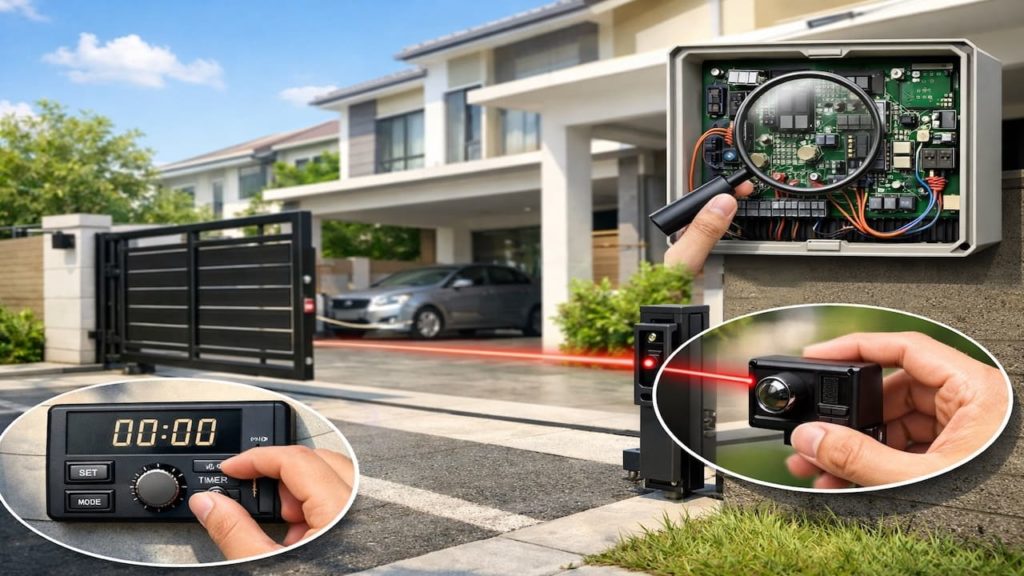
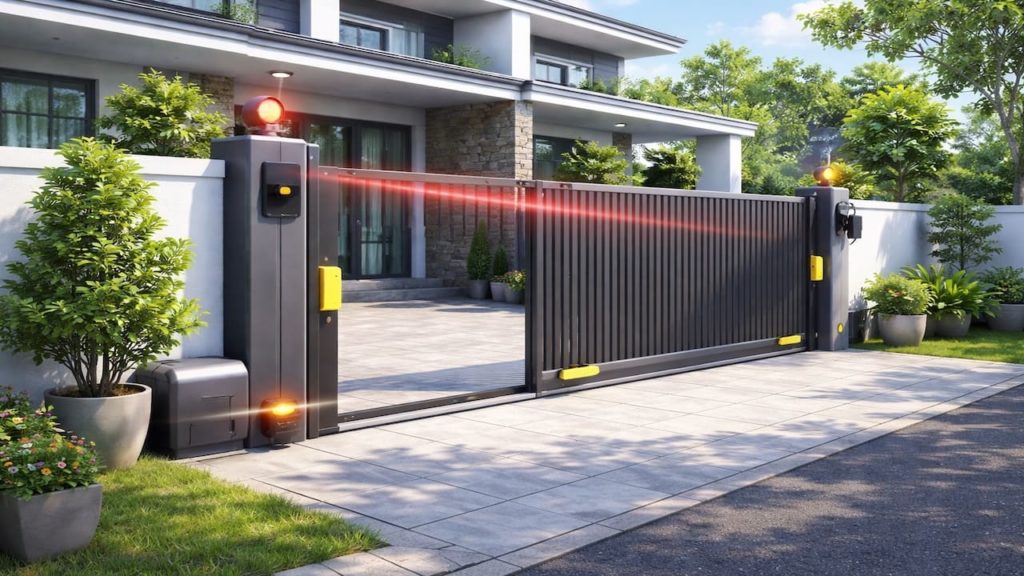
- Wipe photocell lenses with dry microfiber cloth
- Re align sensors to face each other
- Test auto reverse using a soft foam block
- Disable auto close if kids play nearby
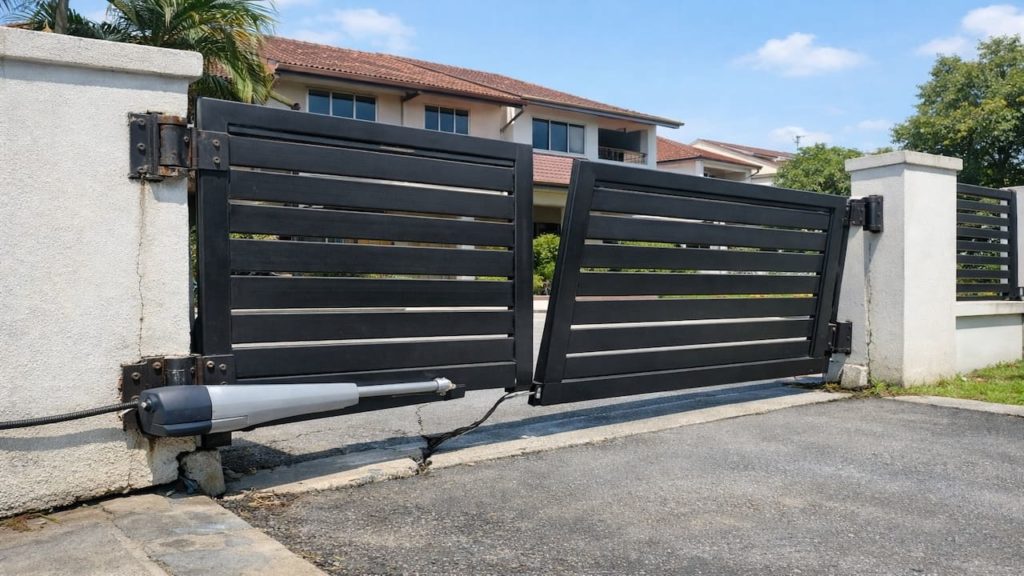
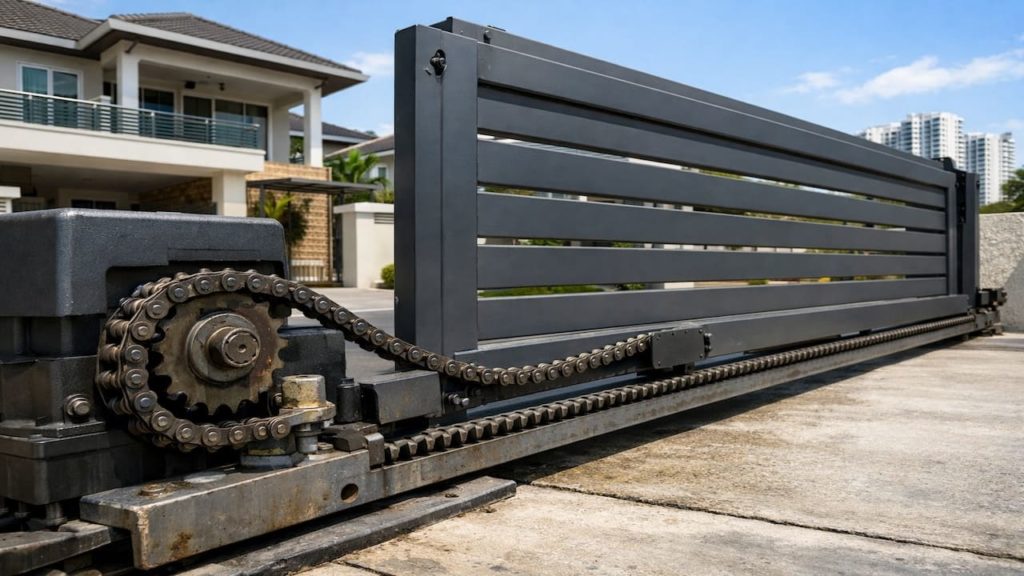
- Keep gate track free of stones and sand
Some say “Sensors are enough, kids will learn.” Kids learn by testing limits, and guests do not know your rules. Put the rule on the adults, not on the child. Sensors plus rules is the real safety net.
3. Why kids get hurt: blind spots, habits, and Malaysia weather
Most accidents happen because adults assume the gate will stop by itself while kids move faster than attention.
Rain noise masks motor sound, glare hides the moving leaf, and wet season routines change—so timing errors increase around school runs and evenings. Familiar danger.
- Kids chase pets through the gate opening
- Adults press remote without line of sight
- Gate moves while child reaches for latch
- Photocell misaligned after cleaning or bumps
- Power surge resets force settings unexpectedly
You could argue “We always watch them, so we’re safe.” Watching fades when groceries, phones, and deliveries stack up, and the gate still moves. Real safety is systems, not willpower. Fix the pattern, not just the moment.
4. How to build a safer autogate routine: daily checks and kid proof cues
Lock in safety by using a daily routine that removes decision making so every adult acts the same way.
In condos and terrace houses, space is tight and kids cut corners—use cues that guide feet and hands without a lecture. Make it automatic.
- Pause two seconds before pressing any remote
- Scan gate path from hinge to end stopper
- Close gate only after kids step inside
- Use manual stop switch during deliveries and bins
- Schedule monthly sensor test after heavy rain week
People say routines are “too much work for a small gate.” It is less work than one injury, one hospital run, and one lifetime regret. One minute a day is cheap insurance. Build the habit and keep it.
5. FAQs
Q1. Should I keep auto-close on when I have toddlers?
If toddlers are in and out of the porch, turning off auto-close is safer. Malaysia homes get busy at dusk, and timing mistakes happen when rain starts suddenly.
Q2. How often should I test the photocell sensors?
Do a quick test weekly and a deeper check after heavy rain or cleaning. Test sensors with a soft object every single week because humidity and dust shift alignment faster than you expect.
Q3. Is higher force setting safer so the gate does not stall?
No, higher force can reduce sensitivity and increase pinch risk. If the gate stalls, fix friction or alignment instead of forcing power through it.
Q4. What is the safest place to keep remotes?
Keep them high and out of sight, like a locked cabinet near the kitchen or a high shelf. In small terrace houses, the sofa table is a danger zone.
Q5. When should I call a technician instead of DIY checks?
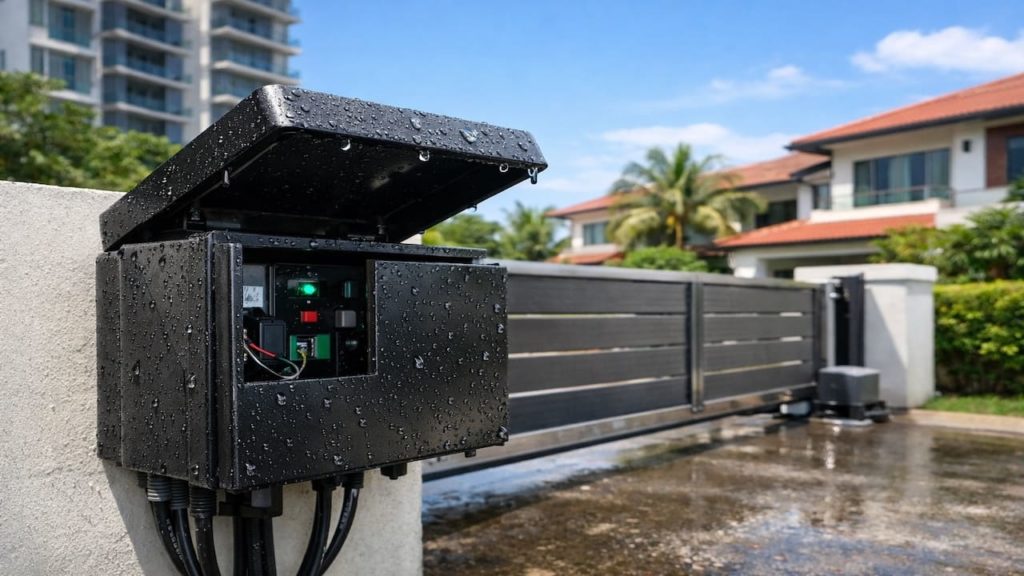
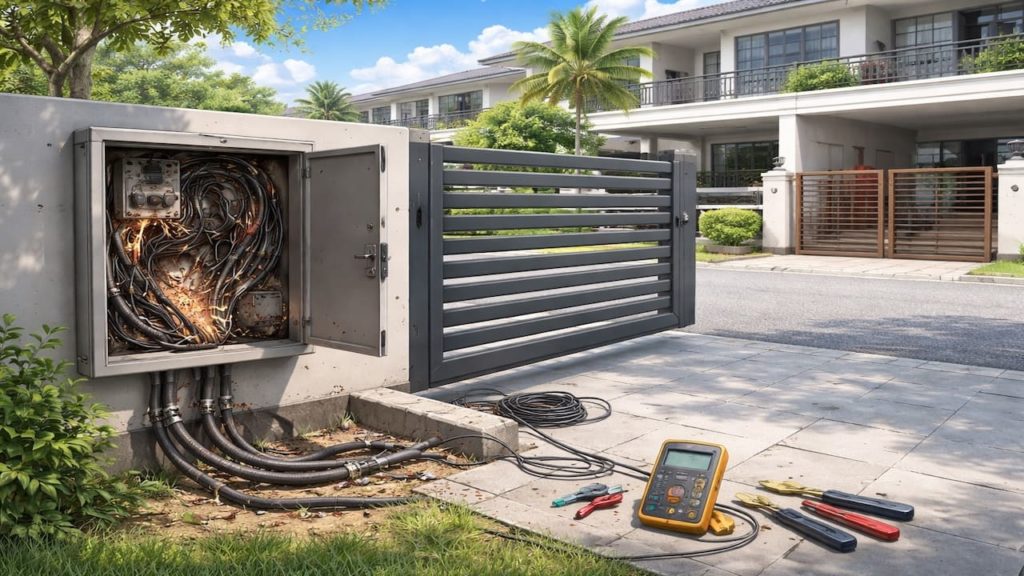
Call if the gate does not reverse reliably, makes new grinding sounds, or behaves differently after storms. Malaysia’s moisture can damage boards, and guessing can make it worse.
Pro’s Tough Talk

I’ve been on site for 20+ years and handled hundreds of jobs, and kid accidents happen from “just once.” You get heat-dazed, rain starts dumping, and the gate moves before your brain catches up. Hell.
There are only 3 causes. First is adult autopilot, pressing the remote while staring at a phone. Second is machine drift, where humidity, sand, and ants mess up the sensors. Third is home flow, tight entrances where kids cut corners like little racers.
Fix it with 3 steps. First, lock remotes up high and out of reach. Second, mark the moving zone so it’s visible every time. Third, make a 2-second check a non-negotiable house rule before any close. Fewer close calls.
Here’s the truth Habits beat settings for child safety Don’t worship the sensor like it’s magic. Parents aren’t idiots and techs aren’t villains, but the system is cold and it doesn’t care.
Think of the gate as a “slow crocodile” that snaps fast when it bites. And that “I’ll leave it half open” move is the top screw-up, yeah I’m calling you out. Rainy-day hands full with umbrellas and bags, and the after-school rush where a kid darts first. So today, before you press that button, actually look.
Summary
Autogate child safety comes from combining dependable sensors with strict home rules. In Malaysia’s heat and rain, small drifts become big risks.
If your gate still acts unpredictable after cleaning and routine checks, treat it as a hardware problem and call support. Unreliable reversing is the line.
Do this today store remotes high and create a clear no go zone then test sensors once this week. If you also face rain stoppages or random beeping, read the related autogate troubleshooting guides next.