Your aircond trips the breaker the moment you turn it on, or it runs for a while and then everything goes dark.
This can be a harmless overload, but it can also be heat, water, or a failing electrical part that is getting worse.
In this guide, you’ll learn how to handle breaker trips safely by spotting the warning signs, doing quick checks, and knowing when to stop and call help.

Hi, I’m Ken. I write practical home guides for Malaysia—no fluff, just what works.
I hold a formal building design qualification and have spent about 20 years on job sites across hundreds of projects. My goal is simple: help you avoid costly mistakes with clear, safe steps—a quick way to decide what to do next.
1. Aircond trips the breaker: 5 warnings
A breaker trip is a safety warning not a nuisance and repeating it can damage equipment or create real fire risk.
Look for patterns first—timing and smell tell you more than random guessing. Not normal.
- It trips instantly when you press ON which often points to a short or a severe start-up surge
- It trips only when the compressor kicks in after a minute which suggests a hard-start or failing electrical part
- You smell burning plastic or see soot marks near the indoor unit or socket which is a red flag
- The breaker feels warm or you hear buzzing at the panel area which can mean loose or overloaded connections
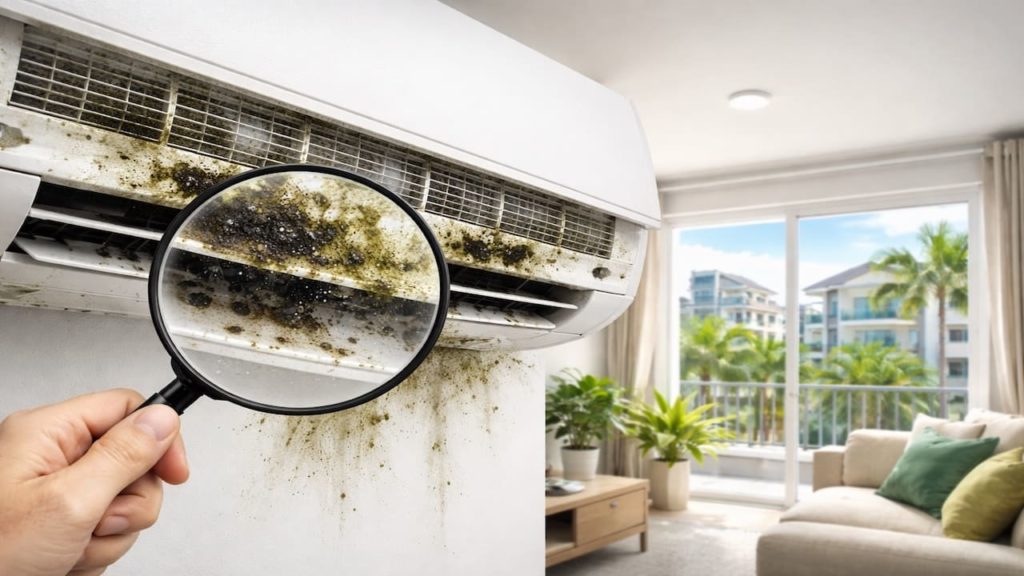
- It trips more on wet days or after condensation leaks which can point to moisture getting into sensitive parts
You might think a quick reset is fine because it “works after,” but repeated trips are the warning itself and the damage can be silent. Treat it seriously.
2. Safety steps before anything else
Turn it off and keep it off until you know why because repeated resets can escalate a small fault into a dangerous one.
Safety comes first—your goal is to stop heat and prevent water plus electricity meeting. Hard stop.
- Switch the aircond off using the remote or wall switch and do not try rapid restarts
- If the breaker tripped flip it back once only after a short pause and watch if it trips again immediately
- Unplug the unit only if the plug is easy to reach and the area is completely dry
- Keep water away from sockets and wipe any indoor leaks so you do not feed the problem
- Turn off other heavy loads on the same circuit and test again later only if the breaker stayed stable
You may worry about heat and comfort, but protecting wiring and your ceiling matters more than cold air for one afternoon. One safe reset is enough.
3. Why the breaker trips
Most breaker trips happen because current spikes or insulation breaks down and the breaker is doing its job by cutting power.
The cause is usually one of three buckets—overload, failing start components, or moisture and wiring faults. Clear buckets.
- Weak capacitor makes the motor struggle and draw too much current during start-up
- Compressor hard-start condition pulls high amps and trips protection even if cooling used to work
- Short circuit or damaged insulation triggers instant trips and can worsen fast
- Moisture ingress from leaks or heavy condensation creates tracking_attach areas and random trips
- Shared circuit overload happens when the aircond runs with heaters kettles or other high draw appliances
You might assume the breaker is “too sensitive,” but it is often reacting to a real electrical stress that should be found. Find the root cause.
4. How to fix it safely
Fix breaker trips by confirming the cause before replacing parts so you do not waste money or miss a dangerous fault.
Start with diagnosis—good technicians will test current draw and insulation instead of guessing. Evidence matters.
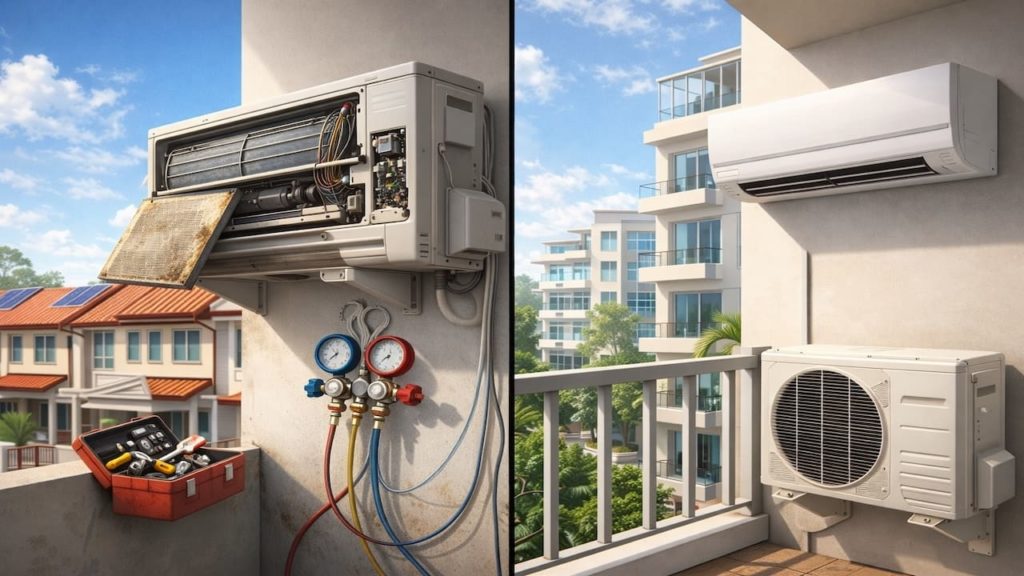
- Ask for a current draw check during start-up to confirm whether the compressor is pulling abnormal amps
- Request inspection of capacitors and wiring connections because those are common failure points
- Ask for drain and leak inspection if there has been indoor dripping or wet marks recently
- Confirm whether your aircond shares a circuit with other heavy appliances and reduce that load
- If the breaker itself is old ask for an electrical safety inspection rather than blind replacement
You might want to swap the breaker first because it is easy, but that can hide the real fault and the next trip can be worse. Diagnose then repair.
5. FAQs
Q1. What should I do the moment the breaker trips?
Turn the aircond off and pause before doing anything else. Reset the breaker once only, then stop if it trips again.
Q2. Is it dangerous if it trips more than once?
Treat repeated trips as urgent because it can signal heat, moisture, or failing electrical parts. If there is any burning smell, stop and call for inspection.
Q3. Can a dirty filter cause breaker trips?
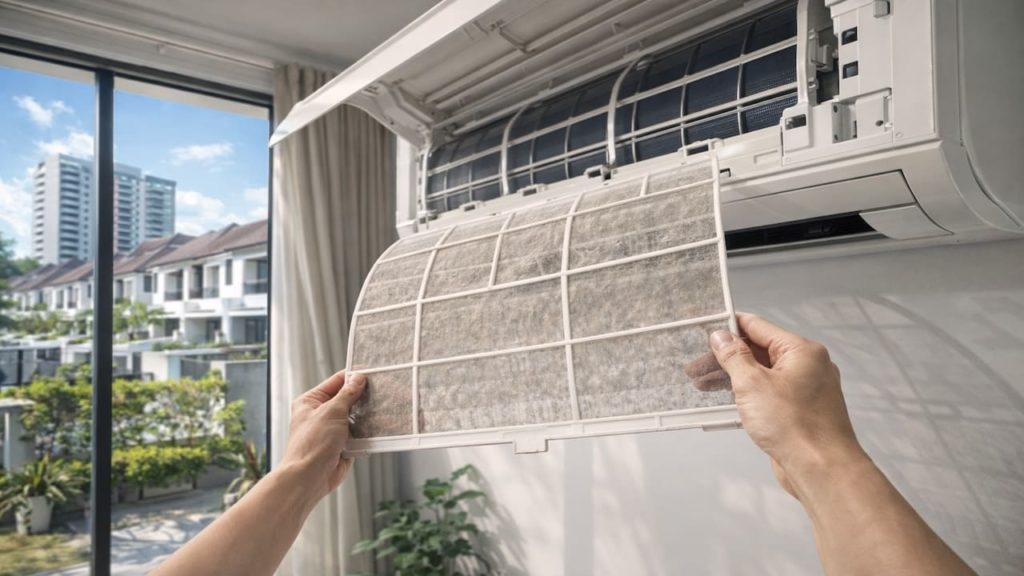
A dirty filter can raise strain and heat, but it usually does not cause instant breaker trips by itself. Clean it anyway, then look for electrical or start-up issues.
Q4. Should I replace the breaker immediately?
A weak breaker can trip, but replacing it without finding the cause is risky — confirm the load and fault first. If it trips again, get it checked properly.
Q5. What should I tell the technician?
Tell them when it trips, what else was running, and whether there was smell, buzzing, or water leaking. Those details speed up real diagnosis.
Pro’s Tough Talk

I’ve been on site for 20+ years and handled hundreds of jobs, and breaker trips are one of those “small” events that can turn ugly if you play brave. No hero points.
It breaks into 3 buckets: overload from too much on one circuit, a struggling motor start that pulls crazy current, or moisture and wiring faults that should not be ignored. Steps are 3 too: stop the unit, reset once, then identify timing and any smell before you call.
This is like a smoke alarm that keeps screaming and you pull the battery, and like a car that keeps overheating and you just keep topping up water. One comment: flipping the breaker 10 times does not make you a technician. Two classics: people run heavy appliances together then blame “bad electricity,” and people ignore a little drip until the wall looks like modern art. Respect the trip and you avoid the big bill so stop gambling and start checking.
Summary
Breaker trips are usually caused by overload, failing start components, moisture, or wiring faults. The pattern and timing are your biggest clues.
Reset once only—if it trips again or you smell burning, stop and call for proper electrical inspection. Safety first.
Note the timing, reduce other loads, keep the area dry, and share details with the technician. One smart check beats ten blind resets.