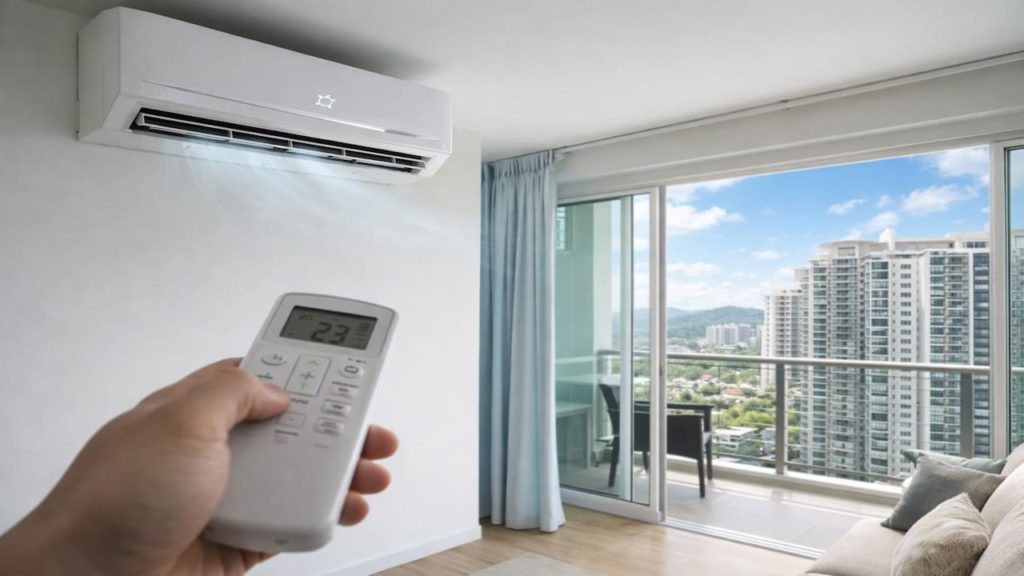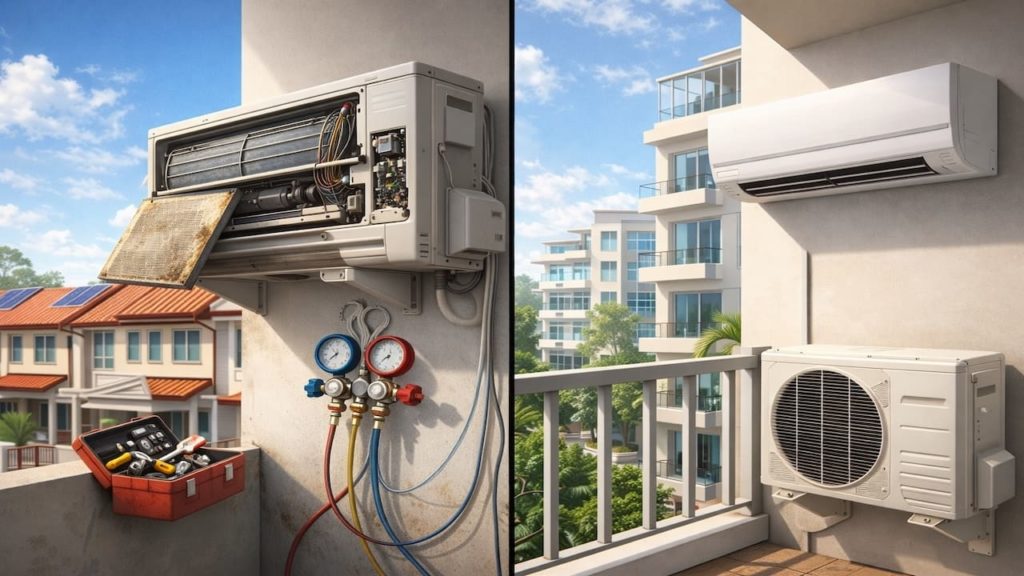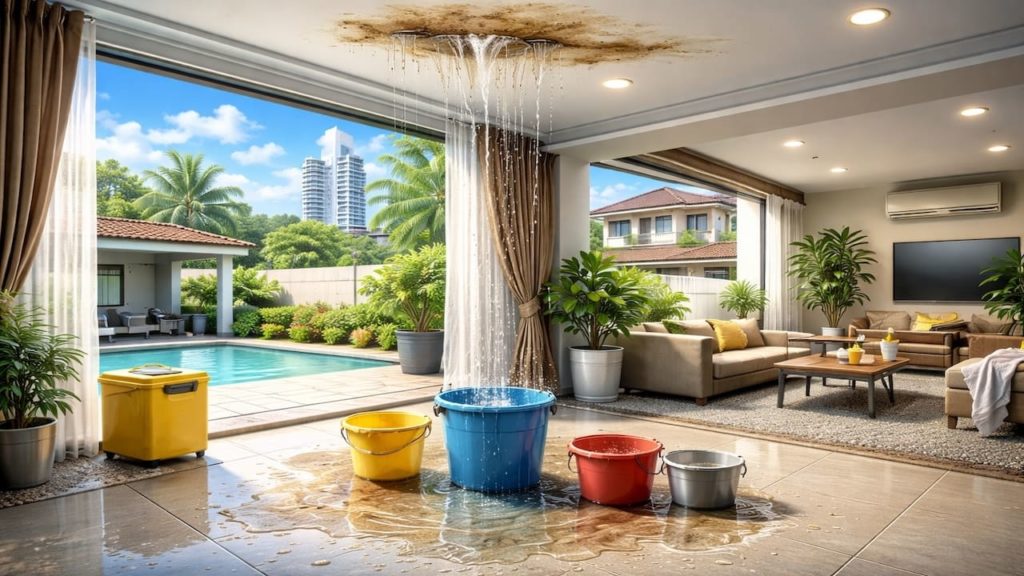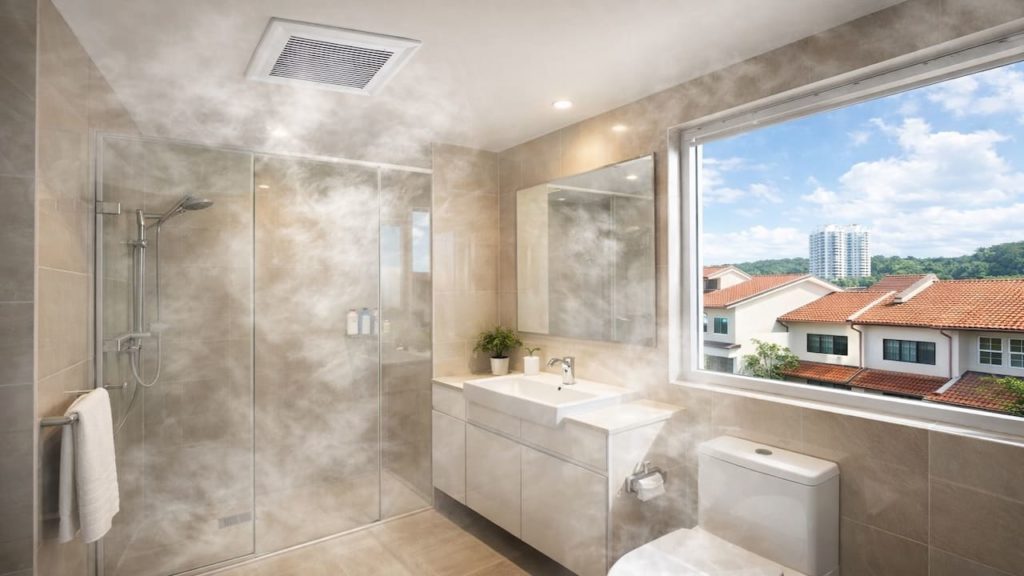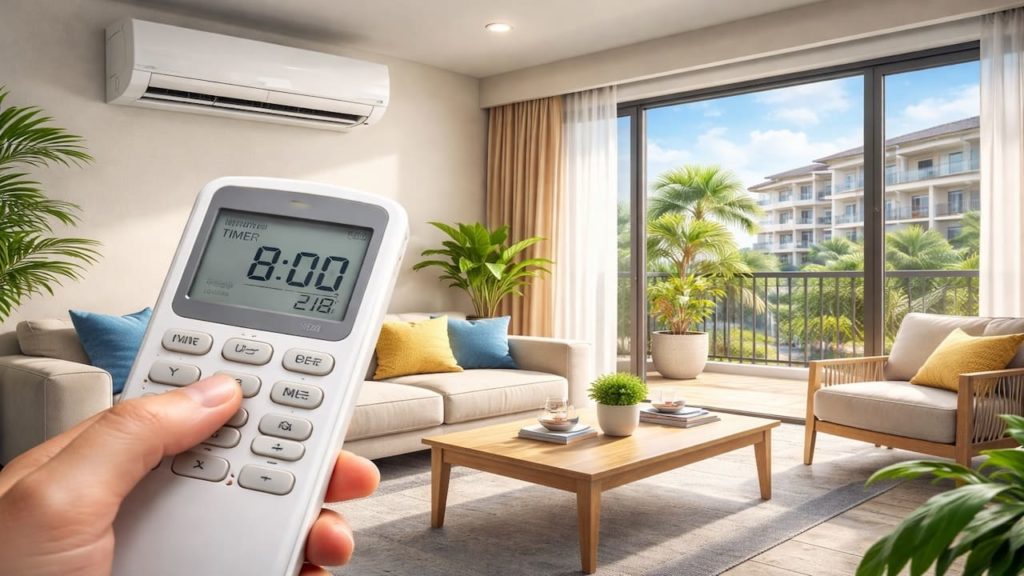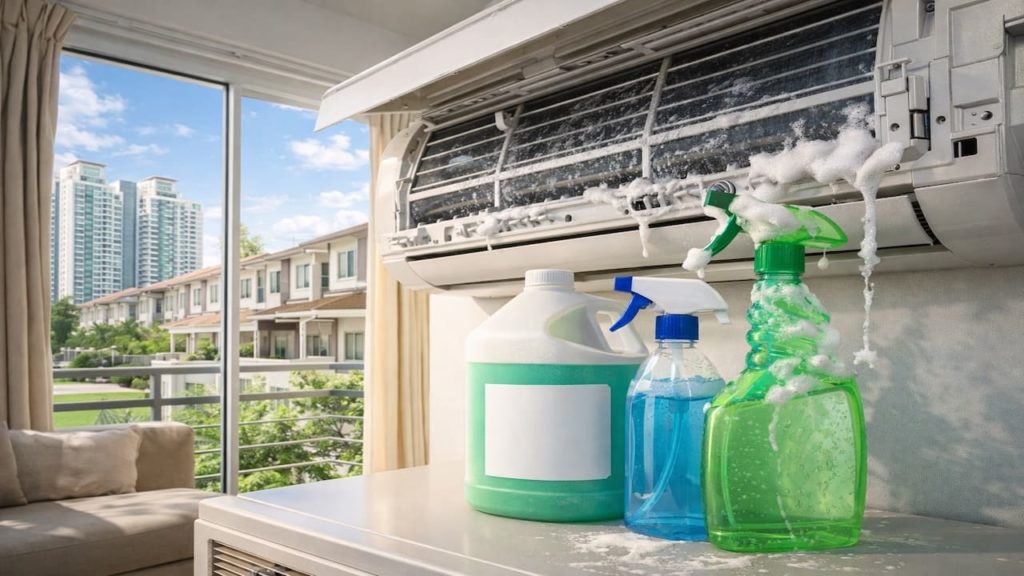
You want to clean your aircond at home, but you’re not sure which chemicals are safe or what will damage the unit.
In Malaysia’s hot humidity and rainy season, airconds collect moisture, dust, and smells fast, especially in condos with closed windows or terrace houses near busy roads.
In this guide, you’ll learn how to use aircond cleaning chemicals safely at home so you reduce odors and grime without breathing harsh fumes or creating leaks later.

Hi, I’m Ken. I write practical home guides for Malaysia—no fluff, just what works.
I hold a formal building design qualification and have spent about 20 years on job sites across hundreds of projects. My goal is simple: help you avoid costly mistakes with clear, safe steps—a quick way to decide what to do next.
1. Aircond cleaning chemicals: 5 tips
Use the mildest chemical that solves the problem
Malaysia humidity makes gunk grow faster, but stronger chemicals are not automatically better—start gentle and protect plastics and fins. Safety first.
- Choose a neutral cleaner for plastic covers and a mild degreaser for grime
- Avoid spraying anything into electrical areas or near the control board
- Use gloves and keep kids pets away in tight condo rooms
- Open windows or run an exhaust fan to clear fumes in humid air
- Rinse cloths often so you are not wiping dirt back onto surfaces
Some people think “more chemical means more clean.” It often means more residue and more smell later, so go light and repeat if needed.
2. Use products safely at home
Turn off power and control overspray before you apply anything
In Malaysia terrace houses, moisture plus extension cords is a bad mix—do the job with the isolator off and a towel barrier in place. No hero moves.
- Switch off at the wall isolator not only the remote
- Lay towels under the indoor unit to catch drips and protect walls
- Spray cleaner onto a cloth first instead of spraying into the unit
- Keep cleaners away from fins and sensors unless the label says safe
- Wait the label time then wipe and lightly damp wipe to remove residue
You may feel slow doing it this way. That slow control prevents the classic mistake of soaking the wrong part and causing a smell or a short.
3. Why aircond chemicals go wrong
Most damage comes from fumes corrosion and leftover residue
Malaysia condos trap fumes, and rainy season air slows drying, so chemicals can sit on surfaces and keep smelling. That is the hidden trap.
- Harsh fumes irritate eyes throat and trigger headaches in closed rooms
- Strong cleaners can corrode metal fins and weaken heat transfer
- Sticky residue attracts dust faster so the unit gets dirty again
- Wrong mixing can create dangerous gas even in a small bedroom
- Overspray into the casing can reach wiring and cause faults
Some owners blame the aircond when problems show up later. The real issue is chemical choice and drying time, so treat it like a controlled job.
4. How to clean safely with common products
Clean surfaces first then manage moisture and drying
Do it in a simple order—Malaysia humidity means drying is part of cleaning, not an optional extra. Drying matters.
- Remove and wash filters with mild soap then dry fully before reinstall
- Wipe the front cover louvers and intake area with a damp cloth
- Use a soft brush on visible dust and avoid bending fins
- After cleaning run fan mode for 15 to 30 minutes to dry inside
- If smell persists focus on drain and blower wheel and call a technician
People want a one-spray solution. Real comfort comes from clean airflow plus a dry interior, so keep the routine simple and repeatable.
5. FAQs
Q1. Can I use bathroom cleaner on aircond plastic parts
Many bathroom cleaners are too harsh and can leave strong fumes in Malaysia’s humid rooms—use a mild neutral cleaner on plastics instead.
Q2. Is it okay to spray cleaner directly into the indoor unit
Not recommended for home cleaning, because overspray can reach sensors and wiring. Spray onto a cloth first and wipe only accessible surfaces.
Q3. Can I mix cleaners to make it stronger
Never mix bleach with other cleaners. Mixing can create dangerous gas in small condo bedrooms, so keep products separate and follow labels.
Q4. Why does my aircond smell stronger after I cleaned it
Residue and moisture can get stirred up and blown out on first run. Wipe again with a damp cloth and dry the unit with fan mode.
Q5. When should I stop DIY and call a technician
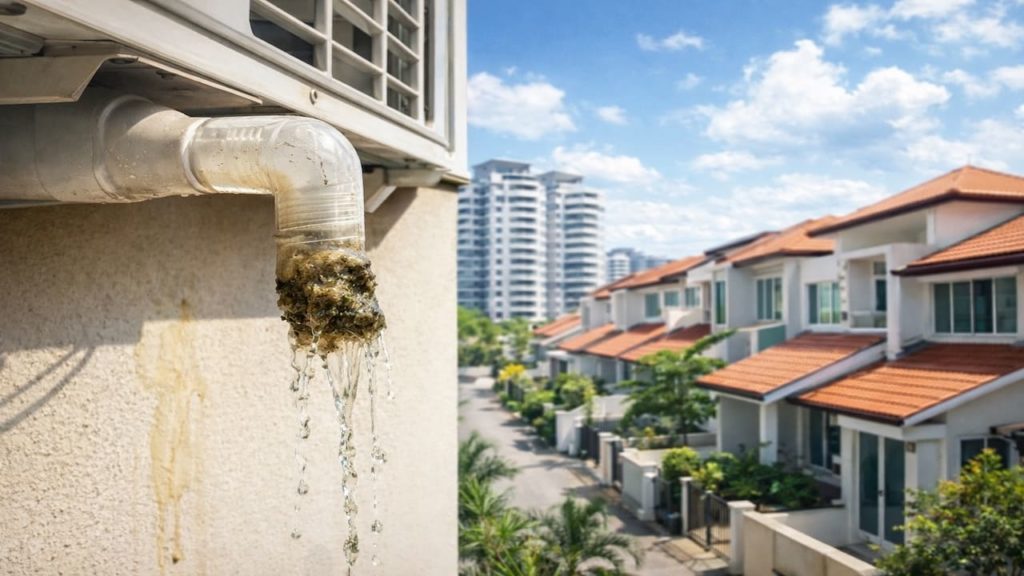
If smell keeps returning, water backs up, or airflow stays weak, the source is often the blower wheel or drain line. A proper service is faster than endless wiping.
Pro’s Tough Talk

I’ve been on site for 20+ years and handled hundreds of jobs, and Malaysia aircond DIY chemical cleaning goes wrong in the same stupid ways. Humid condos trap fumes, and rainy season makes everything stay wet longer.
3 causes. People use the wrong chemical, they spray like it’s a garden hose, and they never dry the unit after. 3 steps. Power off at the isolator, wipe only what you can see, then run fan mode to dry the inside before you sleep.
Listen Strong chemicals are not skill. Spraying harsh cleaner into an aircond is like pouring perfume on gym socks, and mixing bottles is like using a chainsaw to cut bread. And when someone says “just add more,” hit them with a mental comeback, what is this, a chemistry exam. Two classics: spraying while the unit is still on, and “DIY mixing” because more is better. Keep doing that and enjoy your own spicy air freshener, champion.
Summary
In Malaysia’s humid homes, safe aircond cleaning is about mild products, controlled wiping, and proper drying, not aggressive spraying. Simple.
If smells or leaks keep returning, treat it as a moisture and drainage problem and stop repeating harsh chemicals that leave residue behind.
Power off wipe gently dry thoroughly. Today, clean filters and wipe accessible surfaces, then read the “still smells after cleaning” and “technician visit” guides to fix hidden sources without overpaying.