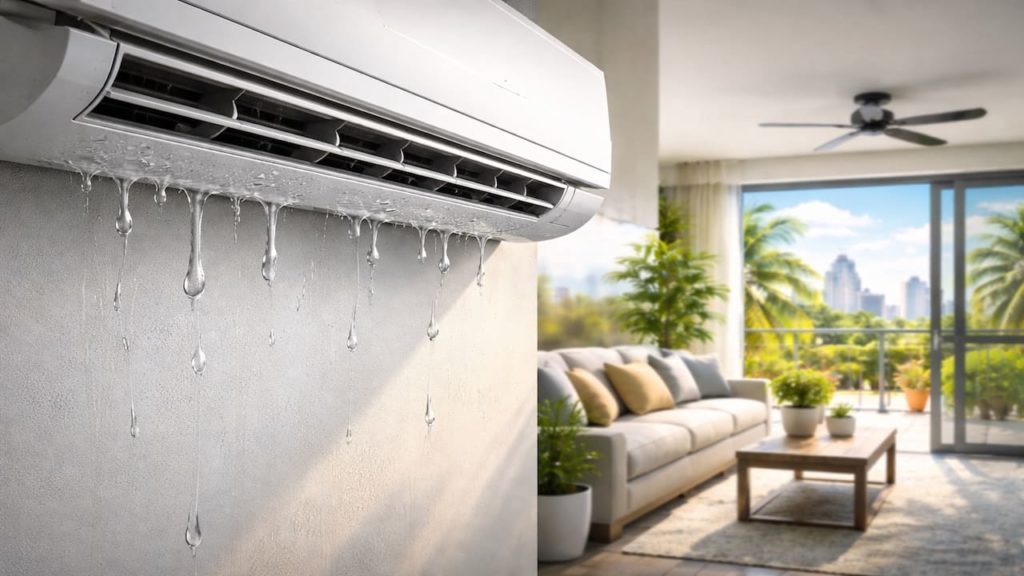
You notice water droplets on the indoor unit, wet marks on the wall, or a steady drip, and you wonder if something is broken.
Some condensation is normal because airconds remove moisture from the air, but leaks and staining are not something to ignore.
In this guide, you’ll learn what condensation is normal vs not by checking 5 common reasons, spotting warning signs, and choosing safe next steps.

Hi, I’m Ken. I write practical home guides for Malaysia—no fluff, just what works.
I hold a formal building design qualification and have spent about 20 years on job sites across hundreds of projects. My goal is simple: help you avoid costly mistakes with clear, safe steps—a quick way to decide what to do next.
1. Aircond condensation: 5 reasons
Condensation happens because your aircond is pulling moisture out of the air and that water must drain away.
When the moisture is high, small droplets can appear, but certain patterns signal a problem. Clear line.
- High humidity days create more water so you may see heavier normal dripping outside
- Dirty filter reduces airflow and can cause uneven cooling and surface sweating
- Blocked drain line makes water back up and overflow from the indoor unit
- Cold air leaking out or warm air leaking in can cause sweating on casing and pipes
- Low refrigerant or coil icing can melt later and look like sudden leaking
You might assume any water means a leak, but normal condensation has a different pattern than overflow. Look at where it appears and how fast.
2. What’s normal vs not
The key difference is normal water drains away cleanly while abnormal water appears indoors or stains surfaces.
Use simple signs—this saves you from panic and helps you act fast when it is truly not normal. Practical.
- Normal: water dripping from the outdoor drain hose during cooling with no indoor wet marks
- Normal: more dripping on rainy days because the air holds more moisture
- Not normal: water dripping from the indoor unit or running down the wall
- Not normal: wet ceiling spots, paint bubbles, or persistent damp smell near the unit
- Not normal: repeated puddles even after cleaning the filter and checking airflow
Some people ignore small stains because the unit “still works,” but water damage spreads quietly. Treat indoor water as a real issue.
3. Why condensation shows up
Indoor condensation shows up when water cannot drain or surfaces stay too cold and moisture collects where it should not.
Airflow, insulation, and drainage work together—if one fails, moisture finds a new path. That path is your wall.
- Clogged drain lines force water back into the tray until it spills indoors
- Weak airflow creates cold spots that sweat and drip from casing edges
- Gaps around piping allow warm humid air to hit cold surfaces and create sweating
- Frozen coils melt when the compressor stops and create sudden bursts of water
- Improper tilt or loose fittings can prevent smooth drainage into the pipe
You might think condensation is only about weather, but indoor leaking is often a drainage or airflow issue you can identify. Cause first.
4. How to handle condensation safely
Start with safety and prevention by stopping water damage and checking airflow before you attempt deeper fixes.
Do not open sealed parts or spray chemicals into the unit—focus on what you can access and document what you see. Smart.
- Turn the unit off and place a towel or container to protect walls and flooring
- Clean and dry the filter then restart and observe whether dripping changes
- Inspect the drain hose outlet if accessible and confirm water can flow freely
- Run Fan mode after cooling to dry the coil and reduce residual moisture
- If leaking continues take photos and call for drain line clearing and inspection
Some people keep running the unit “to dry the room,” but if water is leaking indoors you are feeding damage. Stop the leak first, then cool again.
5. FAQs
Q1. Is water dripping from the outdoor hose normal?
Yes, outdoor dripping is usually normal because that is where moisture should go. It can drip more on humid or rainy days.
Q2. Why is water dripping from the indoor unit?
This is usually not normal and often points to a clogged drain, poor tilt, or airflow issues causing overflow. Treat it as a maintenance problem.
Q3. Can a dirty filter cause condensation problems?
Yes, because reduced airflow can create cold spots and icing that later melts. Filter cleaning is a fast first step.
Q4. What if the water looks like a sudden burst?
That can happen when an iced coil melts after the unit stops. Look for frosting signs and repeated patterns.
Q5. When should I call a technician?
Call if water is leaking indoors, stains are forming, or the drain line seems blocked. Call quickly if you see ceiling damage or electrical smells.
Pro’s Tough Talk

I’ve been on site for 20+ years and handled hundreds of jobs, and “condensation” is where people either overreact or ignore it until the wall is ruined. Both are expensive.
It breaks into 3 buckets: normal moisture removal, drainage that can’t keep up, or cold surfaces meeting humid air in the wrong place. Steps are 3 too: protect the area, clean airflow basics, then confirm the drain flow.
Normal dripping is like a bottle sweating on a hot day, and abnormal leaking is like a cup with a crack sitting on your shelf. One comment: stop calling every drop a disaster. Two aruaru: people never look at the drain hose, and people keep running it while water stains grow. Indoor dripping is not “normal” so act fast or you’ll pay for cooling plus repainting, congrats.
Summary
Some condensation is normal because airconds remove moisture, especially in wet weather, but indoor dripping and stains are not normal. Pattern matters.
If water appears indoors, if stains spread, or if dripping continues after basic filter cleaning, the next step is drain inspection and proper cleaning. Clear trigger.
Protect the wall and floor, clean the filter, and check the drain outlet today, then continue with mold risk and maintenance routines for prevention. Stop water damage early and keep cooling clean.