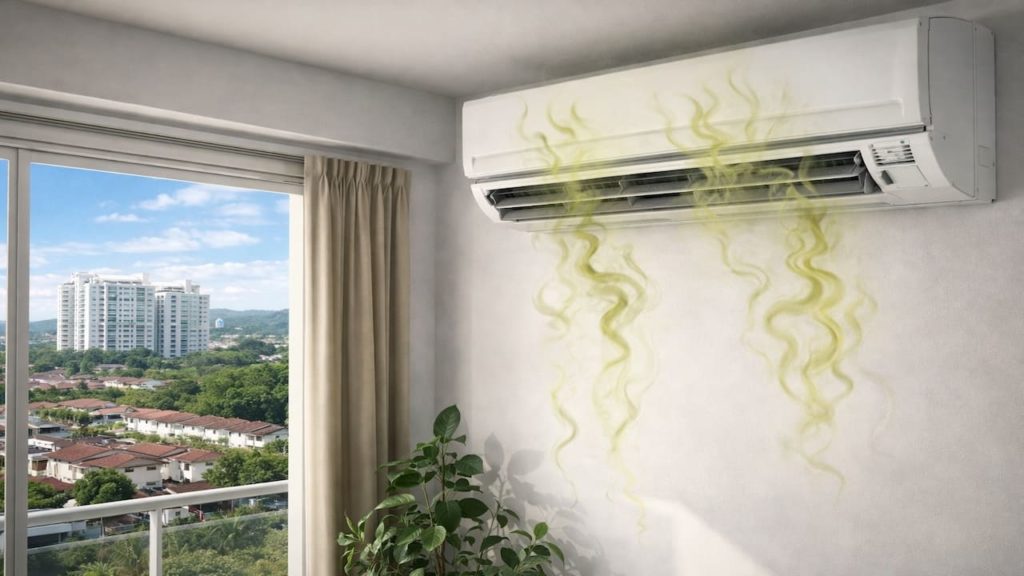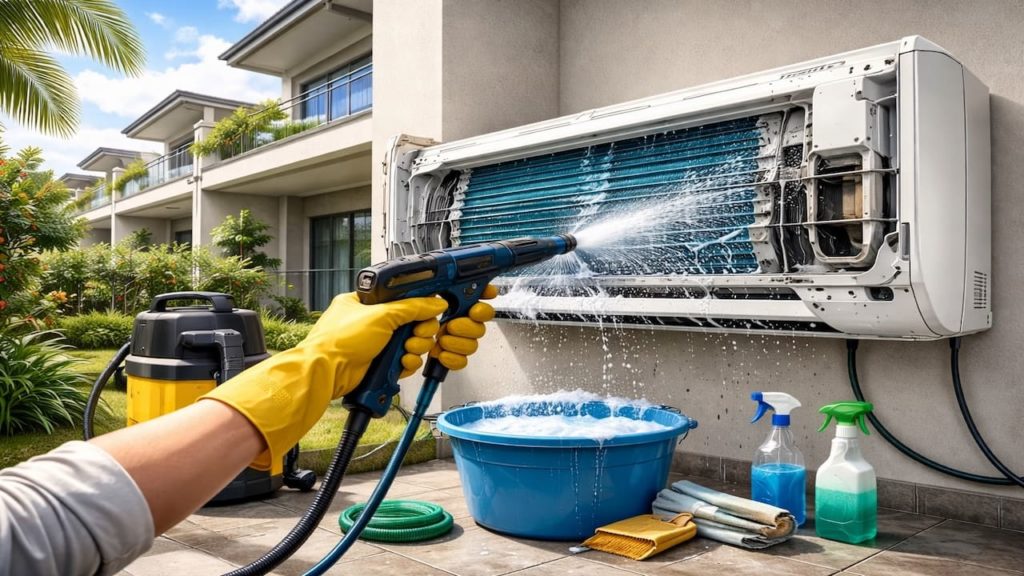
You want to DIY clean your aircond because it smells musty, airflow feels weak, or dust keeps coming back in your bedroom or living room.
Malaysia’s heat and humidity make coils stay wet longer, so small dirt becomes slime fast, especially in condos with closed windows and terrace houses near roads.
In this guide, you’ll learn how to clean your aircond safely without taking it apart so you can freshen airflow, reduce odors, and avoid creating leaks or electrical risk.

Hi, I’m Ken. I write practical home guides for Malaysia—no fluff, just what works.
I hold a formal building design qualification and have spent about 20 years on job sites across hundreds of projects. My goal is simple: help you avoid costly mistakes with clear, safe steps—a quick way to decide what to do next.
1. Aircond DIY cleaning: 5 steps
Follow these 5 steps and do not disassemble anything
In Malaysia homes, moisture sits inside the unit after cooling—this is why gentle cleaning and drying beats aggressive spraying. No shortcuts.
- Turn off power at the wall isolator and wait 2 minutes
- Remove filters wash with mild soap rinse then dry fully
- Vacuum or brush dust on the intake grille and front cover
- Wipe louvers and accessible plastic with a damp cloth then dry
- Run fan mode 15 to 30 minutes to dry the inside after cleaning
Some people want a one spray fix. That usually leaves residue and moisture behind, so the smell returns, and the humid air in Malaysia makes it worse.
2. Safe cleaning without disassembly
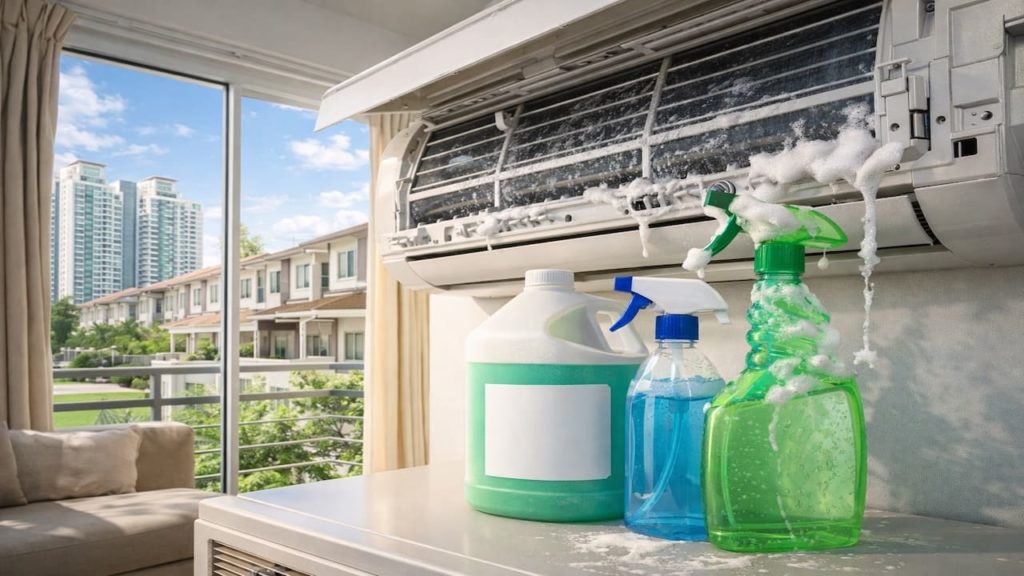
Stay on the outside and keep liquids away from electronics
Condos and terrace houses often have tight rooms and wet floors during rainy season—control overspray and you stay safe. Boundaries.
- Spray cleaner onto a cloth first instead of spraying into the unit
- Avoid the right side panel area where many units house electronics
- Do not bend the fins or poke tools into the coil
- Keep towels under the unit so wall paint stays protected
- Ventilate the room to clear fumes in Malaysia humidity
You might think opening a small panel is harmless. It is not, because capacitors and wiring can bite, so keep it external and controlled.
3. Why DIY cleaning goes wrong in Malaysia
Most DIY failures are water and residue problems
Malaysia’s humid air slows drying, and that turns leftover cleaner into sticky film—then dust sticks and odor grows again. Reality.
- Spraying liquid deep inside so water reaches sensors or the board
- Leaving cleaner residue that keeps smelling when the unit runs
- Cleaning only the filter while the blower wheel stays slimy
- Running low fan speed so the inside never dries after cooling
- Ignoring drain issues so moisture keeps pooling in the tray
Some people blame the aircond brand. Most of the time, it is process and moisture control, especially in a humid condo bedroom.
4. How to do a safe DIY clean in 20 minutes
Clean what you can reach then dry the unit properly
Do this when the room is bright and dry if possible—Malaysia rainy evenings make drying slower, so plan the timing. Simple win.
- Power off at the isolator then open the front cover only
- Wash filters and let them dry fully before reinstalling
- Wipe intake grille louvers and cover with a damp cloth
- Check for visible slime smell near the drain area without poking inside
- After reassembly run fan mode to dry then test cooling for 10 minutes
You may want to finish fast and close the cover. Take the drying step seriously, because humid air is the reason smells keep coming back.
5. FAQs
Q1. How often should I DIY clean my aircond in Malaysia
Filters every 2 to 4 weeks is a solid routine in Malaysia humidity, especially during rainy season. Wipe the intake area when dust builds up.
Q2. Can I use disinfectant spray inside the unit
Avoid spraying inside because overspray can reach electronics and leave residue. If you want a fresher smell, focus on filter cleaning and drying with fan mode.
Q3. When should I stop DIY and call a technician
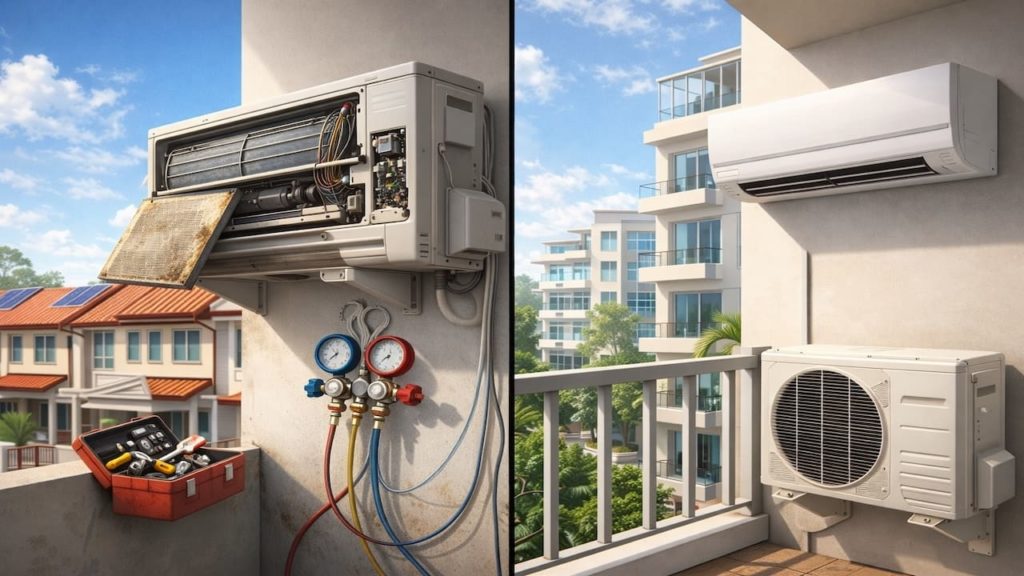
Stop if you see ice burning smell or repeated leaks—those signs point to deeper issues like drainage, blower wheel slime, or electrical faults. A proper service is faster than guessing.
Q4. Why does the smell return even after filter cleaning
The odor often lives on the blower wheel or drain tray, not the filter. Humidity keeps those parts wet, so smell returns if the inside never dries.
Q5. Will DIY cleaning improve weak cooling
It can if the filter and intake were blocked and airflow improves. If cooling is still weak, check BTU sizing, installation quality, or ask for a proper inspection.
Pro’s Tough Talk

I’ve been on site for 20+ years and handled hundreds of jobs, and Malaysia aircond DIY disasters are always the same story. Humid condos and terrace houses make tiny mistakes grow into big smells and leaks.
3 causes only. People spray like it’s a car wash, they chase “fresh scent” instead of removing wet dirt, and they skip drying because they are impatient. 3 steps. Power off, clean only what you can reach, then dry the unit with fan mode before you sleep.
Listen DIY means controlled cleaning not chemical flooding. Spraying inside is like washing a phone under a tap, and skipping drying is like putting wet laundry back in the closet. When someone says “just spray more,” hit them with the mental comeback, sure and enjoy your new perfume swamp. Two classics: cleaning at night after rain, and “quick wipe” with the power still on. Keep doing that and congratulations, you just invented your own indoor humidifier.
Summary
Safe aircond DIY cleaning is mostly filter cleaning, surface wiping, and drying, which matters more in Malaysia’s humid condo and terrace house conditions.
If smell, leaks, icing, or weak cooling keeps returning, stop repeating harsher cleaners and treat it as a drain, blower, or system issue.
Power off clean reachable parts then dry. Today, do the 5 steps once and take photos of anything odd, then read the “still smells after cleaning” and “technician visit” guides to avoid repeat costs.