Your aircond is cooling, then suddenly you notice dripping, a wet wall mark, or a damp smell that wasn’t there yesterday.
A clogged drain pipe can be caused by dust, slime buildup, or a kinked hose, and it often shows up during long humid runs.
In this guide, you’ll learn how to clear a clogged drain safely with 5 simple fixes, what causes the blockage, and when to stop and call help.

Hi, I’m Ken. I write practical home guides for Malaysia—no fluff, just what works.
I hold a formal building design qualification and have spent about 20 years on job sites across hundreds of projects. My goal is simple: help you avoid costly mistakes with clear, safe steps—a quick way to decide what to do next.
1. Aircond drain pipe clogged: 5 fixes
Stop the leak then restore smooth drainage before you worry about anything else.
Most clogs are near the drain outlet or inside the first section of hose—start simple and you often solve it fast. First priority.
- Turn the unit off and protect the wall and floor with towels or a container
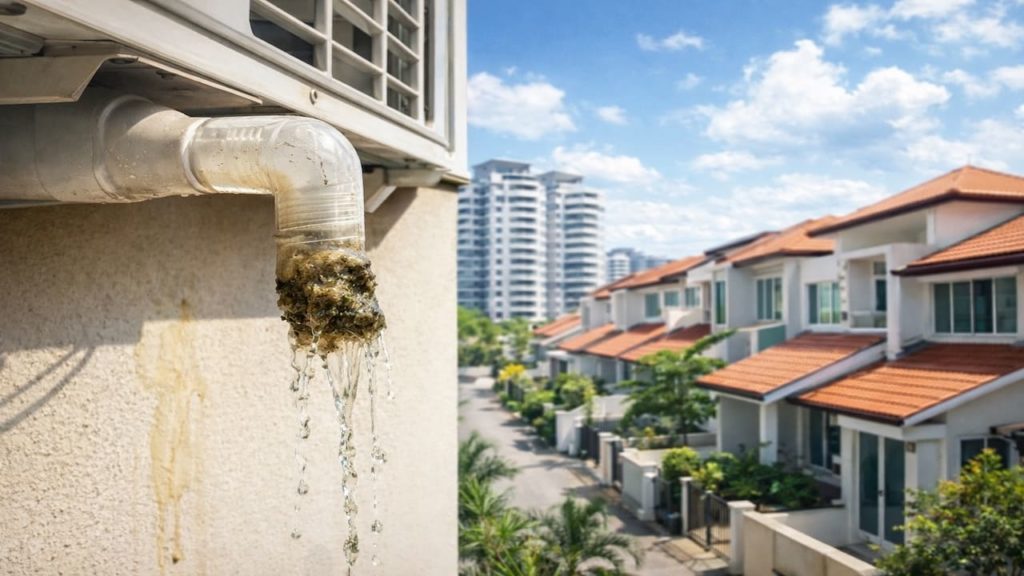
- Check the drain hose outlet and clear visible slime or debris by hand with tissue
- Gently straighten any bends or pinches in the hose so water can flow again
- Clean the air filter so airflow is steady and the drain tray does not flood
- Run Fan mode for 20 to 30 minutes after cooling to reduce leftover moisture
You might assume you need special equipment, but most clogs are basic and obvious once you look—do the easy wins first, then escalate if leaking continues.
2. Clear it safely without tools
Clear the outlet and flush gently with clean water so you remove the clog without damaging the drain path.
Keep it light and controlled—aggressive poking can disconnect the hose or push gunk deeper. No mess.
- Switch off the aircond and wait 5 minutes so dripping slows and you can observe clearly
- Locate the drain hose outlet and confirm whether water is dripping at all
- Wipe the outlet and remove any soft buildup you can reach without forcing anything
- Pour a small amount of clean water at the indoor drain access if reachable and safe
- Restart cooling for 10 minutes and confirm water exits outside in a steady drip
Some people try harsh chemicals or high pressure, but that can worsen smells and cause leaks later—gentle clearing and observation is the safe route.
3. Why the drain pipe gets clogged
Clogs form when moisture mixes with dust and turns into slime inside the tray and hose.
This buildup grows quietly, then one day water has nowhere to go—so it spills indoors. Slow problem.
- Dirty filters push more dust through the unit which feeds biofilm growth
- High humidity creates more condensation so the drain system is under more load
- Infrequent Fan drying leaves the inside wet which helps slime form faster
- Kinked or sagging hoses trap water and create a perfect clog spot
- Partial clogs cause gurgling sounds and weak dripping before full blockage happens
You might blame “random leaking,” but the pattern is predictable—dust plus moisture plus time equals blockage, every single time.
4. How to prevent repeat clogs
Keep airflow clean and dry the system after use so slime cannot build up again.
Prevention is boring, but it works—small habits reduce leaks and musty smells. Routine.
- Clean the filter monthly so dust does not become drain sludge
- Run Fan mode for 20 to 30 minutes after long cooling sessions to dry the coil
- Keep doors and windows closed during cooling so humidity load stays manageable
- Check the drain outlet occasionally and keep it clear of leaves and debris
- Call for service if indoor leaking returns quickly or you see staining and damp patches
You might think prevention is unnecessary if the leak stopped today, but repeat clogs are common unless you change the moisture routine—do the basics and it stays quiet.
5. FAQs
Q1. Is water dripping outside a good sign?
Yes outside dripping is usually normal because that is where the moisture should go. If indoor dripping happens instead, suspect a clog or overflow.
Q2. What are early signs of a clog?
Weak or no dripping outside during cooling is one sign. Musty smell, gurgling, or damp marks near the unit can also appear first.
Q3. Can I use bleach or strong drain chemicals?
Be careful because harsh chemicals can leave residue and worsen odor, and they may damage parts. Start with gentle clearing and clean water flushing only if safe to access.
Q4. Why does it leak only on very humid days?
High humidity creates more condensation, so a partial clog becomes a full overflow faster. That is why the timing feels random.
Q5. When should I stop DIY and call a technician?
If indoor water keeps coming back after basic clearing, call for proper drain line cleaning. Call immediately if you see ceiling damage or any electrical smell.
Pro’s Tough Talk

I’ve been on site for 20+ years and handled hundreds of jobs, and water issues follow the same script: ignore the small drip, then act shocked when the wall stains. Every time.
Causes split into 3 buckets: dust turns into slime, the hose gets kinked, or water cannot exit outside. Steps are 3 too: stop the leak, clear the outlet, then test the drip outside.
This is like a sink that “kind of drains” until it doesn’t, and like a straw that clogs with tapioca pearls. One comment: you’re not doing a science experiment, stop blasting random chemicals. Two aruaru: people never look at the drain outlet, and people keep running it while the stain grows. Fix drainage first or enjoy repainting later.
Summary
A clogged drain pipe is usually a dust and moisture slime problem, a kinked hose, or a blocked outlet. The fix starts with stopping water damage and restoring flow.
If indoor leaking returns quickly after gentle clearing, that is your trigger to get a proper drain cleaning and inspection. Do not wait for stains to spread.
Clean the filter, keep the drain outlet clear, and run Fan mode after long cooling sessions, then read the guides on condensation and mold risk next. Keep the drain clear and the room stays dry.