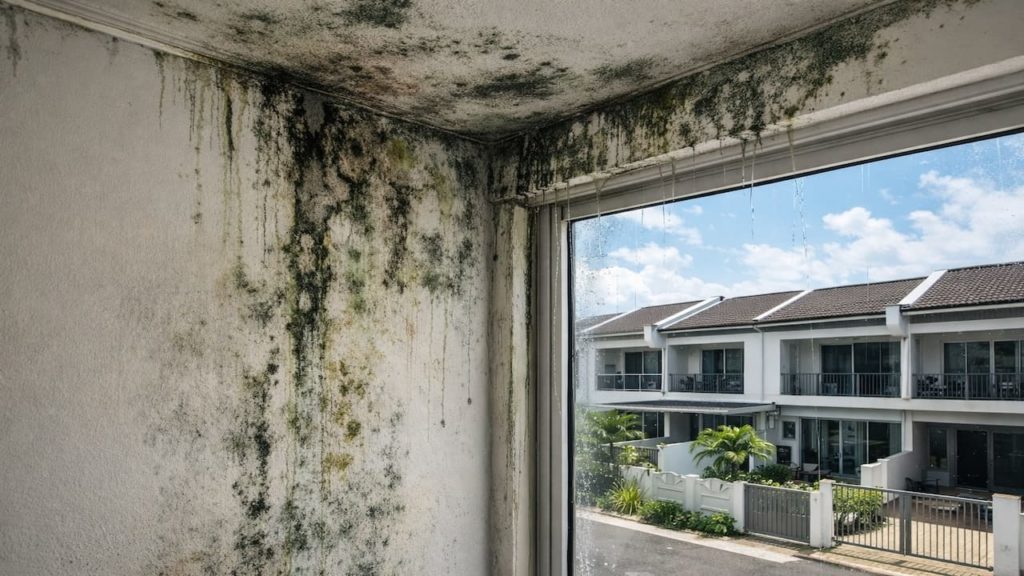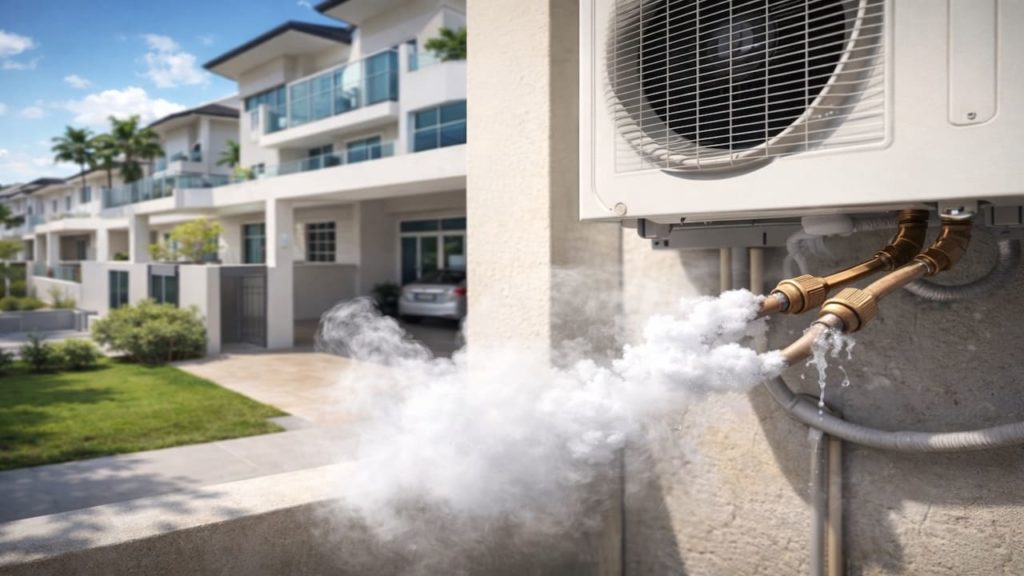
You suspect an aircond gas leak because cooling is weaker, the unit runs longer, or it keeps icing up even after a basic clean.
In Malaysia’s hot humid weather, condos and terrace houses push airconds hard, so small leaks show up fast during rainy season and long afternoon runs.
In this guide, you’ll learn how to spot aircond gas leak symptoms and know when to stop so you avoid bigger damage and call a technician with clear facts.

Hi, I’m Ken. I write practical home guides for Malaysia—no fluff, just what works.
I hold a formal building design qualification and have spent about 20 years on job sites across hundreds of projects. My goal is simple: help you avoid costly mistakes with clear, safe steps—a quick way to decide what to do next.
1. Aircond gas leak signs: 5 symptoms
Multiple symptoms together is the real warning
One symptom can be dirt or settings, but a leak usually shows a pattern. Malaysia humidity makes the room feel sticky even when the air seems cold. Pattern.
- Cooling gets weaker and takes much longer to feel comfortable
- The unit runs almost nonstop but the room still feels clammy
- Ice forms on the indoor coil or pipes then airflow drops
- You hear a faint hissing near piping or the indoor unit area
- Oily residue shows on flare joints or around pipe connections
Some people say “just top up gas and move on.” That can hide the leak for a week—then you pay again and risk compressor stress.
2. When to stop and call
Stop early when safety or overheating signs appear
In a condo bedroom with windows shut, you do not want to gamble with unknown smells or repeated trips. Malaysia rainy nights also slow drying and increase icing risk. Stop point.
- Turn the unit off if you smell burning or strong chemical odors
- Stop cooling if ice appears and switch off to prevent overflow leaks
- Do not keep resetting the breaker if it trips during operation
- Ventilate the room if possible and keep kids away from the airflow
- Call a technician and share photos of ice oil marks and error lights
You might think one more hour of use is fine. It is not—once the system is unstable, extra running can turn a small leak into a bigger repair.
3. Why aircond gas leaks happen
Most leaks come from joints installation and vibration
Malaysia heat cycles expand and contract metal, and condo outdoor ledges amplify vibration. Over time, weak joints and poor install work loosen. Reality.
- Flare joints not tightened correctly during installation
- Piping bent too sharply and cracked after repeated vibration
- Corrosion on outdoor coils from salty air or constant moisture
- Poor vacuuming and moisture inside leads to long term system stress
- Accidental damage during renovations drilling or moving furniture
Some owners blame the brand immediately. A good unit can still leak if the piping work is sloppy—so focus on workmanship and testing.
4. How to respond without making it worse
Gather evidence and ask for proper leak testing
Your job is not to fix refrigerant issues yourself. Your job is to protect the unit and get a clean diagnosis that fits Malaysia home conditions. Control.
- Clean the filter and confirm airflow is not blocked by curtains or racks
- If ice is present stop cooling and let it thaw before testing again
- Check the piping area for oil marks and take a clear photo
- Ask the technician to locate the leak not just refill refrigerant
- Request a written scope covering leak test repair and performance check
Some people want the fastest refill and done. That is how you get delays—because the leak stays and the same symptoms come back.
5. FAQs
Q1. Is weak cooling always a gas leak
No, weak cooling can also come from dirty filters, blocked airflow, or a clogged drain causing icing. Look for the pattern and not just one symptom.
Q2. Why does icing suggest a possible leak
Low refrigerant can change coil temperatures and lead to ice, but airflow problems can do it too. In Malaysia humidity, icing can happen faster — so stop and check the basics first.
Q3. Can I keep using the aircond if it still cools a bit
Stop if it ices or trips. Continued running can stress the compressor and create more expensive repairs.
Q4. Should I accept a simple gas top up
Only if the technician also explains why gas was low and what test confirmed it. If they cannot explain, you risk paying again soon.
Q5. What should I send the technician before the visit
Send the model, room size, symptoms timeline, and photos of ice or oily joints. Mention if you live in a condo with a tight service ledge or a terrace house with long piping runs.
Pro’s Tough Talk

I’ve been on site for 20+ years and handled hundreds of jobs, and gas leak cases in Malaysia follow the same script. Hot days, humid nights, then people act shocked the unit starts struggling.
Three causes. Bad flare joints, vibration rubbing the pipe, and “top up only” habits that never fix the leak. Three steps. Stop when icing or trips show up, take photos of oil marks and ice, then demand leak finding plus repair before any refill.
Listen Top up without leak finding is paying twice. A leak is like a hole in a bucket, you can pour all day and still lose water. And a stressed compressor is like running a marathon while sick, you finish but you break later. When someone says “normal lah just add gas,” throw a mental comeback, what is this, hope-based maintenance. Two classics: the guy who keeps running it until the airflow dies, and the guy who refills every 2 months and calls it “maintenance.” Keep doing that and enjoy your monthly donation plan to the service guy.
Summary
Gas leak signs are not just weak cooling, they are a pattern like long runtime, icing, hissing, and oily joints, especially in Malaysia humidity. Pattern.
If you see icing, burning smells, breaker trips, or unstable cycling, stop early and call, because extra running can escalate the damage.
Spot the pattern stop early demand leak finding. Today, take photos and notes, then read the “technician visit” and “BTU sizing” guides to avoid overpaying and to reduce strain that makes problems show up faster.